China's development of green industries and the country's initiative of building a unified national market have made steady progress over the first three quarters of 2024, according to the data published by the State Taxation Administration on Sunday.
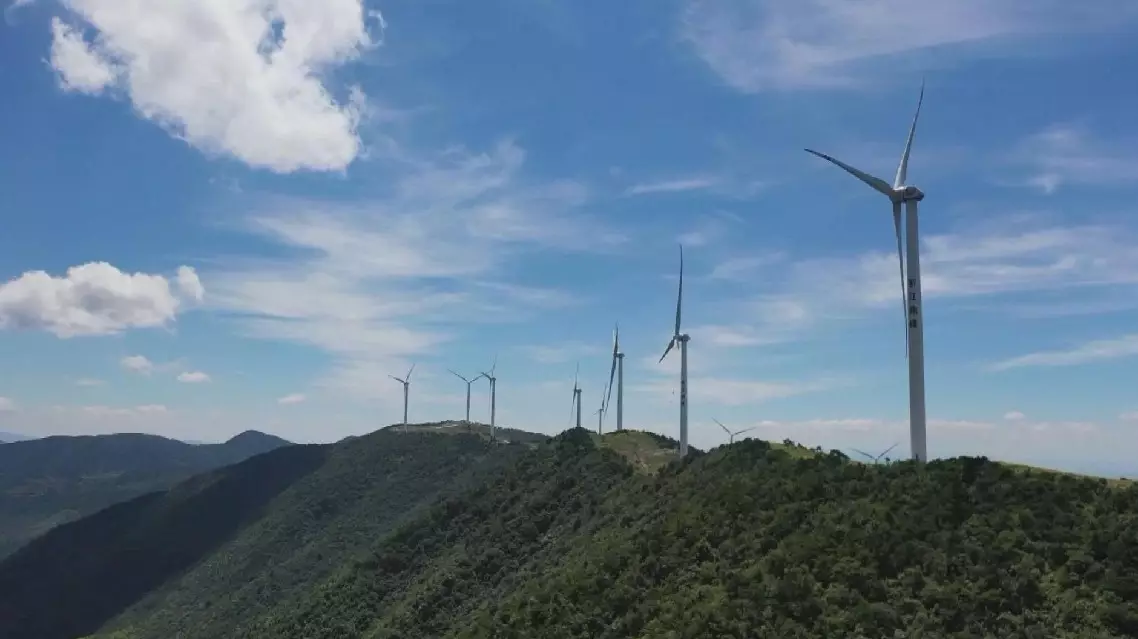
The tax data highlighted that the development of green industries has gathered pace in Jan-Sept, reflecting a resilient and diversified economic landscape.
Sales revenue in the ecological protection and environmental governance sectors surged by 11.4 percent, while the green technology services sector, including renewable energy and energy-saving solutions, witnessed a growth of approximately 20 percent. As China's broader strategy has continued emphasis on transition toward a more sustainable and innovative paradigm, sales in the clean energy sector, including solar, wind, and hydropower, maintained a rapid growth.
The transportation and logistics sector also registered faster growth, with sales revenue rising by 10 percent year on year. In particular, the growth in multimodal transport and freight forwarding services saw increases of 33.5 percent and 11.3 percent, respectively. The transportation sector in Sept alone experienced a 10.6 percent growth.
Moreover, interprovincial sales volume rose by 2.5 percent, outpacing the overall growth rate of national enterprise sales revenue by 1.1 percent, reflecting a steady progress in building a unified national market.
China on April 10, 2022 unveiled guidelines for accelerating the building of a unified national market, envisioning breaking local protection and market fragmentation and unblocking key sticking points that weigh on economic circulation, as part of a wide-ranging push for an effectively regulated, fairly competitive and fully open market across the country.
China’s green industries, unified national market initiative make steady progress: data

The Beijing Stock Exchange (BSE) has seen a significant expansion of its investor base, with the total number of qualified investors exceeding 10 million as of Jan 20, indicating the bourse's rising vitality and appeal.
This represents a net increase of almost 2 million accounts on the third-born of China's A-share market compared to the same period last year.
This figure marks the highest number of qualified investors since the establishment of the BSE in 2021, doubling from 4 million at its inception. In just the past five months alone, the number surged from 9 million to more than 10 million.
Experts say that the rapid growth of the investor base is attributed to the robust performance of the bourse's new share market.
Since the beginning of 2026, the frozen funds for new share subscriptions on the BSE has exceeded 1 trillion yuan (about 143.85 billion U.S. dollars), reflecting sustained high investor enthusiasm for entering the market.
"The scale of 10 million investors is a key indicator of the maturity of the Beijing Stock Exchange's market ecosystem. The impressive performance of the new stock market has validated the investment value of BSE-listed companies, attracting incremental capital inflows. And the expansion of market size and growth in investor numbers form a virtuous cycle, providing more sufficient capital support for innovation-oriented small and medium-sized enterprises," said Lu Zhe, chief economist at the Soochow Securities.
The total market capitalization of the BSE has approached to 1 trillion yuan. Data shows that the number of companies listed on the bourse has reached 290, with a total value of 949.571 billion yuan (about 136.59 billion U.S. dollars).
Meanwhile, the BSE has demonstrated strong market resilience, with the Beijing Stock Exchange 50 Index up by around 50 percent cumulatively in 2025. The benchmark index includes 50 stocks considered to be representative of the market, providing a tool to monitor the overall performance of the bourse.
Since the opening of the BSE, over 90 percent of the listed companies have cumulatively distributed 19.86 billion yuan (about 2.86 billion U.S. dollars) in cash dividends, with 16 companies having paid out dividends exceeding their total amount of funds raised through listing.
The 2025 third-quarter report shows that the average revenue of 279 BSE-listed companies stood at 520 million yuan (about 74.8 million U.S. dollars), an increase of 5.99 percent year-on-year. Their average net profit was almost 32.99 million yuan (about 4.74 million U.S. dollars).
Five companies included in the Beijing Stock Exchange 50 Index, as well as eight companies not included, have disclosed their equity distribution plans, with the combined cash distribution amounting to 358 million yuan (about 51.5 million U.S. dollars).
Beijing Stock Exchange sees record number of qualified investors