China's aluminum export has experienced a remarkable surge in 2024, with companies ramping up production to meet growing international orders.
Industry insiders report that demand, particularly from the food and pharmaceutical sectors, has driven a significant increase in aluminum foil shipments.
Du Jixing, chairman of an aluminum foil manufacturing company in Jiangyin City of east China's Jiangsu Province, noted that his company's production lines are operating at full capacity around the clock, yielding over 200 tons of products daily, a year-on-year increase of 12.5 percent.
"Our total overseas sales volume from January to September has increased by over 20 percent compared to last year. Overseas sales account for more than 60 percent of our total sales. Demands from all of our export destinations have shown positive growth compared to last year," Du said.
In a similar trend, a company producing aluminum formwork in Fuzhou City in east China's Jiangxi Province, reported a notable rise in orders from Southeast Asia, the Middle East, and North America, which now comprise a quarter of their total order volume.
"We are currently shipping an average of 10 to 12 truckloads per day. In September, our factory shipped 123,000 square meters of aluminum foil. By January 15 (next year), we still have 180,000 square meters of overseas orders to deliver. We will be operating at full capacity in the second half of this year," said Wu Xiaoming, deputy general manager of the manufacturer.
According to data from the General Administration of Customs, China exported 4.35 million tons of unwrought aluminum and aluminum products from January to August, marking a 15 percent increase year on year. Exports of aluminium section, sheets, and foils have shown a particularly impressive growth, leading experts to predict that aluminum export will continue to thrive in the near future.
Despite the high global aluminum prices, which have fluctuated between 18,000 and 22,000 yuan (2,530 to 3,090 U.S. dollars) per ton, processing firms are still facing profit margin pressure.
According to industry analysts, most profits are concentrated in upstream sectors such as bauxite, alumina, and electrolytic aluminum. As a result, many processing companies are focusing on international expansion to offset rising costs.
Wu Xiaoming noted that the price of aluminum alloy plates has risen nearly 10 percent this year. To mitigate these costs, his company is reducing its procurement of new aluminum alloy plates and increasing the use of recycled materials. Exploring the setup of overseas factories is also one of the company's strategic moves to gain higher profit margins.
Wu Qiong, a senior manager of the company's human resources department, mentioned their intentions to establish production facilities in the Middle East and Africa.
"Establishing factories in foreign countries will allow us to quickly recycle old plates and shorten our service and transportation radius," she said.
As domestic competition intensifies, more and more aluminum processing firms are also turning their attention to international markets.
"We've seen some exceptional aluminum foil and aluminum sheet manufacturers are gaining competitive advantages through product innovation, cost reduction, efficiency promotion and green development initiatives. These efforts are well-positioned to capture a significant share of the global market," said Gu Fengda, chief analyst for the metal industry at Guosen Futures.
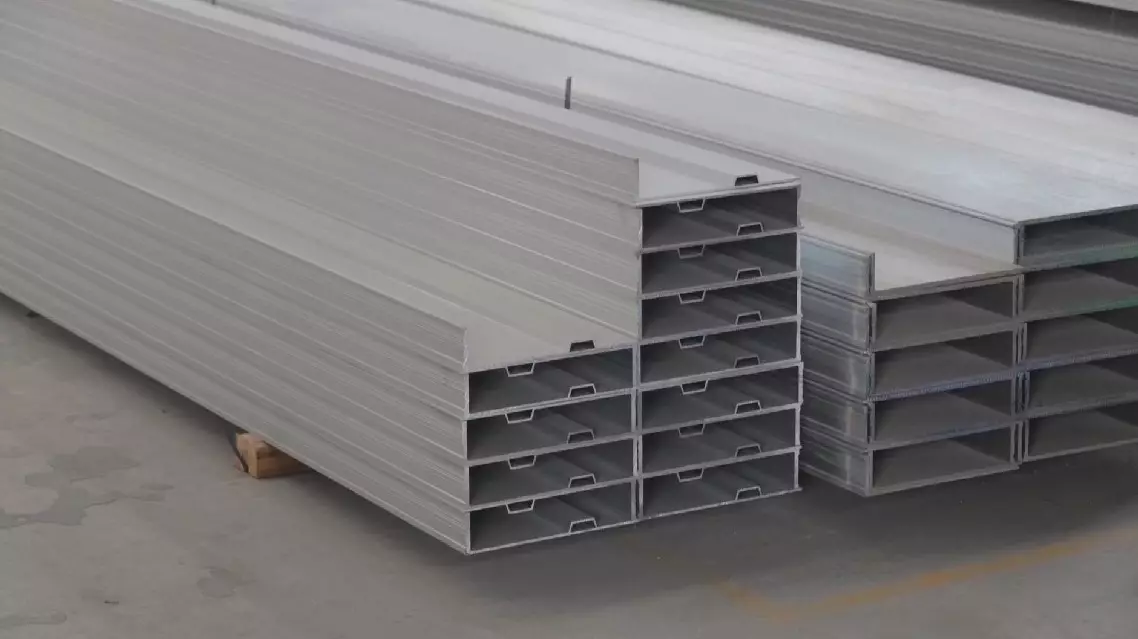
China's aluminum exports surge amid growing global demands

China's push toward a greener future is once again in the spotlight at this year's annual political "two sessions", as lawmakers are reviewing a draft ecological environment code, a significant step toward establishing a comprehensive legal framework for ecological protection.
The draft code was submitted on March 5 to the ongoing fourth session of the 14th National People's Congress (NPC), China's top legislature, for deliberation.
Once adopted, it will become China's second formal statutory code, after the Civil Code, which was adopted in 2020.
The rule of law has been continuously strengthened to support the country's green progress. China already has more than 30 laws related to environmental protection, along with over 100 sets of administrative regulations and more than 1,000 sets of local rules.
The latest legislative move comes amid China's historic gains in ecological conservation over the past decade or so. Championing green development, the country has recorded the world's fastest growth in forest resources and afforestation, led globally in renewable energy development, and achieved one of the fastest national reductions in energy intensity worldwide.
The 1,242-article draft has five chapters, covering areas including pollution control, ecological protection, and green and low-carbon development.
Scholars involved in drafting the legislation say the code goes beyond broad legal principles. It is also designed to address environmental issues that affect people's daily lives.
"Electric vehicles are becoming very common in China. My family has one. We all think it environment-friendly. But have you ever thought about this question: how do we deal with the first generation of EV batteries after they expire a few years later? The same goes for wind turbine blades and solar panels," said Ding Lin, assistant professor of the Renmin University of China.
China's environmental progress has drawn global attention in recent years, from improving air quality to expanding renewable energy. Yet amid geopolitical tensions and economic uncertainty, some observers have questioned whether the country will maintain the same pace of green transition.
"Last year during the COP30, even some friends who are very familiar with China asked me whether China will continue its green development path. I told them we have gradually worked out new policies. We have a very clear direction and goal. In a world full of uncertainties, we are providing the most certainty," said Wang Yi, an NPC deputy from east China's Zhejiang Province and professor of the Chinese Academy of Sciences.
In a country pursuing modernization, taking the time to codify environmental laws sends a clear message: economic growth and environmental protection are not a trade-off to be managed, but a commitment to be upheld. For China, a beautiful environment is not a luxury for the future, it is a right for the present, and a responsibility to the next generation.
"This code reflects China's vision of harmonious coexistence between humanity and nature. It shows how development and environmental protection can move forward together," said Lyu Zhongmei, vice chair of the NPC Environmental Protection and Resources Conservation Committee.
China will accelerate the green transition across the board and cut carbon dioxide emissions per unit of the GDP by a total of 17 percent in the 2026-2030 period, according to a draft outline of the 15th Five-Year Plan (2026-30) for national economic and social development submitted to the NPC for deliberation on March 5.
Chinese lawmakers review draft ecological environment code in major green legislative push