The 44th Gulf Information Technology Exhibition (GITEX) will wrap up in Dubai, the United Arab Emirates (UAE), on Friday after showcasing exciting applications for artificial intelligence (AI) as well as advancements in robotics and vehicles.
As one of the world's three largest IT exhibitions and the biggest computer and electronics show in the Middle East, the expo has attracted over 6,500 companies from more than 180 countries. This edition of the event highlighted a different major theme on each of its five days - tech investment, super AI, cybersecurity, data management and futurism.
The exhibition also expanded its scale this year, occupying over 40 exhibition halls.
The standout highlight was undoubtedly AI, showcased across ten dedicated halls featuring cutting-edge technologies and applications.
Themed "AI in everything," the AI section illustrated the transformative impact of the emerging field across various sectors including sustainable development, healthcare, education, and digital finance, allowing attendees to envision a future where AI is omnipresent.
In a notable exhibit, visitors could take a selfie and input commands to apply various filters using AI.
Myriad Chinese tech companies also made their mark at GITEX, showcasing their latest innovations and injecting vitality into global innovation.
Another standout attraction was a dual-mode flying car, which captivated attendees with its ability to switch from "land mode" to "flight mode" by deploying its arms and rotors, promising a glimpse into the future of urban transportation.

Gulf IT expo to close in Dubai with focus on AI
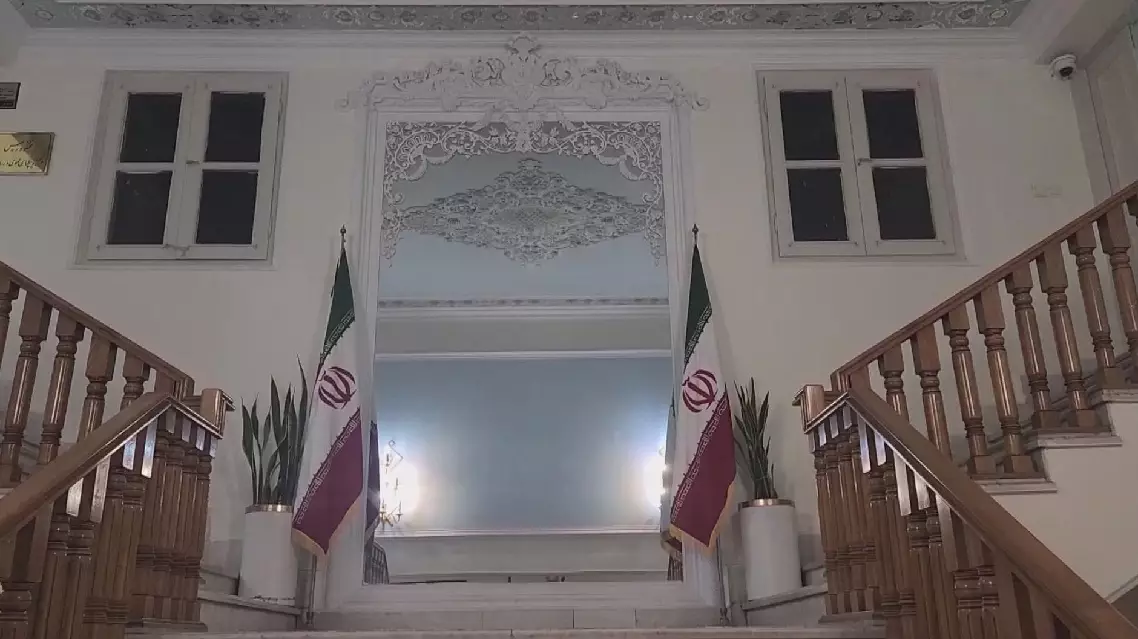
Conveying Iran's conditions for ending the war to Pakistan, as a mediating country, is among the key purposes of Iranian Foreign Minister Seyed Abbas Araghchi's return to Islamabad, Iran's semi-official Tasnim News Agency reported on Sunday.
According to Tasnim, Araghchi's return to Pakistan is not related to nuclear negotiations with the United States. Instead, the foreign minister is expected to discuss bilateral relations with Pakistan, along with other issues such as Iran's enforcement of a new legal system on the Strait of Hormuz, seeking war compensation, guarantees against repeated "aggression by the warmongers," and lifting the U.S. naval blockade.
Araghchi arrived in Islamabad on Sunday afternoon for his second visit since Friday, following a stop in Oman. His brief visit to Pakistan aims to continue consultations with Pakistani officials, it added.
Araghchi is scheduled to visit Russia after Pakistan on the final leg of his regional tour. During his first trip to Islamabad, he met Pakistan's Prime Minister Shehbaz Sharif and Arm Chief Asim Munir.
On Feb. 28, Israel and the United States launched joint attacks on Tehran and other Iranian cities, killing Iran's then-Supreme Leader Ali Khamenei, senior commanders, and civilians. Iran responded with waves of missile and drone strikes targeting Israel and U.S. assets in the Middle East, and tightened control over the Strait of Hormuz, blocking passage by vessels belonging to or affiliated with Israel and the United States.
An April 8 ceasefire was followed by Iran-US talks in Islamabad on April 11 and 12. After the negotiations collapsed, the United States imposed a blockade on the Strait of Hormuz, preventing ships to and from Iranian ports from transiting.
A new round of negotiations had been expected in Pakistan this week, but Iran declined to attend, citing continued U.S. naval pressure and "excessive demands."
U.S. President Donald Trump told Fox News Sunday that he will no longer send delegations to talk with Iran. "If they (the Iranians) want to talk, they can come to us, or they can call us," he said.
Trump said that he has great respect for Pakistan, which had been hosting U.S.-Iranian talks in Islamabad, and that Pakistan will stay involved.
He repeated that Iran cannot have nuclear weapons. "So if they want, they can call us. But again, they know what has to be in the agreement. Very simple: they cannot have a nuclear weapon. Otherwise, there's no reason to meet," said Trump.
Iranian President Masoud Pezeshkian said U.S. pressure and hostile actions are undermining trust and making progress toward renewed talks more difficult, according to a statement from his office early Sunday.
He added that Washington cannot pursue negotiations while increasing pressure on Iran, saying such actions "disrupt the necessary atmosphere" for diplomacy.
Iran's FM conveys conditions for ending war to Pakistan