Over 1,100 exhibitors from 12 countries and regions are showcasing products at the 2024 China Jingdezhen International Ceramic Expo in Jingdezhen, renowned worldwide as the "porcelain capital", in east China's Jiangxi Province.
The five-day ceramic expo opened on Friday. This year's exhibition area has expanded by 33 percent from last year to 140,000 square meters. It includes eight major sections, including international brands, renowned kilns and artistic ceramics.
With an emphasis on integrated development in trade, investment, and culture, the event attracted brands from countries including South Korea, Japan, Italy, Germany and the United States.
"Historically, many excellent works were created after celadon entered Buan from China during the Song Dynasty, especially inlaid celadon, which features etched patterns and patterns formed by filling of depressions, showing an innovative technique that is unique across the world," said Kim Mun Sik, curator of Buan Celadon Museum from South Korea.
Buan, located in Jeollabuk-do, South Korea, was a prominent site for celadon production during the Goryeo Dynasty. The museum features exhibits that highlight the development and techniques of celadon pottery, including inlaid celadon, a signature style of the Goryeo period known for its intricate craftsmanship.
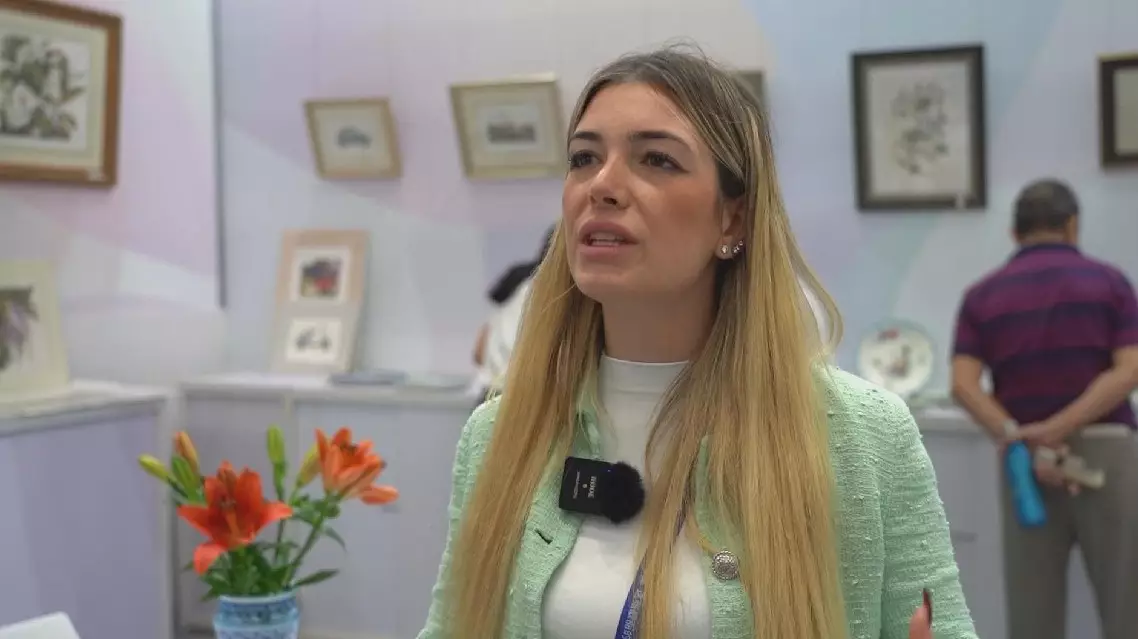
Francesca Masala, an exhibitor from Italy, brought ceramic products from the country's southern regions including Naples and Campania to the expo.
She said it's really important that southern Italy has the chance to introduce itself at the expo, as most relevant enterprises are located in the north.
"Every day, come by a lot of people. Every time they see Italy, they're like 'Oh my god, Italy!' And they come and see, and they learn something new. So I think that's really good," she said.
Apart from international exhibitors, many Chinese exhibitors and visitors are also at the event.
"What impressed me most is that the expo is showcasing many porcelain products for daily use. Over 10 years ago, most porcelain products I saw were artworks," said a visitor named Meng Liyun.
To foster innovation, the expo has also enlarged its zone for entrepreneurship and innovation to provide a platform for young artists and local entrepreneurs.
In addition to the main expo, a series of high-profile events will be held, including forums on ceramic culture heritage and innovation, and art exhibitions.
In September, the online platform for Jingdezhen ceramic trading operations center based in Shenzhen was officially launched. The platform is set to evolve into a ceramic trading platform worth over 10 billion yuan in the next three to five years.
Ye Fengchun, deputy director of the Jingdezhen development and reform commission, noted during the event that last year, the total output value of Jingdezhen's ceramic industry surpassed 86.12 billion yuan (12.1 billion U.S. dollars).
First held in 2004, the expo, formerly the China Jingdezhen International Ceramic Fair, has become a significant platform to showcase the world's finest porcelain.
Over the past 20 years, the event has drawn around 2,500 overseas enterprises from 49 countries and regions, according to the organizers.
Ceramic expo promotes cultural exchange in China's "porcelain capital"