China's foreign trade has seen robust growth with an expanding network of shipping routes offering freight services to more parts of the world.
The country's goods export and import totaled 32.33 trillion yuan (about 4.55 trillion U.S. dollars) in the first three quarters of 2024, up 5.3 percent year on year, the latest customs data showed. This upward momentum is driven by an ever-expanding international logistics network that ensures efficient shipments and broad reach.
Yantian Port in Shenzhen City handles over one-third of the foreign trade volume in south China's Guangdong Province and makes up more than a quarter of the nation's export to the U.S.
Port managers recently unveiled a new shipping route map, highlighting the addition of 16 new routes in the first nine months of this year.
"The new routes mainly cover North America, South America, Australia and the Mediterranean region," said Pang Ning, deputy general manager of the commerce department of Yantian International Container Terminal.
That includes a dedicated route from Shenzhen to Los Angeles established in the second quarter to deal with the surge in cross-border e-commerce shipments, reducing clients' stocking periods to just 3-4 days.
"Our new route accommodates the rapid growth of cross-border e-commerce business between the Greater Bay Area and North America. Client shipments have risen from 30-50 containers per week to 50-80 containers per week. Additionally, we have added six new routes across South China," said Mao Wenjun, deputy general manager and marketing director of COSCO Shipping Lines South-China Company.
Guangdong has launched another six projects this year under the Guangdong-Hong Kong-Macao Greater Bay Area (GBA) Combined Ports initiative, which connects two different ports within the GBA and integrates the whole trade process of ports, customs, logistics, enterprises and finance, significantly speeding up delivery times.
"Yantian Port's routes under the 'Greater Bay Area Combined Ports' program have rapidly expanded due to strong demand, now totaling 14 routes. In the first three quarters, cargo handled under this model reached 12,000 containers, 4.3 times that of the same period last year," said Huang Wei, deputy chief of the Ship Supervision Section No.1 at Dapeng Customs, a branch of Shenzhen Customs.
In the first three quarters, China recorded trade growth with over 160 countries and regions, with export to ASEAN countries and Belt and Road partner countries rising by 9.4 percent and 6.3 percent, respectively. Emerging markets now account for nearly 64.5 percent of its total import and export.
In the first three quarters, China maintained stable trade with major traditional markets while strengthening ties with emerging markets, leading to continuous improvements in quality and steady growth in scale, making a positive contribution to national economic development," said Xiao Lu, deputy director of the Ministry of Commerce's Department of Foreign Trade.
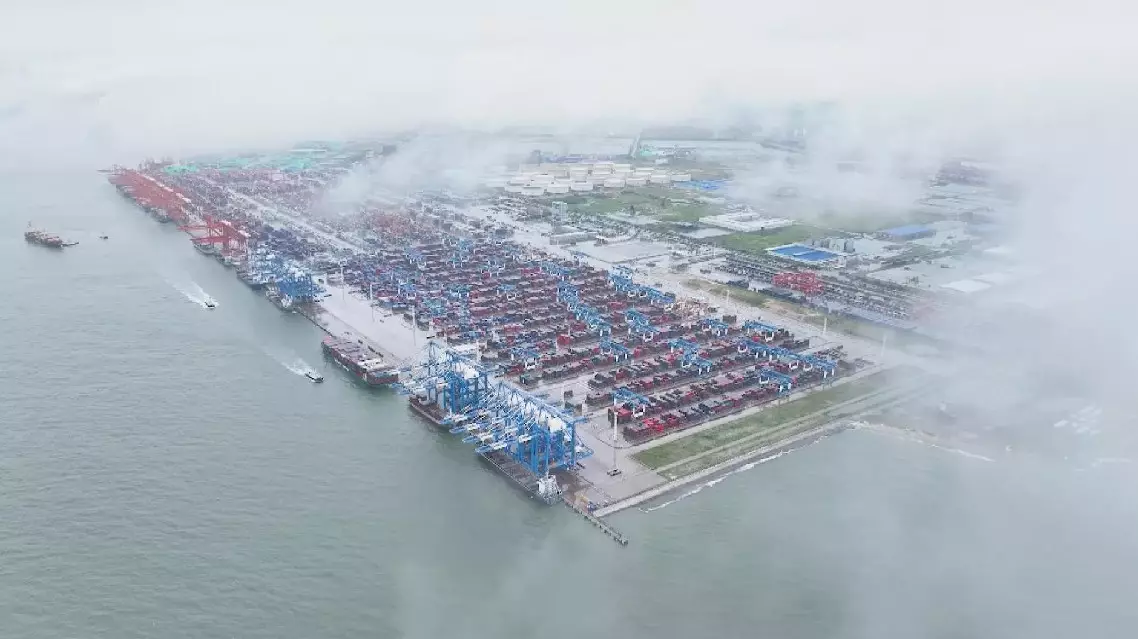
China's foreign trade grows as shipping network expands