Skip to Content Facebook Feature Image

Chinese researchers develop "lunar soil bricks" for future lunar base construction

China

China

China

Chinese researchers develop "lunar soil bricks" for future lunar base construction

2024-10-21 17:54 Last Updated At:22:07

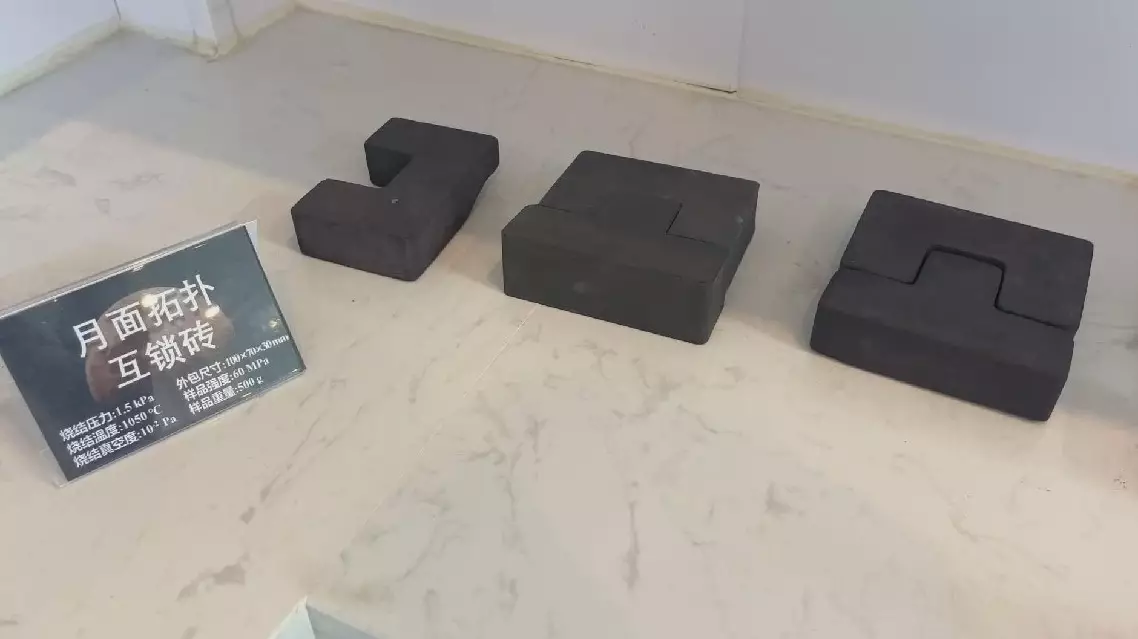
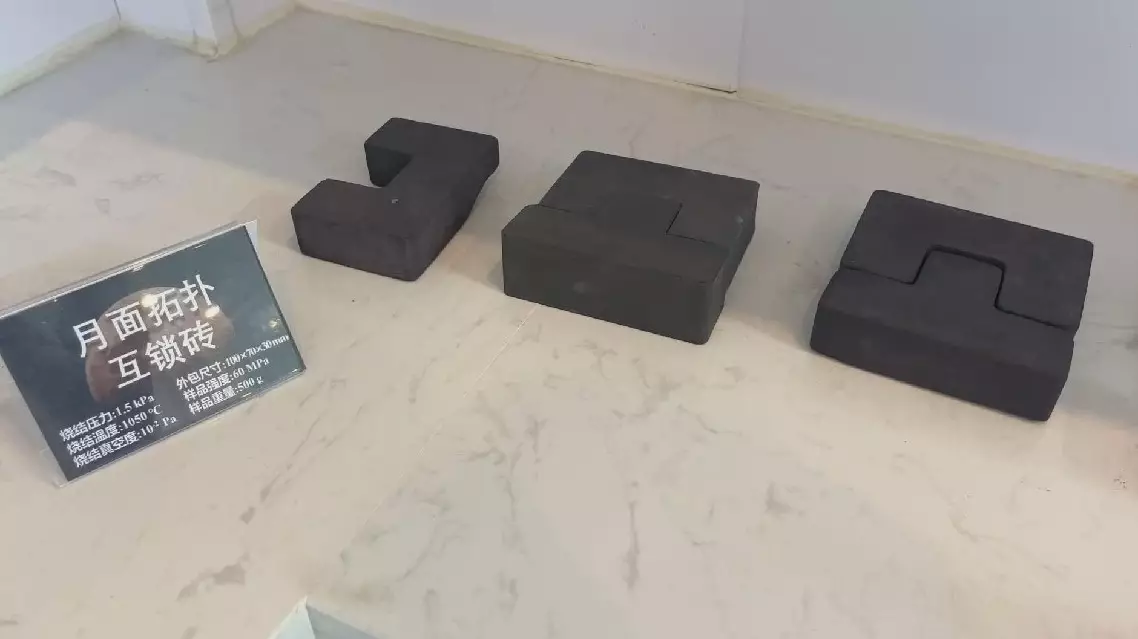
Chinese researchers have developed bricks from a material that has a similar composition to lunar soil, with the hope that they can be used to build a lunar base in the future.

"These two bricks in my hands are called simulated lunar soil bricks. They are made from lunar soil simulation, which is sintered to form such bricks," said Zhou Cheng, a professor at the National Center of Technology Innovation for Digital Construction and the Huazhong University of Science and Technology.

The "lunar soil bricks" have a similar density to that of ordinary bricks but are more than three times stronger than standard red bricks or concrete bricks.

Temperatures on the moon surface exceed 180 degrees Celsius during the lunar day and would drop to minus 190 degrees Celsius at night.

In addition, significant levels of cosmic radiation and many micrometeorites would also hit the surface of the moon as it doesn't have atmospheric protection, and there is frequent moonquake activity. All of these will place demanding requirements on the mechanical, thermal and radiation resistance properties of lunar surface construction materials.

"What we care about the most is its mechanical and thermal performances, including heat preservation and insulation effectiveness, as well as its ability to withstand cosmic radiation. The moon has a vacuum environment, so there is significant cosmic radiation," Zhou said.

The bricks will be sent to China's space station aboard the Tianzhou-8 cargo spacecraft to verify their mechanical and thermal performance, as well as their ability to withstand cosmic radiation. The first lunar brick is expected to return to the Earth by the end of 2025.

The total planned exposure period for the bricks is three years. So every year, researchers will return one sample panel exposed on the space station to the Earth and conduct related experiments, according to Zhou.

The research team also designed the bricks in two shapes: columnar and flaky. The pillar-shaped lunar soil bricks are primarily intended for mechanical testing, while the larger-exposed flakes are used to assess thermal and radiation effects.

In addition to their various forms, these bricks are made from five simulated compositions of lunar soil and undergo three distinct sintering processes, providing more accurate scientific data for the construction of future lunar bases.

China unveiled a national mid-term to long-term development program for space science on Tuesday, outlining a roadmap for the development of space science in China through 2050. The international lunar research station, which was initiated by China, will be constructed during the program's second phase from 2028 to 2035.
Chinese researchers develop "lunar soil bricks" for future lunar base construction
Chinese researchers develop "lunar soil bricks" for future lunar base construction

Chinese researchers develop "lunar soil bricks" for future lunar base construction

Chinese researchers develop "lunar soil bricks" for future lunar base construction

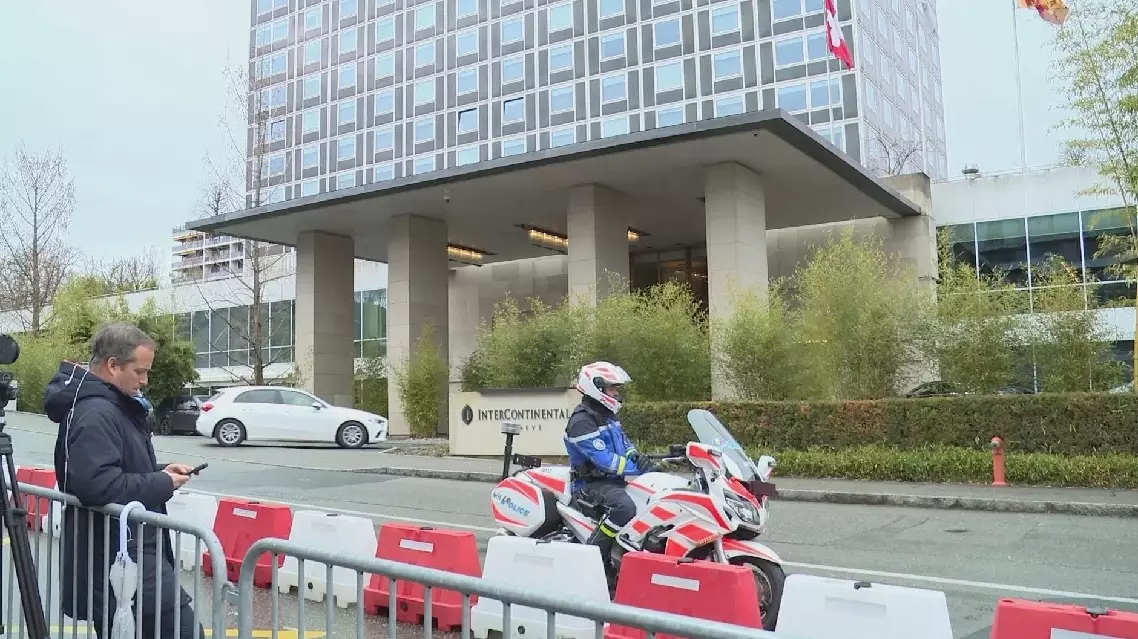
Days before the fourth anniversary of the start of the Ukraine-Russia conflict, the two-day talks among Ukraine, the United States and Russia, marking the third round of trilateral talks this year, concluded in Geneva on Wednesday with no breakthrough on key issues.

The first-day talks lasted six hours in both bilateral and trilateral formats, while the second-day talks lasted two hours, Russian media reported.

Ukrainian President Volodymyr Zelensky said that no agreement on key issues was reached, according to media reports.

"We can see that some groundwork has been done, but for now, positions differ because the negotiations were not easy," Zelensky told reporters on Wednesday.

Zelensky also told Ukrainian media that monitoring of a ceasefire with U.S. participation, as well as sensitive political issues such as Donbas and the Zaporizhzhia Nuclear Power Plant, were all discussed during the talks.

Ukraine's chief negotiator Rustem Umerov, also Ukraine's National Security and Defense Council Secretary, said that the work was intense and subjective.

"There is progress, but no details at this stage," he wrote in a Facebook post.

Umerov said on Facebook that the next stage is to reach the required level of consensus to make well-known decisions for the presidents' consideration. He emphasized that the ultimate goal remains unchanged: a just and sustainable peace.

A separate meeting with representatives of the United States and European countries, including France, Britain, Germany, Italy and Switzerland, was also held on Tuesday, Umerov wrote in a Facebook post on Tuesday.

Describing the talks as difficult but business-like, Russia's presidential aide Vladimir Medinsky noted that a new round of negotiations will be held in the near future. No documents were signed during the talks, RIA Novosti reported Wednesday.

The Russian Foreign Ministry announced on Wednesday that the Russian delegation had clear instructions to act within the framework of understanding from the meeting between Russian President Vladimir Putin and U.S. President Donald Trump that was held in the U.S. city of Anchorage, Alaska in August last year.

Two previous rounds of trilateral talks, held in Abu Dhabi on Jan 23-24 and Feb 4-5, did not resolve key territorial issues.

The latest talks focused on key issues including a ceasefire mechanism, security guarantees, humanitarian issues and territorial disputes.

Analysts said that although some limited progress was achieved, the parties' wide gaps on key issues make a major breakthrough in the near term unlikely.

Latest round of trilateral talks on Ukraine ends without agreement on key issues

Latest round of trilateral talks on Ukraine ends without agreement on key issues

Recommended Articles