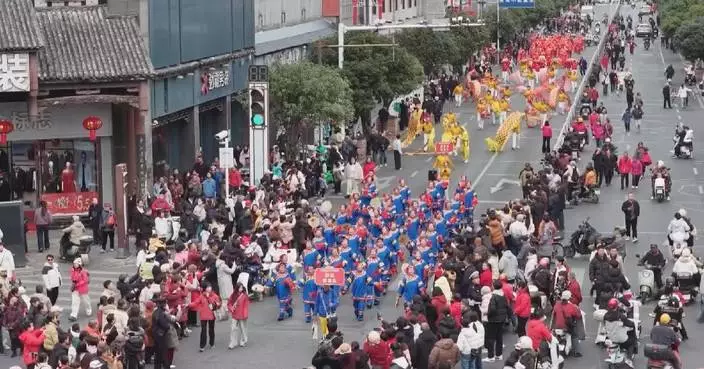
Families in Tibetan-inhabited areas in southwest China's Sichuan Province are celebrating the Tibetan New Year, or Losar, with traditional rituals and reunion dinners.
According to the Tibetan calendar, the Tibetan New Year in 2026 falls on Feb 18, or Wednesday.
Right before the new year, a traditional horse racing event, symbolizing progress and good fortune, took place in Sichuan's Ganzi Tibetan Autonomous Prefecture.
Against the majestic backdrop of snow-capped mountains, riders showcased their speed and skill, highlighting the unique charm of Tibetan culture.
"I'm so honored that I took first place. People are very happy and hope that more events will be held," said Li Wangjie, the horse racing champion.
Well past midnight on the eve of the Tibetan New Year, blessing ceremonies begun, with many on their way to collect sacred water, seeking good fortune for the year ahead.
"This tradition has lasted for over a century. Generations of our ancestors have observed this tradition," said You Zhumu, owner of Luwang Travelers' Home.
In the morning, the family dressed up in traditional Tibetan robes and adorned themselves with jewelry.
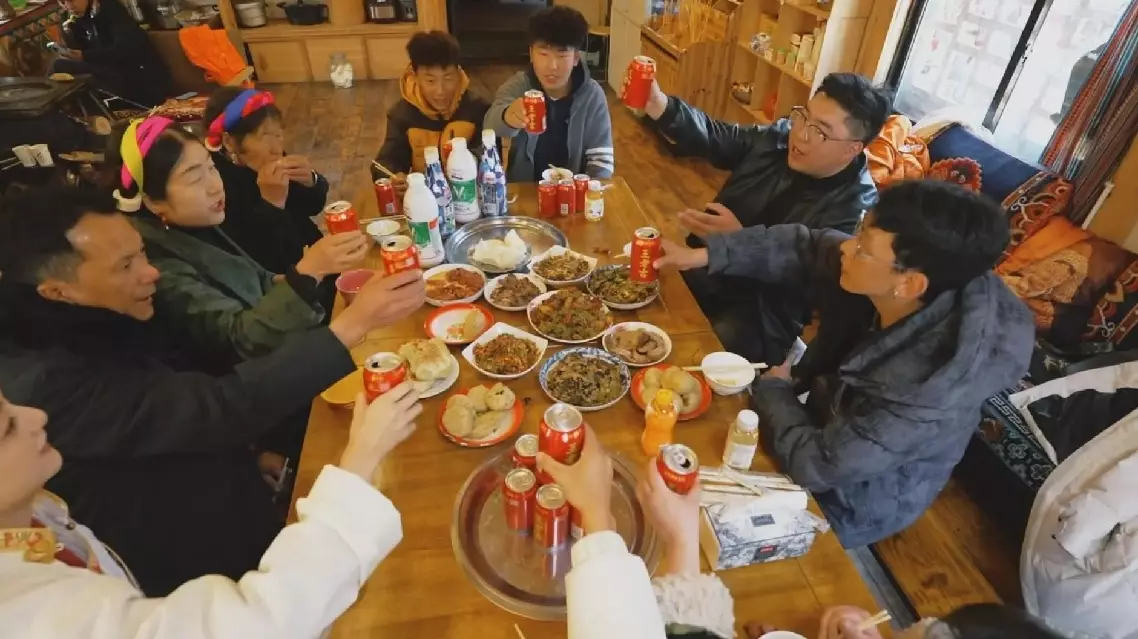
Meanwhile, many were busy making preparations for the reunion lunch. The highlight of the meal is a dish that symbolizes reunion -- steamed buns.
"During family reunions, we enjoy traditional steamed buns, which are also given as gifts to relatives and friends. The fillings include potato, yak meat and mushrooms," said You.
"We invite our relatives to celebrate the New Year with us. We also welcome travelers who come to spend the holiday together with our family," said Luwang Jiangze, another owner of the travelers' home.
In the afternoon, the air was filled with high-pitched mountain songs and the lively Guozhuang dance. Men and women, young and old, came together to celebrate the holiday and the spirit of reunion.
Tibetan families in Sichuan celebrate ethnic New Year with time-honored rituals
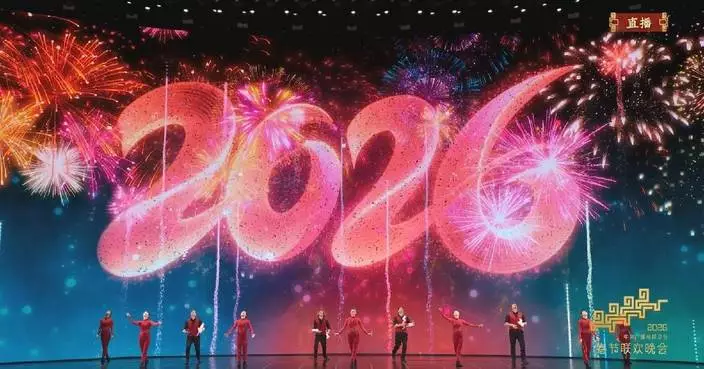
As another dazzling China Media Group (CMG) Spring Festival Gala drew to a close on early Tuesday morning, sign language performers infused the closing song "Unforgettable Tonight" with heartfelt emotion, allowing viewers with disabilities to share in the celebration and experience every touching note alongside millions of families across China.
For four decades, the final moments of the gala have belonged to "Unforgettable Tonight." For generations, the eve of the Chinese New Year isn't complete until its familiar melody fills living rooms. "Unforgettable Tonight" is not just a song but a cherished tradition that carries the weight of a nation's shared memories and hopes.
Inside a modest rehearsal room, the magic of "barrier-free broadcasting" came alive, as the production team worked to ensure that the visually and hearing-impaired could experience the full energy and emotion of the gala, just like everyone else.
"It might look like sign language is just a set of gestures. But it's so much more. It includes facial expressions, the dynamics, and the tempo of each movement. Every detail expresses the rhythms, melodies, and emotions in the music. As you can see, for this year's 'Unforgettable Tonight' with a lighter tone, the performers made it look effortless, swaying gently as they signed. But if the style changes, so does our signing. We can make it powerful too," said Zhao Zhihui, head of barrier-free broadcasting for the gala.
Last year, the team was challenged by an operatic version of the song, and the sign language mirrored the grandeur: delivered with robust energy and the muscular grace of Chinese opera. But in 2026, the approach was intentionally more intimate. Performers strove to capture even the subtlest change in mood.
"When it was the opera version, our signing was powerful and vigorous, capturing the strength and depth of traditional Chinese opera. This year, we wanted every delicate shift on stage to be fully shared by our visually and hearing-impaired audiences," Zhao shared.
During rehearsal, as the melody of "Unforgettable Tonight" flowed through the room and interpreters began their own choreography, the song revealed a beauty beyond sound and lyrics. Their hands, faces, and movements became a new language of expression, resonating with everyone present.
"It's not really about singing a song. It's about channeling all the emotions we've built up through so many years of the Chinese New Year. The gestures required for this song are simple, just a few basic movements. But every time you perform them, it feels different. Especially the final sign, the emotions are always deeper. Because that moment carries several months of hard work. When you finally succeed and think about 'Unforgettable Tonight,' you realize, what is 'tonight'? It's actually the past months of preparation and effort, all leading to that one final moment when we share the Gala's wonderful performances with every single member of our audience," said Zhao.
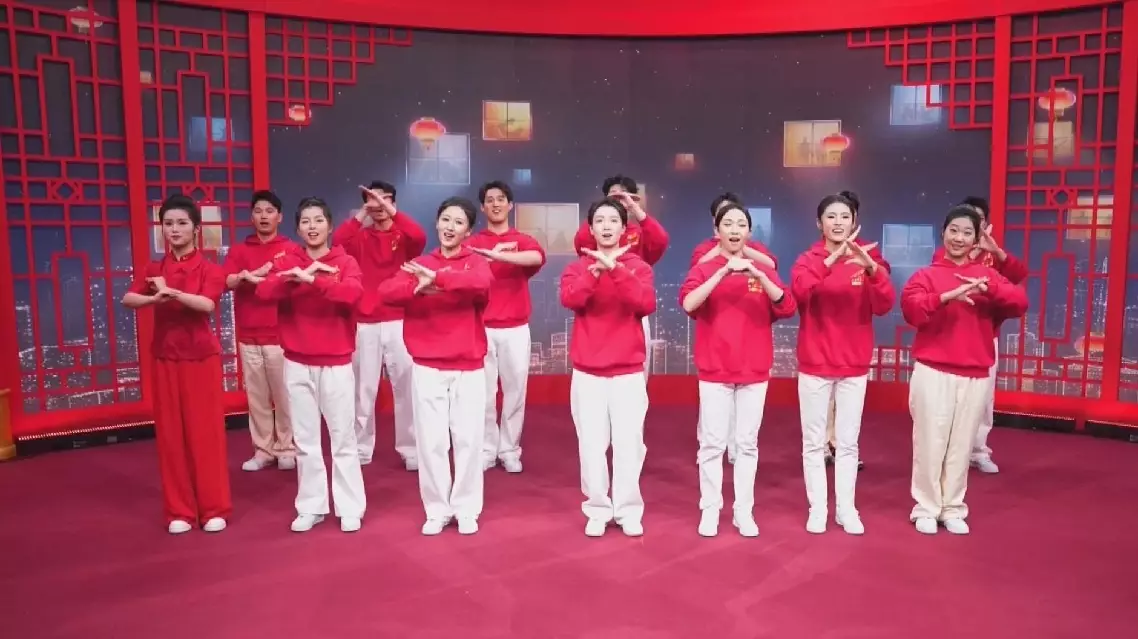
Sign language performers bring fresh life to beloved song at Spring Festival Gala