The mesmerizing performances and astonishing abilities of Chinese-made humanoid robots during the 2026 China Media Group (CMG) Spring Festival Gala has not only thrilled global audiences but also highlighted the remarkable transformation and rate of development of the country's rapidly-evolving robotics industry.
The gala delivered a more than four-hour-long feast of captivating cultural performances and entertaining variety acts to usher in the Chinese New Year, which arrived at midnight Tuesday.
The long-running gala show -- which has been recognized by the Guinness World Records as the most-watched annual television program on the planet -- has increasingly taken on a high-tech feel in recent years and the appearance of advanced AI-embodied robots during various segments was one of the major talking points to emerge from this year's television extravaganza.
Many observers note the Gala was not just a festive celebration, but also a key window into the accelerating pace of China's technological evolution, while social media users praised the robot performances as unexpected, impressive, and a glimpse of the future.
Last year, a group of humanoid robots took to the gala stage to perform a rather sedate traditional dance, with some simple handkerchief twirling. This year, however, the change was palpable, as more versatile robots executed a series of impressive martial arts stunts and synchronized Kung Fu moves in a breathtaking, high-tempo stage segment.
Wang Xingxing, founder of Unitree Robotics, the firm responsible for the captivating display, said that painstaking preparations had gone in to delivering the routine, and highlighted just how much faster and more dexterous the bots have become over the last 12 months.
"The timing of each move must be precise to within hundredths of a second, perfectly synchronized with the music. This is just like human performers dancing or doing martial arts to a beat. Now we can have robots run on stage, perform, and then run to the next spot. Their speed has increased by an estimated five to 10 times over last year," said Wang.
Meanwhile, robots created by the Beijing-based Noetix Robotics company also starred in a special comedy skit in which they showed off their unique backflipping party trick.
"Back in March, we built the world's first backflipping robot. Now, after major upgrades, it flips and instantly stabilizes, a technical breakthrough. Before the Gala, it underwent over 30 extreme tests in a full-scale training stage," said Yi Ting, Noetix Robotics' gala program director.
China now holds more than 32,000 humanoid robotics patents, about 68 percent of the global total, with core component localization at roughly 75 percent.
Data from Qichacha, a leading Chinese platform offering company information inquiry services, shows that there are currently over 2,000 existing patents related to humanoid robots in China.
Since 2021, 1,620 patent applications related to humanoid robots have been filed in China, and 800 were recorded in 2025 alone, according to the platform, highlighting the huge growth in the last year alone.
The World Robotics 2025 Report shows that China has been the world's largest industrial robot market for 11 straight years and now holds more than 190,000 valid robotics patents, nearly two thirds of the global total.
From AI algorithms and high-end components, to motion control systems and embodied intelligence models, the industrial chain behind these machines reflects broader advances in China's technology base.
According to a research report by the China Academy of Information and Communications Technology in 2024, it is estimated that China will have more than 100 million humanoid robots in use after 2045, entering various industries, creating a total market value of approximately 10 trillion yuan.
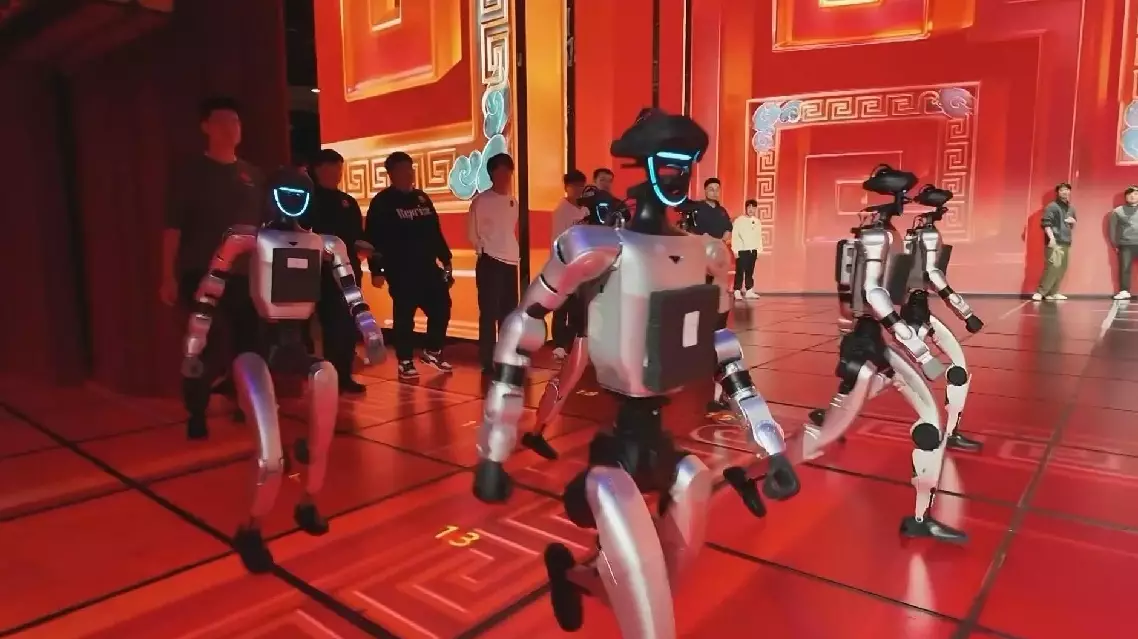
China's rapid robot revolution highlighted as humanoids steal show at Spring Festival Gala