Skip to Content Facebook Feature Image

BRICS helps members enhance roles in global governance: former World Bank deputy head

China

China

China

BRICS helps members enhance roles in global governance: former World Bank deputy head

2024-10-24 00:50 Last Updated At:01:17

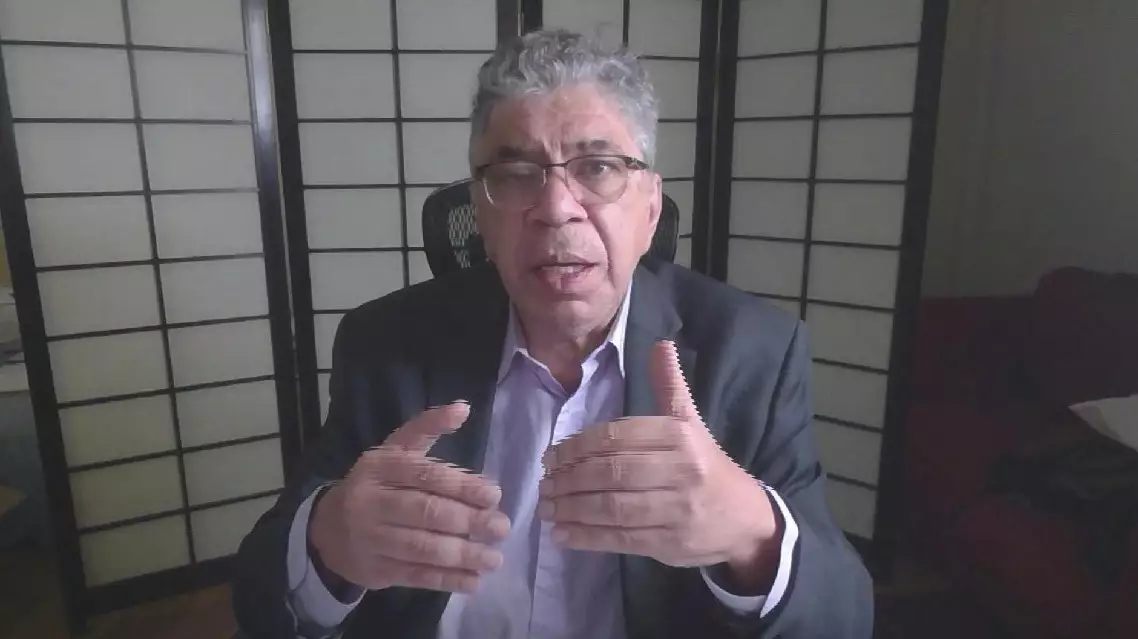
The BRICS mechanism has enabled member countries to enhance their roles in global governance and increase their "bargaining power" on the world stage among international institutions amid a "reformulation" of the global order, according to a former vice president of the World Bank.

Brazilian economist Otaviano Canuto, also a senior fellow at the Policy Center for the New South, shared his expectations on the potential outcomes of the ongoing 16th BRICS Summit, which is being held in Russia's Kazan City from Tuesday to Thursday, in a recent interview with the China Global Television Network (CGTN).

Canuto highlighted the notable results BRICS has achieved based on his experience working as a senior advisor during his tenure at the World Bank.

"When it was created in 2009 and then joined by South Africa in 2010, the idea was mostly to reinforce collectivity, the bargaining power of the constituent countries, their voice in the inevitable reformulation, reorganization of multilateral institutions and it worked well in the sense that all of the BRICS countries managed to obtain a higher share of capital of the World Bank, for instance, as well as higher shares of the quotas of the IMF," he said.

Canuto also noted how BRICS went further through the establishment of the New Development Bank (NDB), which was jointly established in Shanghai by BRICS members in 2014 to mobilize resources for infrastructure and sustainable development projects in emerging market economies.

"There is also currency sharing arrangement that is not a substitute to the IMF, but it adds to other forms of cooperation among countries sharing reserves," he said.

The NDB has, since its launch, invested nearly 35 billion U.S. dollars in sectors such as clean energy and energy efficiency, transportation infrastructure, water resources and sanitation, and digital infrastructure, playing a positive role in improving global economic governance.
BRICS helps members enhance roles in global governance: former World Bank deputy head

BRICS helps members enhance roles in global governance: former World Bank deputy head

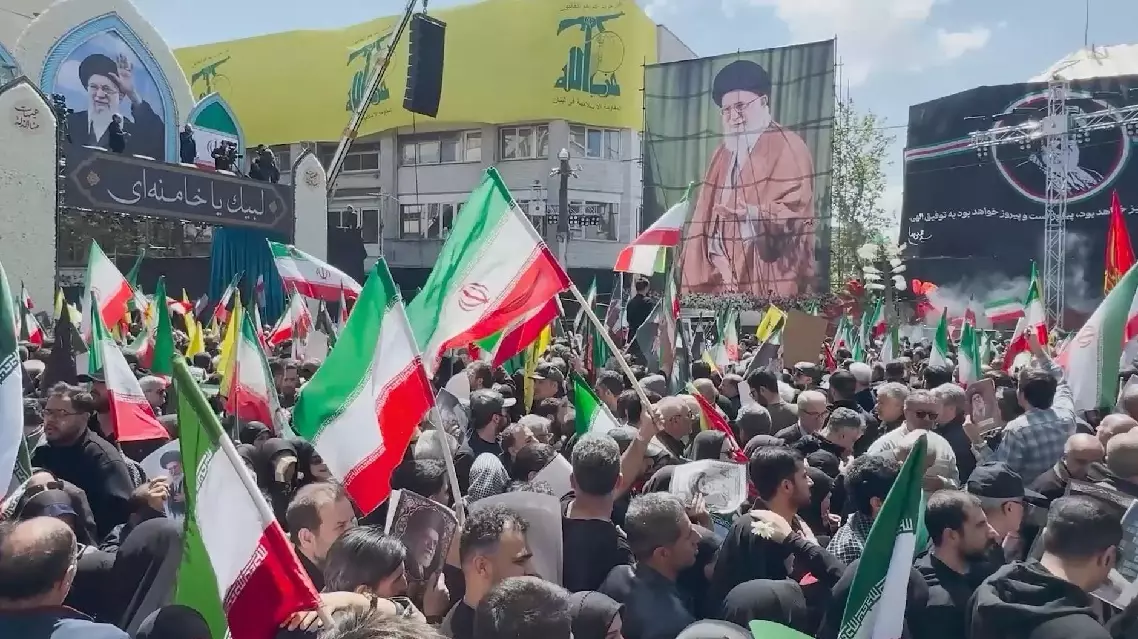
Large crowds gathered in Iranian capital of Tehran on Thursday to mark the 40th day since the killing of the country's former Supreme Leader Ayatollah Ali Khamenei, with grief and tension shaping the mood in the capital as the traditional mourning period came to its close.

The 40th day of mourning is a significant moment in Iran, traditionally marking the end of a period of national grief.

Ali Khamenei was killed on February 28 minutes after the outbreak of the U.S.-Israeli war with Iran. Iranian state media confirmed his death the following day, and authorities announced 40 days of public mourning.

Ceremonies began early in the day, with people gathering at Jomhouri Square before moving toward the site of the killing. Many carried flags and portraits of Ali khamenei, saying that they came not only to mourn but also to show their loyalty and respect.

"I am here to show respect for our late supreme leader, as it is the 40th day of his death. I appreciate what he has done, and for the love of our country. I am ready to die for my country," said Fateme Zahra, a Tehran resident.

Government officials also joined the ceremonies, saying that the turnout demonstrated unity and support for the new leadership.

"The large crowds here show that they remember their martyred supreme leader, and that they pay homage to the new leadership. They will stand until the end," said Mohammad Eslami, head of Iran's Atomic Energy Organization.

Despite Khamenei's death, local political analysts believe the political system in Iran remains stable.

"In the Iranian constitution, the leader is the commander-in-chief. So what you see is the result of a system he set up as the commander-in-chief," said Foad Izadi, a political analyst at the University of Tehran.

The commemorations came amid a fragile two-week ceasefire with the United States, leaving the coming weeks critical for Iran's future.

Iran marks Ali Khamenei 40th day amid fragile ceasefire with US

Iran marks Ali Khamenei 40th day amid fragile ceasefire with US

Recommended Articles