The U.S. dollar weakened in late trading on Thursday.
The dollar index, which measures the greenback against six major peers, dropped by 0.33 percent to 98.819 at 3 p.m. (1900 GMT).
In late New York trading, the euro increased to 1.1710 dollars from 1.1683 dollars in the previous session, and the British pound was up to 1.3446 dollars from 1.3415 dollars in the previous session. The U.S. dollar bought 158.98 Japanese yen, higher than 158.51 Japanese yen of the previous session. The U.S. dollar declined to 0.7904 Swiss francs from 0.7914 Swiss francs, and it fell to 1.3822 Canadian dollars from 1.3849 Canadian dollars. The U.S. dollar lost to 9.2799 Swedish kronor from 9.3069 Swedish kronor.
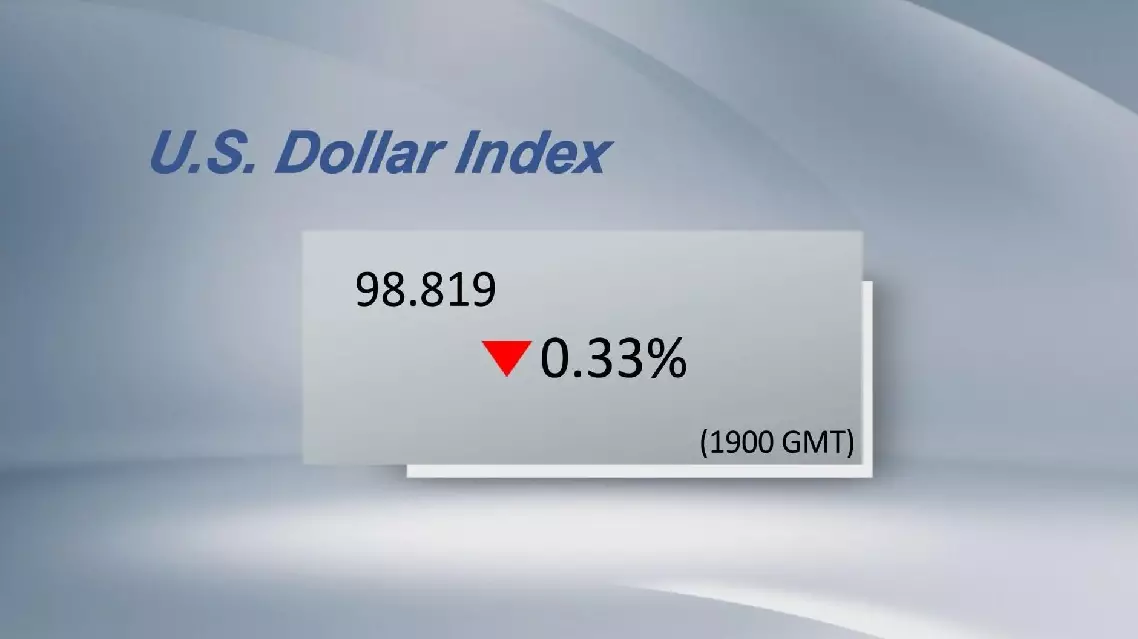
U.S. dollar ticks down
At least 8,000 or more remains are still buried in the rubble in Gaza Strip, and desperate local residents are appealing for international assistance to recover the dead and deliver humanitarian aid to the survivors.
Around half the remains recovered from Gaza City's rubble this month were women and children, the head of the UN Human Rights Office in the Occupied Palestinian Territory, Ajith Sunghay, said on Tuesday.
It is estimated that at the current pace, recovering those still buried in the rubble could take more than a decade.
Sunghay said that Israel has been obstructing excavation and forensic work, making identification harder and risking the loss of evidence.
"The search efforts faced numerous obstacles, including a lack of resources, the Israeli blockade, and the difficulty of official institutions in responding to these accidents and disasters," said Aref Abdul Fattah, a local security officer.
"The civil defense rescue teams in the Gaza Strip are working hard to recover bodies from under the rubble. They have made tremendous efforts. About 8,000 bodies under the rubble are buried beneath more than 300 buildings in Gaza. Rescue workers are cooperating with the International Committee of the Red Cross to search for the victims under the debris. It is exhausting. This is economically, physically, and mentally draining, especially for the civil defense rescue workers. Because of this, they have made enormous efforts on the ground," said Mahmoud Bassal, a civil defense spokesman.
In Islam, burying the deceased is a sacred communal obligation that must be carried out with dignity and care. That is why Gazans are going to extraordinary lengths to recover the bodies of the victims.
"This is one of the most important matters in the lives of Gazans. Their beliefs and Islamic faith urge them to honor the dead by burying them," Aref said.
"Burying the dead is a very important matter, and this, of course, is among the values of our faith," said Bassal.
Calling on Israel to halt the war and destruction and allow aid into the territory, Gazans hope that the international community and relevant institutions will help recover the victims buried beneath the rubble.
"The support of the international community and relevant institutions is crucial, as it helps preserve evidence and confirm identities,"said Bassal.
"We hope to end the war and destruction, and for the Israeli army to withdraw from the Gaza Strip and open the border crossings, so that aid can enter and construction materials can be brought in. In this way, we can rebuild our homes and return to our homeland, so that we can live with dignity on this land," said Tareq Ghanem, a refugee camp representative.
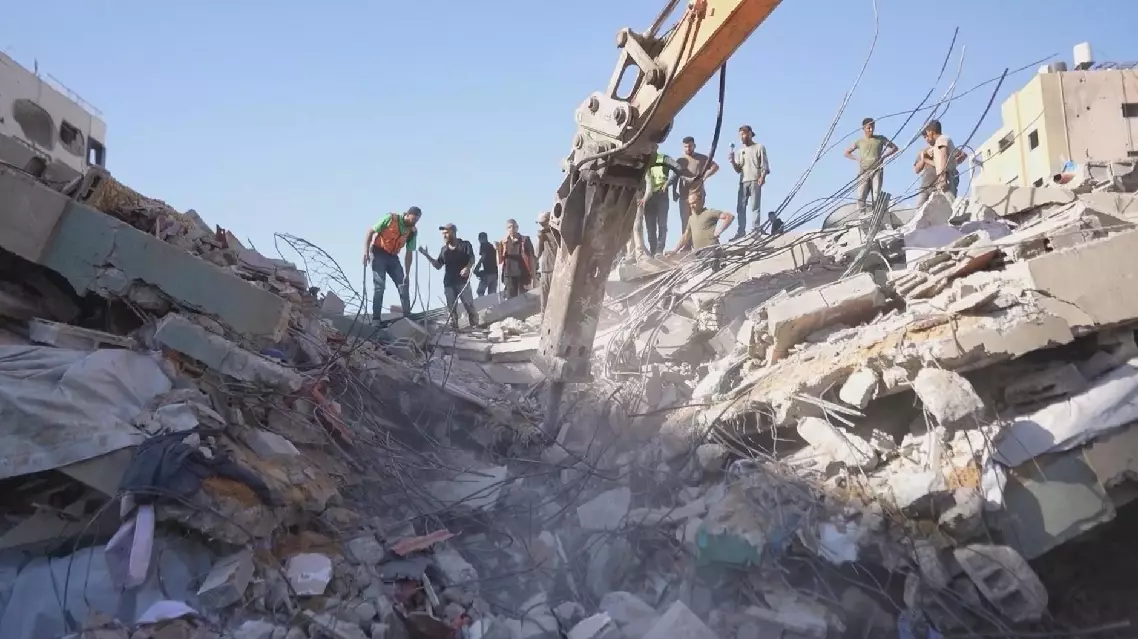
Gazans call for int’l assistance as at least 8,000 bodies still under rubble