Skip to Content Facebook Feature Image

China’s industrial economy sees steady growth in first 3 quarters: officials

China

China

China

China’s industrial economy sees steady growth in first 3 quarters: officials

2024-10-24 14:04 Last Updated At:14:37

China's industrial and information economy remained stable in the first three quarters of the year, with the industrial structure constantly improved, officials said at a press conference in Beijing on Wednesday, expressing confidence in meeting the country's annual targets.

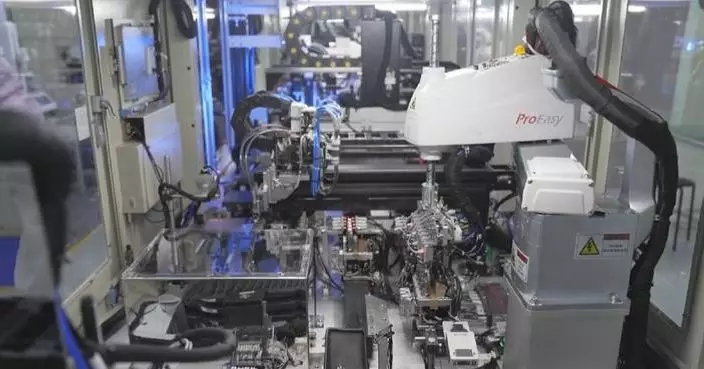
Equipment manufacturing and high-tech manufacturing industries saw rapid growth in the period, with their added value accounting for a higher proportion of the total added value of industrial enterprises above the designated size than the annual figure of last year.

Industrial enterprises above the designated size refer to industrial enterprises with annual revenue from principal activities reaching or above 20 million yuan (about 2.8 million U.S. dollars).

Meanwhile, industrial investment nationwide maintained double-digit growth for eight consecutive months, official data showed.

"The recent adoption and implementation of a series of policies to boost the economy will continue to unleash the impetus for industrial upgrading, the potential of residents' consumption, and the vitality of business entities. We are confident in achieving the annual targets," said Zhao Zhiguo, chief engineer of the Ministry of Industry and Information Technology (MIIT).

Next, multiple measures, including preferential trade-in and tax policies, will be taken to stimulate auto consumption, Zhao told reporters.

"We will launch another batch of pilot zones to fully electrify vehicles in the public sector, and provide guidance for the development of new energy vehicle battery replacement models. A regulation on the management of access to auto production will be rolled out to improve the dynamic management mechanism, as some are coming in while others are going out of the list of companies with access to auto production," Zhao said.

According to the ministry, the national industry-finance cooperation platform has helped enterprises raise more than one trillion yuan (about 140 billion U.S. dollars).

In this year alone, the platform has helped enterprises raise around 290 billion yuan (about 40.7 billion U.S. dollars), up 40.7 percent year on year, the latest data showed.

"We will step up efforts to issue policy documents on financial support for new industrialization to channel more financial resources into sci-tech innovations, advanced manufacturing industries, green development, and small and medium-sized enterprises," said Tao Qing, director of the Operation Monitoring and Coordination Bureau of the MIIT.
China’s industrial economy sees steady growth in first 3 quarters: officials
China’s industrial economy sees steady growth in first 3 quarters: officials
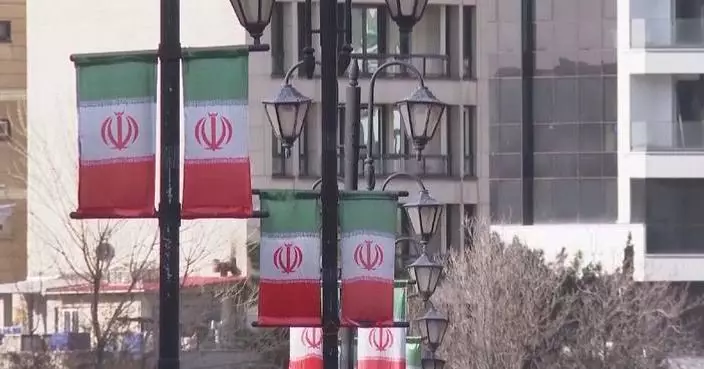
The Iranian government is focusing on public concerns and maintaining stable supplies of essential goods amid recent protests, Iranian President Masoud Pezeshkian said in a televised interview on Sunday.

In the city of Karaj, northwest of the capital Tehran, daily life has largely continued as normal. A video filmed by a local resident on Sunday shows food stores open and grocery shelves fully stocked.

"This is the block near my home, and there are some food stores here. Daily life continues here. Last night we did not see many protests in Karaj. Right now the city is very safe. This is a grocery store close to my home. All the food is available; nothing is in shortage. Here are noodles and different types of beans. Here are dairy products, cheese, and yogurt. I also checked other grocery stores and didn't see any shortages. Everything is available," said local resident Ali Reza.

Iranian officials have described recent disturbances as acts orchestrated by the "enemy," including some carried out by well-trained and armed "terrorists." The incidents have caused casualties among security personnel and civilians, as well as property damage.

The Secretary of Iran's Supreme National Security Council Ali Larijani has directed authorities to severely punish the "terrorists."

Meanwhile, Iran's police chief Ahmad-Reza Radan said on Sunday that the police had raised alert levels and arrested several leaders of the troublemakers during the operations on Saturday.

President Pezeshkian noted in the interview that the normal demands of the Iranian people are reasonable and justified, but they must realize that triggering riots and carrying out terrorist acts are the enemy's attempts to undermine the country. He urged the public to remain vigilant.

Also on Sunday, Iranian Parliament Speaker Mohammad Baqer Qalibaf warned that Tehran would regard U.S. and Israeli bases and facilities in the Middle East as "legitimate targets" if Washington takes military action against Iran. His remarks followed media reports saying U.S. President Donald Trump is "seriously considering authorizing a strike" against Iran.

Iranian state media reported that at least 109 members of Iran's security forces have been killed in clashes since the protests began 14 days ago. Meanwhile, human rights groups based outside the country said the number of protesters killed has exceeded 200, though the figure could not be independently verified.

The protests initially erupted over a sharp depreciation of the rial and sweeping subsidy reforms. Iranian authorities have blamed the unrest on foreign-linked agents and sanctions imposed by the United States.

Iranian president says government focusing on ensuring supplies amid protests

Iranian president says government focusing on ensuring supplies amid protests

Recommended Articles