The first Hualong One nuclear power unit in south China's Guangdong-Hong Kong-Macao Greater Bay Area officially entered commercial operation on Monday.
The newly commissioned Unit 1 of China General Nuclear Power Group (CGN) Guangdong Taipingling Nuclear Power Project achieved multiple key technological breakthroughs and completed 26 major design upgrades, according to engineers. It also marked the simultaneous completion and handover of both the physical plant and its integrated digital system.
Unit 1 is expected to generate more than nine billion kilowatt-hours of electricity annually, which is sufficient to meet the yearly power needs of around one million residents in the Greater Bay Area.
Zhang Guoqiang, head of CGN Huizhou Nuclear Power Project, said the project helps advance the nation's carbon reduction drive.
"The clean energy output is equivalent to reducing carbon dioxide emissions by approximately 8.4 million tons or adding around 20,000 hectares of forest. Currently, Unit 1 has completed all performance tests and a 168-hour full-power continuous operation assessment. All parameters of the unit are normal and stable, and the unit is in good condition," said Zhang.
The Taipingling Nuclear Power Project is planned to build six Hualong One units in three phases. Once fully completed, the project is expected to generate more than 55 billion kilowatt-hours of electricity annually.
"Hualong One" is China's domestically developed third-generation nuclear reactor. The technology is considered vital in the country's pursuit of improving its energy mix and meeting its dual carbon targets of peaking carbon emissions by 2030 and achieving carbon neutrality by 2060.
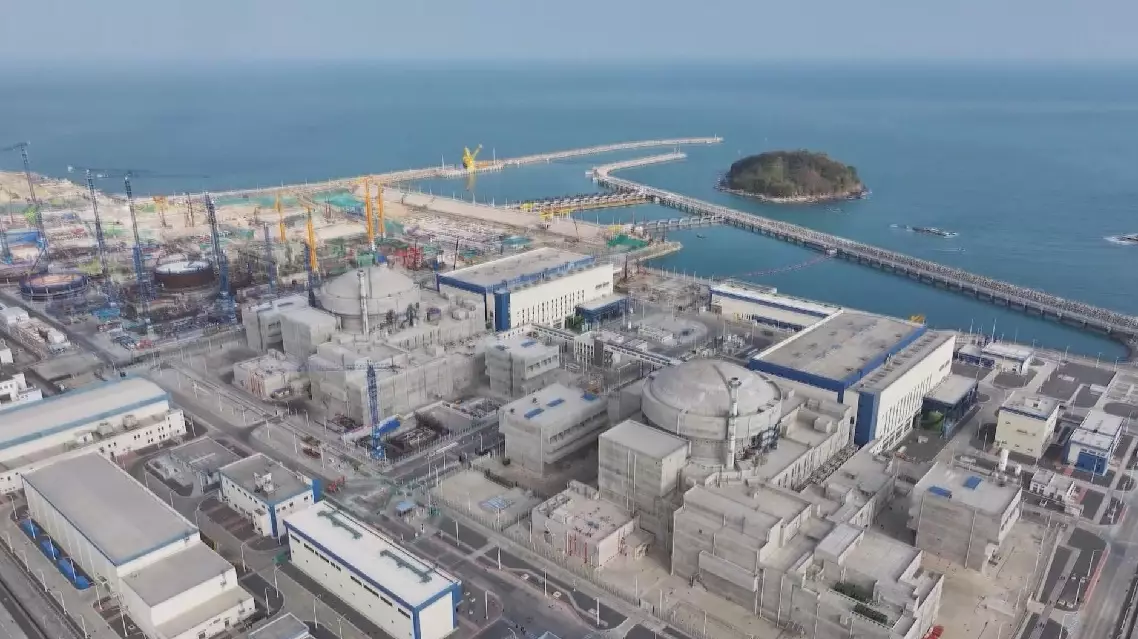
First Hualong One nuclear power unit in China's Greater Bay Area starts power generation