Skip to Content Facebook Feature Image

Future Investment Initiative conference opens in Saudi Arabia

China

China

China

Future Investment Initiative conference opens in Saudi Arabia

2024-10-30 21:40 Last Updated At:22:57

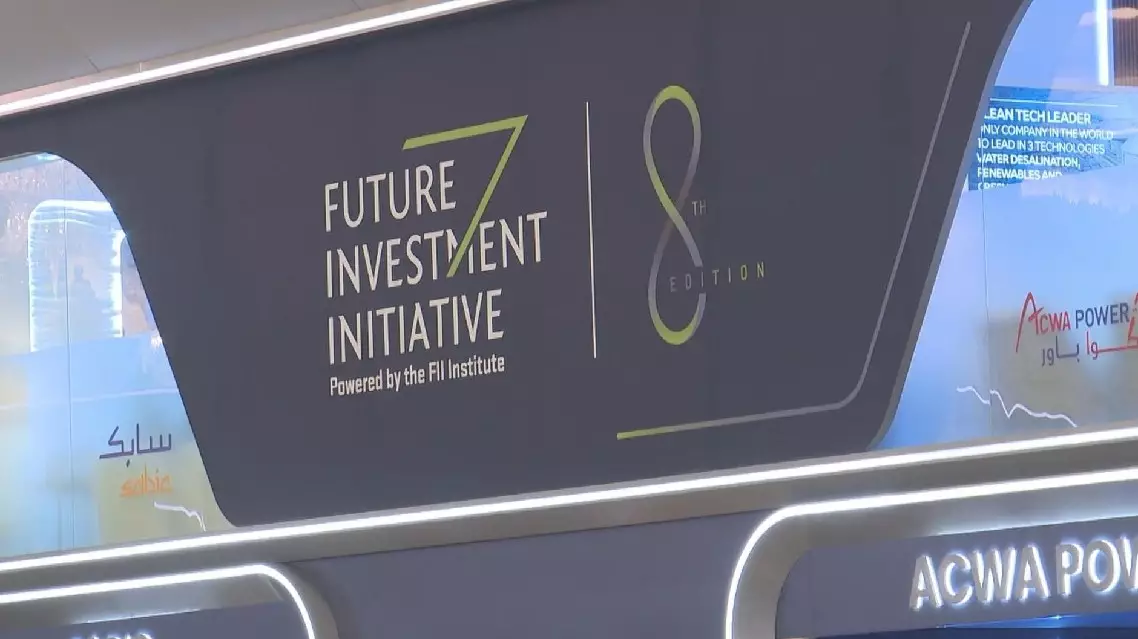
The 8th Future Investment Initiative (FII) conference opened on Tuesday in Saudi Arabia's capital Riyadh.

Dubbed "Davos in the Desert," the FII conference is the largest international investment and innovation forum in the Middle East, attracting many political and business leaders every year.

This year's theme, "Infinite Horizons: Investing Today, Shaping Tomorrow," highlights the event's focus on advancing impactful solutions in areas such as global connectivity, mining, artificial intelligence, health technology, sports, the circular economy, and more.

This year's FII has over 7,000 participants and 600 speakers from diverse sectors, with investors from China and Saudi Arabia actively seeking greater cooperation opportunities.

"Next year marks the 35th anniversary of the establishment of diplomatic ties between China and Saudi Arabia. Economic and trade cooperation form an important foundation for our comprehensive strategic partnership, and I am delighted to see more and more Chinese companies coming here. Today, I attended the Future Investment Initiative conference and I was pleased to see many Chinese participants. A friend just informed me that among the more than 5,000 attendees at this event, over 700 are from China. This also shows that our Chinese companies are paying more and more attention to the Saudi market," said Chang Hua, ambassador of China to Saudi Arabia.

For Saudi investors, it is also a valuable opportunity to strengthen ties with Chinese partners and expand collaboration on projects like the futuristic mega-city, NEOM.

"With Chinese, we have a number of partnership and infrastructure projects. I'm not at the liberty of announcing the projects, but, you know, it's well-known between us and between them, and we will announce it in the near future. It's a great partnership to develop very complex projects that will take the capabilities of both NEOM as well as our Chinese partners to the next level," said Manar Al Moneef, chief of the Investment Office of NEOM.

An adit tunnel project of Saudi Arabia's futuristic city NEOM, built by China Railway Construction Corporation (CRCC), was completed and delivered in May, which signifies the end of the first project undertaken by a Chinese enterprise in NEOM.

Located at the southern tip of the Gulf of Aqaba and covering an area of 26,500 square km, NEOM represents Saudi Arabia's vision for building an avant-garde future city featuring "a new model for sustainable living, working and prospering."

The city is part of Saudi Vision 2030 initiated to foster a diversified economy. Currently, multiple Chinese enterprises are participating in the building of NEOM City.
Future Investment Initiative conference opens in Saudi Arabia
Future Investment Initiative conference opens in Saudi Arabia
Future Investment Initiative conference opens in Saudi Arabia

Future Investment Initiative conference opens in Saudi Arabia
A major port in northern Venezuela came under U.S. airstrikes in the early hours of January 3, which caused extensive damage to civilian infrastructure, destroyed critical medical supplies in a warehouse, and severely impacted centuries-old cultural heritage sites, according to local residents.

The La Guaira Port, a vital hub for imports that support daily life in the region, was heavily damaged during the attack.

Large quantities of medical supplies stored at the port were destroyed. A historic cultural building dating back for some 300 years was also badly damaged by the bombardment.

Residents living near the port recalled the terrifying scenes as explosions shook nearby neighborhoods.

Humberto Bolivar, who lives in a community separated from the port by only a main road, said the blast waves shattered his home's windows, while stray shrapnel struck the water tank on his roof. According to reports, three missiles were fired at the port that night.

Bolivar said that beyond material losses, he is most concerned about the psychological impact on his children, who remain too frightened to leave their home days after the attack.

"The United States invaded our country. The children were frightened. This is not good for them, because it leaves some children with psychological trauma. They do not want to go to school or leave the house, because they are afraid that something worse might happen. We truly do not want this to happen to our country," he said.

Apart from civilian facilities, local cultural heritage site was also affected.

The La Guaira state government building, a structure with nearly 300 years of history and once served as the site of Venezuela's first national customs office, was struck by the force of the explosions.

Windows of the building were shattered, and furniture scattered across the floor.

"As people of La Guaira, we feel deep pain. Our cultural heritage has been bombed. We are living in constant anxiety and suffering, and life can no longer be the same as it was before," said a local named Henry Cumares.

The U.S. side has claimed the airstrikes targeted warehouses allegedly used to store narcotics. However, locals refuted such accusation.

"According to what Donald Trump said, they bombed this place using the excuse that the warehouses here were used to store drugs at the port. But based on the video released by our governor, these warehouses that were burned contained medicine for kidney patients and foods. Many people depend on these supplies to survive. I think the bombing is extremely despicable," said a local resident named Alejandro Capriles.

US strike hits Venezuelan port, wrecking medical supplies, heritage building

US strike hits Venezuelan port, wrecking medical supplies, heritage building

Recommended Articles