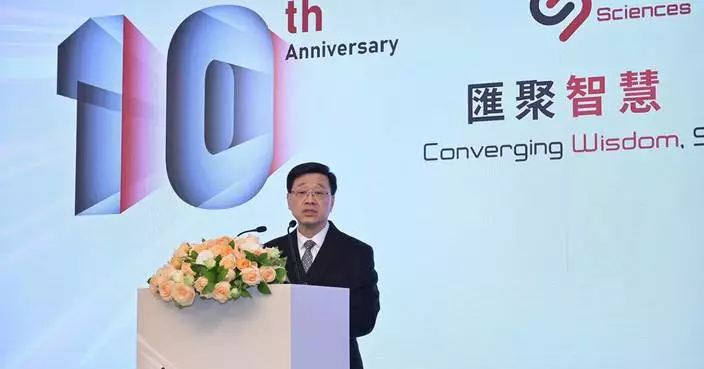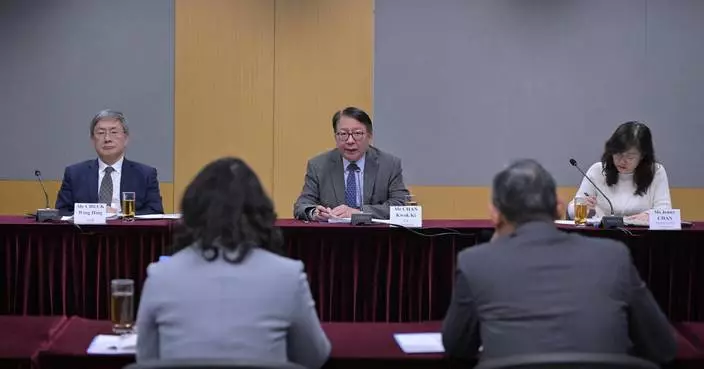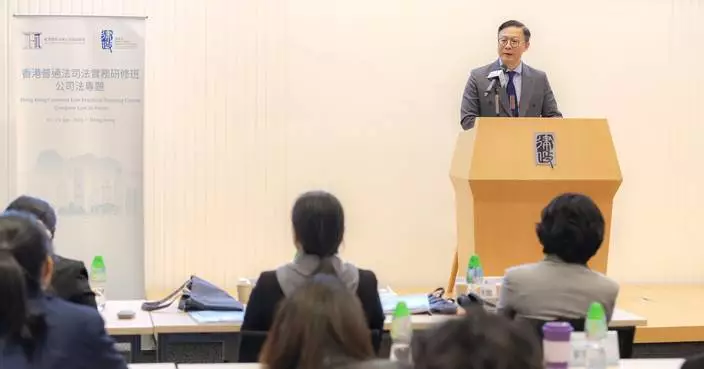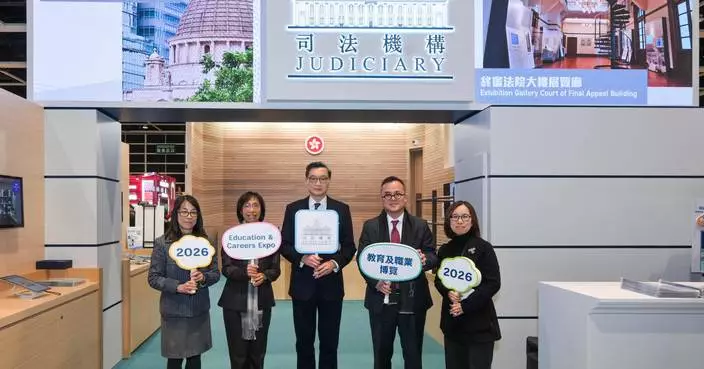
Speech by FS at breakfast meeting hosted by HKEX in Riyadh, Saudi Arabia (with photos/video)
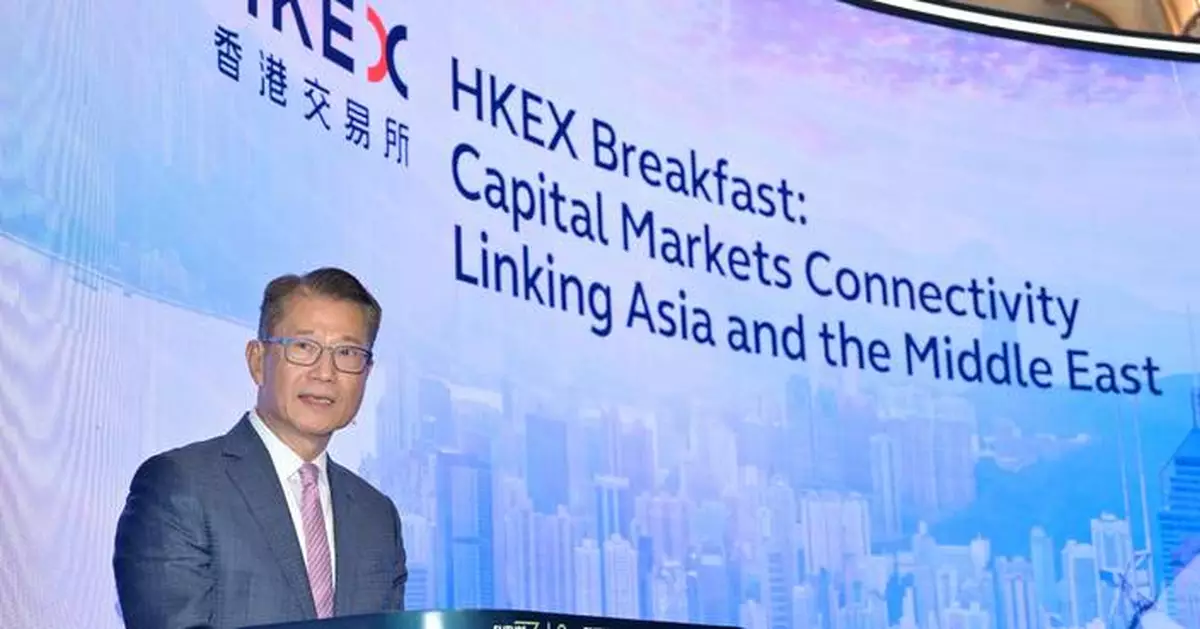
Following is the speech by the Financial Secretary, Mr Paul Chan, at a breakfast meeting hosted by the Hong Kong Exchanges and Clearing Limited (HKEX) in Riyadh, Saudi Arabia, today (October 30):
Carlson (Chairman of HKEX, Mr Carlson Tong), Mohammed (CEO of Saudi Exchange, Mr Mohammed Al-Rumaih), Bill (Group Chief Executive of Standard Chartered PLC, Mr Bill Winters), Darryl (Deputy Chief Executive of HKMA, Mr Darryl Chan), Bonnie (CEO of HKEX, Ms Bonnie Chan), distinguished guests, ladies and gentlemen,
Good morning, everyone. It is a great pleasure to join you today at this important breakfast session hosted by HKEX, right at the heart of the FII (Future Investment Initiative).
Before we begin, I want to extend my appreciation to HKEX for organising this session and to FII for providing a forum that brings global leaders together to address the future of investment. My special thanks to Mohammed, CEO of Saudi Exchange, and Bill, Global CEO of Standard Chartered, for joining this panel.
A moment for co-operation
There couldn't be a better time for us to gather and discuss how we can strengthen our capital market connectivity. The transformative agenda set forth by Saudi Arabia's Vision 2030 seeks to foster a dynamic society through extensive infrastructure projects, green transition, and digitalisation. This ambitious vision is driving significant reforms across various sectors, positioning the Kingdom as a leader in economic diversification and innovation.
In light of the evolving geopolitical landscape and shifts in global economic gravity, Saudi Arabia and the broader Middle East are actively deploying their capital towards Asia. In this context, Hong Kong emerges as a pivotal player, serving as an international financial centre and a gateway to China and the wider Asian market.
Hong Kong's value proposition
Hong Kong's unique strengths are anchored in the "one country, two systems" framework, which China has committed to maintain over the long term. This arrangement allows Hong Kong to benefit from both the advantages of being part of China and the defining characteristics as an international city. We enjoy convenient, and at times privileged, access to the Mainland market while retaining our distinctive features, including a common law system, a judiciary that exercises powers independently, the free flow of capital, goods, information, and talent, a low and simple tax regime, and a currency pegged to the US dollar.
Hong Kong is one of the top three international financial centres globally, alongside New York and London. We have also recently been recognised by the Fraser Institute as the freest economy in the world. Our world-class professional services adhere to the highest international standards, bolstered by a wealth of international experience and extensive connections.
In short, Hong Kong presents unique advantages that can create significant value for Middle Eastern investors and capital. Hong Kong is an attractive destination for investment and collaboration, particularly in such areas as fund-raising, asset and wealth management, and green and sustainable finance. Allow me to elaborate.
Fund-raising markets
First, our fund-raising market. Our stock market has a capitalisation of over US$4.5 trillion, which is 12 times of our GDP. It went through some challenging times in 2023 and the earliest part of this. It is making a comeback, particularly following the recent announcement of a stimulus package by the central authorities, aimed at injecting liquidity into the banking sector and supporting the real estate market. Since then, the market has increased by about 15 per cent with high volume. We have seen strong buying interest from American and European investors, who accounted for approximately 85 per cent of the buy side by value. Notably, 90 per cent of these investors are long-term fund managers and investment banks.
Over the past few years, we have continuously reformed our listing regime. These reforms have broadened our market's appeal and positioned Hong Kong as a leading listing hub for innovative enterprises. For example we are now the second-largest biotech fund-raising hub after the United States.
Our country, China, has consistently supported the development of Hong Kong's stock market. Just this April, the China Securities Regulatory Commission announced five measures to bolster the development of Hong Kong's capital markets, including, for example, expanding the Connect Schemes we have with the Mainland to cover more ETFs (exchange-traded funds) and REITs (real estate investment trusts), and facilitating the listing of more leading Mainland companies on the Hong Kong Stock Exchange.
By the way, we are also actively enhancing our connectivity with new markets. Last year, we reached an agreement with the Saudi Exchange and Indonesia Stock Exchange to allow companies in these countries to secondary list on our Stock Exchange. As they come to Hong Kong, they are able to access both international capital and capital from the Mainland under the Connect Schemes.
The upcoming listing of two ETFs investing in Hong Kong stocks on the Saudi Exchange will be further reinforcing our links with Saudi Arabia.
Beyond stock market, we boast a vibrant private equity sector, which manages over US$230 billion in assets, making us number two in Asia, only after the Mainland. Indeed, Hong Kong has a comprehensive chain of funds supporting companies at various stages of growth.
Looking to the future, our stock market is poised to grow deeper and more robust. We are determined to attract more quality issuers from around the globe, and new capital sources, particularly Middle East and Asia.
Asset and wealth management hub
Second, asset and wealth management. Many Middle Eastern families and ultra-high-net-worth individuals are increasingly recognising the need to diversify their asset allocation and look beyond traditional American and European markets. They can certainly look to Hong Kong. We manage over US$4 trillion in assets, with more than half coming from outside Hong Kong and Mainland China. We are also home to 2 700 single-family offices. Beyond diversified investment offerings, we have established a robust network comprising private banks, accounting and legal firms, trusts, and other professional service providers, forming a strong nexus that caters to their needs. This is further complemented by our strong philanthropic culture and programmes for families to leave a lasting legacy, making a difference in the world and shaping a better future for generations to come.
Green and sustainable finance
Finally, green and sustainable finance. As a key component of Vision 2030, Saudi Arabia has embarked on the Saudi Green Initiative, with clear targets to increase the share of renewable energy, reduce carbon emissions, and enhance land and sea protection. This vision resonates with us well, and we stand ready to contribute.
Hong Kong is Asia's green finance capital, demonstrated by our leading position in arranging green and sustainable debt, averaging over $63 billion per year over the past three years, accounting for over one-third of Asia's total. Beyond volume, we are committed to building a green reporting system that meets the highest international standards, by adopting taxonomies interoperable with other international classification frameworks, and adhering to global sustainable reporting standards. Clearly, Hong Kong is an ideal platform for Saudi and Middle Eastern green and sustainable projects looking to access funds in our part of the world.
Concluding remarks
Ladies and gentlemen, I have just outlined some of the areas that Hong Kong can play in connecting capital, investments, and opportunities between our markets. I am eager to hear the valuable insights from our panelists this morning on how our capital markets can further collaborate and innovate.
I wish you all the best of health and business in the years to come. May our discussions today inspire new ideas and fruitful collaborations that lead to shared prosperity and growth for all.
Thank you!
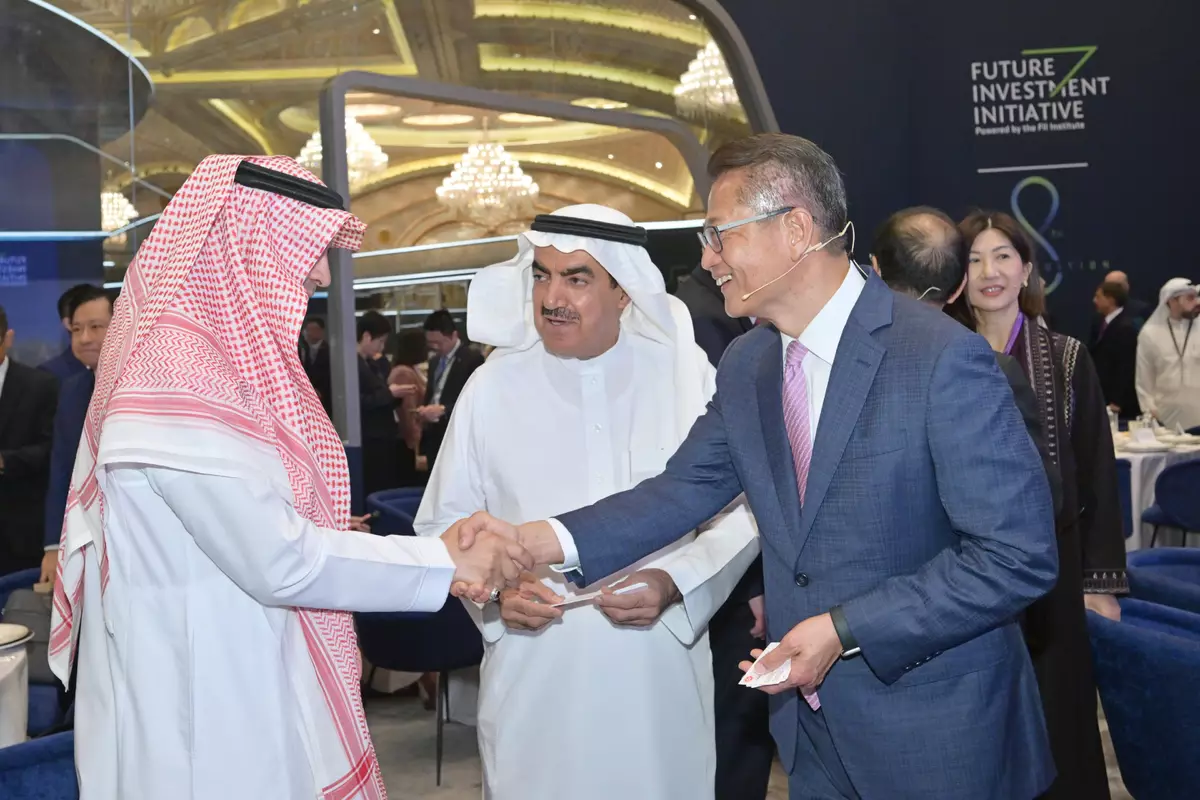
Speech by FS at breakfast meeting hosted by HKEX in Riyadh, Saudi Arabia Source: HKSAR Government Press Releases
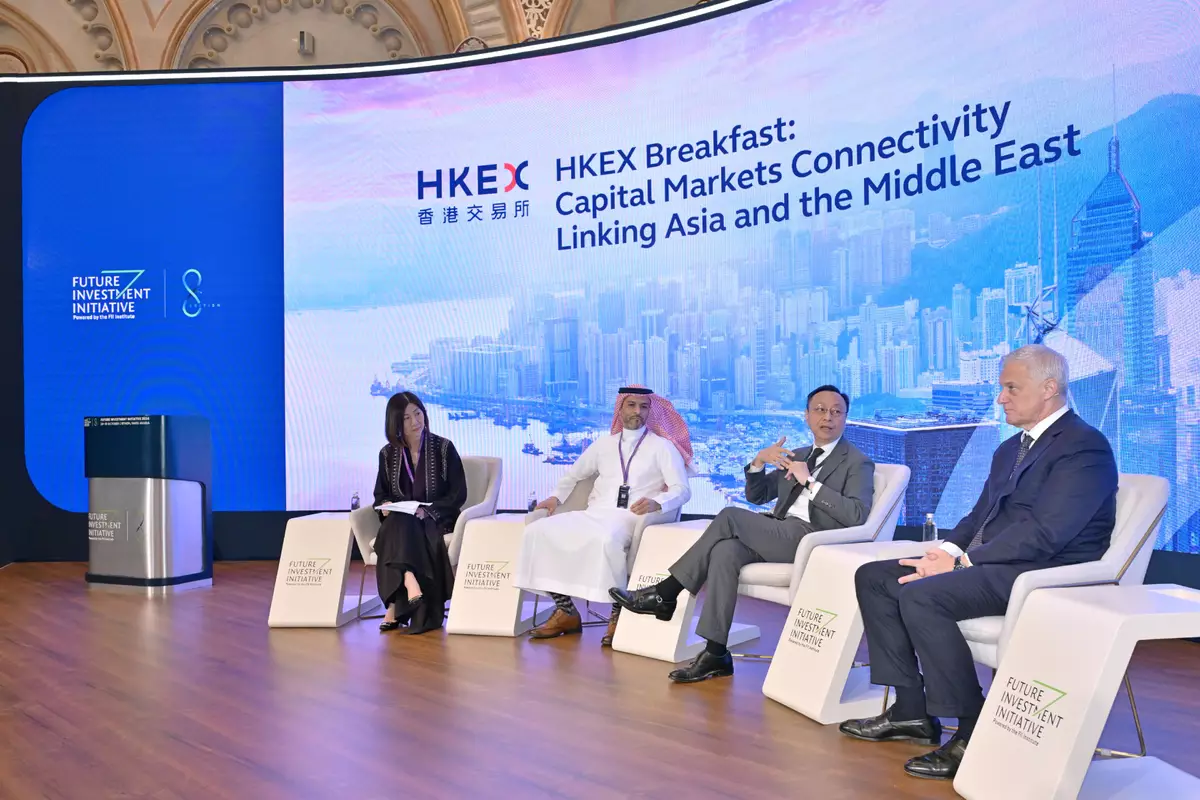
Speech by FS at breakfast meeting hosted by HKEX in Riyadh, Saudi Arabia Source: HKSAR Government Press Releases
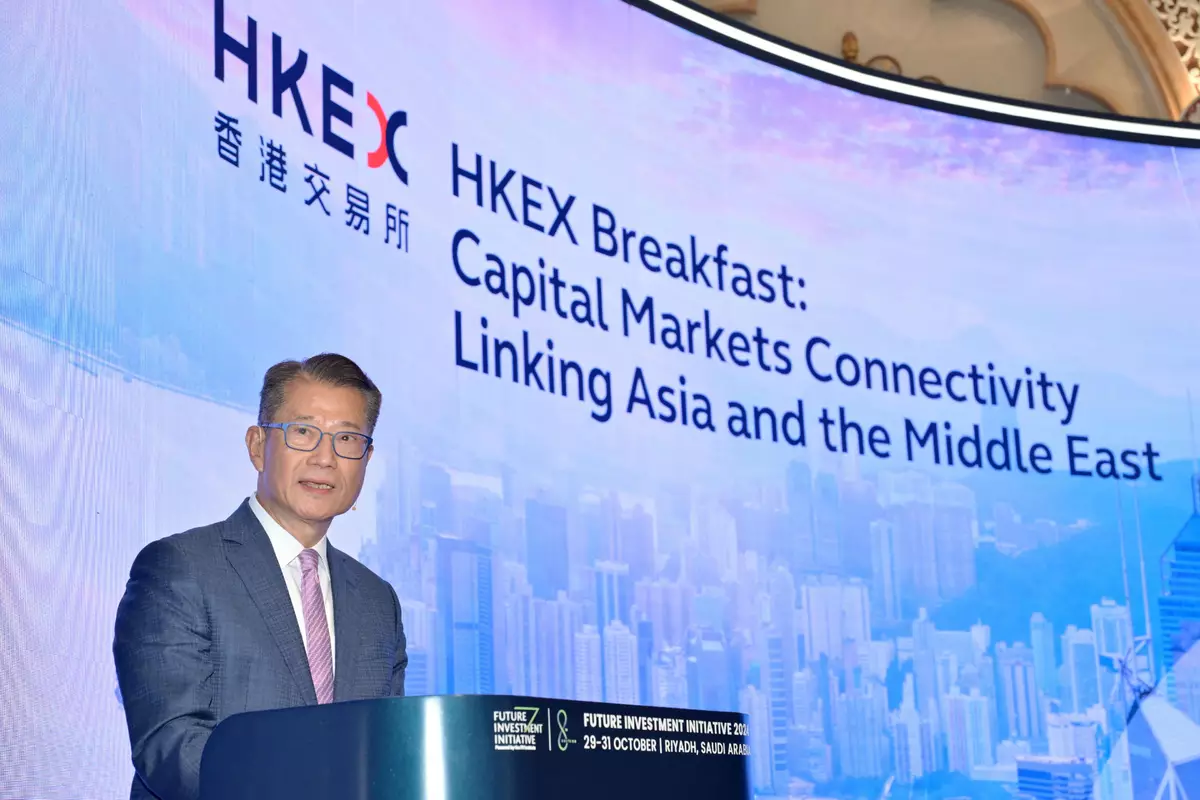
Speech by FS at breakfast meeting hosted by HKEX in Riyadh, Saudi Arabia Source: HKSAR Government Press Releases