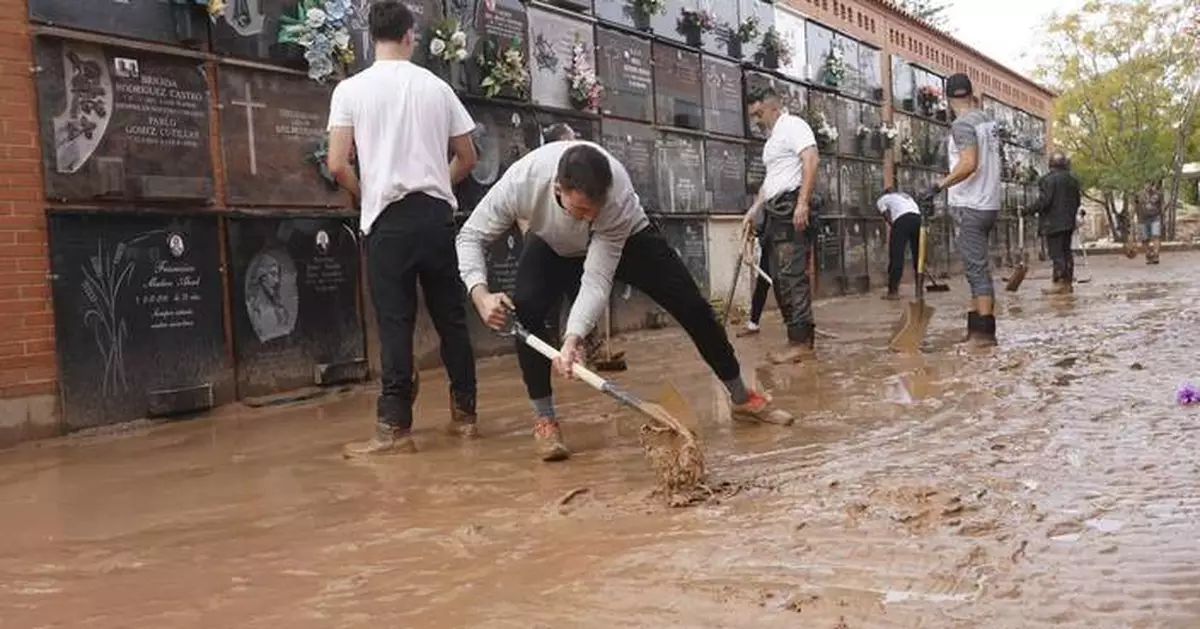
CHIVA, Spain. (AP) — Mud cakes her boots, splatters her leggings and the gloves holding her broom. Brown specks freckle her cheeks.
The mire covering Alicia Montero is the signature uniform of the impromptu army of volunteers who for a third day Friday shoveled and swept out the muck and debris that filled the small town of Chiva in Valencia after flash floods swept through the region. Spain's deadliest natural disaster in living memory has left at least 205 people dead with untold numbers still missing, and countless lives in tatters.
Click to Gallery
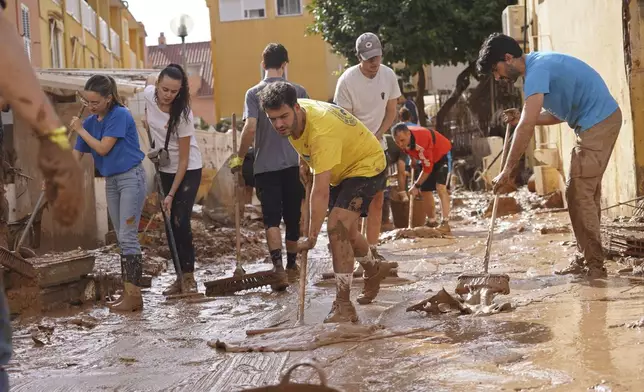
People clear mud from the street after floods in Massanassa, just outside of Valencia, Spain, Friday, Nov. 1, 2024. (AP Photo/Alberto Saiz)
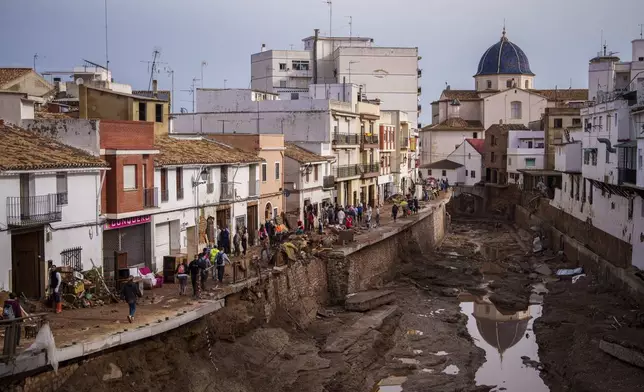
A general view of an area affected by floods in Chiva, Spain, Friday, Nov. 1, 2024. (AP Photo/Manu Fernandez)
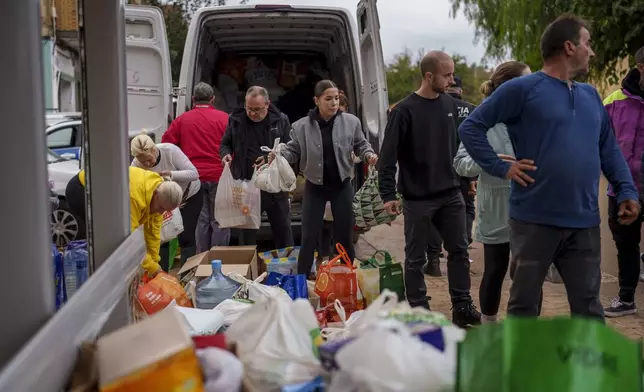
People collect food in an area affected by floods in Chiva, Spain, Friday, Nov. 1, 2024. (AP Photo/Manu Fernandez)
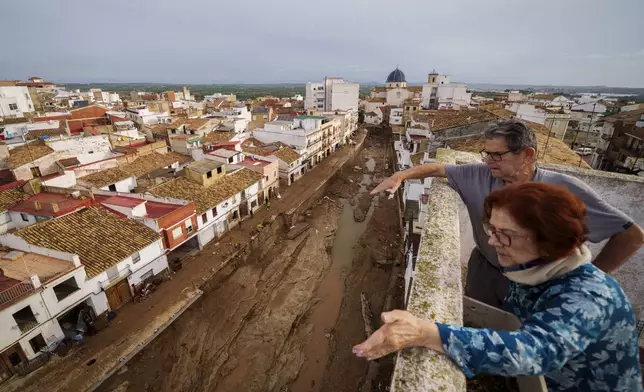
Two people look out over an area affected by floods in Chiva, Spain, Friday, Nov. 1, 2024. (AP Photo/Manu Fernandez)
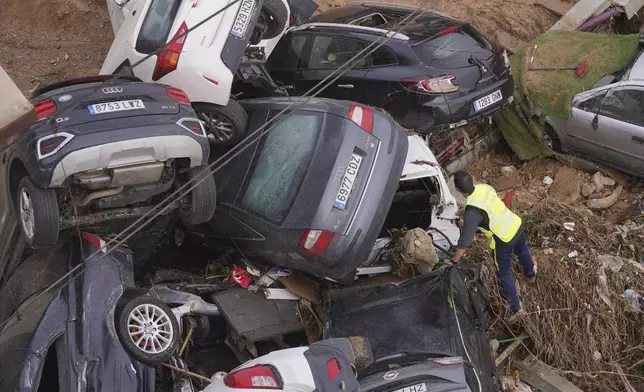
A civil guard searches for survivors in cars piled up on the outskirts of Valencia, Spain, Friday, Nov. 1, 2024 after flooding. (AP Photo/Alberto Saiz)
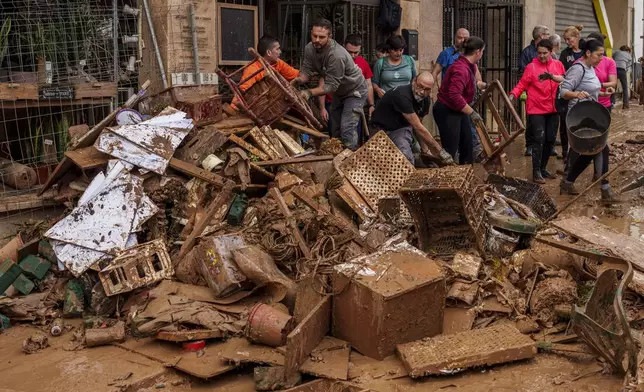
People clean mud from a shop affected by floods in Chiva, Spain, Friday, Nov. 1, 2024. (AP Photo/Manu Fernandez)
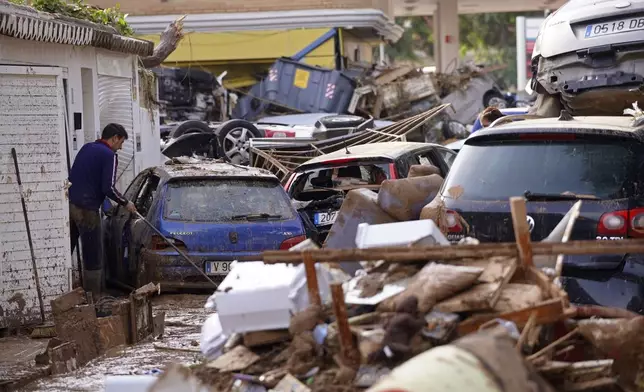
A man sweeps by piled up cars after floods in Massanassa, just outside of Valencia, Spain, Friday, Nov. 1, 2024. (AP Photo/Alberto Saiz)
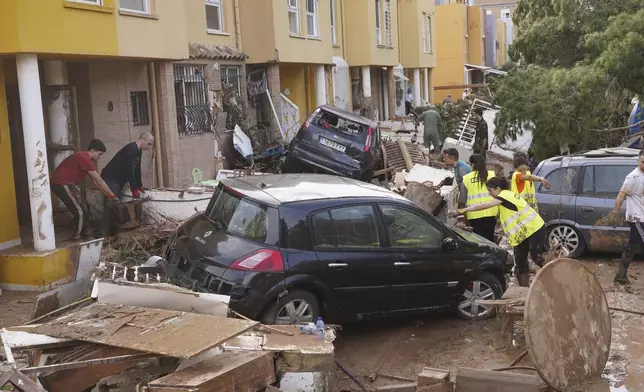
People clear debris from the street after floods in Massanassa, just outside of Valencia, Spain, Friday, Nov. 1, 2024. (AP Photo/Alberto Saiz)
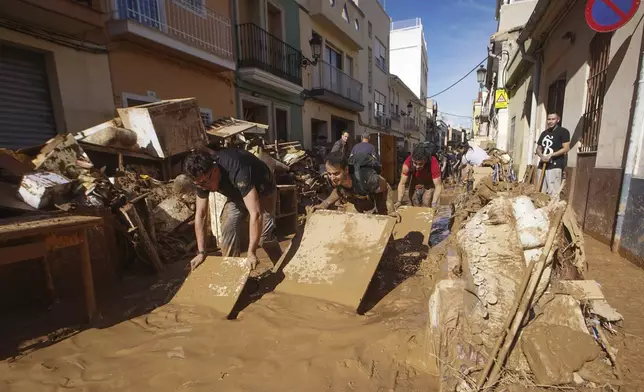
Residents and volunteers try toiling remove mud in an area affected by floods in Paiporta, near Valencia, Spain, Friday, Nov. 1, 2024. (AP Photo/Alberto Saiz)
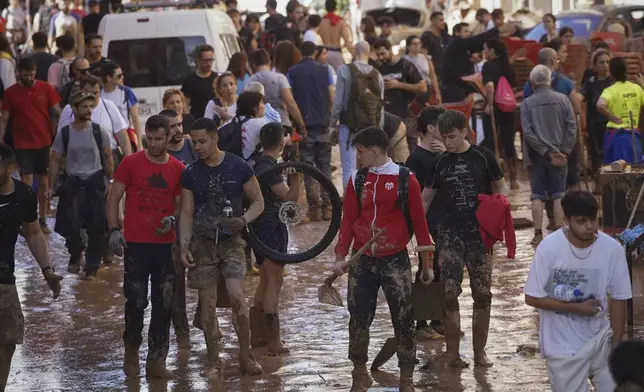
People walks through the mud at an area affected by floods in Paiporta, near Valencia, Spain, Friday, Nov. 1, 2024. (AP Photo/Alberto Saiz)
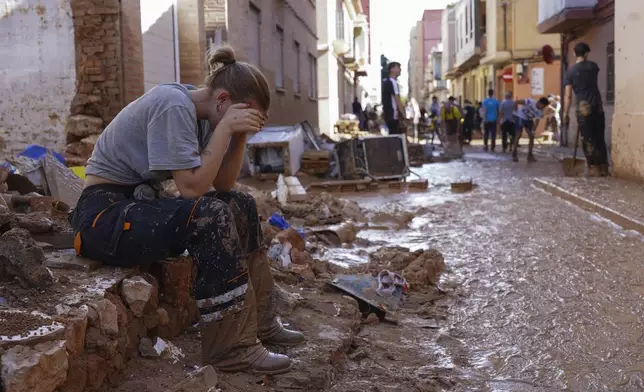
A woman rests as residents and volunteers clean up an area affected by floods in Paiporta, near Valencia, Spain, Friday, Nov. 1, 2024. (AP Photo/Alberto Saiz)
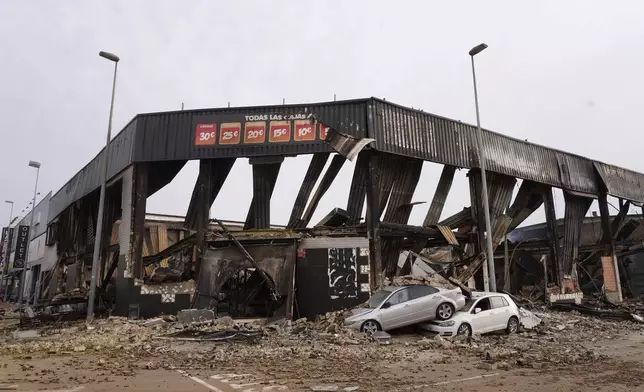
Damaged cars are seen outside a shopping centre after floods in Valencia, Spain, Friday, Nov. 1, 2024. (AP Photo/Alberto Saiz)
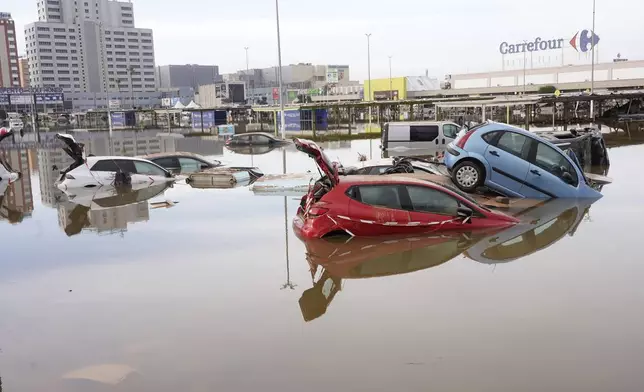
Cars are seen half submerged after floods in Valencia, Spain, Friday, Nov. 1, 2024. (AP Photo/Alberto Saiz)
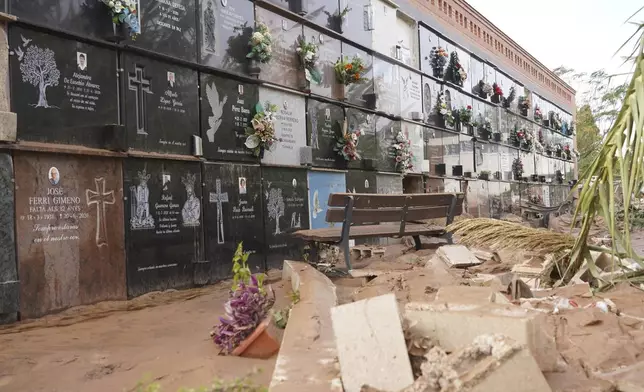
Broken tombstones and debris is seen inside a flood damaged cemetery on the outskirts of Valencia, Spain, Friday, Nov. 1, 2024 after flooding in the region. (AP Photo/Alberto Saiz)
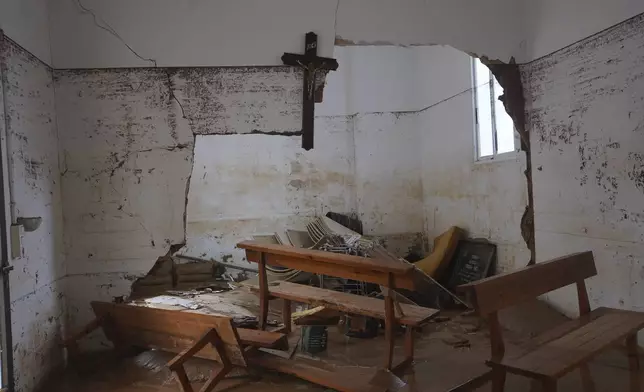
Damage is seen inside a cemetery on the outskirts of Valencia, Spain, Friday, Nov. 1, 2024 after flooding. (AP Photo/Alberto Saiz)
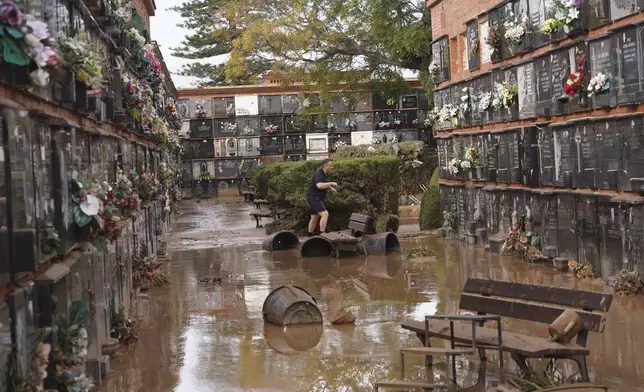
A man walks inside a flood damaged cemetery on the outskirts of Valencia, Spain, Friday, Nov. 1, 2024 after flooding in the region. (AP Photo/Alberto Saiz)
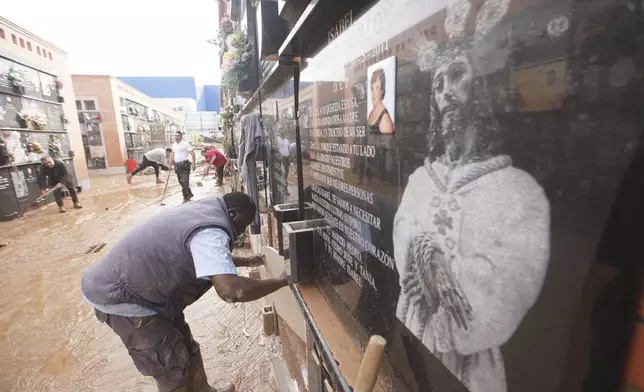
Workers repair damaged tombstones and clean mud inside a cemetery on the outskirts of Valencia, Spain, Friday, Nov. 1, 2024 after flooding in the region. (AP Photo/Alberto Saiz)
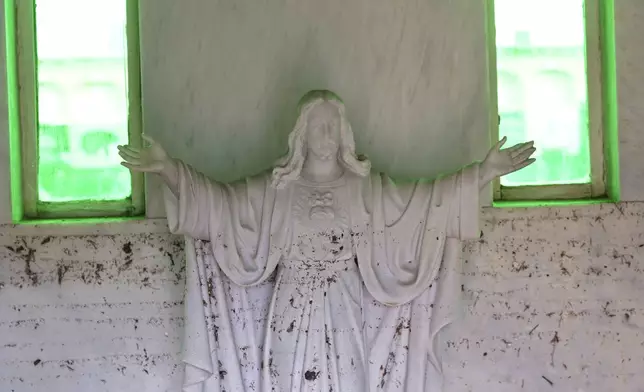
A mud splattered statue of Christ is seen inside a cemetery on the outskirts of Valencia, Spain, Friday, Nov. 1, 2024 after flooding in the region. (AP Photo/Alberto Saiz)
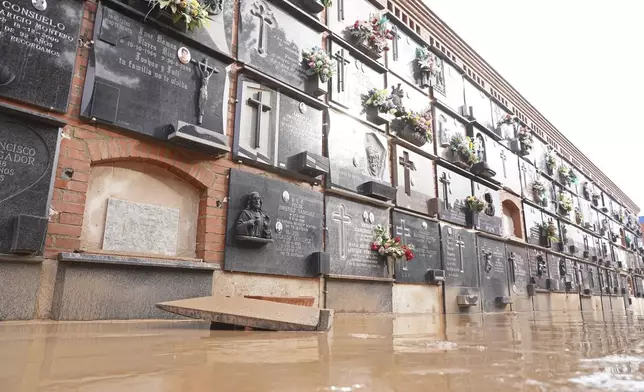
A flooded wall of tombs are seen inside a cemetery on the outskirts of Valencia, Spain, Friday, Nov. 1, 2024 after flooding in the region. (AP Photo/Alberto Saiz)
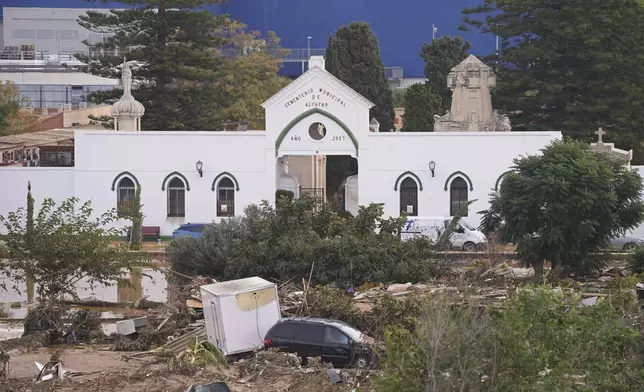
Damage is seen outside a cemetery on the outskirts of Valencia, Spain, Friday, Nov. 1, 2024 after flooding. (AP Photo/Alberto Saiz)
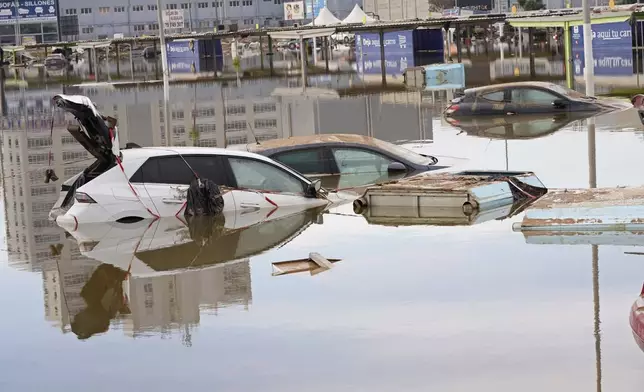
Cars are seen half submerged after floods in Valencia, Spain, Friday, Nov. 1, 2024. (AP Photo/Alberto Saiz)
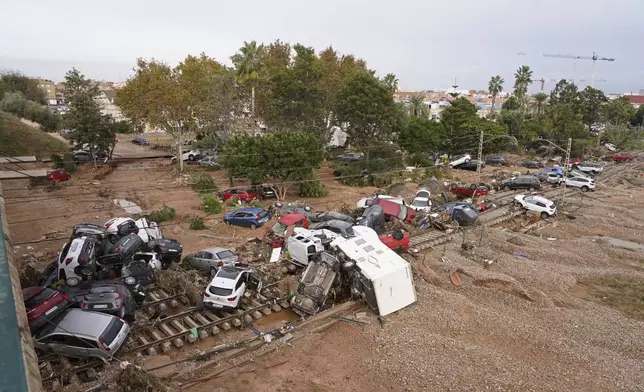
Vehicles are strewn across railway tracks after floods on the outskirts of Valencia, Spain, Friday, Nov. 1, 2024. (AP Photo/Alberto Saiz)
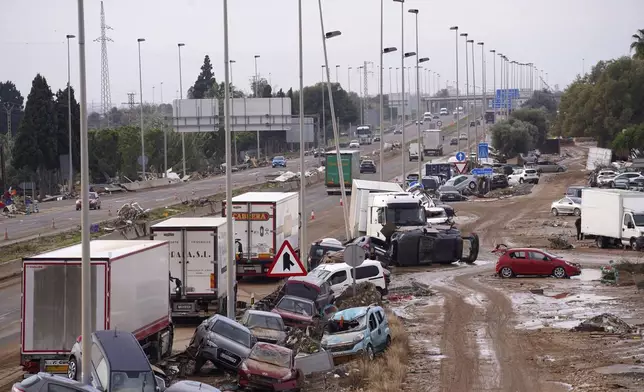
Cars are strewn on the side on a main road after floods in Valencia, Spain, Friday, Nov. 1, 2024. (AP Photo/Alberto Saiz)
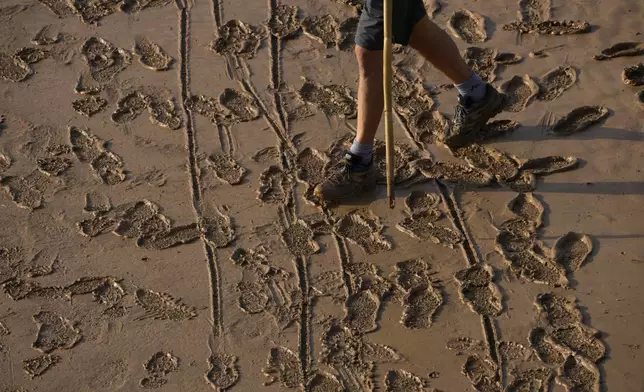
A man walks on a mud-covered road after flooding in Valencia, Spain, Thursday, Oct. 31, 2024. (AP Photo/Manu Fernandez)
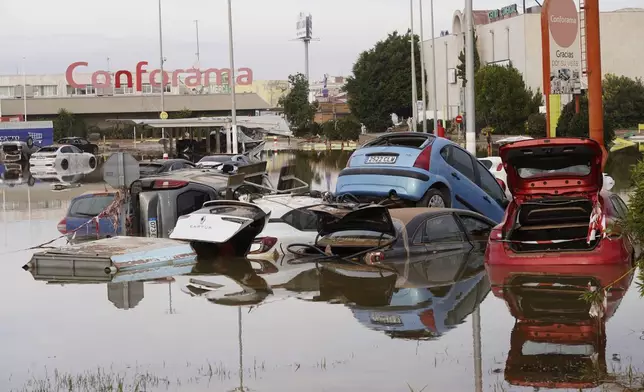
Cars are seen half submerged after floods in Valencia, Spain, Friday, Nov. 1, 2024. (AP Photo/Alberto Saiz)
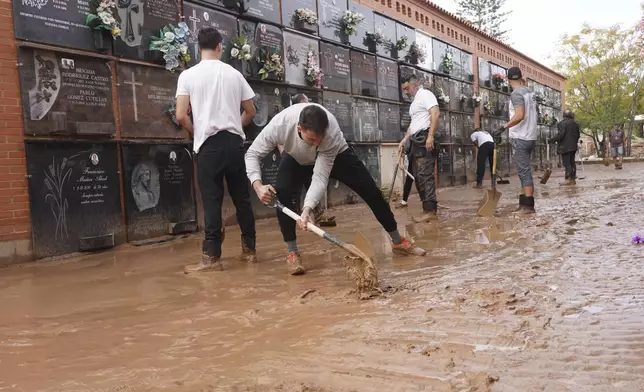
People clear away mud from inside a flood damaged cemetery on the outskirts of Valencia, Spain, Friday, Nov. 1, 2024 after flooding in the region. (AP Photo/Alberto Saiz)
As police and emergency workers continue the grim search for bodies, authorities appear overwhelmed by the enormity of the disaster, and survivors are relying on the esprit de corps of volunteers who have rushed in to fill the void.
While hundreds of people in cars and on foot have been streaming in from Valencia city to the suburbs to help, Montero and her friends are locals of Chiva, where at least seven people died when Tuesday’s storm unleashed its fury.
“I never thought this could happen. It moves me to see my town in this shape,” Montero tells The Associated Press. “We have always had autumn storms, but nothing like this.”
She says she barely avoided the floods when she was driving home Tuesday, and that if she had got on the road five minutes later she believes she would have been swept away like dozens of cars still stranded on the highway that crosses a flood plain between her town and the city of Valencia, about 30 kilometers (18 miles) to the east.
Tractors roar through Chiva's narrow streets, only briefly stopping or slowing to allow people to toss broken doors, shattered furniture and other debris into the beds before churning their way up, away from the epicenter of the destruction.
Residents and volunteers meanwhile shovel and sweep out the layers of mud that coat the floors of the ruined shops and homes, the air abuzz with frenetic energy. People carry buckets of water from a large ornamental pool in a town square to wash away the mire. Three young boys take a break to kick a soccer ball around on the slippery street.
Newcomers are easy to spot because they are clean, but a few steps down Chiva's slippery cobblestones and they are quickly marked with mud.
“How many hours have we been at it? Who knows?” Montero says, while taking a breather from cleaning near a gorge that was filled with a crushing wall of water just days earlier.
“We work, stop to eat a sandwich they give us, and keep on working.”
“As much mud in the streets as if the waters had but newly retired from the face of the earth,” is Charles Dickens' description of 19th century London in his novel “Bleak House.”
In Chiva and other parts of Valencia — Paiporta, Masanasa, Barrio de la Torre, Alfafar — mud has become synonymous with death and destruction. The mire flowed into houses and crawled into cars, smashing some vehicles apart and easily lifting and moving others.
The storm this week unleashed more rain on Chiva in eight hours than the town had experienced in the preceding 20 months. The deluge powered a flood that knocked down two of the four bridges in the town, and made a third unsafe to cross. The waters have now receded and the Civil Guard divers are gone, but police keep searching the gorge, smashed homes and underground garages, concerned that the mud could be hiding more bodies.
“Entire houses have disappeared. We don’t know if there were people inside or not,” Mayor Amparo Fort told RNE radio.
There are so many people coming to help the hardest-hit areas that the authorities have asked them not to drive or walk there, because they are blocking the roads needed by the emergency services.
“It is very important that you return home,” said regional President Carlos Mazón, who thanked the volunteers for their goodwill. The regional government has asked volunteers to gather at a large cultural center in the city Saturday morning to organize work crews and transport.
Electricity was at last restored for Chiva’s 20,000 residents on Thursday night, and there is still no running water. Local governments have been distributing water, food and basic necessities in towns across Valencia affected by the flash floods, and the Red Cross is using its vast network of aid to help those affected.
In Chiva, the Civil Guard police officers have been searching collapsed houses and the gorge for bodies, and directly traffic. Firefighters are helping ensure buildings were safe. Some 500 soldiers have been deployed in the Valencia region to deliver water and essential goods to those in need, and more are on the way.
But so far no military units are in Chiva, where the wave of solidarity among average citizens underscores the dearth of official help. The vibe is one of townsfolk just getting on with it.
A man weeps inside the Astoria Cinema, which has been transformed into a supply depot. The theater is filled with piles of water bottles and fruit. People make sandwiches. One group of young men arrive and drop off bottled water before picking up shovels and brooms and joining the fray.
Just across a square at the town hall, a sign says everyone is allowed to take two bottles of water a day. Volunteers hand out baguette sandwiches.
Cleaning out the bakery that has been in her family for five generations, María Teresa Sánchez hopes it can continue, but she is not sure if her 100-year-old oven can be salvaged.
“Chiva will take a long time to recover from this,” she said. “But it is true that we have not felt alone. We are helping each other. And at the end that is really what we embrace, that spirit of being a town that is isolated and nobody has come to help, yet see how we are all out in the street? That is the shining light to this story.”
Medrano reported from Madrid. Associated Press writers Colleen Barry in Milan and Jamey Keaten in Geneva, contributed to this report.
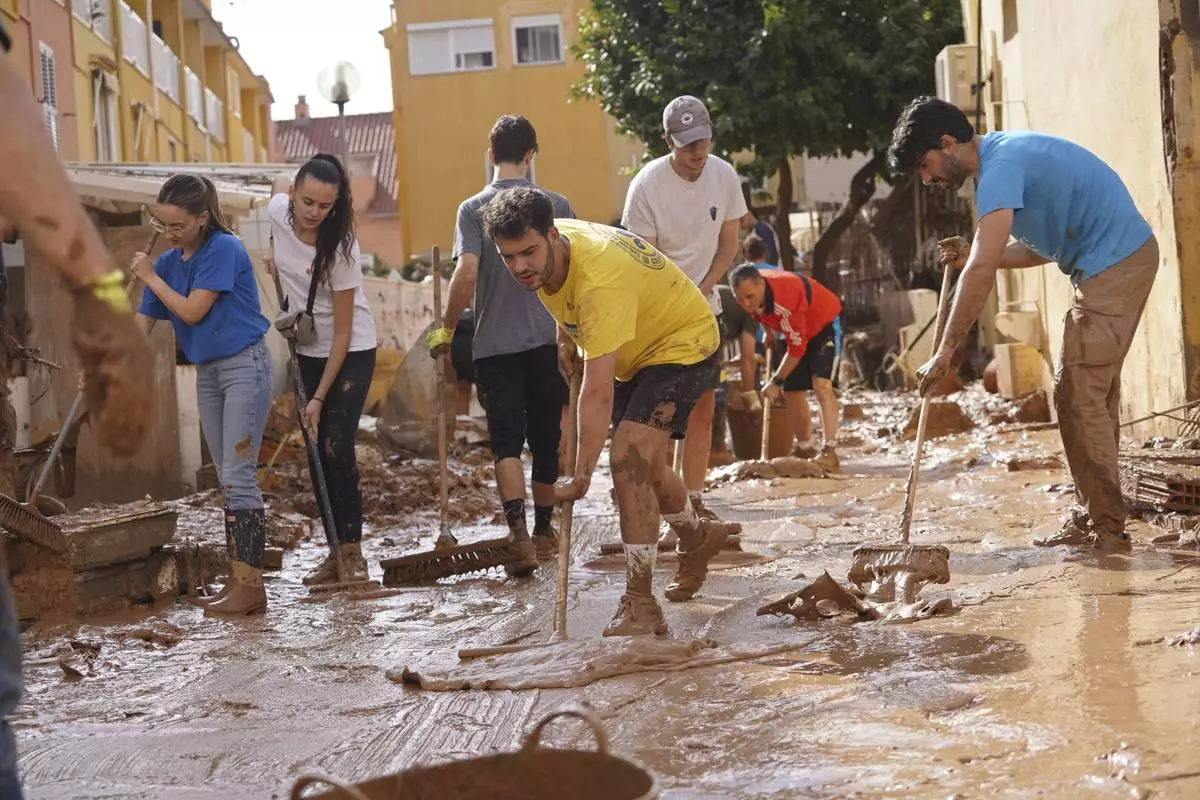
People clear mud from the street after floods in Massanassa, just outside of Valencia, Spain, Friday, Nov. 1, 2024. (AP Photo/Alberto Saiz)
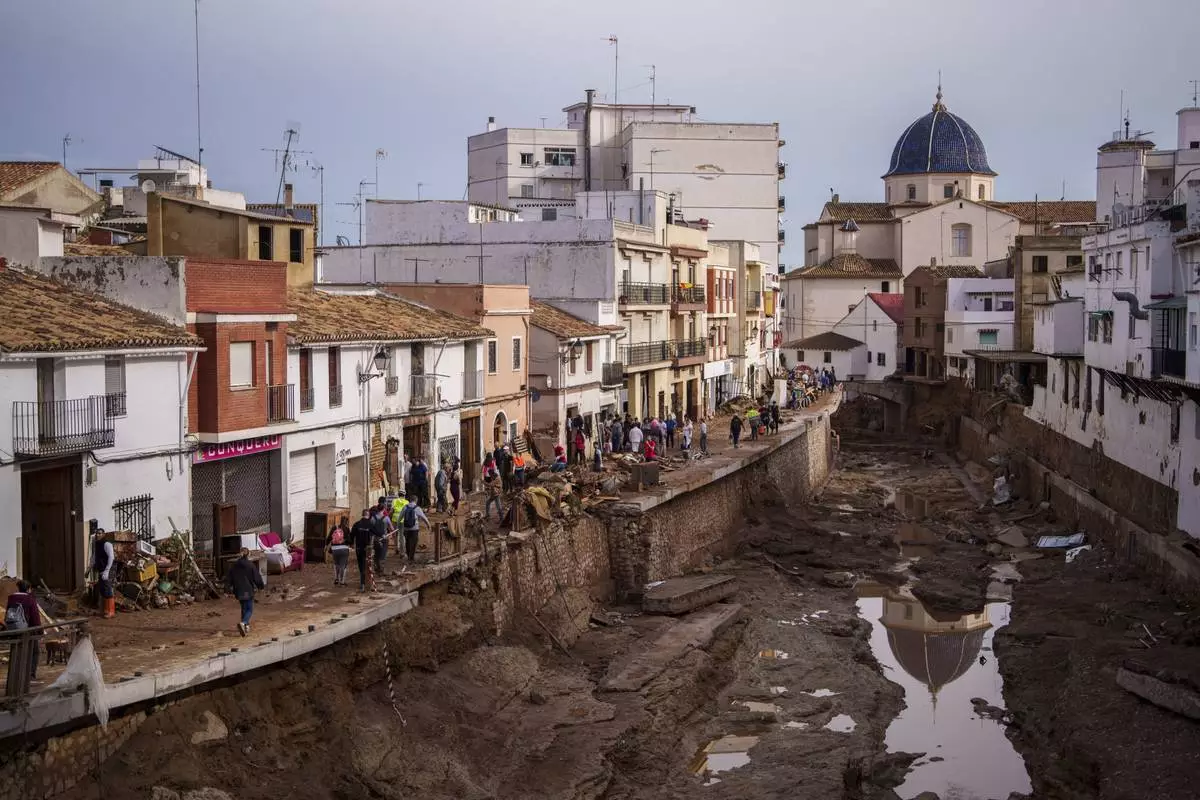
A general view of an area affected by floods in Chiva, Spain, Friday, Nov. 1, 2024. (AP Photo/Manu Fernandez)
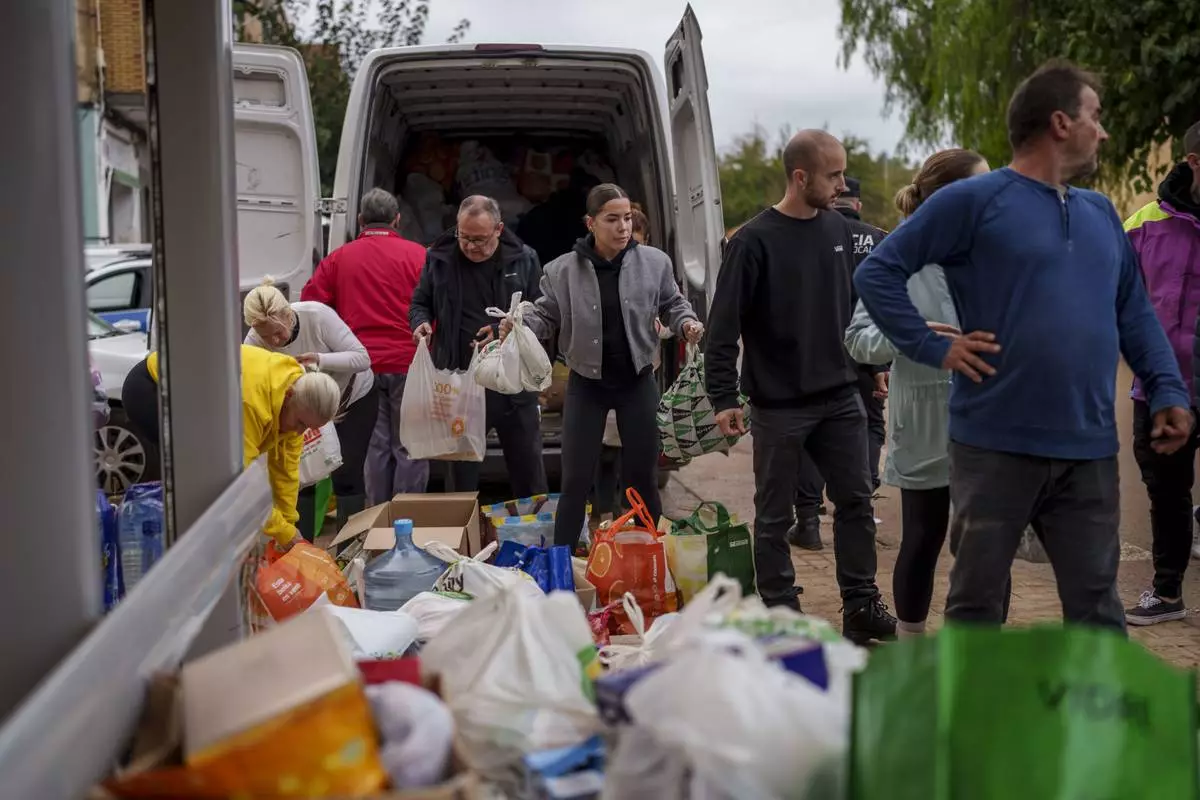
People collect food in an area affected by floods in Chiva, Spain, Friday, Nov. 1, 2024. (AP Photo/Manu Fernandez)
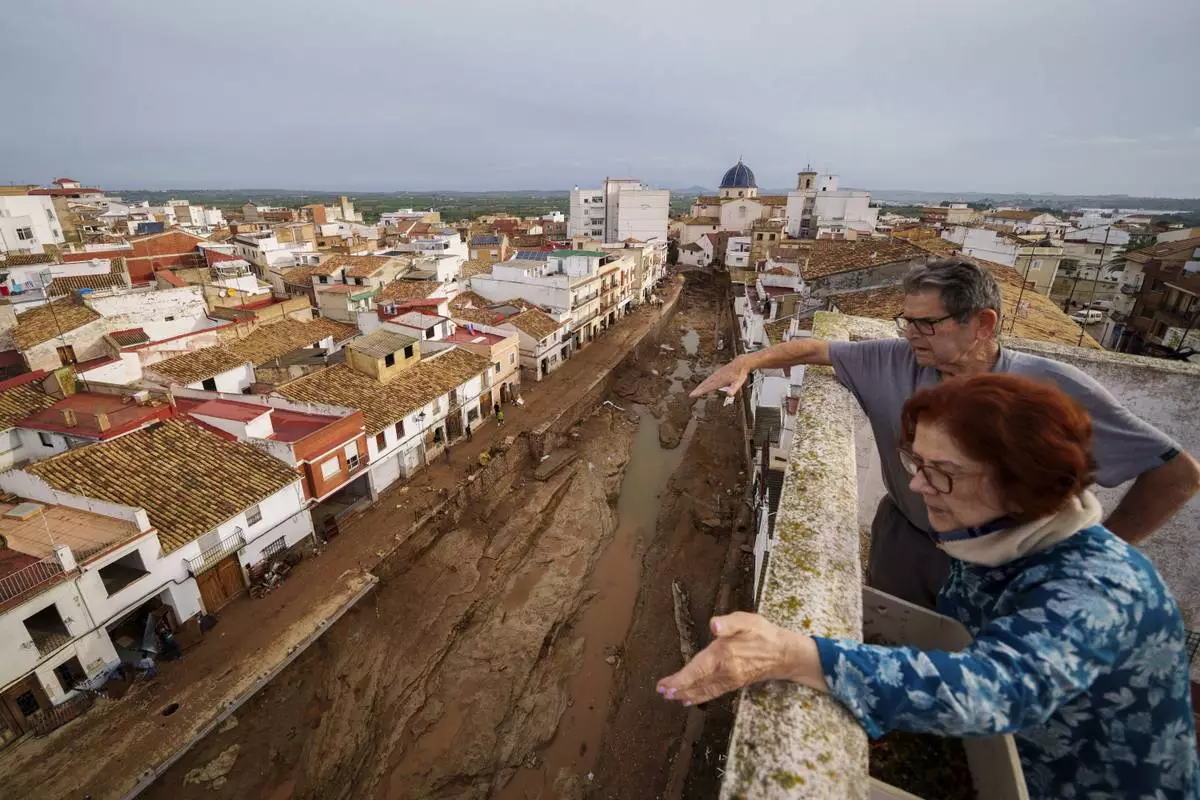
Two people look out over an area affected by floods in Chiva, Spain, Friday, Nov. 1, 2024. (AP Photo/Manu Fernandez)
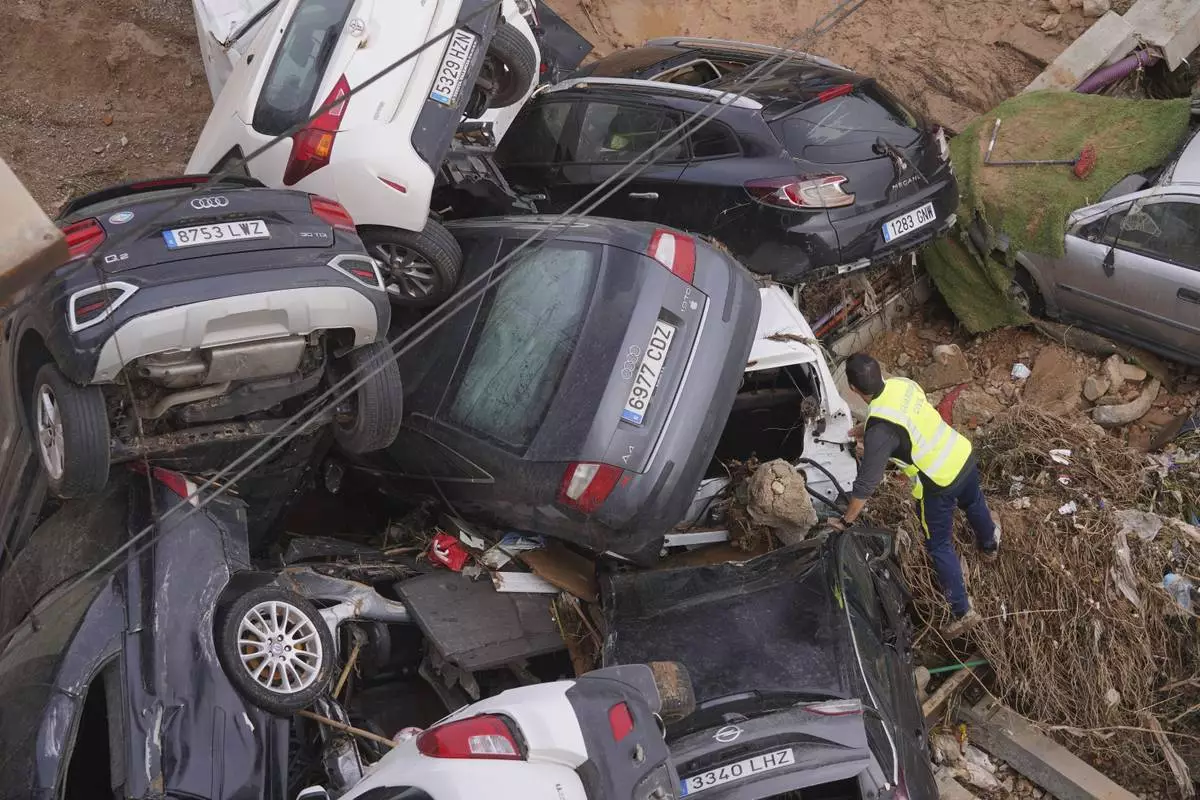
A civil guard searches for survivors in cars piled up on the outskirts of Valencia, Spain, Friday, Nov. 1, 2024 after flooding. (AP Photo/Alberto Saiz)
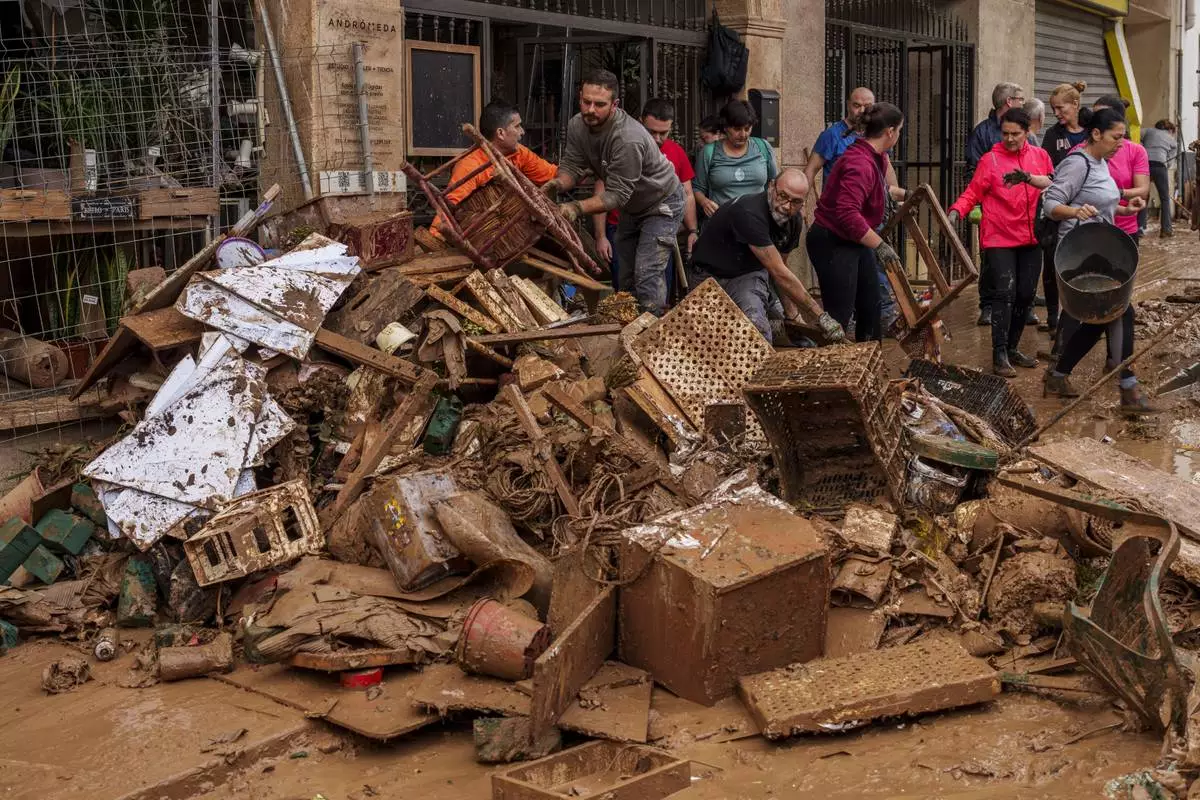
People clean mud from a shop affected by floods in Chiva, Spain, Friday, Nov. 1, 2024. (AP Photo/Manu Fernandez)
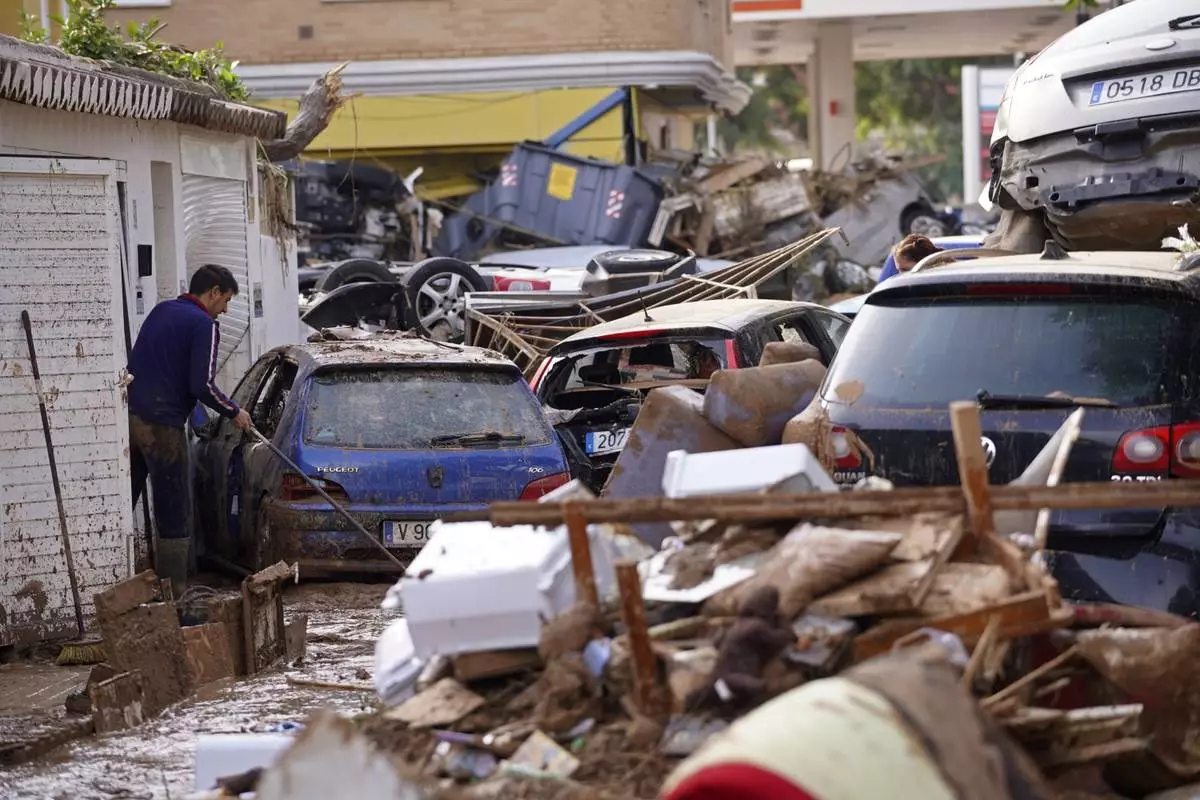
A man sweeps by piled up cars after floods in Massanassa, just outside of Valencia, Spain, Friday, Nov. 1, 2024. (AP Photo/Alberto Saiz)
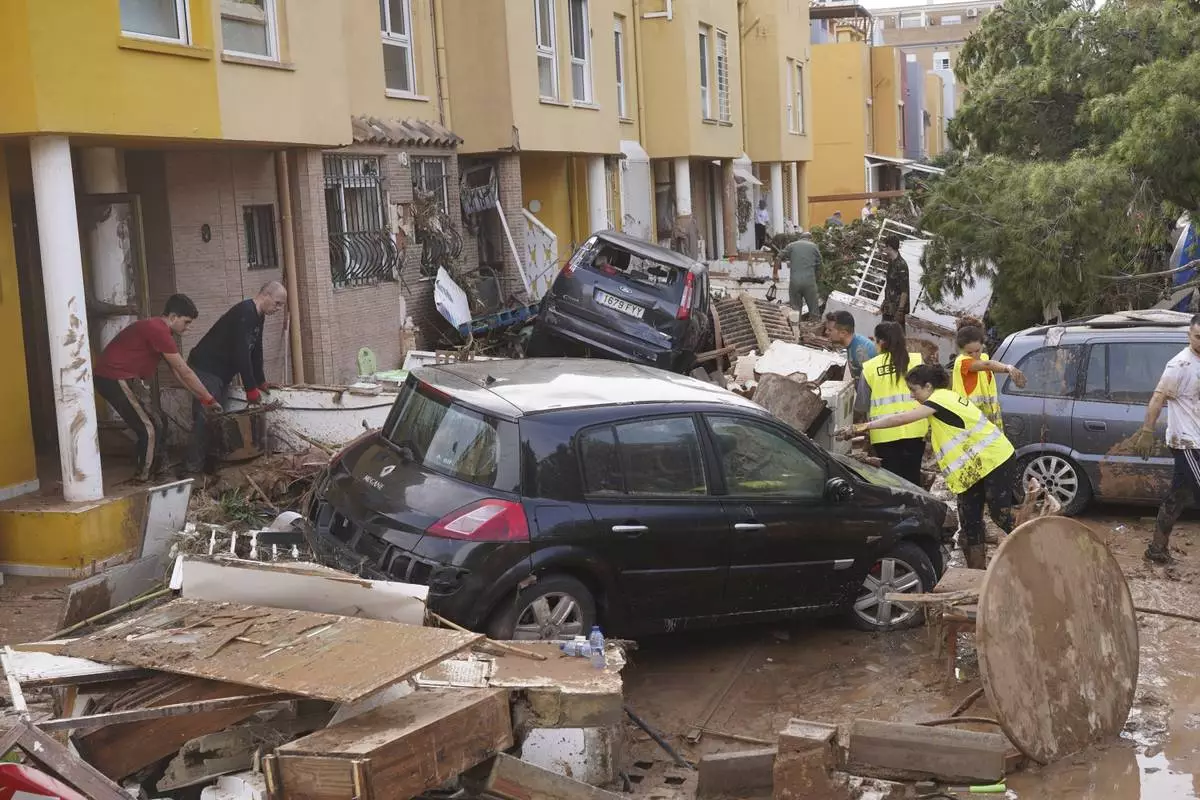
People clear debris from the street after floods in Massanassa, just outside of Valencia, Spain, Friday, Nov. 1, 2024. (AP Photo/Alberto Saiz)
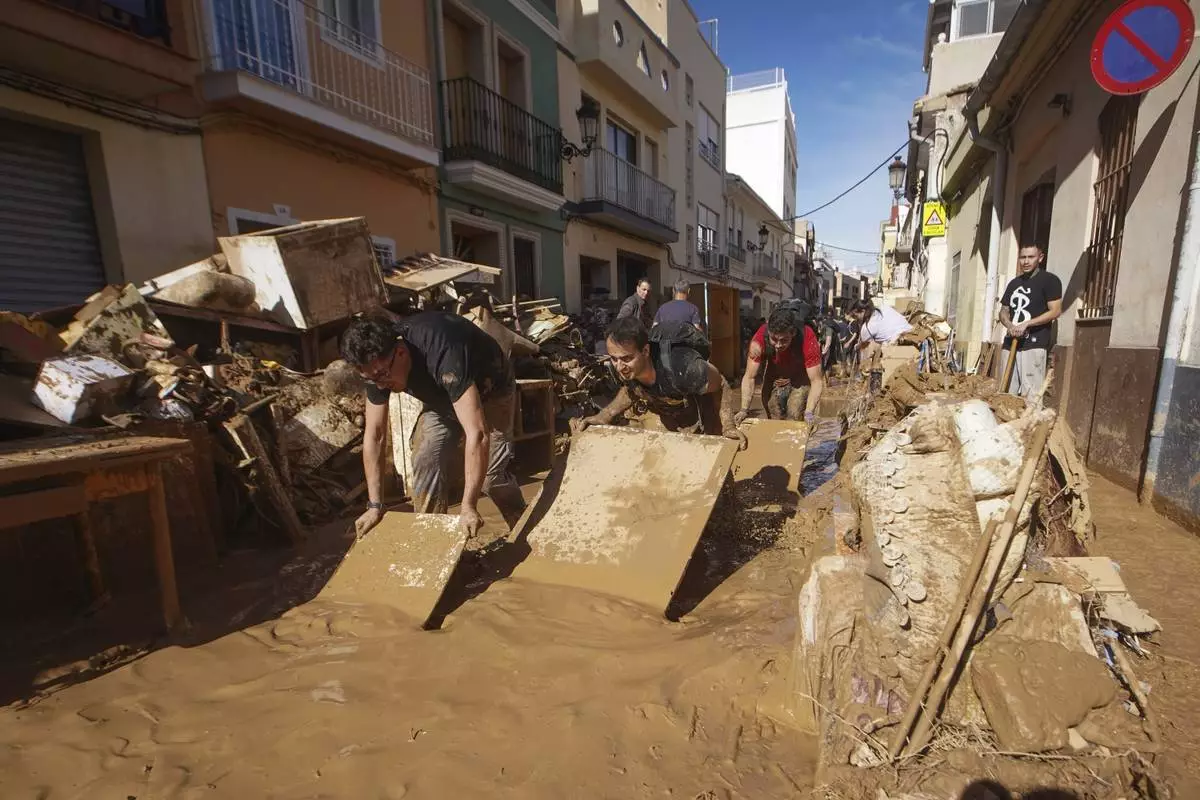
Residents and volunteers try toiling remove mud in an area affected by floods in Paiporta, near Valencia, Spain, Friday, Nov. 1, 2024. (AP Photo/Alberto Saiz)
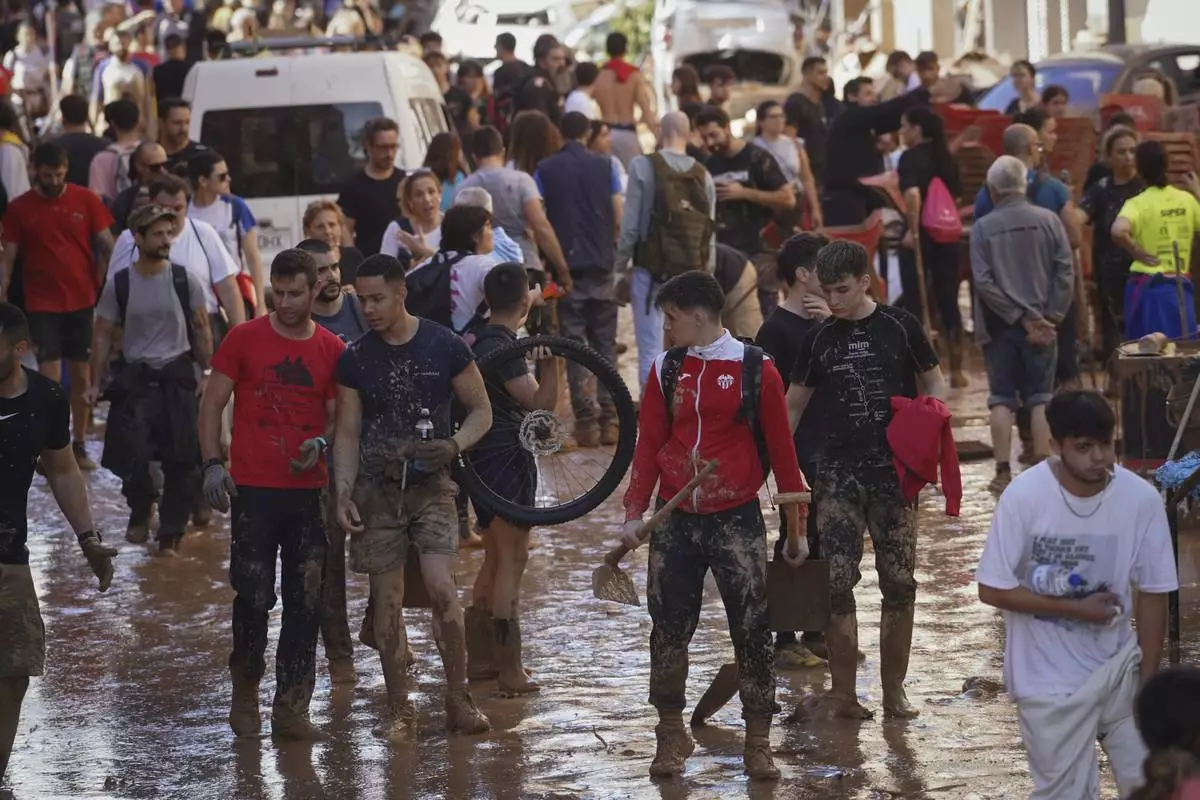
People walks through the mud at an area affected by floods in Paiporta, near Valencia, Spain, Friday, Nov. 1, 2024. (AP Photo/Alberto Saiz)
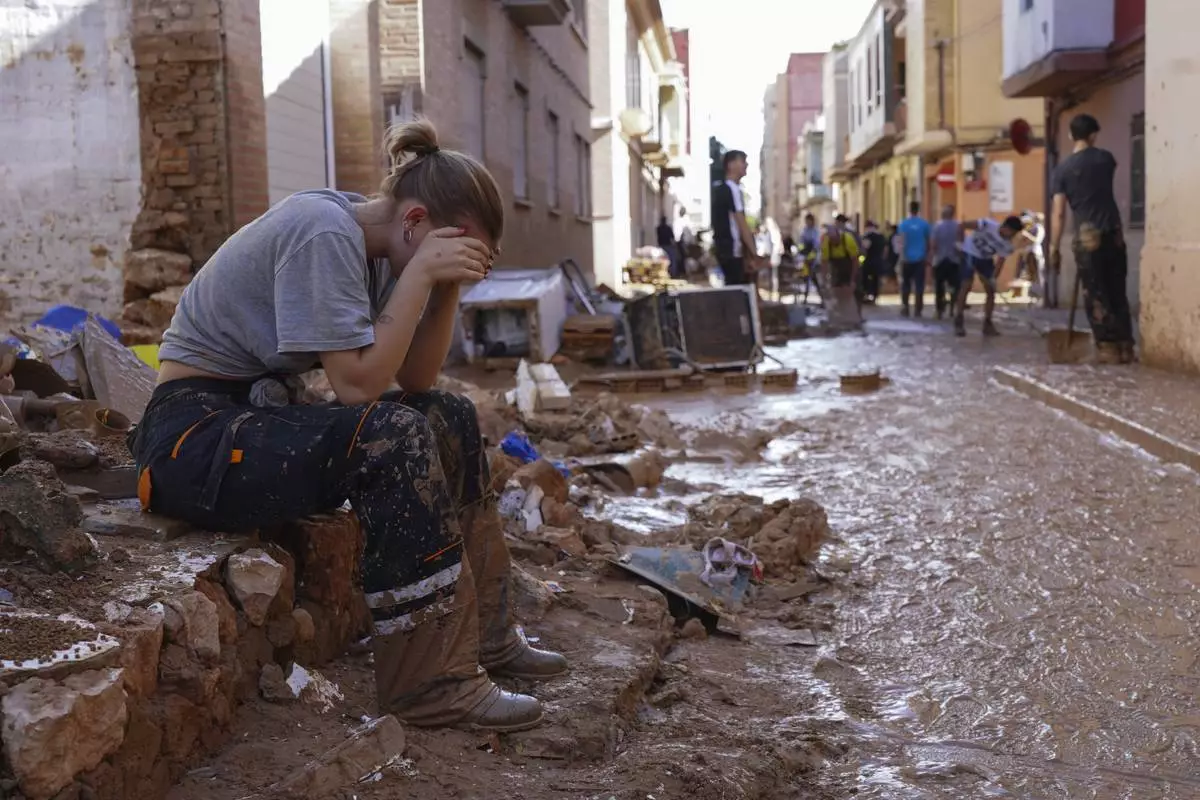
A woman rests as residents and volunteers clean up an area affected by floods in Paiporta, near Valencia, Spain, Friday, Nov. 1, 2024. (AP Photo/Alberto Saiz)
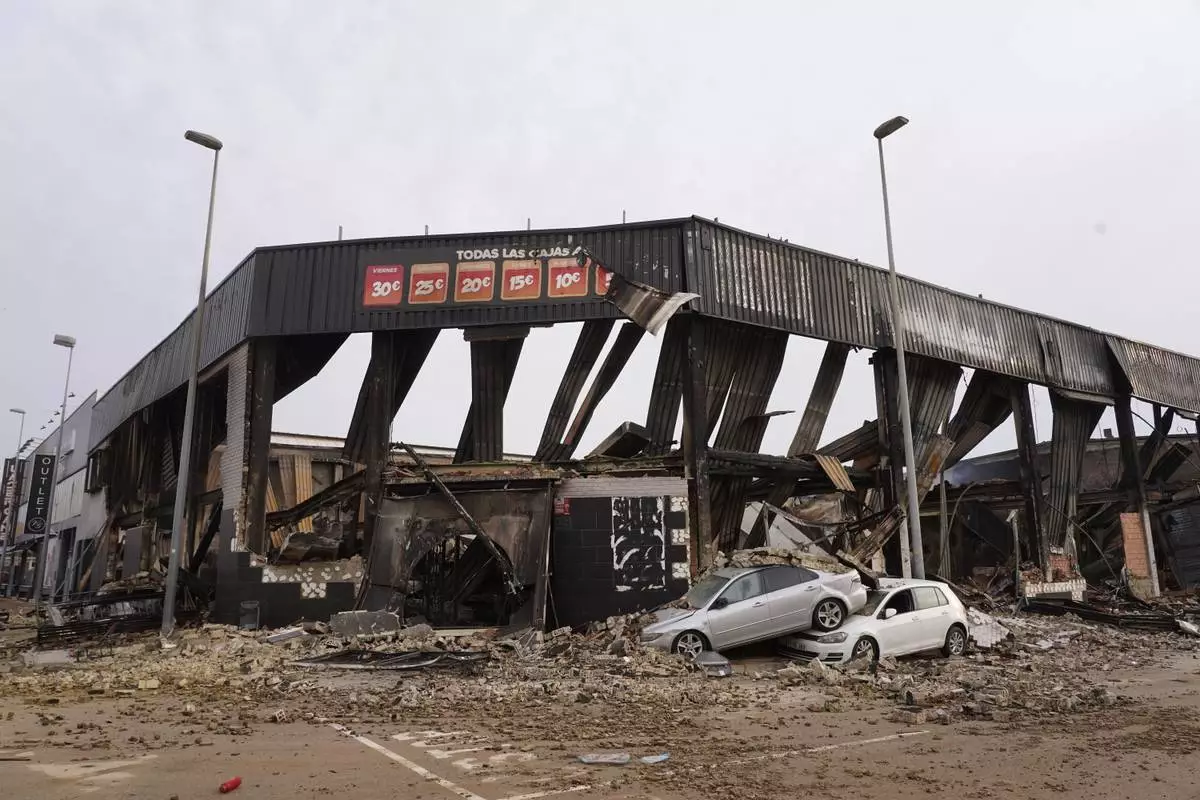
Damaged cars are seen outside a shopping centre after floods in Valencia, Spain, Friday, Nov. 1, 2024. (AP Photo/Alberto Saiz)
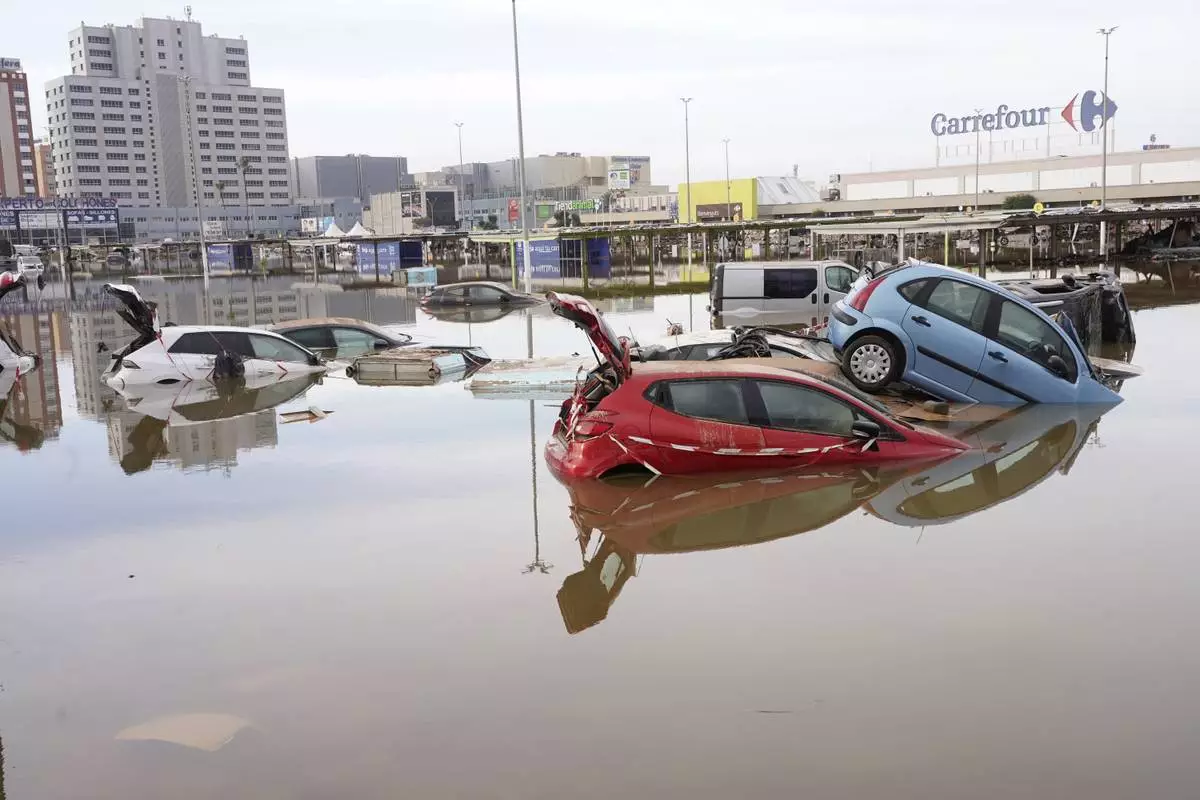
Cars are seen half submerged after floods in Valencia, Spain, Friday, Nov. 1, 2024. (AP Photo/Alberto Saiz)
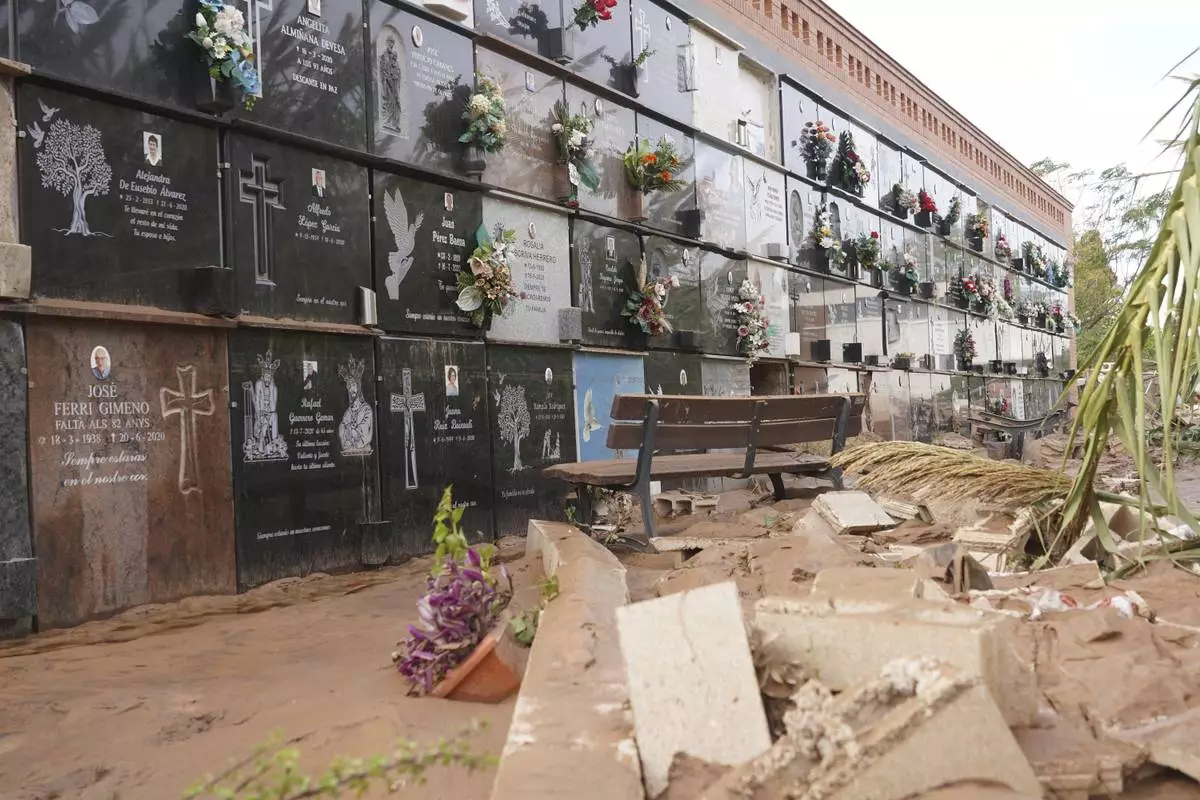
Broken tombstones and debris is seen inside a flood damaged cemetery on the outskirts of Valencia, Spain, Friday, Nov. 1, 2024 after flooding in the region. (AP Photo/Alberto Saiz)
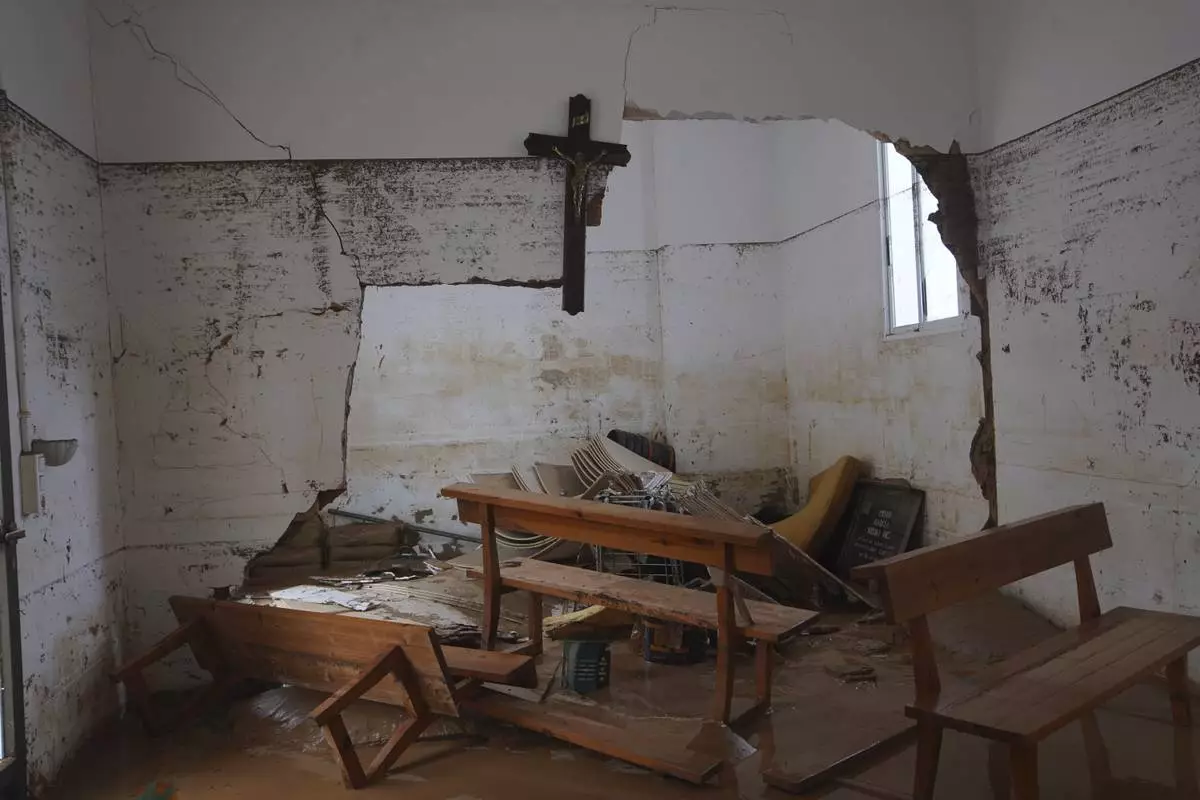
Damage is seen inside a cemetery on the outskirts of Valencia, Spain, Friday, Nov. 1, 2024 after flooding. (AP Photo/Alberto Saiz)
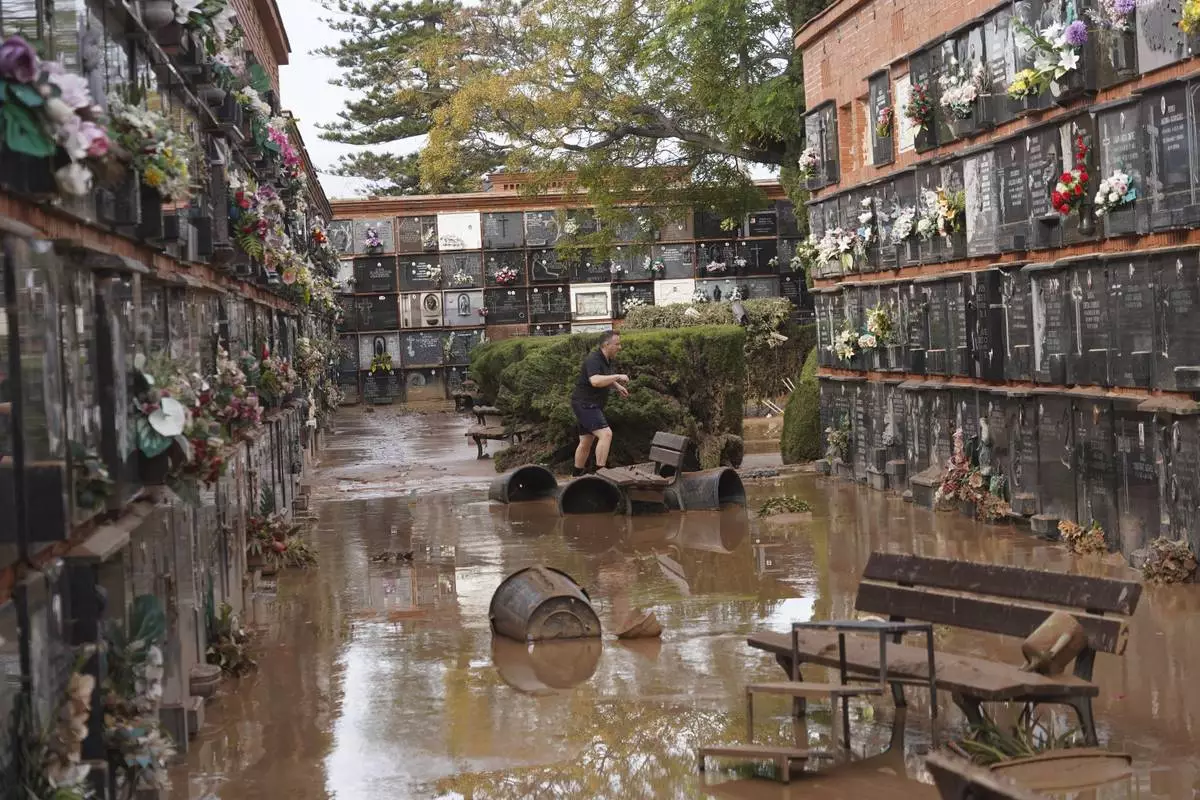
A man walks inside a flood damaged cemetery on the outskirts of Valencia, Spain, Friday, Nov. 1, 2024 after flooding in the region. (AP Photo/Alberto Saiz)
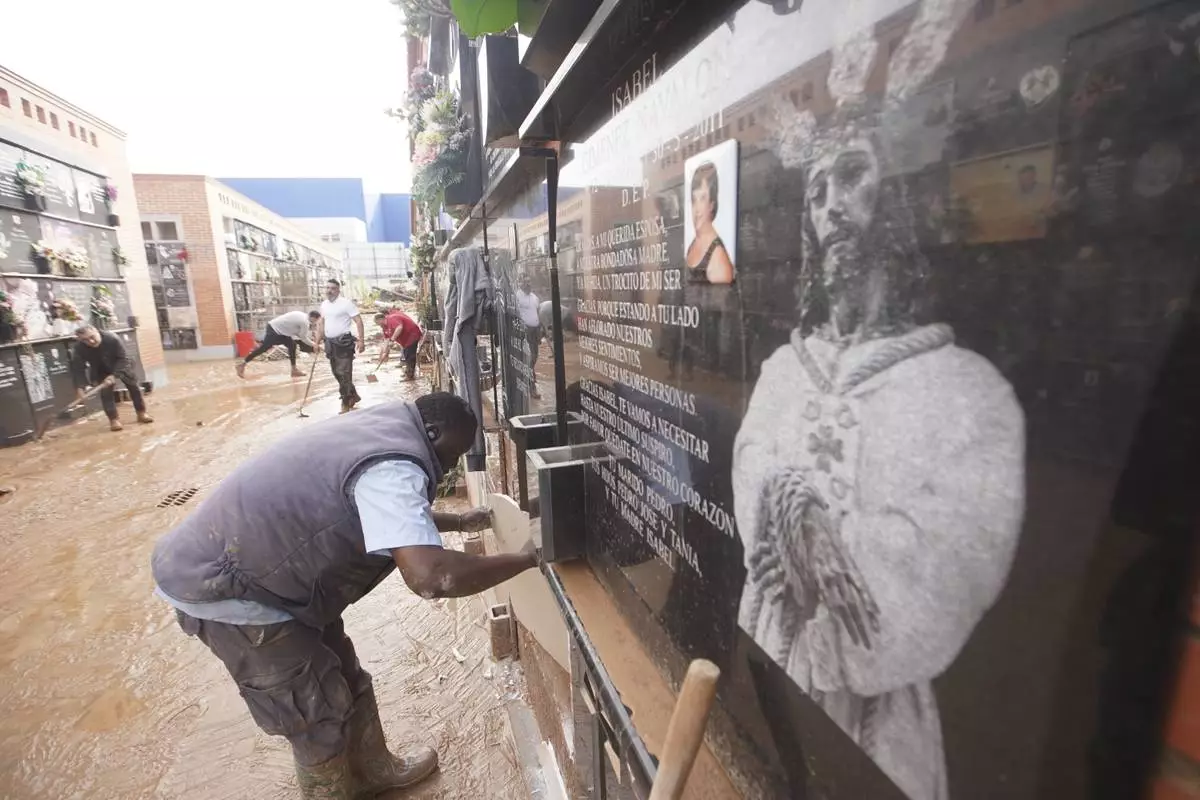
Workers repair damaged tombstones and clean mud inside a cemetery on the outskirts of Valencia, Spain, Friday, Nov. 1, 2024 after flooding in the region. (AP Photo/Alberto Saiz)
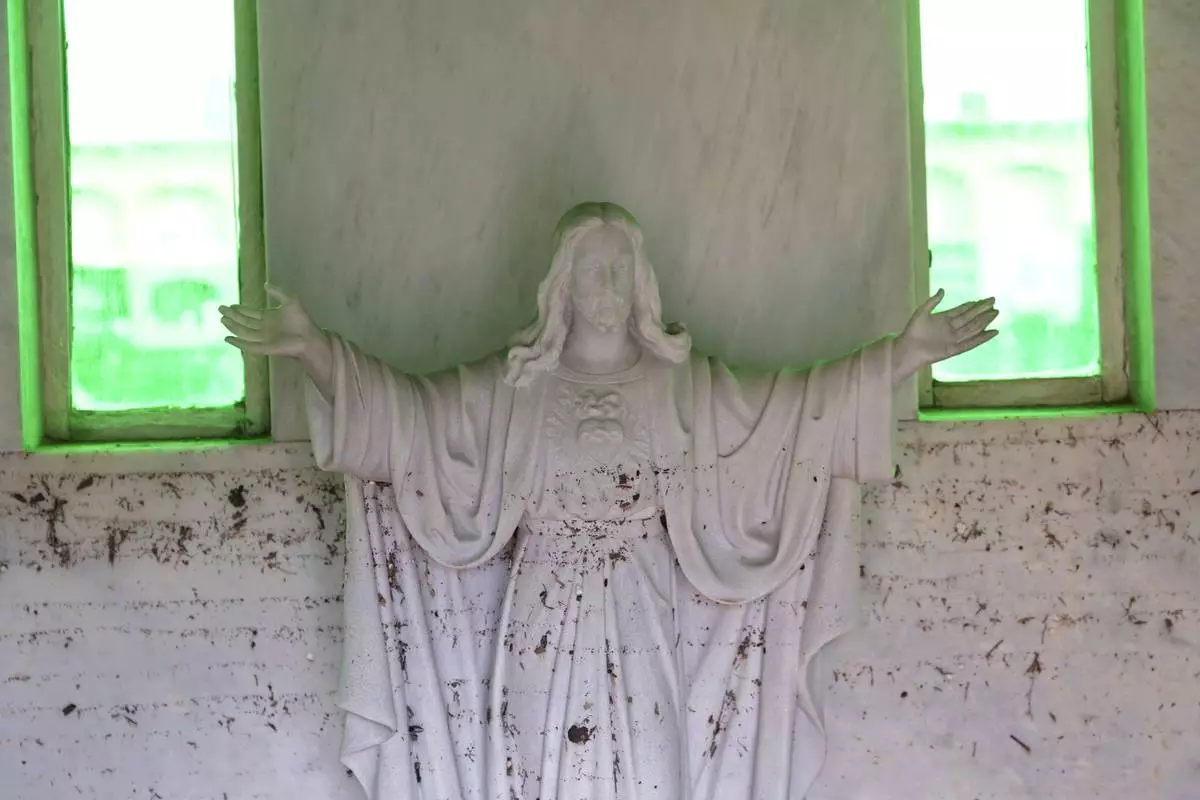
A mud splattered statue of Christ is seen inside a cemetery on the outskirts of Valencia, Spain, Friday, Nov. 1, 2024 after flooding in the region. (AP Photo/Alberto Saiz)
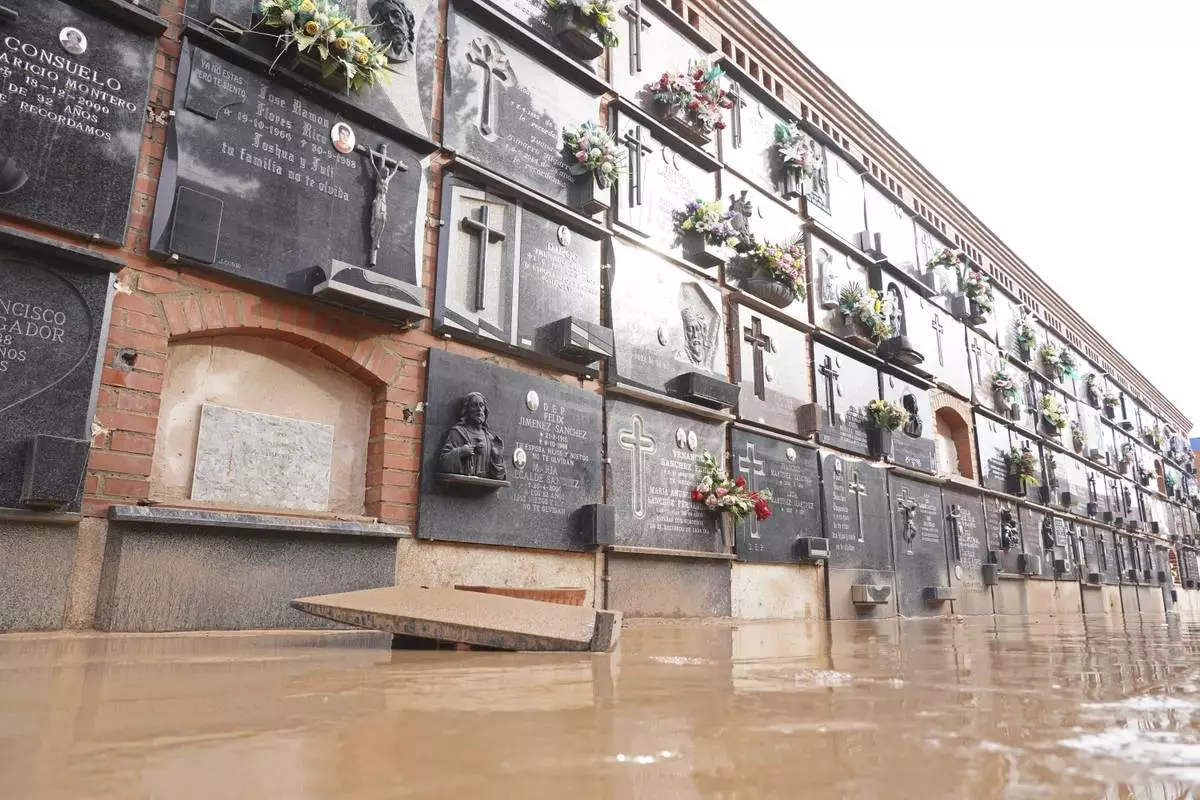
A flooded wall of tombs are seen inside a cemetery on the outskirts of Valencia, Spain, Friday, Nov. 1, 2024 after flooding in the region. (AP Photo/Alberto Saiz)
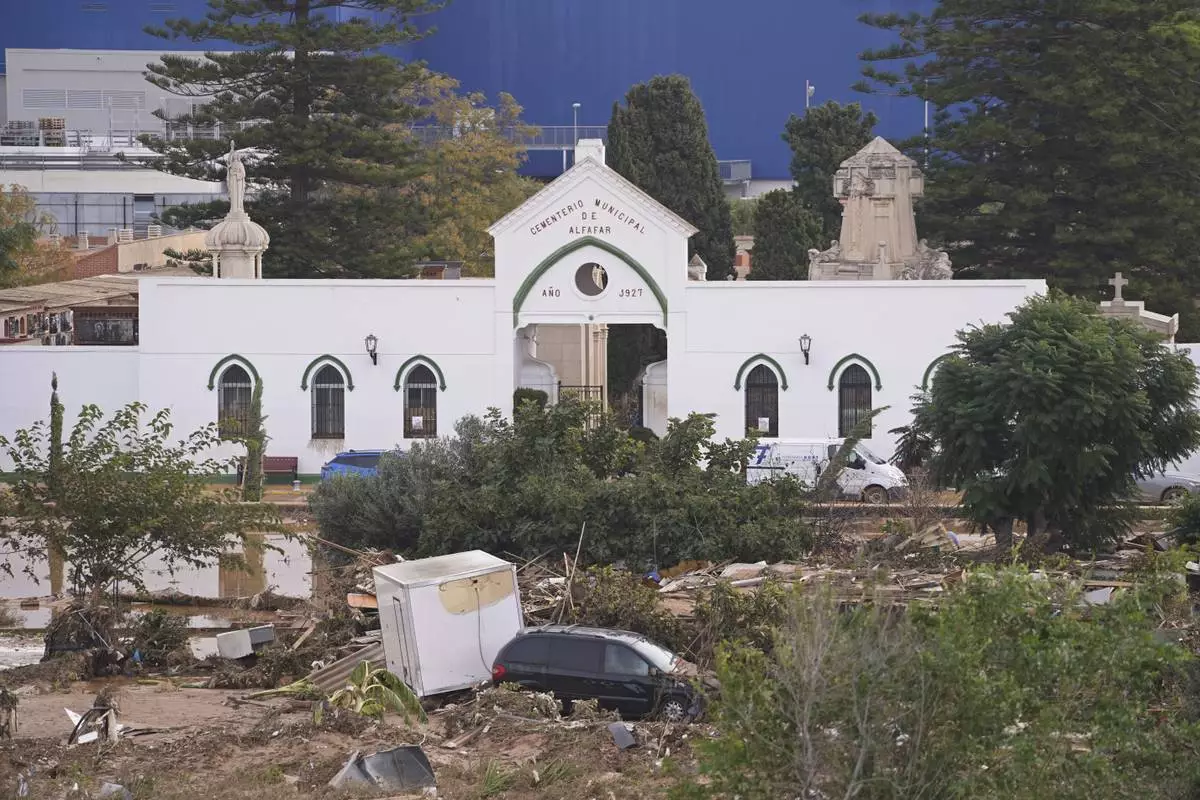
Damage is seen outside a cemetery on the outskirts of Valencia, Spain, Friday, Nov. 1, 2024 after flooding. (AP Photo/Alberto Saiz)
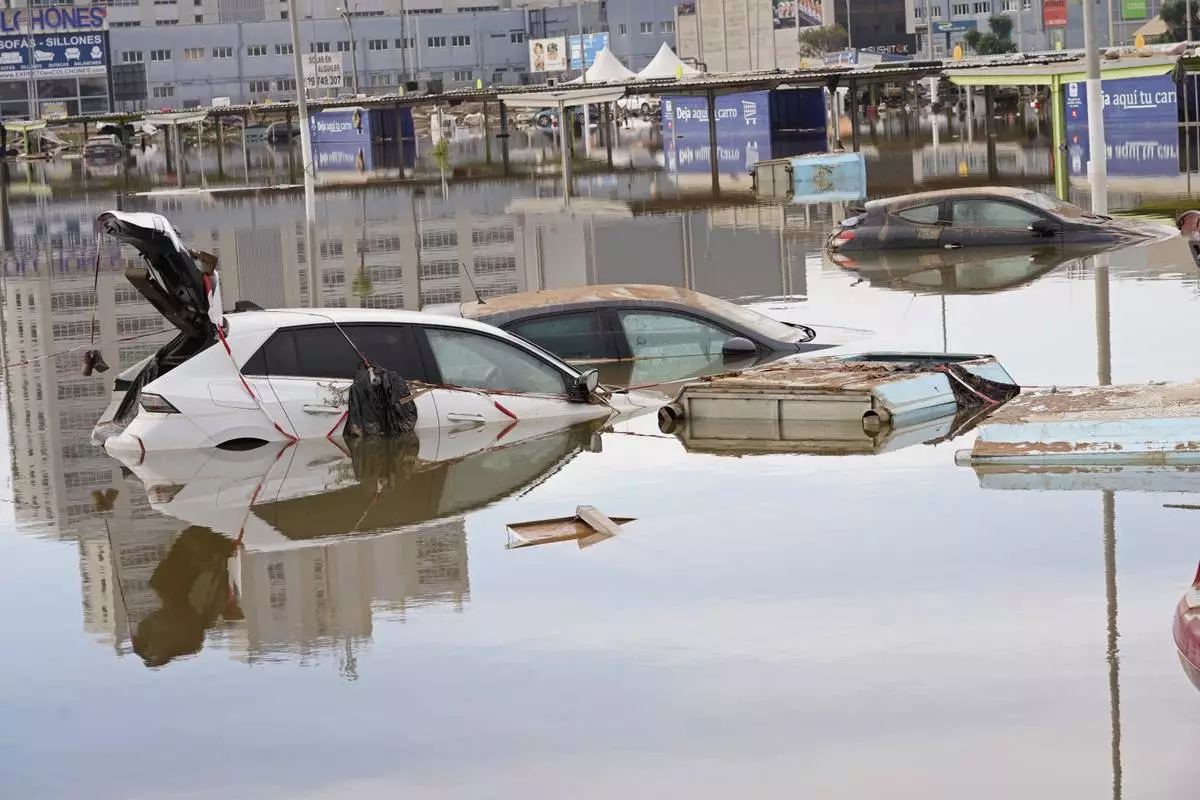
Cars are seen half submerged after floods in Valencia, Spain, Friday, Nov. 1, 2024. (AP Photo/Alberto Saiz)
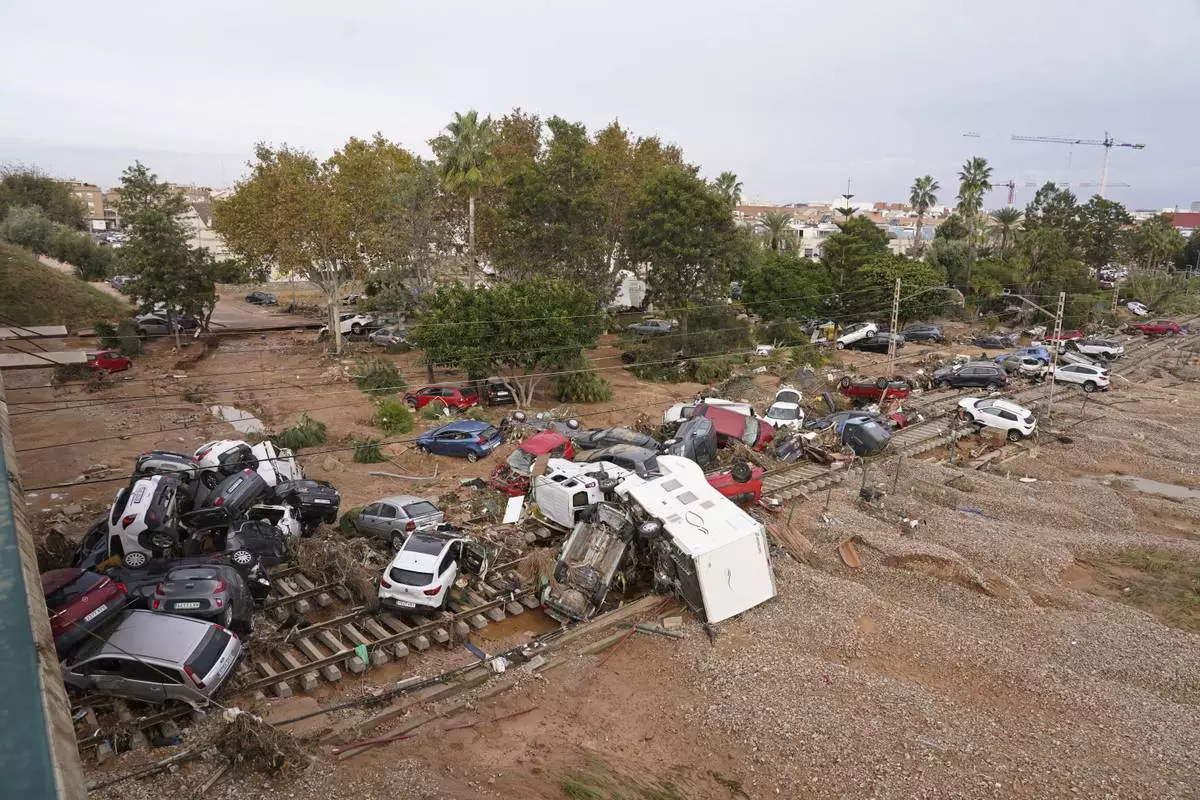
Vehicles are strewn across railway tracks after floods on the outskirts of Valencia, Spain, Friday, Nov. 1, 2024. (AP Photo/Alberto Saiz)
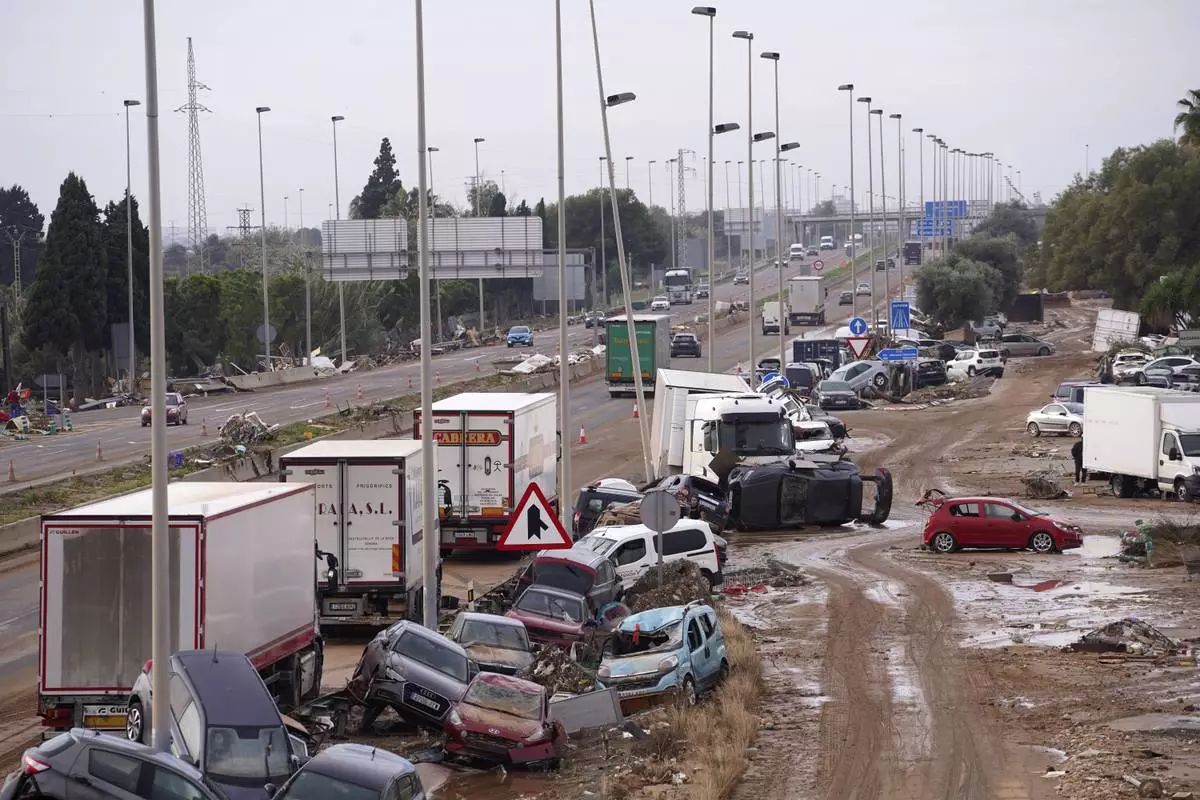
Cars are strewn on the side on a main road after floods in Valencia, Spain, Friday, Nov. 1, 2024. (AP Photo/Alberto Saiz)
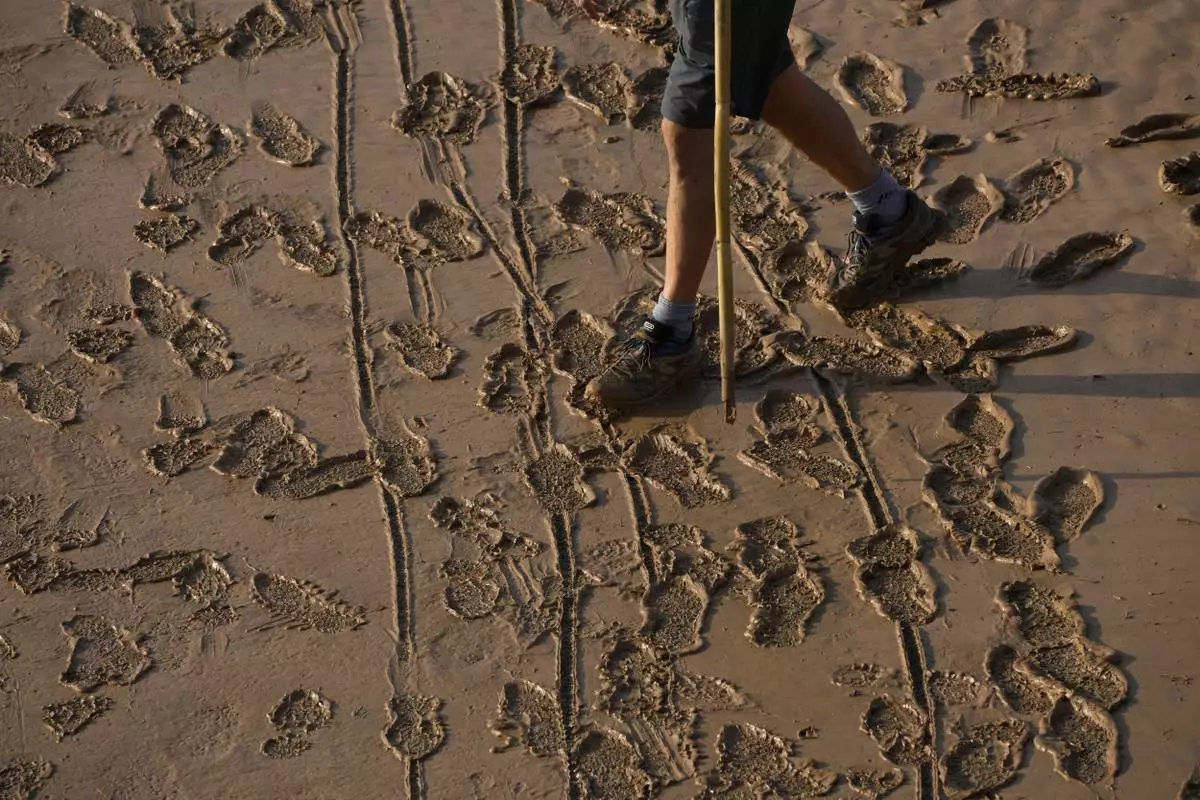
A man walks on a mud-covered road after flooding in Valencia, Spain, Thursday, Oct. 31, 2024. (AP Photo/Manu Fernandez)
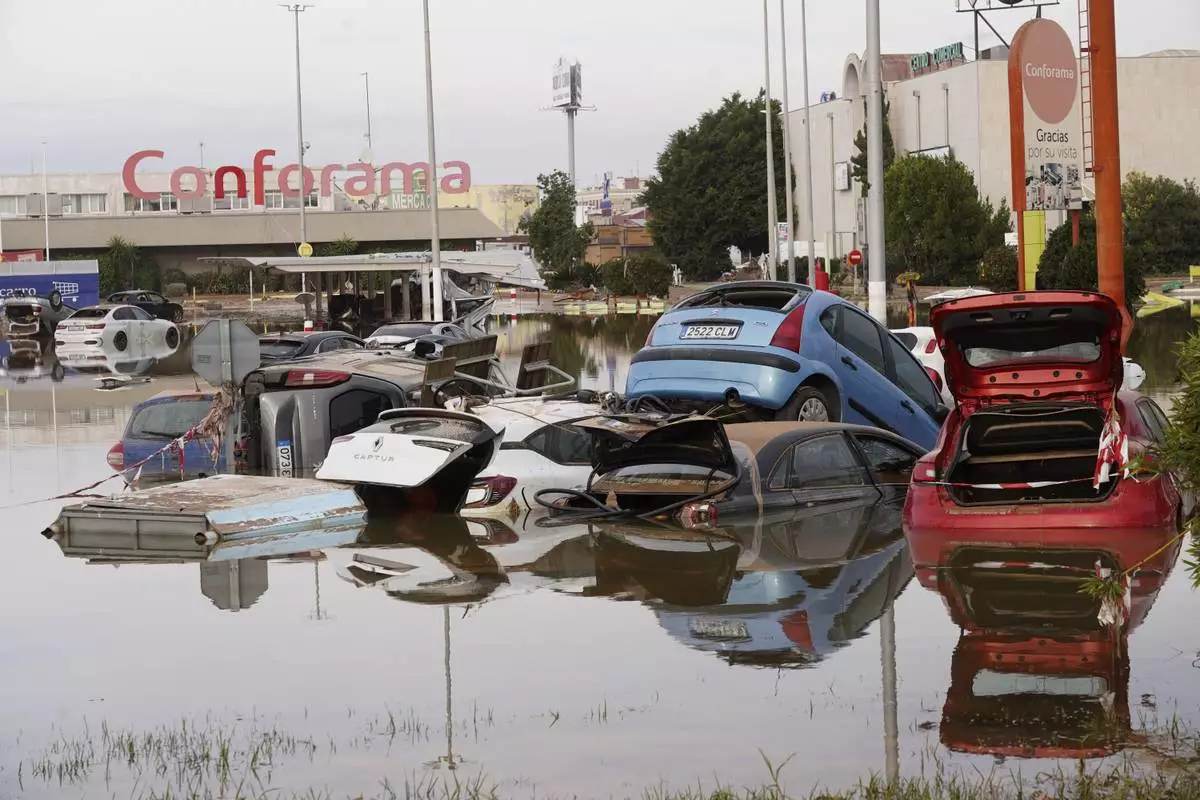
Cars are seen half submerged after floods in Valencia, Spain, Friday, Nov. 1, 2024. (AP Photo/Alberto Saiz)
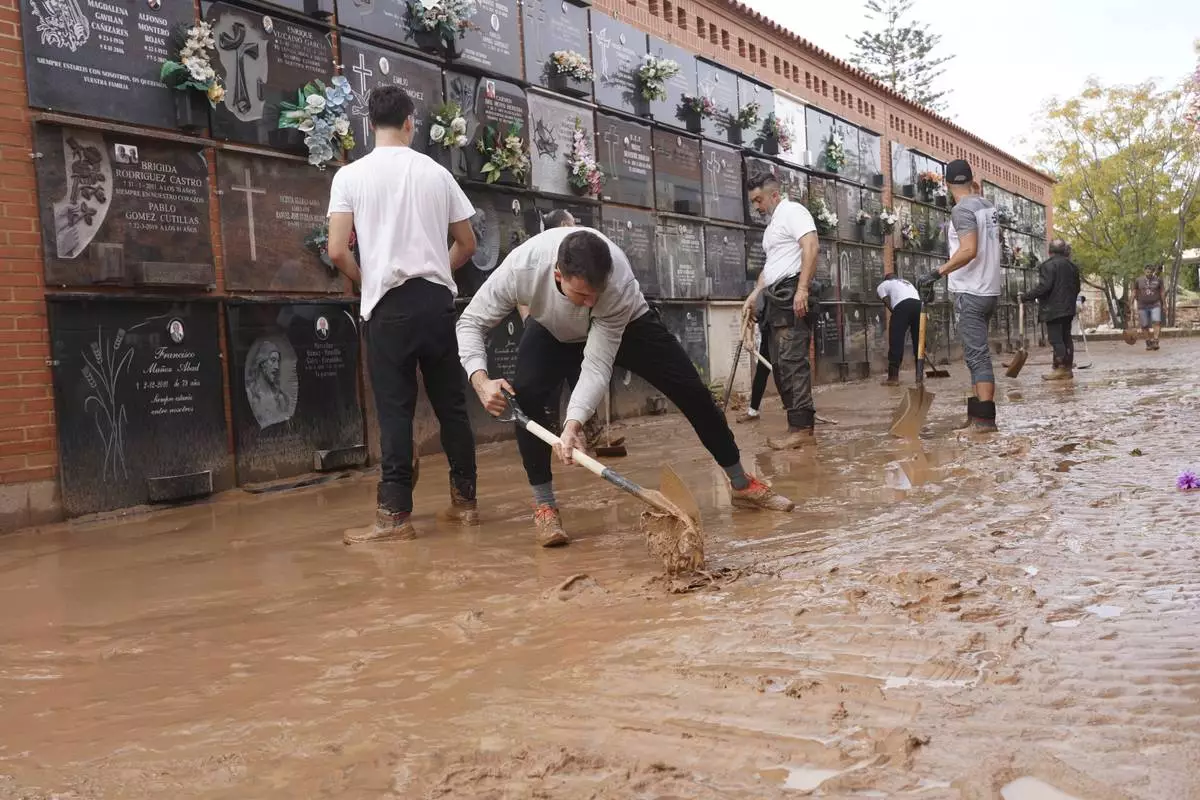
People clear away mud from inside a flood damaged cemetery on the outskirts of Valencia, Spain, Friday, Nov. 1, 2024 after flooding in the region. (AP Photo/Alberto Saiz)