DHAKA, Bangladesh (AP) — Tens of thousands of minority Hindus rallied Friday to demand that the interim government in Muslim-majority Bangladesh protect them from a wave of attacks and harassment and drop sedition cases against Hindu community leaders.
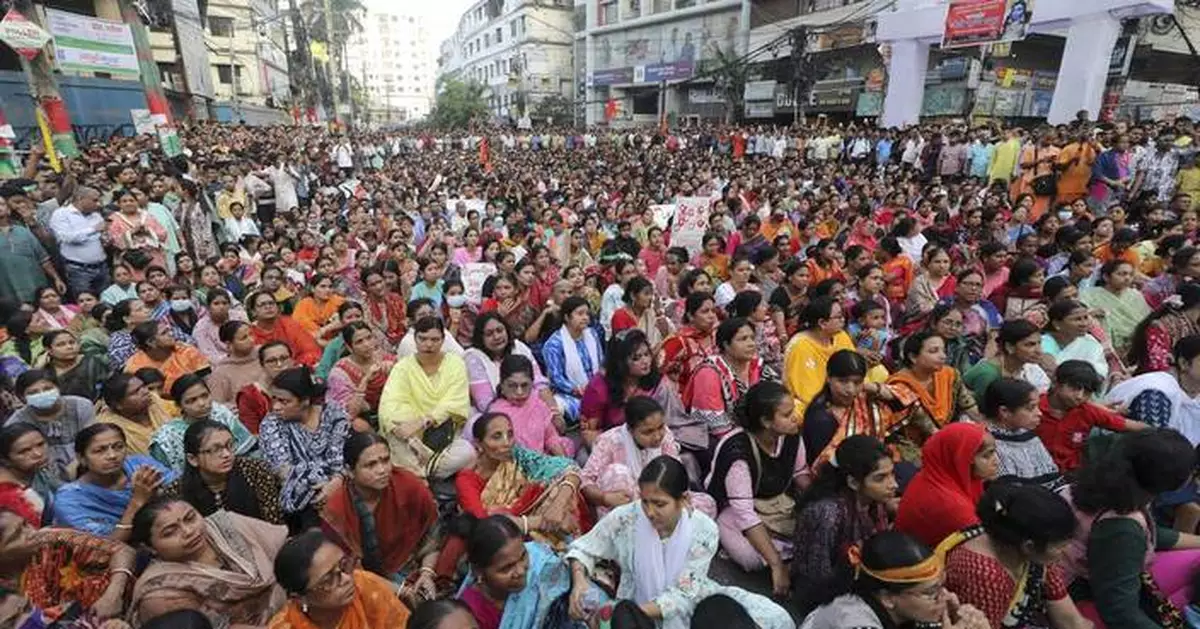
About 30,000 Hindus demonstrated at a major intersection in the southeastern city of Chattogram, chanting slogans demanding their rights while police and soldiers guarded the area. Other protests were reported elsewhere in the country.
Click to Gallery
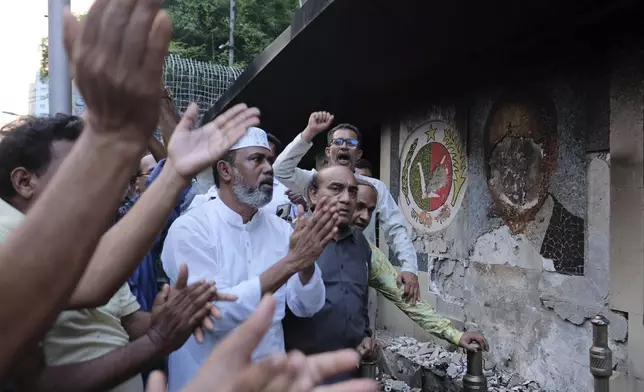
Supporters of the Jatiya Party that supports the country's ousted leader Sheikh Hasina, protest outside a vandalised party office, in Dhaka, Bangladesh, Friday, Nov. 1, 2024. (AP Photo/Mahmud Hossain Opu)
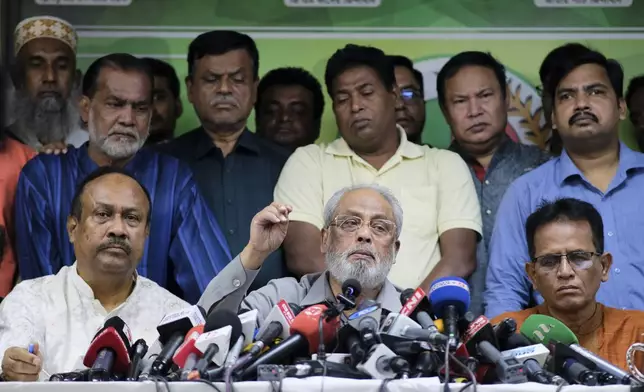
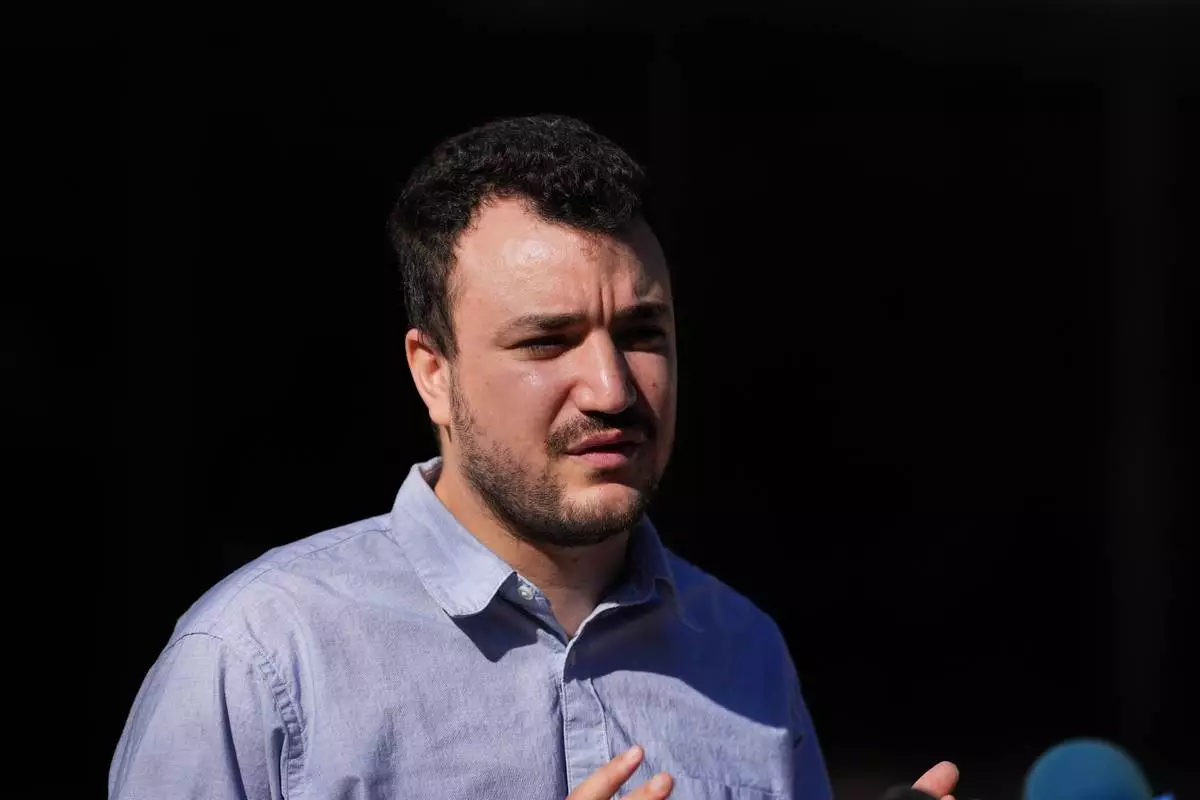
GM Quader, chairperson of the Jatiya Party, that supports the country's ousted leader Sheikh Hasina, speaks to the media about Thursday's attacks on his party's offices in Dhaka, Bangladesh, Friday, Nov. 1, 2024. (AP Photo/Mahmud Hossain Opu)

Bangladesh Hindus participating in a rally to demand that an interim government withdraw all cases against their leaders and protect them from attacks and harassment, argue with the security personnel in Chattogram, Bangladesh, Friday, Nov. 1, 2024. (AP Photo)
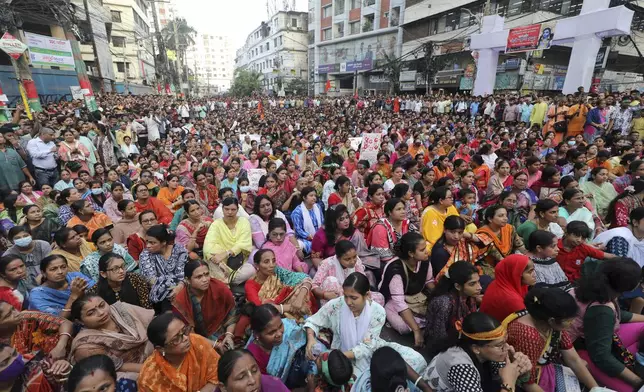
Bangladesh Hindus participate in a rally demanding that an interim government withdraw all cases against their leaders and protect them from attacks and harassment, in Chattogram, Bangladesh, Friday, Nov. 1, 2024. (AP Photo)
Hindu groups say there have been thousands of attacks against Hindus since early August, when the secular government of Prime Minister Sheikh Hasina was overthrown and Hasina fled the country following a student-led uprising. Muhammad Yunus, the Nobel peace laureate named to lead an interim government after Hasina's downfall, says those figures have been exaggerated.
Hindus make up about 8% of the country's nearly 170 million people, while Muslims are about 91%.
The country’s influential minority group Bangladesh Hindu Buddhist Christian Unity Council has said there have been more than 2,000 attacks on Hindus since Aug. 4, as the interim government has struggled to restore order.
United Nations human rights officials and other rights groups have expressed concern over human rights in the country under Yunus.
Hindus and other minority communities say the interim government hasn't adequately protected them and that hard-line Islamists are becoming increasingly influential since Hasina's ouster.
The issue has reached beyond Bangladesh, with Indian Prime Minister Narendra Modi voicing concern over reports of attacks.
While the administration of United States President Joe Biden has said it is monitoring Bangladesh’s human rights issues since Hasina’s ouster, U.S. presidential candidate Donald Trump has condemned what he described as “barbaric” violence against Hindus, Christians, and other minorities in Bangladesh.
In a post on X, he said: “I strongly condemn the barbaric violence against Hindus, Christians, and other minorities who are getting attacked and looted by mobs in Bangladesh, which remains in a total state of chaos.”
Hindu activists have been staging protest rallies in the capital, Dhaka, and elsewhere since August to press a set of eight demands including a law to protect minorities, a ministry for minorities and a tribunal to prosecute acts of oppression against minorities. They also seek a five-day holiday for their largest festival, the Durga Puja.
Friday's protest in Chattogram was hastily organized after sedition charges were filed Wednesday against 19 Hindu leaders, including prominent priest Chandan Kumar Dhar, over an Oct. 25 rally in that city. Police arrested two of the leaders, angering Hindus.
The charges stem from an event in which a group of rally-goers allegedly placed a saffron flag above the Bangladesh flag on a pillar, which was considered disrespecting the national flag.
Hindu community leaders say the cases are politically motivated and demanded Thursday that they be withdrawn within 72 hours. Another Hindu rally was planned for Saturday in Dhaka.
Separately, supporters of Hasina's Awami League party and its allied Jatiya Party have said they also have been targeted since Hasina's ouster. Jatiya's headquarters was vandalized and set on fire late Thursday.
On Friday, Jatiya Party Chair G.M. Quader said his supporters would continue to hold rallies to demand their rights despite risking their lives. He said they would hold a rally Saturday at the party headquarters in Dhaka to protest price hikes of commodities, and what they call false charges against their leaders and activists.
Later Friday, the Dhaka Metropolitan Police announced it was banning any rallies near the Jatiya Party's headquarters. Hours after the police decision, the party said it postponed their rally to show respect to the law and a new date for the rally would be announced soon.
The police decision came after a student group strongly criticized the police administration for initially granting permission for the rally, and threatened to block it.
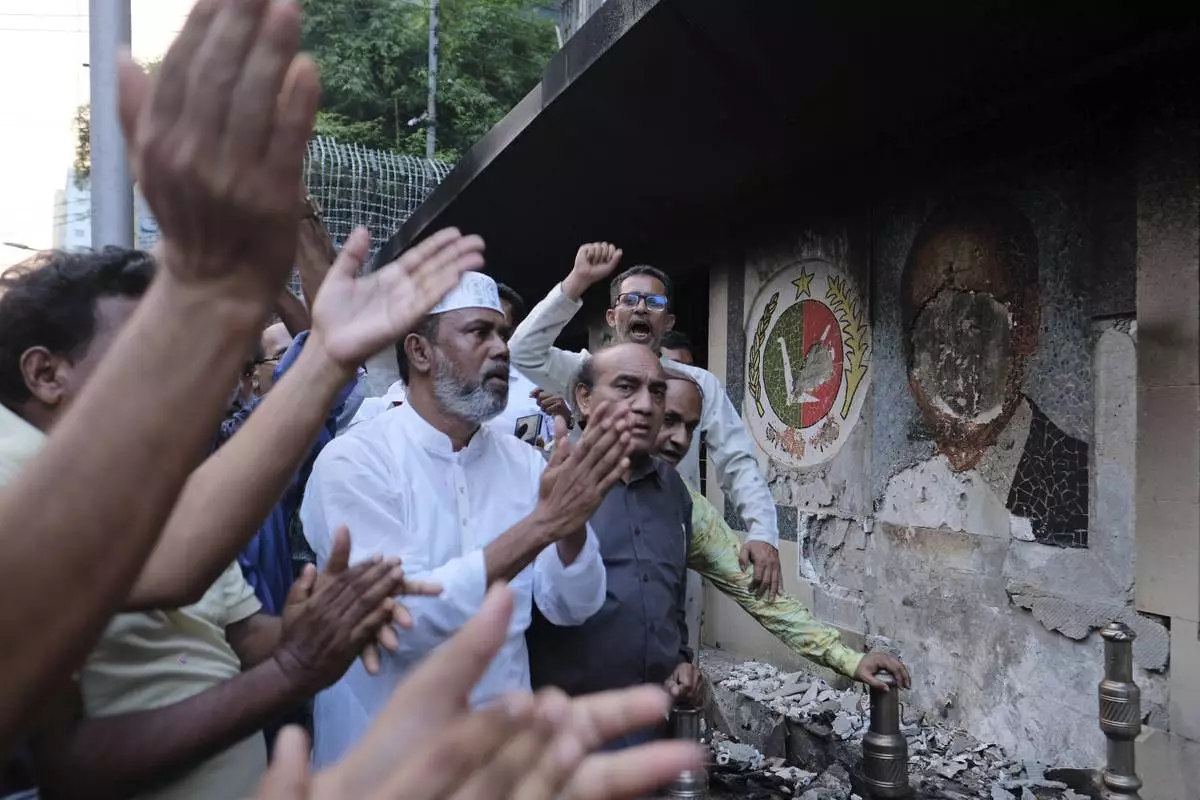
Supporters of the Jatiya Party that supports the country's ousted leader Sheikh Hasina, protest outside a vandalised party office, in Dhaka, Bangladesh, Friday, Nov. 1, 2024. (AP Photo/Mahmud Hossain Opu)
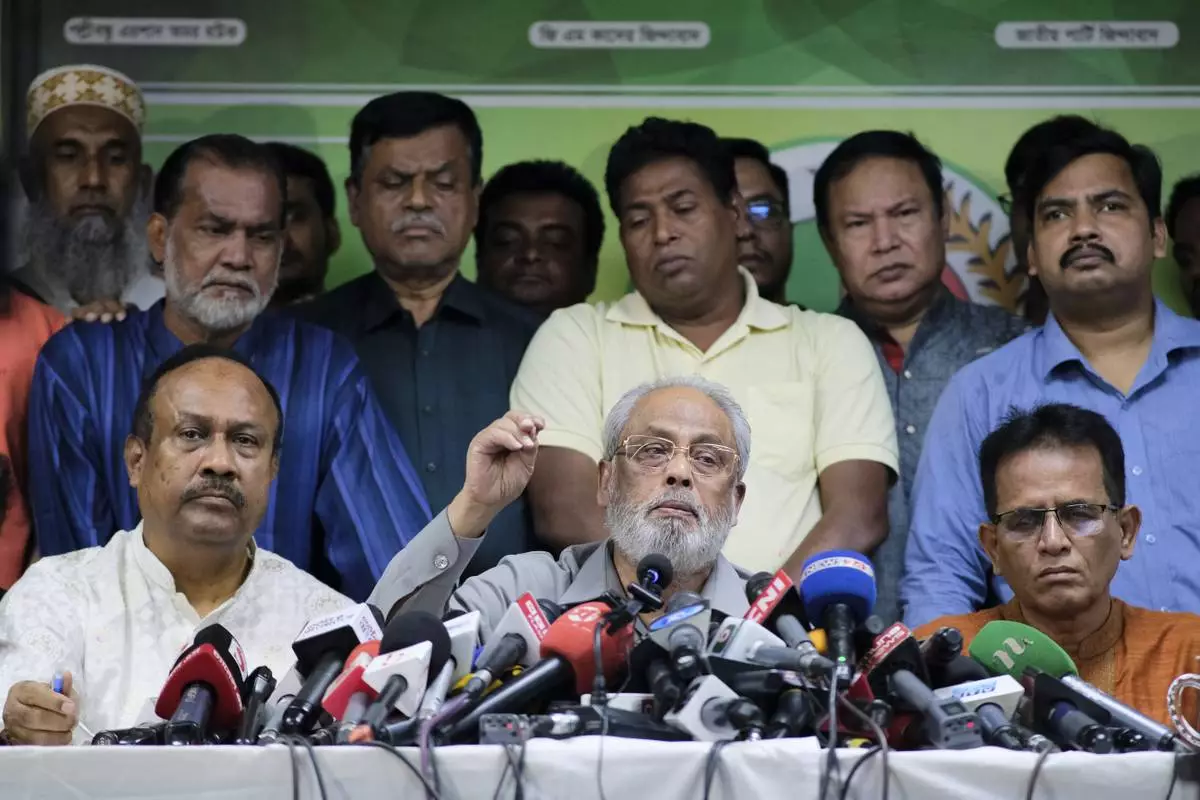
GM Quader, chairperson of the Jatiya Party, that supports the country's ousted leader Sheikh Hasina, speaks to the media about Thursday's attacks on his party's offices in Dhaka, Bangladesh, Friday, Nov. 1, 2024. (AP Photo/Mahmud Hossain Opu)
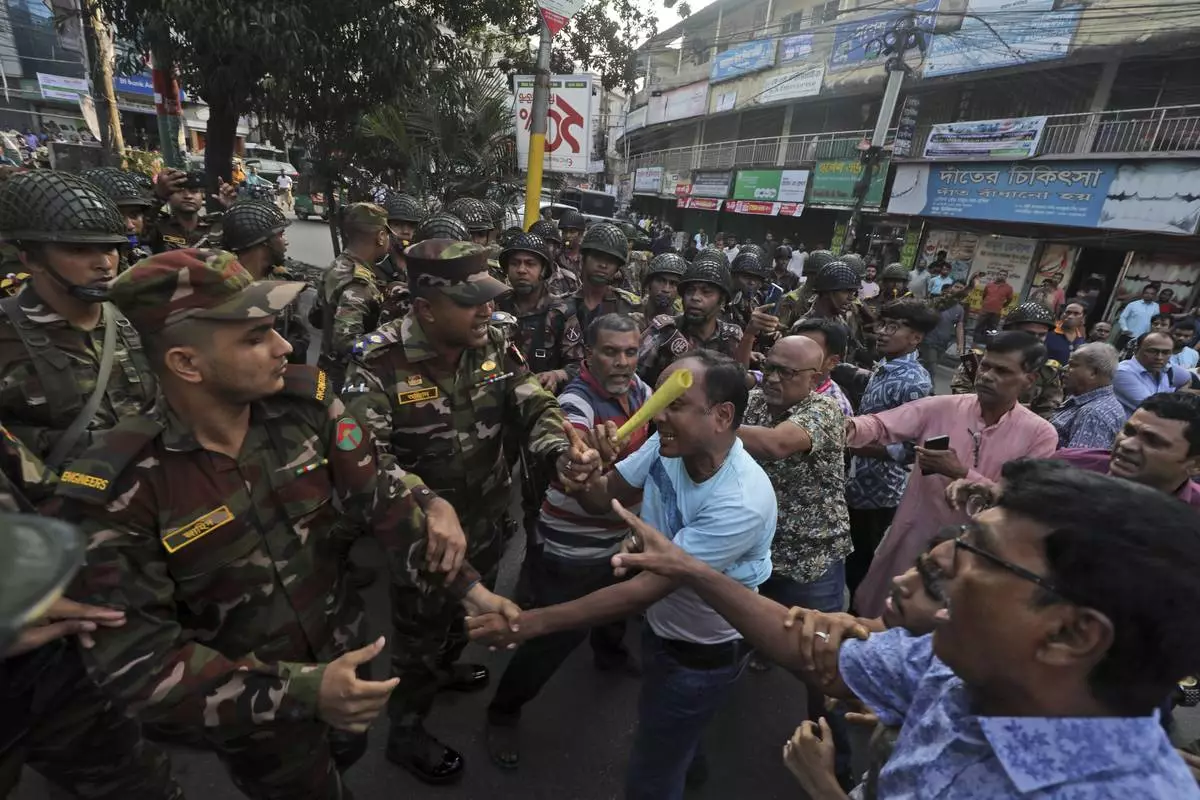
Bangladesh Hindus participating in a rally to demand that an interim government withdraw all cases against their leaders and protect them from attacks and harassment, argue with the security personnel in Chattogram, Bangladesh, Friday, Nov. 1, 2024. (AP Photo)
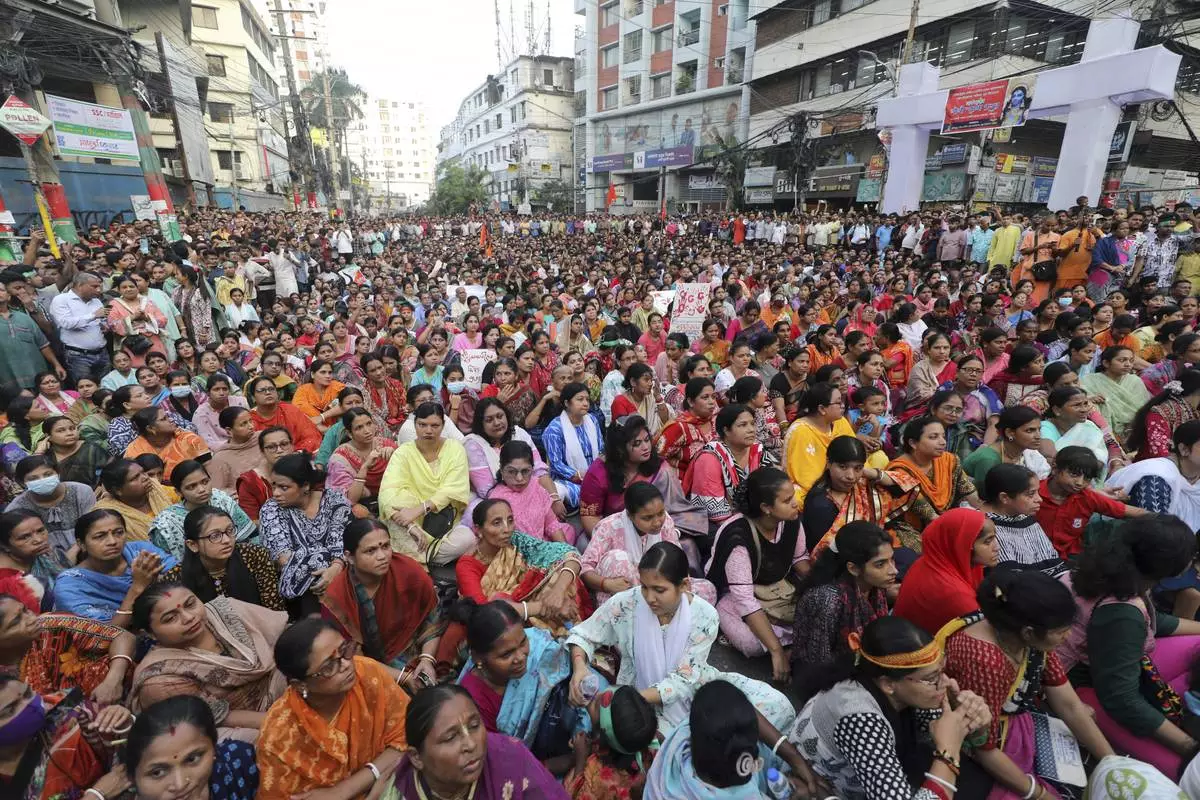
Bangladesh Hindus participate in a rally demanding that an interim government withdraw all cases against their leaders and protect them from attacks and harassment, in Chattogram, Bangladesh, Friday, Nov. 1, 2024. (AP Photo)