The No. 1 unit of the Zhangzhou nuclear power plant will be put into operation within 2024, which is expected to drive economic and social development of east China's Fujian Province and serve as a new engine for the region to achieve carbon peak and carbon neutrality goals.
The Zhangzhou nuclear power project is China's largest base for using Hualong One technology, a domestically developed third-generation reactor design. It consists of six nuclear power units and now, four are under construction.
"The unit one has completed the nuclear fuel loading and will be put into commercial operation by the end of this year. The unit 2 is preparing for the cold commissioning. The unit 3 began construction on February 22, and the unit 4 on September 27," said Wu Yuanming, director of Guodian Zhangzhou Energy with the China National Nuclear Corporation (CNNC), owner of the power plant.
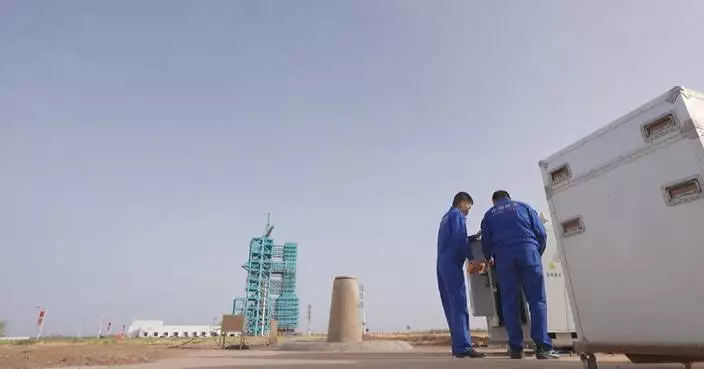
At the first Hualong One power unit of the Zhangzhou nuclear power plant, the final preparations before commercial operations are underway, and all facilities are ready. The personnel there are busy checking operational status and communicating to ensure a safe and smooth operation.
"The Zhangzhou nuclear power plant's unit 1 is in a critical period of commissioning with all major works being carried out in an orderly mannter. All the departments are coordinating, with each performing their duties and striving for the goal of connecting to the grid for commerical use by the end of the year," said Qin Shidong, manager of the Operation Department of CNNC Guodian Zhangzhou Energy.
Construction is underway elsewhere at the power plant.
"The No. 4 nuclear power unit officially began construction on September 27, 2024. Now, all the arrangements on the site are carried out based on schedule," said Zhang Lu, manager for the Zhangzhou nuclear power plant project under China Nuclear Industry 24 Construction.
The working status there is an example of China's striving for nuclear energy via the advanced third-generation nuclear technology Hualong One. It also signifies the country's ceaseless pursuit for a safe, green and sustainable development.
Hualong One reactors were jointly designed by two nuclear power giants, China General Nuclear Power Group and CNNC. At present, six Hualong One power units are in operation domestically and 27 others are under construction.
According to CNNC, each Hualong One nuclear power unit generates more than 10 billion kilowatt-hours of electricity per year, which can meet the annual production demand and domestic electricity demand of 1 million people in moderately developed countries. That is equivalent to reducing the consumption of standard coal by 3.12 million tonnes and reducing carbon dioxide emissions by 8.16 million tonnes per year, as well as an equivalent to planting over 70 million trees.
On January 30, 2021, the world's first nuclear power unit using Hualong One technology was officially put into commercial operation in Fuqing, Fujian Province. On May 20, 2021, the K2 unit at the Karachi Nuclear Power Plant in Pakistan, which is the first overseas nuclear reactor using Hualong One, started commercial operation.
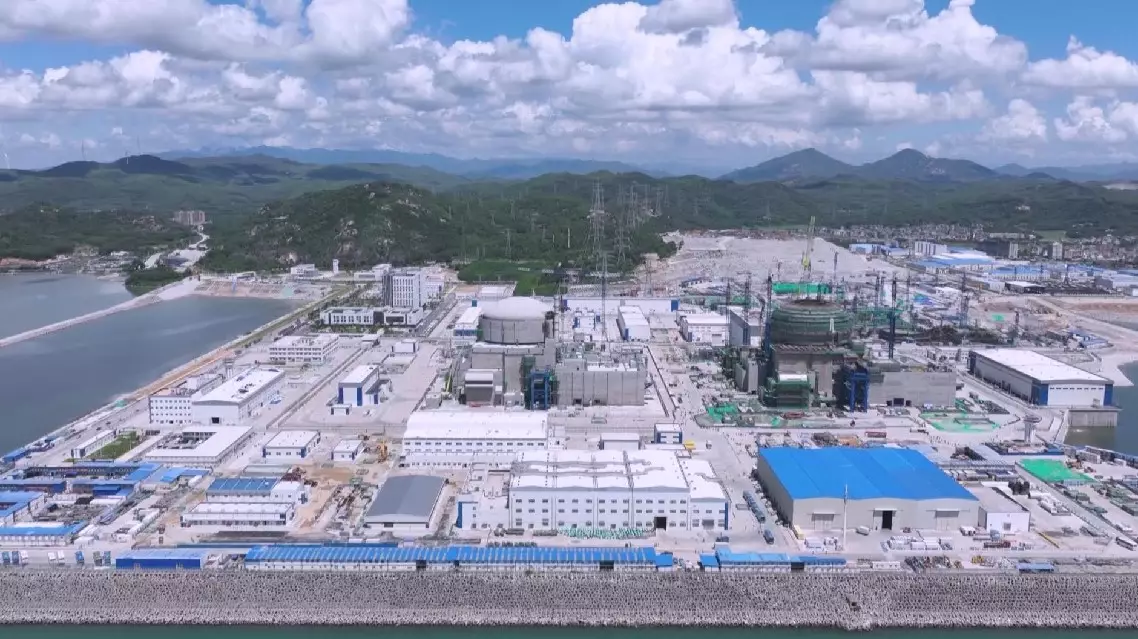
No. 1 Unit of Zhangzhou nuclear power plant to start operation within 2024