International observers and scholars have hailed the just-concluded China-Russia summit as a pivotal event in contemporary history, underscoring its significance for promoting a new type of international relations and advancing a more balanced, multipolar global system.
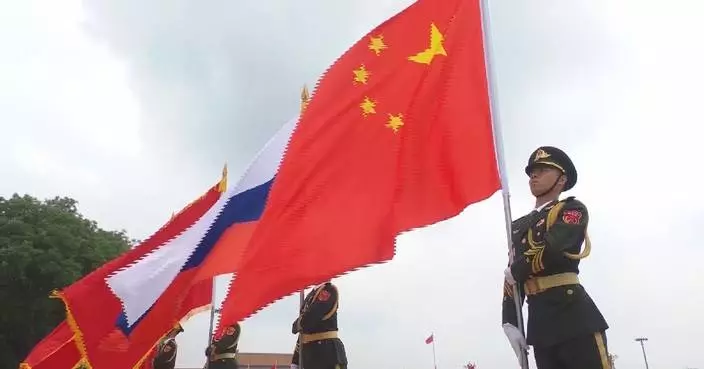
Chinese President Xi Jinping held talks with Russian President Vladimir Putin in Beijing on Wednesday, exchanging views on a wide range of issues and witnessing the signing of a slew of cooperation documents.
The two sides also agreed to further extend the China-Russia Treaty of Good-Neighborliness and Friendly Cooperation.
"The China-Russia Treaty of Good-Neighborliness and Friendly Cooperation has laid a solid foundation for the development of bilateral relations in the 21st century. Furthermore, this year marks several historical milestones: the 25th anniversary of the establishment of the Shanghai Cooperation Organization, the 20th anniversary of the formation of the BRICS mechanism, and the 30th anniversary of the establishment of the Russia-China strategic partnership of coordination. These factors have created a special atmosphere for the China-Russia summit this time. This meeting represents one of the most important events in the bilateral relationship, and our two countries have set a model for a new type of major-country relations," Kirill Barsky, vice chairman of the Russia-China Friendship Association, said in an interview with China Media Group.
Other experts emphasize that the deepening China-Russia partnership extends beyond bilateral interests, offering a framework for reshaping global governance.
"In a broad sense, multipolarity means that all countries have the right to choose their own diplomatic partners and pursue economic cooperation according to their own will, and the cooperation between China and Russia will contribute to the formation of a more just international order," said Timofey Bordachev, a researcher at the Higher School of Economics, one of Russia's top universities.
The sentiment is echoed by observers from the Global South, who view the China-Russia partnership as a stabilizing force amid geopolitical uncertainty.
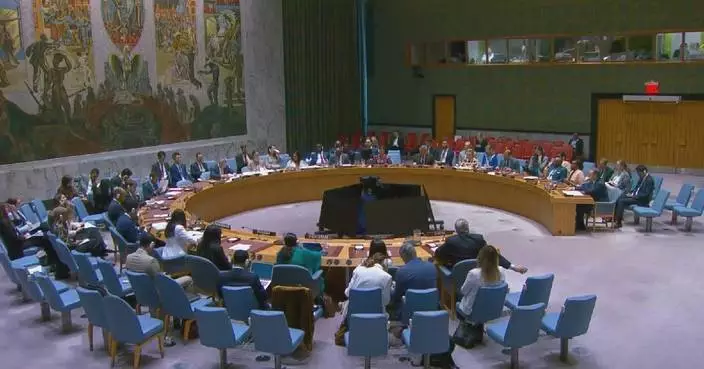
"First and foremost, it is essential to recognize that China and Russia, as permanent members of the United Nations Security Council, play a pivotal role in international affairs. In my view, President Xi Jinping's remarks convey a clear message: global governance is evolving toward multipolarity, and new pathways and approaches should be explored to actively address the profound transformations currently unfolding in our world," said Kamal Mansari, editor-in-chief of the Algerian newspaper "Al-Shabab Al-Mustaqil (Independent Youth)".
Imram Makama, director of the South African division of Africa's Young Entrepreneurs organization, said China-Russia relations were significant for countries across the world.
"For observers in Africa and the wider Global South, questions around fair representation, development priorities and more balanced global system remain highly relevant, making such partnership significant beyond Eurasia," he said.
Gustavo Arevalo, a Peruvian specialist in international law, highlighted the multidimensional nature of China-Russia relations as well as the high complementarity between their economies.
"President Putin's visit to China demonstrates that the two economies have reached a high level of complementarity. The bilateral relationship between Russia and China is multidimensional in nature. The new global governance concepts advocated by China are also recognized and shared by Russia. This vision calls for granting Global South countries greater opportunities to participate in international decision-making, including within the United Nations system," said Arevalo.
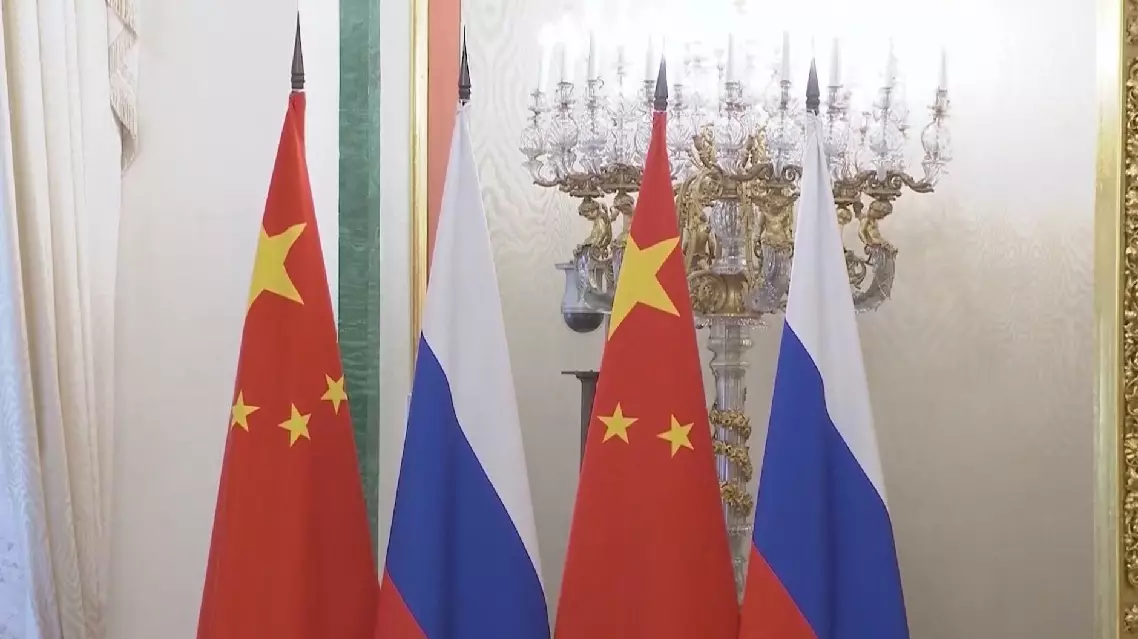
China-Russia summit pivotal for advancing multipolar global system: observers