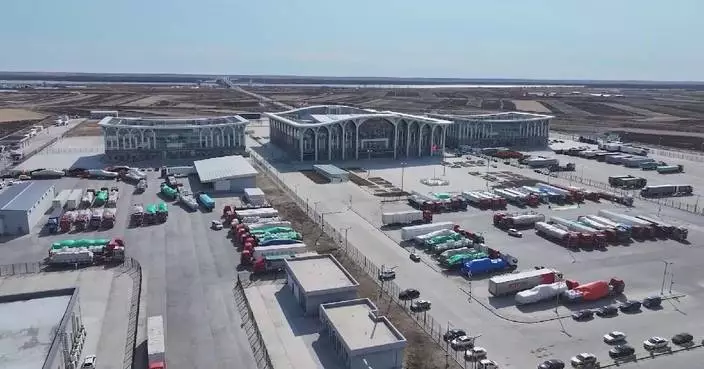
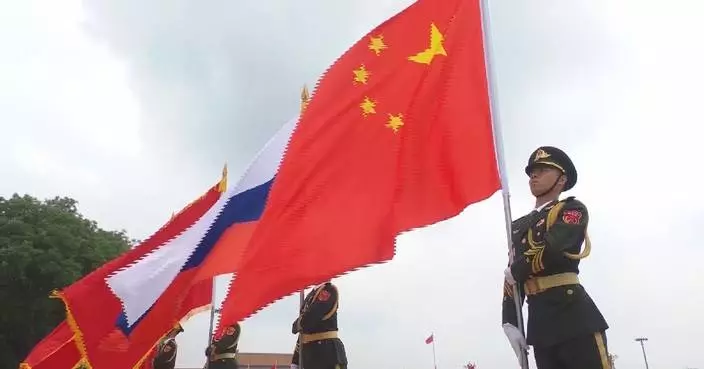
The five-day 10th China-Russia Expo, held in Harbin City of northeast China's Heilongjiang Province, came to a close on Thursday.
The expo attracted 1,557 enterprises from 46 countries and regions to its exhibition area of 55,000 square meters, according to the organizers.
The exhibits covered more than 110 industry sectors, featuring over 10,000 products. Over 500 new technologies and products made their debuts at the expo, spanning areas including intelligent equipment, digital security, green building materials and advanced energy storage.
During the expo, both China and Russia held over 100 supporting events across more than 20 areas, including industrial matchmaking and people-to-people exchanges.
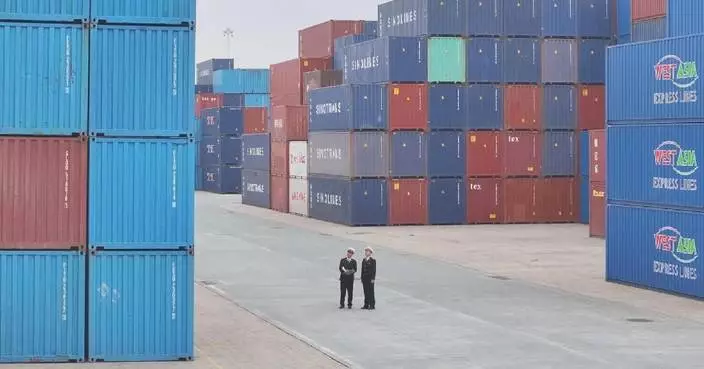
China sustained its position as Russia's largest trading partner for the 16th straight year with bilateral trade reaching 227.9 billion dollars in 2025, surpassing the 200 billion-dollar mark for the third consecutive year, according to the Chinese Ministry of Commerce.
In the first quarter of 2026, bilateral trade sustained strong growth, hitting 61.2 billion U.S. dollars, up 14.7 percent year on year. Chinese exports to Russia rose 22 percent, while imports from Russia increased by nine percent during the period.
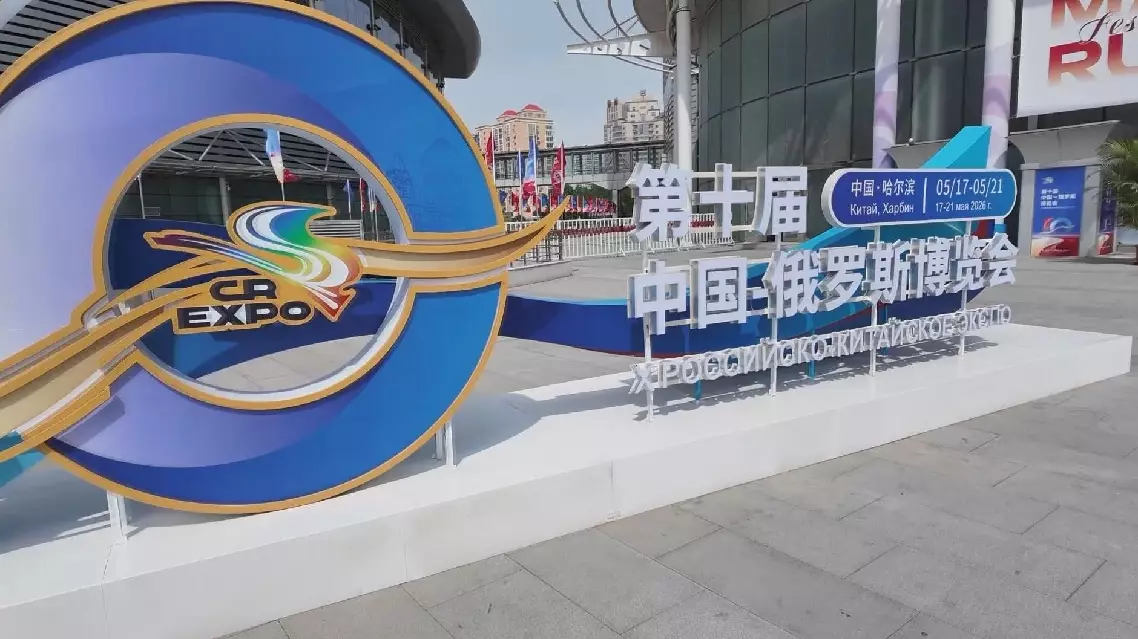
10th China-Russia Expo concludes in Harbin
An inheritor of the age-old Tibetan Thangka art form has introduced Chinese painting and sketching techniques to the Thangka classroom as he looks to inspire the next generation, believing that innovation is the best way to carry forward tradition.
Konchoge, a seasoned artist based in southwest China's Xizang Autonomous Region, has adopted the novel approach to add a distinctive flair to his art. His works are striking in that they integrate traditional Chinese painting techniques which reinvigorate the thousand-year-old practice of Thangka.
The subject matter portrayed in Thangka paintings is diverse, ranging from recreations of Princess Wencheng's epic journey to the Xizang region during the Tang Dynasty (618-907) period, to more complex depictions such as Tibetan medical illustrations.
Konchoge explained how embracing sketching techniques helps add another dimension to the historical Thangka practice.
"When we depict animals or figures, the Thangka tradition doesn't have the method of sketching found in traditional Chinese painting. We've embraced this technique, allowing these animals and figures to spring to life, so to speak," he said.
Recognized for his artistic talent, Konchoge was once funded by the state to further his studies at the Academy of Arts and Design at the prestigious Tsinghua University in Beijing, where he honed his skills.
Meanwhile, with the government providing annual funding to support the inheritance of intangible cultural heritage, enrollment at the Xizang Academy of Thangka has been freely offered to the public since its founding in 2012, helping to preserve the tradition among a new generation of artists.
"No payment is required; moreover, we provide lunch consisting of three dishes and one soup, accompanied by butter tea and sweet tea," said Konchoge, who now works at the academy.
By integrating techniques from other traditional Chinese arts into his own, Konchoge is achieving a unique cultural fusion. Now, thanks to state support, the Xizang Academy of Thangka is introducing the glories of an enduring and evolving craft to the whole world.
"Preserving the ancient techniques is our mission; innovation is the best way to carry forward the tradition," Konchoge said.
Konchoge's story was featured in a new episode of the documentary "Yes, it's Xizang!" -- which was released by the China Global Television Network (CGTN) on Thursday.
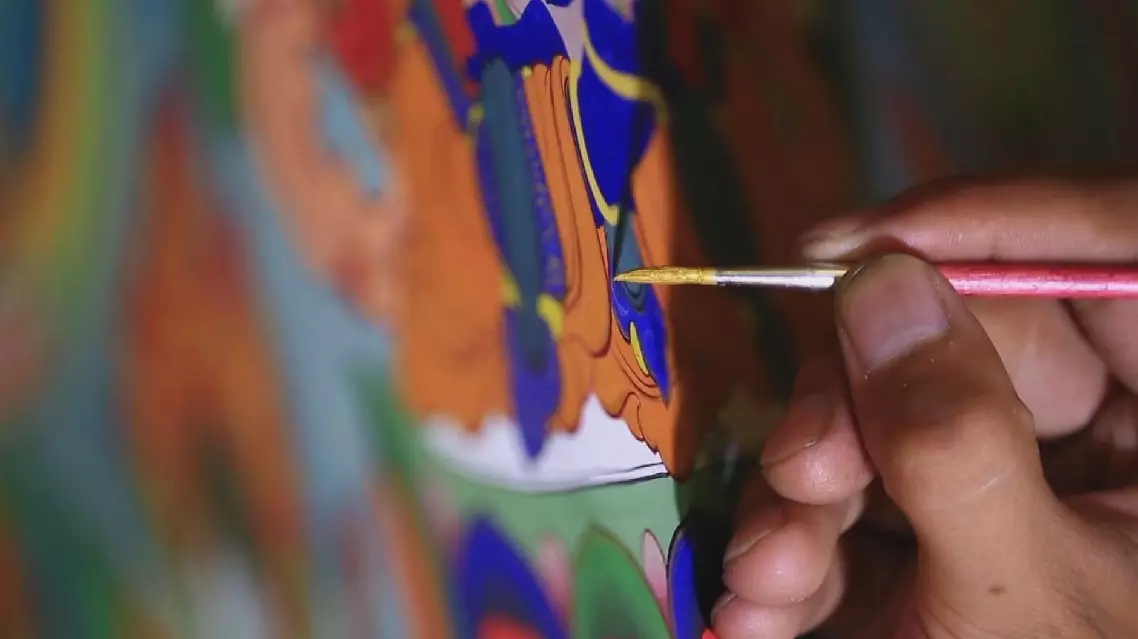
Inheritor of Tibetan Thangka inheritor embraces innovation to carry forward age-old tradition