China's first Automated Guided Vehicle (AGV) cross-border transport system at Ganqimaodu port in north China's Inner Mongolia Autonomous Region has greatly improved the customs clearance efficiency of imported goods and ensured the stable operation of domestic coal supply chain.
From January to September this year, the Ganqimaodu port handled nearly 30.9 million tons of import and export goods, an increase of 12.39 percent, hitting a record high.
With a daily coal import volume of up to 140,000 tons, what ensures the efficient and orderly operation of the busy port is a 6.19-kilometer-long AGV cross-border transport corridor spanning from Gashuunsuhait Port in Mongolia in the north to Ganqimaodu Port in China in the south.
Completed and operational in June 2024, the line features a fully enclosed, bidirectional four-lane road equipped with intelligent checkpoints and video surveillance facilities.
"A total of 6,000 magnets are installed in the 6-kilometer-long road. These magnets do not require power supply or network connection. They provide the vehicles with an electromagnetic induction coordinate information to guide the AGVs through the safest route to the cargo distribution site. The positioning accuracy can reach 3 millimeters," said Wang Bo, general manager of a local logistics company.
The improvement of efficiency of border check and customs joint inspection has also facilitated the unhindered entry of imported coals at the Ganqimaodu Port. The equipment installed along the fully enclosed road can realize automatic scanning, real-time capture, 360-degree monitoring and intelligent image review while vehicles are moving, reducing the inspection clearance time to up to three seconds.
"The AGV unmanned cross-border corridor and efficient inspection can ensure the rapid response and stable operation of the supply chain, providing a strong guarantee for the development of cross-border trade. The operating speed and the number of AGVs have been increased eight times since the beginning of the project, and are still undergoing tests for speed adjustment," said Wang Yong, head of a local logistics company.
Today, the efficiency of a single AGV at the Ganqimaodu Port is more than 6 times that of a double-trailer truck, enabling the annual transport capacity to reach 10 million tons
Meanwhile, the reform of intelligent facilities, intensive information system, digital operation management and facilitative comprehensive services is being progressed at a fast pace in other ports in Inner Mongolia.
The Ministry of Transport of China said that it will make efforts to accelerate the construction of an open, shared, safe and reliable international logistics supply chain system that covers the globe and provides strong guarantee, so as to better promote the inbound and outbound transport of goods.
"In the next step, we will accelerate the development of smart logistics, improve the management system and standards of new business forms of logistics, promote the digital transformation and upgrading of transportation infrastructure such as smart highways, smart waterways, smart ports and smart hubs, better serving and supporting the reduction of logistics costs for the whole society," said Meng Xiaoyu, deputy director of department of transport service of the ministry.
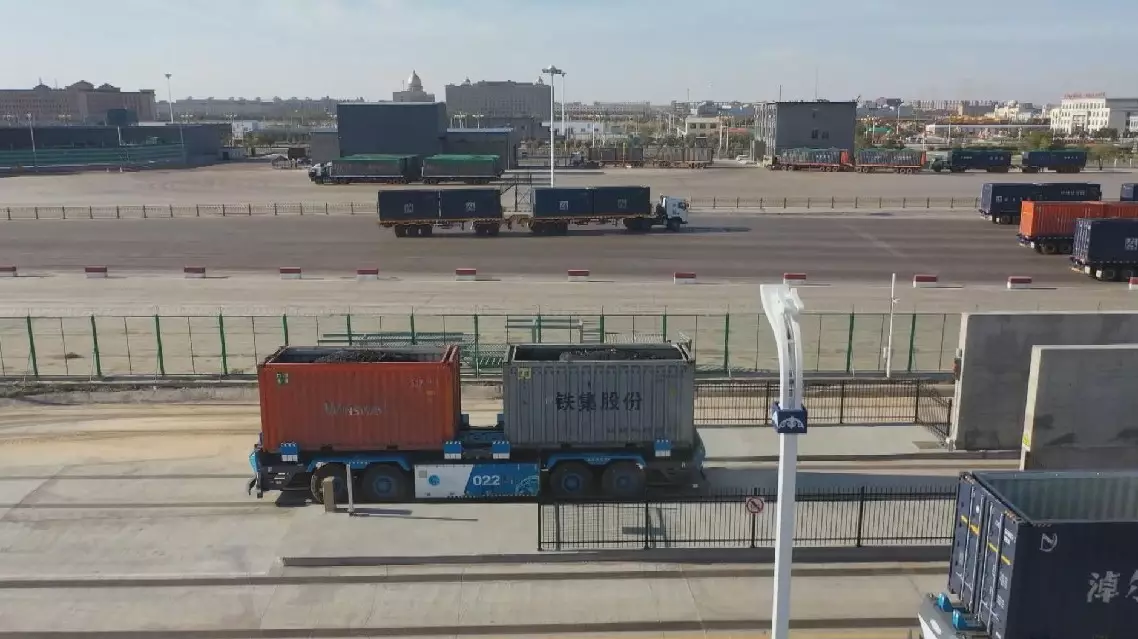
AGV cross-border transport system significantly improves customs clearance efficiency in Inner Mongolia's port
Chinese Foreign Minister Wang Yi, together with Sihasak Phuangketkeow, Thailand's deputy prime minister and foreign minister, held the third meeting of the Consultation Mechanism between the Ministers of Foreign Affairs of China and Thailand on Friday in Bangkok.
Wang, also a member of the Political Bureau of the Communist Party of China Central Committee, noted that this year marks the beginning of China's 15th Five-Year Plan and also the start of the new Thai government's governance.
Facing a volatile international situation, Wang said, China is willing to work with Thailand to give full play to the coordinating role of the foreign ministers' consultation mechanism guided by the strategic consensus reached by the two heads of state.
Both sides should join hands to advance their respective modernization processes, jointly practice genuine multilateralism, create a new golden 50 years for China-Thailand friendship, and make new contributions to promoting the solidarity and development of the Global South as well as regional peace and stability, he said.
Noting that China has always placed Thailand in an important position in its neighborhood diplomacy, Wang said China is ready to continue to be a reliable strategic partner of Thailand, support the new Thai government in leading its people to follow a development path that suits its national conditions, and promote the building of a more stable, prosperous and sustainable China-Thailand community with a shared future.
It is believed that Thailand will continue to resolutely support China's great cause of peaceful reunification, he added.
Wang also called on the two sides to maintain high-level exchanges, enhance political mutual trust, strengthen the alignment of development strategies and initiate the formulation of the new five-year action plan.
He said that both sides should intensify efforts to crack down on transnational crimes, completely eradicate gambling and fraud, strengthen multilateral collaboration and jointly implement the four major global initiatives.
China has always advocated resolving differences between countries through dialogue rather than force, Wang said, extending the hopes that Thailand and Cambodia will consolidate the ceasefire situation, resume bilateral contacts, resolve border disputes as soon as possible and maintain a peaceful and stable environment.
As a common friend of Thailand and Cambodia, China is willing to continue to build a platform for the two sides to rebuild mutual trust and improve relations, he said.
For his part, Sihasak said that Thailand will, as always, attach great importance to its relations with China, firmly pursue the one-China policy, and consolidate the political foundation of bilateral relations.
Thailand is willing to enhance high-level exchanges with China, deepen all-round cooperation in various fields such as connectivity, economy and trade, and combating online gambling and telecommunications fraud, and promote the continuous development of the Thailand-China community with a shared future.
He said that Thailand highly appreciates the four major global initiatives and is willing to strengthen multilateral coordination with China.
Sihasak expressed the appreciation for China's efforts in actively promoting peace talks and mediating the border dispute between Thailand and Cambodia, adding that he looks forward to China continuing to play a constructive role.
The two foreign ministers also exchanged views on the Lancang-Mekong Cooperation (LMC) and East Asia cooperation, and agreed to enhance coordination and cooperation to actively build an LMC 2.0, promoting the building of a Lancang-Mekong community with a shared future to a new level.
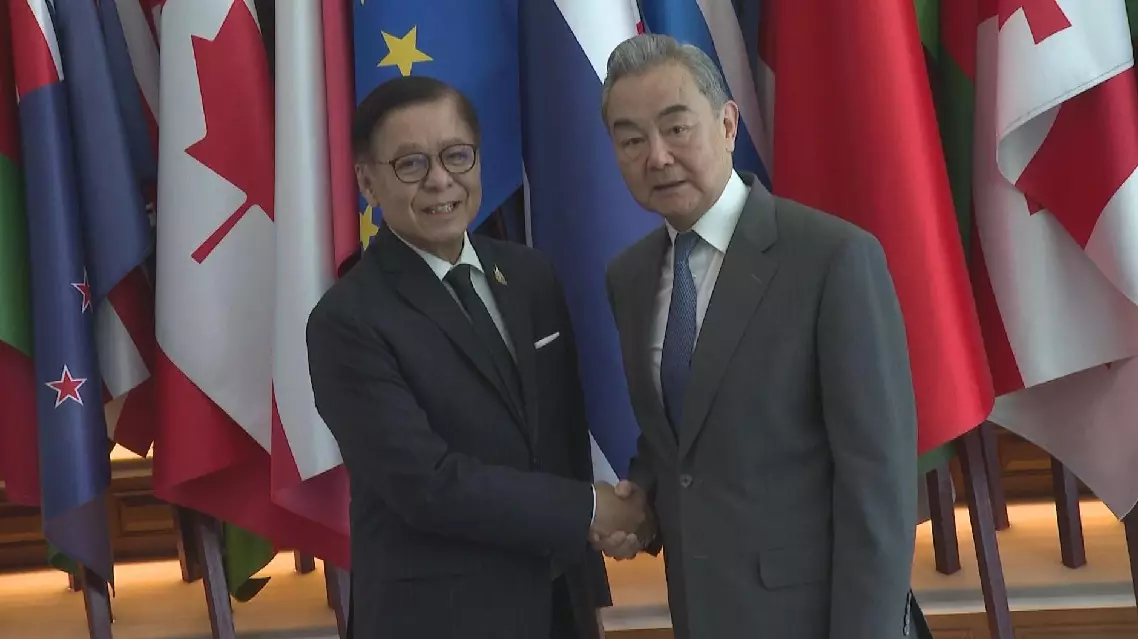
Chinese, Thai FMs hold 3rd consultation mechanism meeting