Skip to Content Facebook Feature Image

Shenzhou-18 astronauts return to Earth with scientific materials

China

China

China

Shenzhou-18 astronauts return to Earth with scientific materials

2024-11-04 13:49 Last Updated At:18:27

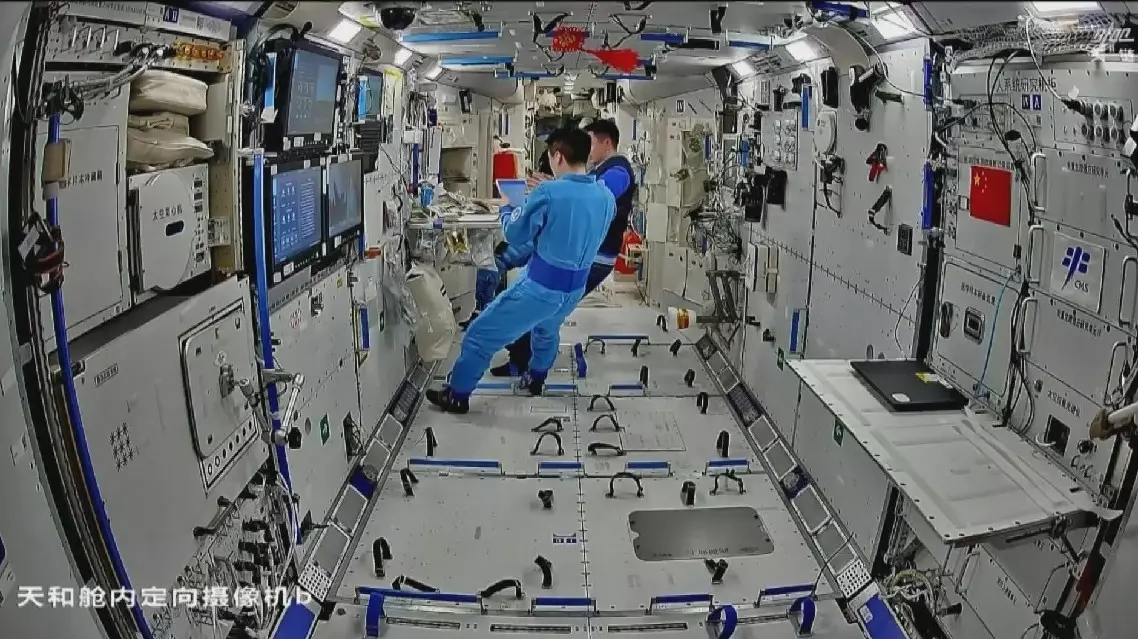
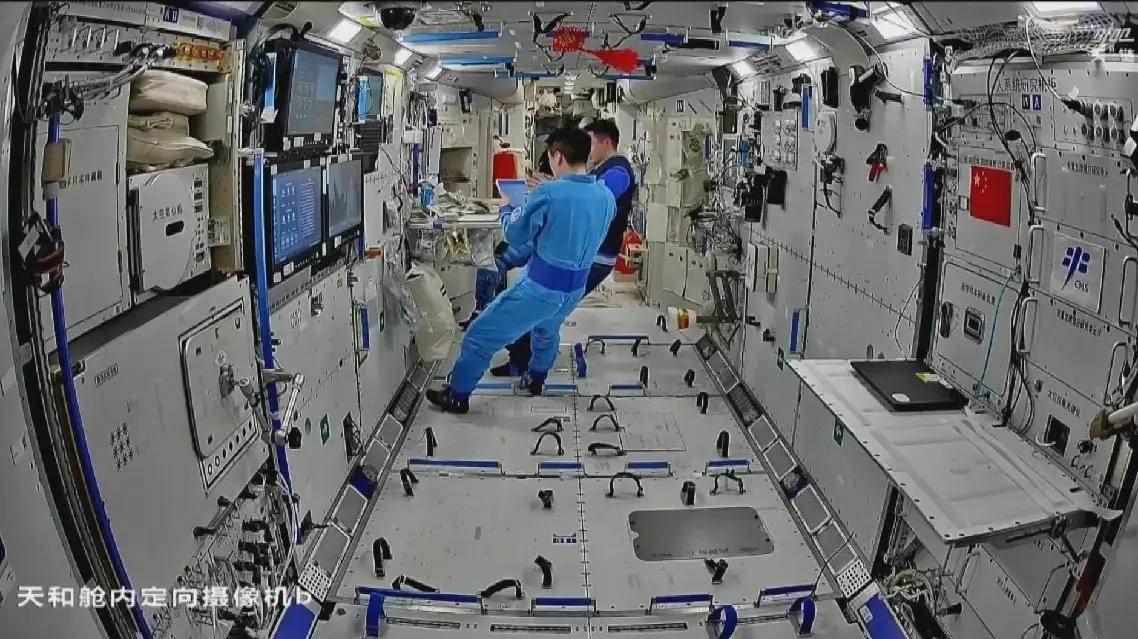
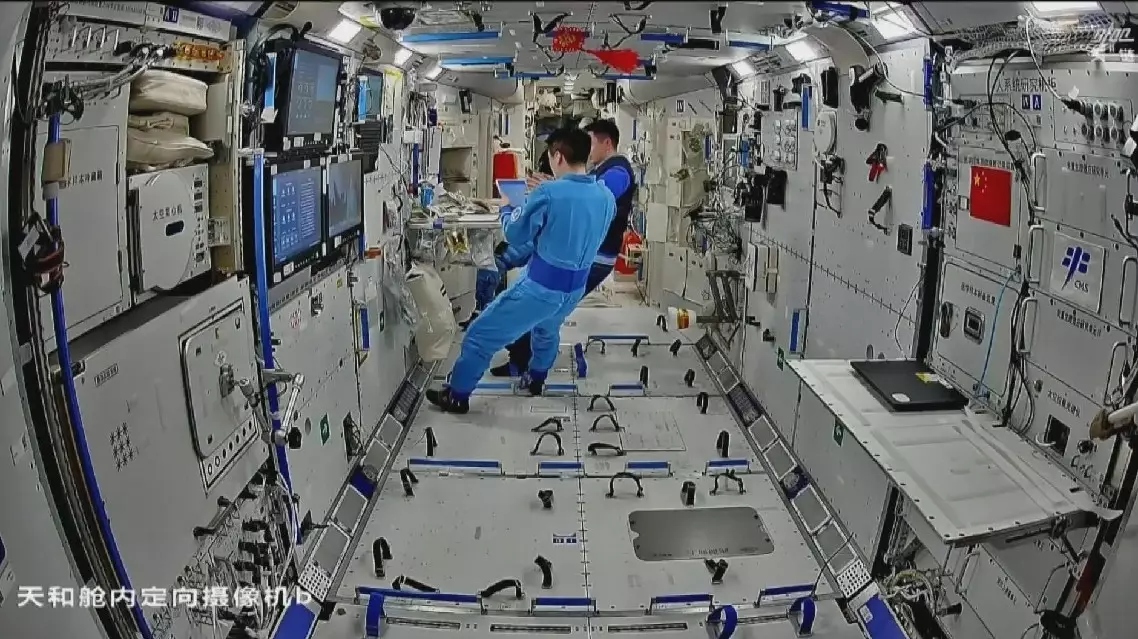
The three astronauts of China's Shenzhou-18 crewed spaceflight mission have returned to Earth with scientific materials from the Tiangong space station.

Carrying astronauts Ye Guangfu, Li Cong and Li Guangsu, the return capsule touched down at the Dongfeng landing site in north China's Inner Mongolia Autonomous Region on Monday morning.

China launched the Shenzhou-18 manned spaceship on April 25, 2024. During their six-month mission, the Shenzhou-18 crew conducted some 90 experiments and tests in the fields of material science, life science, medicine, space technology and the basic physics in microgravity.

The experimental materials that they brought back may help unlock answers to significant scientific questions and aid future space missions, according to Zhang Wei, a professor at the Technology and Engineering Center for Space Utilization, Chinese Academy of Sciences.

"The samples returning with the Shenzhou-18 mission include five types of life science specimens and over 20 samples from material science projects. Among them, around a dozen were exposed to the external environment of the space station, such as special materials like solid lubricants, to observe their reactions under such conditions. Additionally, samples from the container-free material cabinet and high-temperature material cabinet will also be brought back, including some crystal materials and metal materials. These will undergo further research on the ground," Zhang said.

During their mission, the Shenzhou-18 trio kept a close watch on a tank containing zebrafish that subsided in an enclosed miniature ecosystem, forming a mutually sustainable relationship with an aquatic plant called hornwort.

The experiment represented a breakthrough in the field of raising vertebrates in space and even allowed the astronauts to observe the behavioral differences of the fish under space conditions.

"The zebrafish thrived for over 40 days, during which we observed unique movement patterns in microgravity. For instance, they sometimes swam belly-up, displaying behaviors not seen on Earth. Besides, the small ecosystem established itself more quickly in space than it typically would on the ground. By uncovering these basic laws, we have laid the groundwork for future studies on three-element ecosystems and terrestrial-based systems," Zhang said.

According to the professor, China's space station has opened new doors to scientific inquiry, from physics to biology.

"The goal of space-based research is to explore the fundamental laws governing matter and life under extreme conditions. So our various experiments on the space station are mainly, for example, to examine the biological effects of microgravity and radiation in space on living creatures at the molecular, cellular, tissue, organ, individual and group levels and see what we can do to mitigate these effects. These studies provide basic knowledge about life phenomena and laws. The other object is the basic laws of matter motion, including the characteristics of fluid flow in space," Zhang said.
Shenzhou-18 astronauts return to Earth with scientific materials
Shenzhou-18 astronauts return to Earth with scientific materials
Shenzhou-18 astronauts return to Earth with scientific materials

Shenzhou-18 astronauts return to Earth with scientific materials

Shenzhou-18 astronauts return to Earth with scientific materials

Shenzhou-18 astronauts return to Earth with scientific materials
Amid the rising fuel costs and airline surcharges linked to the U.S.-Israeli war against Iran, Caribbean tourism officials gathered at the 44th Caribbean Hotel and Tourism Association Forum this month and expressed cautious optimism, citing resilient visitor demand, strategic marketing adjustments, and strong seasonal performance as foundations for continued recovery.

The U.S.-Israeli war against Iran is already affecting Caribbean economies as fuel prices surge and airlines pass costs on to passengers. This not only pressures the region's tourism-dependent economies but also raises the cost of imported food, electricity, and transportation.

Since the start of the conflict, the price of Brent crude has surged nearly 50 percent, prompting airlines to find the ways to share the burden with travelers.

"The impacts are unfolding in stages. In the first place, when the uncertainty, or the disturbance occurred in the Middle Eastern region, it actually cut the supply chain to some extent to the Pacific, and people started to look at the region in particular. We amplified out marketing presence, to ensure that when people are looking for an option or places to rebook, that St. Lucia would turn up. And we've actually seen some of that result," said Louis Lewis, chief executive officer of the Saint Lucia Tourism Authority.

During the International Monetary Fund's Spring Meeting, the international financial institution expressed its concern for Caribbean tourism, warning that it could see a decline as ticket prices increase.

Lewis acknowledged the potential for longer-term disruption.

"The second thing is that if the conflict continues as a prolonged activity, we anticipate that it could impact us. We will have to diversify from our major source markets, hence the reason why we are looking at Latin America," he said.

But some of the region's top tourism officials are seeing positive signs. The region is coming off another successful year, where tourism arrivals grew by 2.5 percent, adding an additional 900,000 visitors over 2024.

"The region has been witnessing a very good winter season, and I have no doubt whatsoever that the forecast that we have for the summer will continue to be very strong," said Ian Gooding-Edghill, minister of tourism of Barbados.

Still, structural vulnerabilities remain. As an import-dependent region, the Caribbean is highly exposed to global price fluctuations. Concerns are mounting that rising prices in the United States could trigger sharper inflationary pressures, including higher operating costs in the tourism sector.

"In Saint Lucia, we just saw the cost of energy increase about 20 percent, and that's having an impact now going into the summer when our rates are lower. It rallies points to the importance of us building a bit more resilience into Caribbean tourism," said Sanovnik Destang, president of the Caribbean Hotel and Tourism Association.

Caribbean tourism shows resilience despite Middle East tension challenges

Caribbean tourism shows resilience despite Middle East tension challenges

Recommended Articles