 |
- More than nine in ten business leaders (34% very important, 60% somewhat important) consider strong thinking skills important in their decision to hire candidates, with nearly all of them viewing thinking skills as crucial (47% very important, 49% somewhat important) for augmenting or supplementing employees' technical skills in the face of emerging technologies like artificial intelligence.
- Since nearly all business leaders (44% strongly agree, 52% somewhat agree) agree that combining thinking skills with technical skills enables employees to take on higher-value roles in a technology-driven world, nine in ten business leaders (45% very important, 51% somewhat important) think it is important for all employees to be equipped with a basic level of thinking skills, regardless of their industry or job role.
- Despite more than four in five business leaders (28% to a large extent, 57% to a moderate extent) acknowledging that there is a gap in thinking skills in their organisation, less than half of business leaders (43%) have sent their employees for training in thinking skills in the past year. Leaders cite the lack of clear metrics/tools to measure progress in thinking skills development (41%) as a key challenge in cultivating thinking skills among employees.
- Nonetheless, nearly four in five business leaders (24% very likely, 54% somewhat likely) are likely to send their employees for training in thinking skills, with more than half of them (55%) intending to send their employees for such training within the next six months.
SINGAPORE, Nov. 7, 2024 /PRNewswire/ -- In an evolving job market that increasingly values unique human competencies, more than nine in ten business leaders (34% very important, 60% somewhat important) consider strong thinking skills important in their decision to hire candidates for their organisation, with nearly all (47% very important, 49% somewhat important) viewing thinking skills as crucial for augmenting or supplementing employees' technical skills in the face of emerging technologies like artificial intelligence (AI).
With nine in ten business leaders (45% very important, 51% somewhat important) placing the importance for all employees to be equipped with a basic level of thinking skills, regardless of their industry or job role, nearly all (44% strongly agree, 52% somewhat agree) agree that combining thinking skills with technical skills enables employees to take on higher-value roles in a technology-driven world.
However, more than four in five of them (28% to a large extent, 57% to a moderate extent) acknowledge that there is a gap in thinking skills in their organisation to a certain degree. Despite this, less than half of business leaders (43%) have sent their employees for thinking skills training in the past year, citing a lack of clear metrics or tools to measure progress in thinking skills development (41%), inconsistent understanding or definition of what constitutes effective thinking skills (38%), and difficulty in tailoring thinking skills training to suit diverse roles or departments (38%) among the key challenges they face.
These are some of the key findings from NTUC LearningHub's Special Report 2024 on Thinking Skills in a Digital Age, which investigates how thinking skills complement technical skills to build a resilient workforce capable of navigating the complexities of the emerging digital economy. Based on a survey involving 200 business leaders, the report also explores the transferability of thinking skills across industries and roles, underscoring the need for training to enhance workers' adaptability and career prospects.
Despite ongoing challenges, half of business leaders (41%) believe that combining thinking skills with technical skills is essential for maximising human capital in their organisation, where they place equal importance on a range of thinking skills such as problem-solving (12%), strategic thinking (11%), critical thinking (10%), analytical thinking (10%), and logical thinking (10%). As such, nearly four in five of them (24% very likely, 54% somewhat likely) are likely to send their employees for training in thinking skills, with more than half of business leaders (55%) intending to send their employees for training in thinking skills within the next six months.
Additionally, thinking skills can help employees navigate career transitions and advancements, keeping them relevant and employable as technology evolves, as corroborated by nearly all business leaders (40% strongly agree, 57% somewhat agree).
Commenting on the report's findings, Mr Amos Tan, Chief Core Skills Officer, NTUC LearningHub, says, "In today's fast-paced and tech-driven workplace, success hinges on the effective augmentation & application of technical expertise and thinking skills. The interplay among these skills enables employees to tackle challenges, adapt to changes, and make calculated decisions, especially as technologies like AI become integral in the workplace. For instance, strong problem-solving, critical and creative thinking allow employees to purposefully steer generative AI systems to produce optimal and accurate outputs. Also, while AI can process data quickly and predict outcomes based on patterns, offer insights or recommendations, at the same time when combined with human's strategic and critical thinking, AI helps decision-makers interpret these insights within business contexts and nuances, guiding decisions that align with the organisation's values and goals. As the demand for thinking skills grows, so does the skills gap and this underscores the vital need for comprehensive training in thinking skills. Arming employees with thinking skills not only boost organisational productivity but enhances individual career resilience and allows employees to unlock new opportunities for career growth."
To download the Special Report 2024 on Thinking Skills in a Digital Age, please visit https://www.ntuclearninghub.com/media/research-reports/2024/Thinking-Skills. To find out more about the courses, training, and grants, please contact NTUC LearningHub at www.ntuclearninghub.com.
About NTUC LearningHub
NTUC LearningHub is the leading Continuing Education and Training provider in Singapore which aims to transform the lifelong employability of working people. Since our corporatisation in 2004, we have been working with employers and individual learners to provide learning solutions in areas such as Infocomm Technology, Generative AI & Cloud, Healthcare, Retail & Food Services, Employability & Literacy, Business Excellence, Workplace Safety & Health, Security, Human Resources & Coaching and Foreign Workers Training.
To date, NTUC LearningHub has helped over 29,000 organisations and achieved more than 2.6 million training places across more than 2,900 courses with a pool of about 900 certified trainers. As a Total Learning Solutions provider to organisations, we also forge partnerships to offer a wide range of relevant end-to-end training. Besides in-person training, we also offer instructor-led virtual live classes (VLCs) and asynchronous online learning. The NTUC LearningHub Learning eXperience Platform (LXP) — a one-stop online learning mobile application — offers timely, bite-sized and quality content for learners to upskill anytime and anywhere. Beyond learning, LXP also serves as a platform for jobs and skills development for both workers and companies.
For more information, visit www.ntuclearninghub.com.
- More than nine in ten business leaders (34% very important, 60% somewhat important) consider strong thinking skills important in their decision to hire candidates, with nearly all of them viewing thinking skills as crucial (47% very important, 49% somewhat important) for augmenting or supplementing employees' technical skills in the face of emerging technologies like artificial intelligence.
- Since nearly all business leaders (44% strongly agree, 52% somewhat agree) agree that combining thinking skills with technical skills enables employees to take on higher-value roles in a technology-driven world, nine in ten business leaders (45% very important, 51% somewhat important) think it is important for all employees to be equipped with a basic level of thinking skills, regardless of their industry or job role.
- Despite more than four in five business leaders (28% to a large extent, 57% to a moderate extent) acknowledging that there is a gap in thinking skills in their organisation, less than half of business leaders (43%) have sent their employees for training in thinking skills in the past year. Leaders cite the lack of clear metrics/tools to measure progress in thinking skills development (41%) as a key challenge in cultivating thinking skills among employees.
- Nonetheless, nearly four in five business leaders (24% very likely, 54% somewhat likely) are likely to send their employees for training in thinking skills, with more than half of them (55%) intending to send their employees for such training within the next six months.
SINGAPORE, Nov. 7, 2024 /PRNewswire/ -- In an evolving job market that increasingly values unique human competencies, more than nine in ten business leaders (34% very important, 60% somewhat important) consider strong thinking skills important in their decision to hire candidates for their organisation, with nearly all (47% very important, 49% somewhat important) viewing thinking skills as crucial for augmenting or supplementing employees' technical skills in the face of emerging technologies like artificial intelligence (AI).
With nine in ten business leaders (45% very important, 51% somewhat important) placing the importance for all employees to be equipped with a basic level of thinking skills, regardless of their industry or job role, nearly all (44% strongly agree, 52% somewhat agree) agree that combining thinking skills with technical skills enables employees to take on higher-value roles in a technology-driven world.
However, more than four in five of them (28% to a large extent, 57% to a moderate extent) acknowledge that there is a gap in thinking skills in their organisation to a certain degree. Despite this, less than half of business leaders (43%) have sent their employees for thinking skills training in the past year, citing a lack of clear metrics or tools to measure progress in thinking skills development (41%), inconsistent understanding or definition of what constitutes effective thinking skills (38%), and difficulty in tailoring thinking skills training to suit diverse roles or departments (38%) among the key challenges they face.
These are some of the key findings from NTUC LearningHub's Special Report 2024 on Thinking Skills in a Digital Age, which investigates how thinking skills complement technical skills to build a resilient workforce capable of navigating the complexities of the emerging digital economy. Based on a survey involving 200 business leaders, the report also explores the transferability of thinking skills across industries and roles, underscoring the need for training to enhance workers' adaptability and career prospects.
Despite ongoing challenges, half of business leaders (41%) believe that combining thinking skills with technical skills is essential for maximising human capital in their organisation, where they place equal importance on a range of thinking skills such as problem-solving (12%), strategic thinking (11%), critical thinking (10%), analytical thinking (10%), and logical thinking (10%). As such, nearly four in five of them (24% very likely, 54% somewhat likely) are likely to send their employees for training in thinking skills, with more than half of business leaders (55%) intending to send their employees for training in thinking skills within the next six months.
Additionally, thinking skills can help employees navigate career transitions and advancements, keeping them relevant and employable as technology evolves, as corroborated by nearly all business leaders (40% strongly agree, 57% somewhat agree).
Commenting on the report's findings, Mr Amos Tan, Chief Core Skills Officer, NTUC LearningHub, says, "In today's fast-paced and tech-driven workplace, success hinges on the effective augmentation & application of technical expertise and thinking skills. The interplay among these skills enables employees to tackle challenges, adapt to changes, and make calculated decisions, especially as technologies like AI become integral in the workplace. For instance, strong problem-solving, critical and creative thinking allow employees to purposefully steer generative AI systems to produce optimal and accurate outputs. Also, while AI can process data quickly and predict outcomes based on patterns, offer insights or recommendations, at the same time when combined with human's strategic and critical thinking, AI helps decision-makers interpret these insights within business contexts and nuances, guiding decisions that align with the organisation's values and goals. As the demand for thinking skills grows, so does the skills gap and this underscores the vital need for comprehensive training in thinking skills. Arming employees with thinking skills not only boost organisational productivity but enhances individual career resilience and allows employees to unlock new opportunities for career growth."
To download the Special Report 2024 on Thinking Skills in a Digital Age, please visit https://www.ntuclearninghub.com/media/research-reports/2024/Thinking-Skills. To find out more about the courses, training, and grants, please contact NTUC LearningHub at www.ntuclearninghub.com.
About NTUC LearningHub
NTUC LearningHub is the leading Continuing Education and Training provider in Singapore which aims to transform the lifelong employability of working people. Since our corporatisation in 2004, we have been working with employers and individual learners to provide learning solutions in areas such as Infocomm Technology, Generative AI & Cloud, Healthcare, Retail & Food Services, Employability & Literacy, Business Excellence, Workplace Safety & Health, Security, Human Resources & Coaching and Foreign Workers Training.
To date, NTUC LearningHub has helped over 29,000 organisations and achieved more than 2.6 million training places across more than 2,900 courses with a pool of about 900 certified trainers. As a Total Learning Solutions provider to organisations, we also forge partnerships to offer a wide range of relevant end-to-end training. Besides in-person training, we also offer instructor-led virtual live classes (VLCs) and asynchronous online learning. The NTUC LearningHub Learning eXperience Platform (LXP) — a one-stop online learning mobile application — offers timely, bite-sized and quality content for learners to upskill anytime and anywhere. Beyond learning, LXP also serves as a platform for jobs and skills development for both workers and companies.
For more information, visit www.ntuclearninghub.com.
** The press release content is from PR Newswire. Bastille Post is not involved in its creation. **

9 in 10 business leaders say thinking skills are vital for hiring and growth in a tech-driven workplace

9 in 10 business leaders say thinking skills are vital for hiring and growth in a tech-driven workplace
|
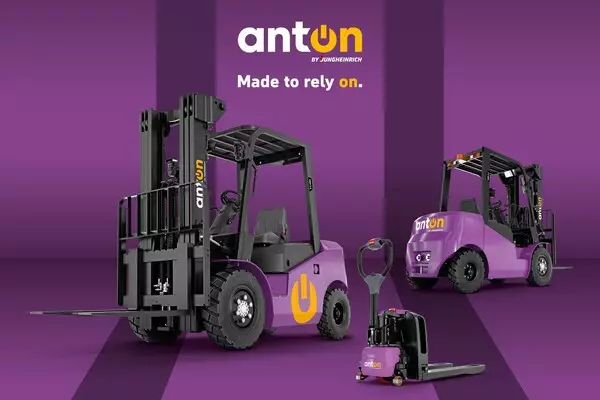
AUCKLAND, New Zealand, Jan. 20, 2026 /PRNewswire/ -- Jungheinrich, today, announced the Asia-Pacific launch of "AntOn by Jungheinrich", a new value-focused material handling brand designed for businesses seeking reliable, straightforward, and cost-effective solutions for everyday operations.
AntOn by Jungheinrich delivers proven reliability, supported by German safety standards and testing expertise. Across the region, sustainability programmes and fleet modernisation initiatives are accelerating the shift toward electrified material handling equipment, reinforcing demand for lithium-ion solutions that balance performance, efficiency, and total cost of ownership.
The initial AntOn portfolio includes CBH 2.0, CBM 2.5, 3.0 and 3.5 tonne electric forklifts, delivering strong load capacities of 2,000 kg, 2,500 kg, 3,000 kg and 3,500 kg, travel speeds up to 17 km/h, and advanced lithium-ion batteries for rapid charging and extended operation, long service life, and minimal maintenance for reliable, efficient material handling in APAC markets. The portfolio is set to expand towards a full product range in the future.
The launch responds to strong growth in the Asia-Pacific's material handling value segment, which is projected to expand at 8.1% by 2030.
In New Zealand, growth in logistics, warehousing, and infrastructure is driving demand for cost-effective, reliable material handling equipment. Rising operating costs and ESG expectations are accelerating the shift from internal combustion forklifts to electric solutions, with lithium-ion technology increasingly adopted for its lower total cost of ownership, zero maintenance, fast charging, and reliable multi-shift performance.
"The AntOn by Jungheinrich brand is a new product line combining ease of use, reliability and cost-effectiveness," said Nadine Despineux, Member of the Board of Management, Sales at Jungheinrich. "We are specifically targeting companies that are looking for cost-effective and straightforward solutions for typical warehouse and transport requirements."
Following a successful European debut with strong sales, AntOn by Jungheinrich is now available to customers in Asia-Pacific, supported through multi-channel sales, including e-commerce, direct sales, and selected partners and distributors.
"With more than 70 years of material handling expertise, Jungheinrich delivers end-to-end solutions supported by an established parts and service network across Asia-Pacific," said Manojit Acharya, Vice President, Jungheinrich APAC.
For more information on the AntOn by Jungheinrich range, please visit: http://www.jungheinrich.co.nz. Interested in becoming an AntOn distributor? Please contact us directly at sales@jungheinrich.co.nz.
For media enquiries:
Jungheinrich
Daniel Lynch | daniel.lynch@jungheinrich.com.au | +61 423 922 202
Rothman & Roman (Appointed PR Agency)
Diana Estella | diana.estella@rothmanasia.com | +65 8498 9424
AUCKLAND, New Zealand, Jan. 20, 2026 /PRNewswire/ -- Jungheinrich, today, announced the Asia-Pacific launch of "AntOn by Jungheinrich", a new value-focused material handling brand designed for businesses seeking reliable, straightforward, and cost-effective solutions for everyday operations.
AntOn by Jungheinrich delivers proven reliability, supported by German safety standards and testing expertise. Across the region, sustainability programmes and fleet modernisation initiatives are accelerating the shift toward electrified material handling equipment, reinforcing demand for lithium-ion solutions that balance performance, efficiency, and total cost of ownership.
The initial AntOn portfolio includes CBH 2.0, CBM 2.5, 3.0 and 3.5 tonne electric forklifts, delivering strong load capacities of 2,000 kg, 2,500 kg, 3,000 kg and 3,500 kg, travel speeds up to 17 km/h, and advanced lithium-ion batteries for rapid charging and extended operation, long service life, and minimal maintenance for reliable, efficient material handling in APAC markets. The portfolio is set to expand towards a full product range in the future.
The launch responds to strong growth in the Asia-Pacific's material handling value segment, which is projected to expand at 8.1% by 2030.
In New Zealand, growth in logistics, warehousing, and infrastructure is driving demand for cost-effective, reliable material handling equipment. Rising operating costs and ESG expectations are accelerating the shift from internal combustion forklifts to electric solutions, with lithium-ion technology increasingly adopted for its lower total cost of ownership, zero maintenance, fast charging, and reliable multi-shift performance.
"The AntOn by Jungheinrich brand is a new product line combining ease of use, reliability and cost-effectiveness," said Nadine Despineux, Member of the Board of Management, Sales at Jungheinrich. "We are specifically targeting companies that are looking for cost-effective and straightforward solutions for typical warehouse and transport requirements."
Following a successful European debut with strong sales, AntOn by Jungheinrich is now available to customers in Asia-Pacific, supported through multi-channel sales, including e-commerce, direct sales, and selected partners and distributors.
"With more than 70 years of material handling expertise, Jungheinrich delivers end-to-end solutions supported by an established parts and service network across Asia-Pacific," said Manojit Acharya, Vice President, Jungheinrich APAC.
For more information on the AntOn by Jungheinrich range, please visit: http://www.jungheinrich.co.nz. Interested in becoming an AntOn distributor? Please contact us directly at sales@jungheinrich.co.nz.
For media enquiries:
Jungheinrich
Daniel Lynch | daniel.lynch@jungheinrich.com.au | +61 423 922 202
Rothman & Roman (Appointed PR Agency)
Diana Estella | diana.estella@rothmanasia.com | +65 8498 9424
** The press release content is from PR Newswire. Bastille Post is not involved in its creation. **
Jungheinrich Launches New Value Brand 'AntOn by Jungheinrich' in Asia-Pacific