China on Wednesday announced the establishment of a new nuclear industry alliance aimed at advancing the country's nuclear technology application sector, bringing together key players from the industrial chain, leading nuclear energy corporations, and research organizations.
At an action conference held in Chengdu, southwest China's Sichuan Province, the state-owned China National Nuclear Corporation (CNNC) launched the ambitious initiative to build partnerships among enterprises, universities, research institutes and social organizations in the field of nuclear technology application, aiming to form a long-term and stable community of shared interests based on joint investment and common development.
According to CNNC, the alliance will include a council, a secretariat, and committees dedicated to nuclear medicine, irradiation and safety inspection.
"This collaborative platform has been established to facilitate exchanges, cooperation and joint development across the upstream, midstream, and downstream sectors of the nuclear technology industry chain," said Du Jin, CNNC chief scientist.
The establishment of the alliance comes after China Atomic Energy Authority and other central authorities jointly rolled out a three-year action plan to promote the nuclear technology application industry, which is expected to see its annual direct economic output value hit 400 billion yuan (about 56 billion U.S. dollars) by 2026.
According to the plan, the development of nuclear technology application industry is an inevitable trend to promote the high-quality development of the nuclear industry, as well as an important means of supporting the transformation and upgrading of the national economy.
Alliance members and stakeholders say they're ready to work hand in hand.
"We will be a leading unit on the alliance's security inspection committee. We will coordinate with businesses, public institutions, and research organizations in this field," said Li Chengfu, president of Tongfang Co., Ltd, a high-tech enterprise that mainly operates businesses including information technology and applied nuclear technology.
"China Isotope and Radiation Corporation will continue to make efforts in the field of nuclear medicine and equipment and radiation technology," said Zhang Junqi, general manager of China Isotope and Radiation Corporation, the country's largest nuclear enterprise in the aspects of research and development, manufacture, distribution and service of nuclear products.
By 2026, the independent innovation capability of China's nuclear technology application industry will be significantly enhanced, and the industrial field will be further expanded, according to the government's action plan released in late October.
Over the next three years, breakthroughs will be made in a number of key technologies, a number of innovation platforms will be built, and new enterprises will be cultivated, focusing on the application of nuclear technology in the fields such as medical diagnosis and treatment, agricultural breeding, food processing, safety and security, said the plan.
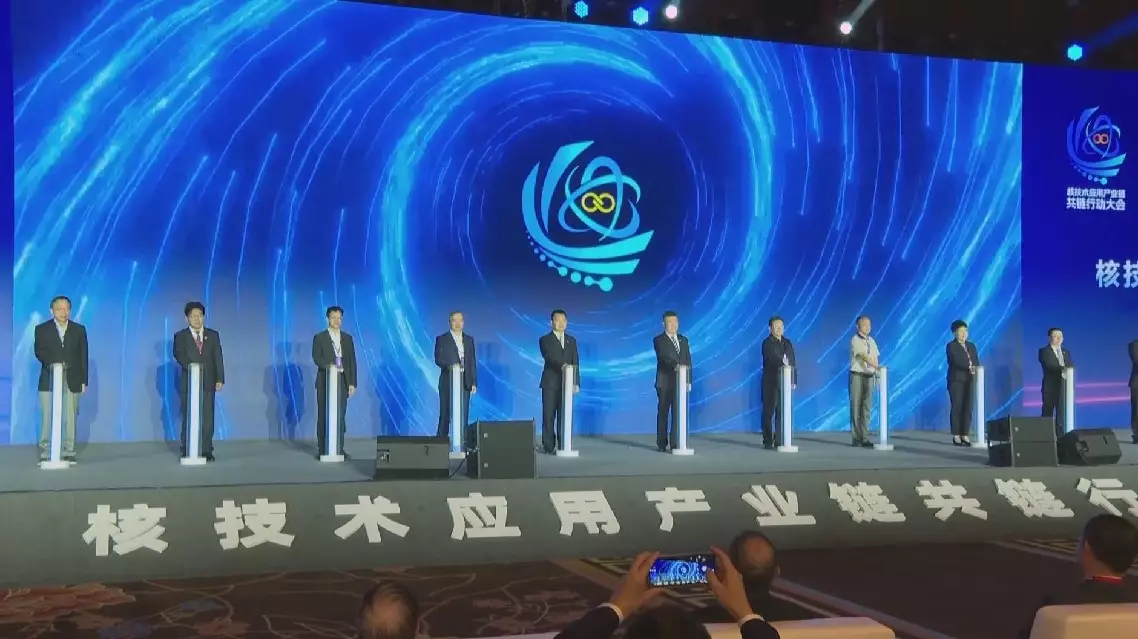
China establishes nuclear industry alliance to promote technology applications