The Chinese People's Liberation Army Air Force (PLAAF)'s first air division has been continuously making innovations in training concepts and methods, as well as tactics, carrying forward the military 's indestructible spirit of fighting and forging ahead bravely.
Monday marks the 75th founding anniversary of the PLAAF. Born in June 1950, the PLAAF's first air division had various outstanding military exploits, including the air force's first victory in air combat, the first close combat annihilation of the enemy, and the first night combat victory.
The brigade recently organized an air combat exercise, in which pilots took off in the new generation domestically-made stealth fighter jet, the J-20 fighter jets. For this exercise, both the red and blue forces improved their tactics. Commanders for air missions must respond to the situation and make flexible deployments according to the battlefield situation in order to achieve the final victory.
"I used to fly J-11B fighter jet, and I was only responsible for the tactics of my J-11B. But now, as an air mission commander, I have higher authority and greater responsibility, so I have to consider more complicated factors," said Hu Haoyu, an officer from the brigade.
As the PLAAF accelerates its progress towards a strategic air force, J-20 was put into service in 2021. The brigade was among the first batch of units equipped with the domestically-made stealth fighter jet, the J-20, and its officers and soldiers have been leading the stride forward on the path of building a strong armed force.
In the face of the opportunities and challenges brought by the new-generation fighter jets, the brigade has actively made changes in training concepts, training modes and combat thinking, to break through traditional tactics and innovate tactical warfare methods.
They have been exploring a new path for joint operations in systematic confrontations and actual combat training.
"We increasingly feel that we should not fight alone. It must be a combination of all services and arms. We should clench the five fingers into a fist and maximize its effectiveness," said Lu Quansheng, also from the brigade.
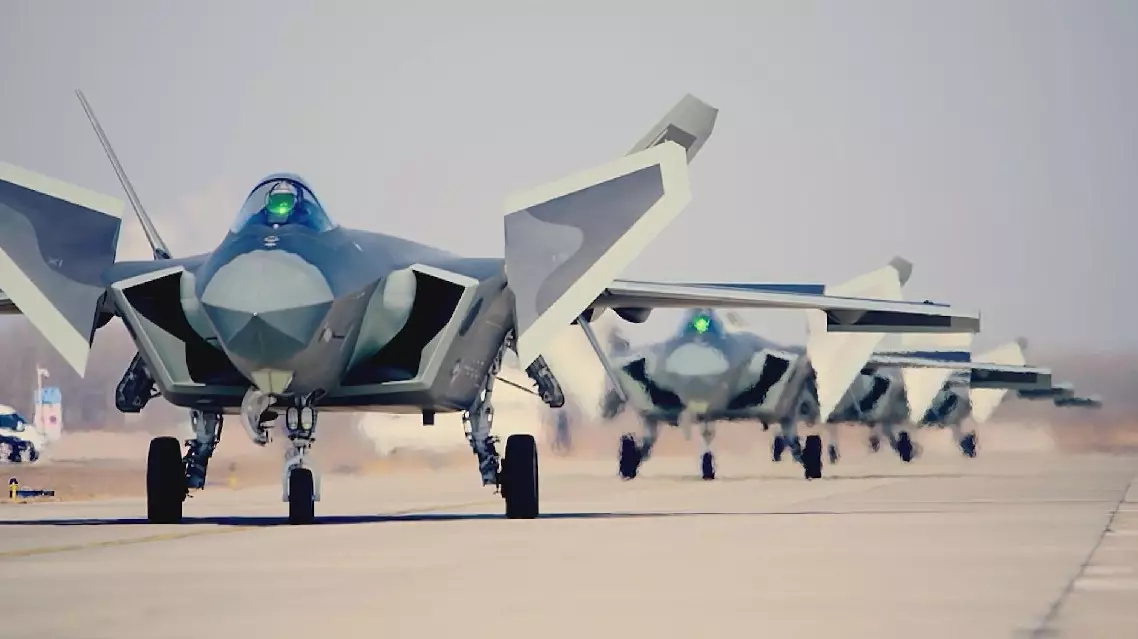
PLA Air Force's first air division innovates training concepts, tactics

South China's Guangdong is seeing a surge in winter tourism, as visitors from around the world flock to the province, drawn by its mild climate, supportive travel policies, and increasingly diverse tourism experiences.
One of Guangdong's most popular winter attractions is its hot springs. Just an hour's drive from Guangzhou city proper, Conghua District is home to what are known as the "rare hot springs", naturally rich in radon, which is believed to offer health benefits. For many visitors, these natural, mineral-rich waters provide a welcome escape from colder temperatures.
Guangdong is home to many hot spring resorts. And the business model is clearly evolving. They are not just selling the views, they are selling the whole experience.
Dusit Devarana Hot Springs and Spa is China's first hot spring joint venture, backed by state-owned investors and run by a premium resort group from Thailand.
"It's peaceful, the air is clear, the water is nice — it feels like Southeast Asia," said Mrs. Ye, a tourist in the resort.
That Southeast Asian influence is evident in both the service and the Northern Thai-style architecture, with custom-made decorations imported straight from the Land of Smiles.
For travel agencies, a warm winter is reshaping demand — with families and group travel leading the way.
Tourists now prefer hotels with shared spaces for gatherings, said Che Qianhui, marketing director of local travel agency Day Day Holiday. Government consumption vouchers are also driving demand, Che said. The top voucher offers 300 yuan off a 1,500-yuan purchase, including some hotels — and they're usually snapped up within five minutes, she added.
The resort is expected to receive large crowds during the upcoming Spring Festival, which falls on February 17, 2026.
"During the Spring Festival, we expect occupancy between 90 and 100 percent. Over the New Year holiday, our rooms were fully booked, with more than 700 visitors to the hot springs every day. We've added family activities and cultural experience offerings, moving beyond a simple health retreat. About 70 percent of new revenue now comes from regions north of the Yangtze River in China, and there are also international visitors from Europe, the Middle East, and Africa," said Shao Yingda, general manager of Dusit Devarana Hot Springs and Spa in Conghua.
To attract more tourists, Guangdong has issued 20 million yuan (2.9 million U.S. dollars) in vouchers. The wider ripple effect could generate around 200 million yuan in total economic activity.
However, vouchers and promotions can only go so far. Across China — and around the world — traditional tourism destinations face the same challenge: how to stay fresh, stand out from similar offerings, and remain competitive over time. That puts the focus on policy design, sustainability, and how to attract international visitors.
"Globally, when per capita GDP surpasses 10,000 U.S. dollars, it enters a leisure stage. Yet many tourism products still focus on traditional sightseeing. International tourists cannot simply be seen as an extension of domestic travelers. Domestic and international travelers have different needs, and destinations must offer customized, in-depth experiences to compete globally," said Li Yaoqi, professor and director of the Cultural and Tourism Consumption Research Center of Sun Yat-sen University.
With growing policy support for both domestic and international travel, this winter is shaping up to be more than just a seasonal getaway. It's also a test of how tourism adapts to changing demand.
Mild climate, policy support, new experiences attract more tourists worldwide to Guangdong