BOSTON--(BUSINESS WIRE)--Nov 12, 2024--
Gradiant’s spin-out, alkaLi, is leading the direct lithium extraction (DLE) and production market with its EC 2 technology, which has demonstrated a groundbreaking 97% lithium recovery rate from salar brines in North America. The new technology is guaranteed by Gradiant to deliver at least 95% lithium recovery at customer sites, empowering industries to produce battery-grade lithium carbonate faster, cheaper, and more sustainably than ever.
This press release features multimedia. View the full release here: https://www.businesswire.com/news/home/20241112509127/en/
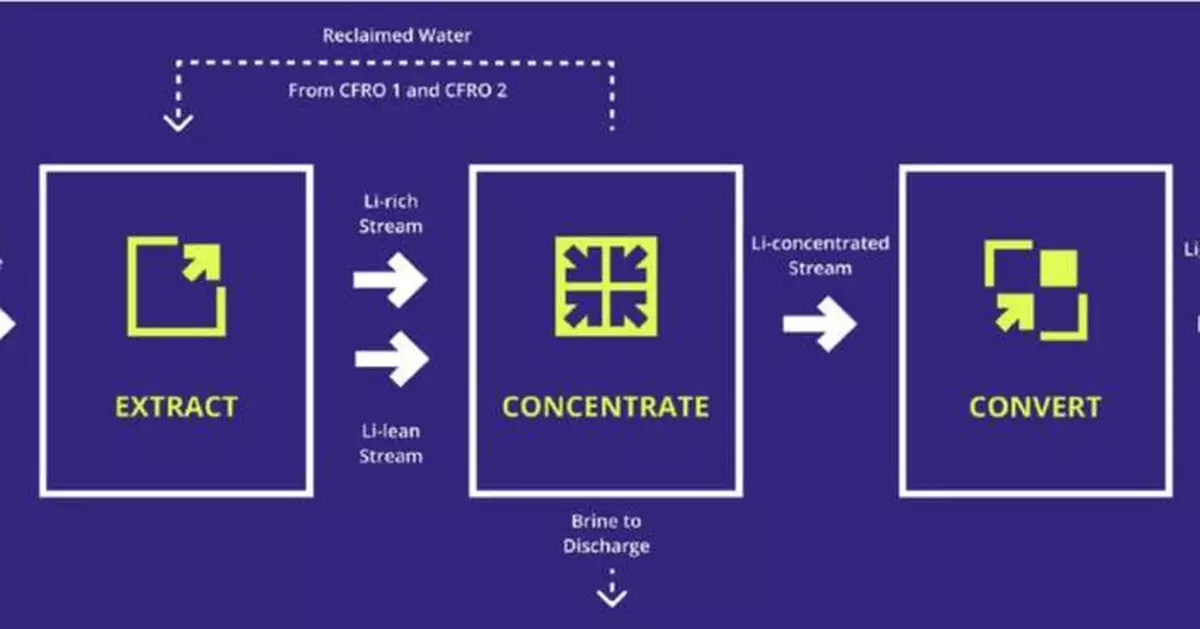
The World’s Most Efficient Lithium Solution.alkaLi’s EC 2 technology is the first and only all-in-one solution engineered to Extract, Concentrate, and Convert battery-grade lithium to meet the accelerating demand from EVs, energy storage, and electronics. Producers now benefit from:
alkaLi has already proven EC 2 ’s Concentrate process for a leading US energy company at a commercial site in Clayton Valley, Nevada, to demonstrate the effectiveness of the foundational CFRO technology to concentrate lithium to battery-grade quality.
Breakthrough Performance. Demonstration testing of EC 2 ’s three stages using salar brine feedwater confirms:
Beyond Lithium. alkaLi’s Elemental Technology approach adapts the EC 2 technology stack to recover a wide range of other critical minerals, including copper, nickel, cobalt, manganese, magnesium, and iron.
Later this month, alkaLi will commission a custom solution with a global mining leader in Western Australia, focusing on nickel and cobalt recovery from mine wastewater. Enhanced with Gradiant's Selective Chemical Extraction technology, the solution purifies feedwater, readying it for CFRO - a breakthrough system that outperforms any commercially available RO processes, delivering a concentrated 300,000 mg/L product with minimal energy use.
Once deployed, alkaLi will transform tailing ponds from environmental liabilities into valuable mineral sources, offering a sustainable path to meet global mineral demand. At another site in Southeast Asia, the EC 2 technology is already converting mine wastewater into high-value industrial-grade magnesium sulfate.
"alkaLi's modular approach to engineering the EC 2 technology stack continues a Gradiant philosophy of maximizing the impact of our cutting-edge innovation across industries and regions," said Prakash Govindan, COO of Gradiant. "The minerals we target are essential to accelerating the electrification of society, and I am thrilled that alkaLi will play such an important role in availing these raw materials to the world’s pioneers."
Interested in EC 2 for your site? Gradiant now offers a free applications testing program to showcase alkaLi’s Extract, Concentrate, and Convert capabilities across various feedwaters. Contact Gradiant to learn more at www.gradiant.com/contact.
About Gradiant
Gradiant is a Different Kind of Water Company. With a full suite of differentiated and proprietary end-to-end solutions for advanced water and wastewater treatment powered by the top minds in water, the company serves its clients' mission-critical operations in the world's essential industries, including semiconductors, pharmaceuticals, food & beverage, lithium and critical minerals, and renewable energy. Gradiant's innovative solutions reduce water used and wastewater discharged, reclaim valuable resources, and renew wastewater into freshwater. The Boston-headquartered company was founded at MIT and has over 1,000 employees worldwide. Learn more at gradiant.com.
About alkaLi
alkaLi is dedicated to accelerating the scaling of lithium and other critical minerals production. The company is powered by the EC 2 technology, the world's only all-in-one solution engineered to Extract, Concentrate, and Convert battery-grade lithium. alkaLi offers mineral producers an unprecedented new means to rapidly scale production with significant benefits in output capacity, speed, cost, and sustainability—with a solution that adapts to the broadest range of source inputs in the industry, including brine, evaporation, and recycling. The Boston-headquartered company is a standalone company spun out from Gradiant. Learn more at alkaLi3.com.
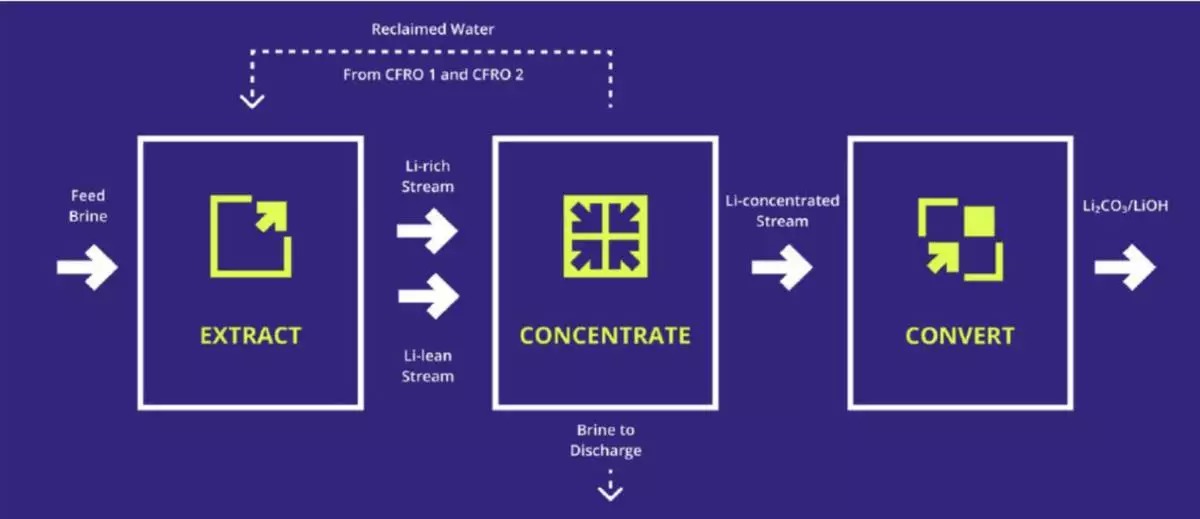
alkaLi’s EC2 modular three-stage containerized system for Extract, Concentrate, and Convert (Graphic: Business Wire)
TOPEKA, Kan. (AP) — The Kansas City Chiefs announced Monday they will leave their longtime home at Arrowhead Stadium for a new, domed stadium that will be built across the Kansas-Missouri state line and be ready for the start of the 2031 season.
The announcement came shortly after a council of Kansas lawmakers voted unanimously inside a packed room at the state Capitol to allow for STAR bonds to be issued to cover up to 70% of the cost of the stadium and accompanying mixed-use district.
The bonds will be paid off with state sales and liquor tax revenues generated in a defined area around it.
“The location of Chiefs games will change,” Chiefs owner Clark Hunt said after the meeting, “but some things won't change. Our fans will still be the loudest in the NFL, our games will still be the best place in the world to tailgate, and our players and coaches will be ready to compete for championships, because on the field or off the field, we are big dreamers, and we're ready for the next chapter.”
The Chiefs intend their $3 billion stadium project to be built in Kansas City, Kansas, near the Kansas Speedway and a retail district known as The Legends. The area is home to Children's Mercy Park, the home of MLS club Sporting Kansas City, and Legends Field, the home of the Kansas City Monarchs minor league baseball team.
The Chiefs also plan to build a $300 million practice facility in the Kansas City-metro suburb of Olathe, Kansas.
“Today's announcement is truly historic. Actually, it's a little surreal,” Kansas Gov. Laura Kelly said. “Today's announcement will touch the lives of Kansans for generations to come. Today's announcement is a total game-changer for our state.
“We have always been Chiefs fans,” Kelly said. “Now we are Chiefs family.”
Kansas Lt. Gov. David Toland, the state’s commerce secretary, said it had committed to issuing $2.4 billion in bonds to cover 60% of the project’s roughly $4 billion cost. State officials also foresee more than 20,000 new construction jobs to be created.
While the final location for the stadium has not been decided, Chiefs president Mark Donovan said it would seat about 65,000, or about 10,000 fewer fans than Arrowhead Stadium. That follows a trend across professional sports of building stadiums and arenas that have fewer overall seats but more amenities, luxury seating and premium spaces.
“We have a lot of work to do. We're still early in the process,” Hunt said. “In the months ahead, we will hire an architect and contractor and get to work on the five-plus-year timeline to build a new stadium.”
The move by the Chiefs is a massive blow to Missouri lawmakers and Gov. Mike Kehoe, who had been working on their own funding package to prevent a third NFL franchise and the second in a decade from leaving their borders; the Rams left St. Louis for Los Angeles in part due to their inability to secure funding to help replace The Dome at America’s Center.
Kehoe had backed a special legislative session in June to authorize bonds covering up to 50% of the cost of new or renovated stadiums, plus up to $50 million of tax credits for each stadium and unspecified aid from local governments.
“They thought new and shiny was better than old and reliable,” Kehoe said after the Chiefs' announcement, adding that the club was in discussions with Missouri officials about staying at a renovated or rebuilt Arrowhead Stadium as late as last week.
“We won’t give up. We’ll look for cracks in the armor and find out if there’s a Missouri Show-Me solution through our sports act.”
The Chiefs originally planned an $800 million renovation of Arrowhead Stadium in a joint effort with the Royals, who are similarly planning to build a new facility to replace Kauffman Stadium. The facilities sit a couple hundred yards apart, across a parking lot, and both teams have leases with Jackson County, Missouri, that expire in January 2031.
Last year, Jackson County voters soundly defeated a local sales tax extension which would have helped to pay for those renovations to the football stadium while helping to fund a new ballpark for the Royals in downtown Kansas City, Missouri.
The Royals were not discussed by Kansas lawmakers Monday, but momentum appears to be building behind their own move across the state line. An affiliate of the club already has purchased the mortgage on a tract of land in Overland Park, Kansas.
“While the Chiefs aren’t going far away and aren’t gone yet, today is a setback as a Kansas Citian, a former Chiefs season ticket-holder and lifelong Chiefs fan,” said Quinton Lucas, the mayor of Kansas City, Missouri. “Business decisions are a reality and we all understand that, but Arrowhead Stadium is more — it’s family, tradition and a part of Kansas City we will never leave.”
Hunt has long said his preference was to renovate Arrowhead Stadium, which was beloved by his father and team founder, the late Lamar Hunt. It is considered one of the jewels of the NFL, alongside Lambeau Field in Green Bay, and is revered for its tailgating scene and home-field advantage; it currently holds the Guinness World Record for the loudest stadium roar.
This summer, Arrowhead Stadium will host six World Cup matches, including matches in the Round of 32 and quarterfinals.
Lamar Hunt established the Chiefs on Aug. 14, 1959. The team was originally based in Dallas and known as the Texans, but Hunt was convinced by then-Kansas City Mayor H. Roe Bartle to relocate the team to Missouri with promises of tripling the team's season-ticket sales and expanding the seating capacity of Municipal Stadium.
In 1972, the team moved into Arrowhead Stadium at the Truman Sports Complex just east of downtown Kansas City.
The stadium has undergone numerous renovations through the years, allowing it to stay relevant in a changing sports landscape. But there has been little economic development around the stadium, the facility itself is starting to show wear and tear, and there is a limit to the number of luxury suites and amenities that the franchise can utilize to help drive revenue.
While the Hunt family has long loved Arrowhead Stadium, it has warmed in recent years to the idea of a replacement.
Not only would it solve many of the shortcomings of the Chiefs' longtime home, a new facility with a fixed or retractable roof would allow them to use it year-round. That would mean the potential for hosting more concerts and events, college football bowl games, the Final Four and perhaps one of Lamar Hunt's long-held dreams: a Super Bowl.
“Chiefs fans on both sides of the state line can tell you that the success we've enjoyed together has elevated the profile of the entire region,” Clark Hunt said. “Sports are woven into the fabric of this community. If you travel and go to New York or Los Angeles or Europe or South America, you don't have to tell people which side of the state line you're from. You tell them you're from Kansas City, and there's a pretty good chance their response might have something to do with the Chiefs.”
Skretta reported from Kansas City, Missouri. AP writers David Lieb and Heather Hollingsworth also contributed.
AP NFL: https://apnews.com/hub/nfl
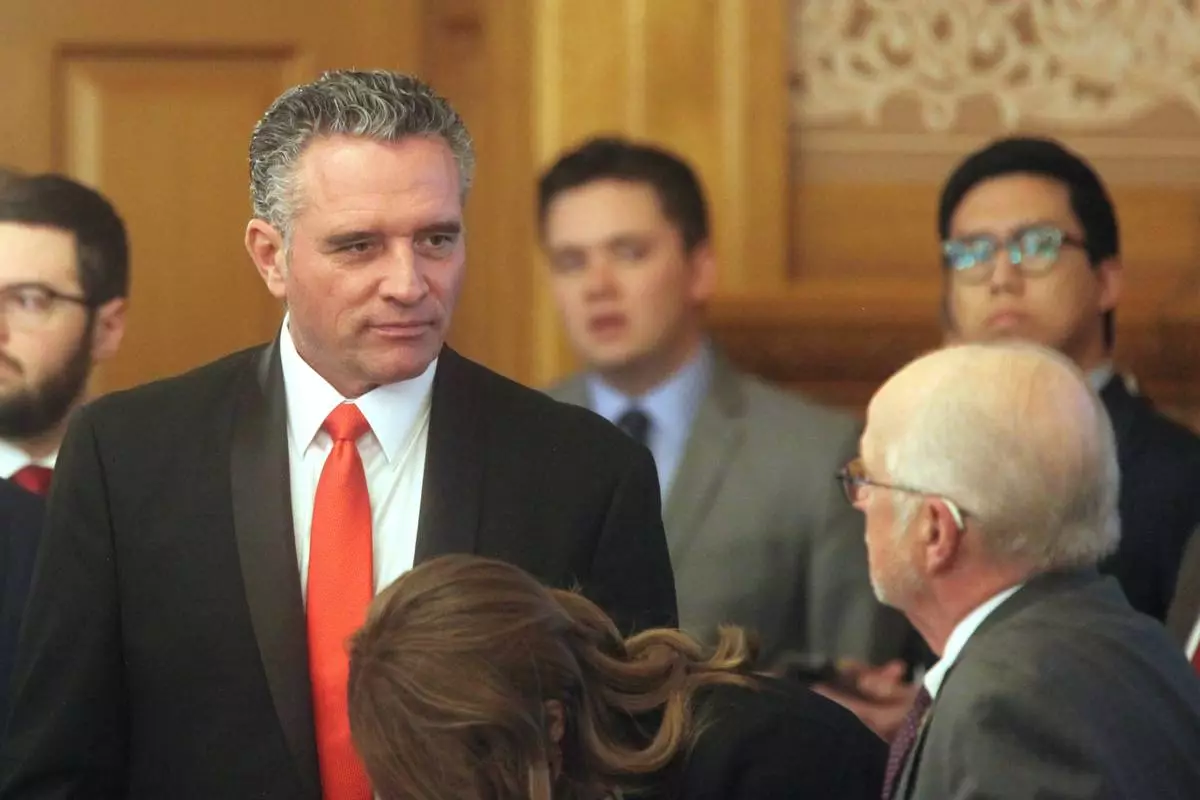
Kansas Senate President Ty Masterson, R-Andover, confers with members of the Legislature's staff before a meeting of legislative leaders to review a proposal for issuing bonds to help the Kansas City Chiefs build a new stadium on the Kansas side of the Kansas City metropolitan area, Monday, Dec. 22, 2025, at the Statehouse in Topeka, Kan. (AP Photo/John Hanna)
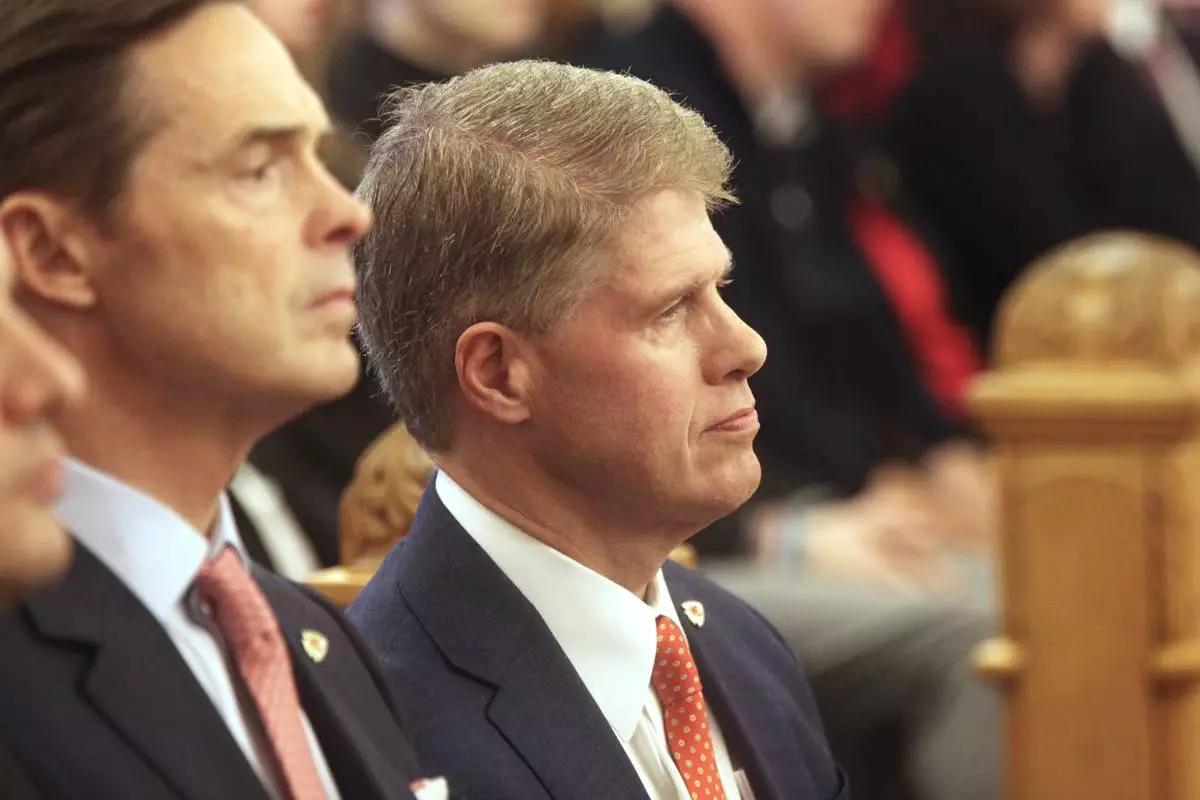
Kansas City Chiefs Chairman and CEO Clark Hunt watches the start of a meeting of legislative leaders who had the power to decide whether the state issues bonds to help the Chiefs finance a new stadium on the Kansas side of the Kansas City metropolitan area, Monday, Dec. 22, 2025, at the Statehouse in Topeka, Kan. (AP Photo/John Hanna)