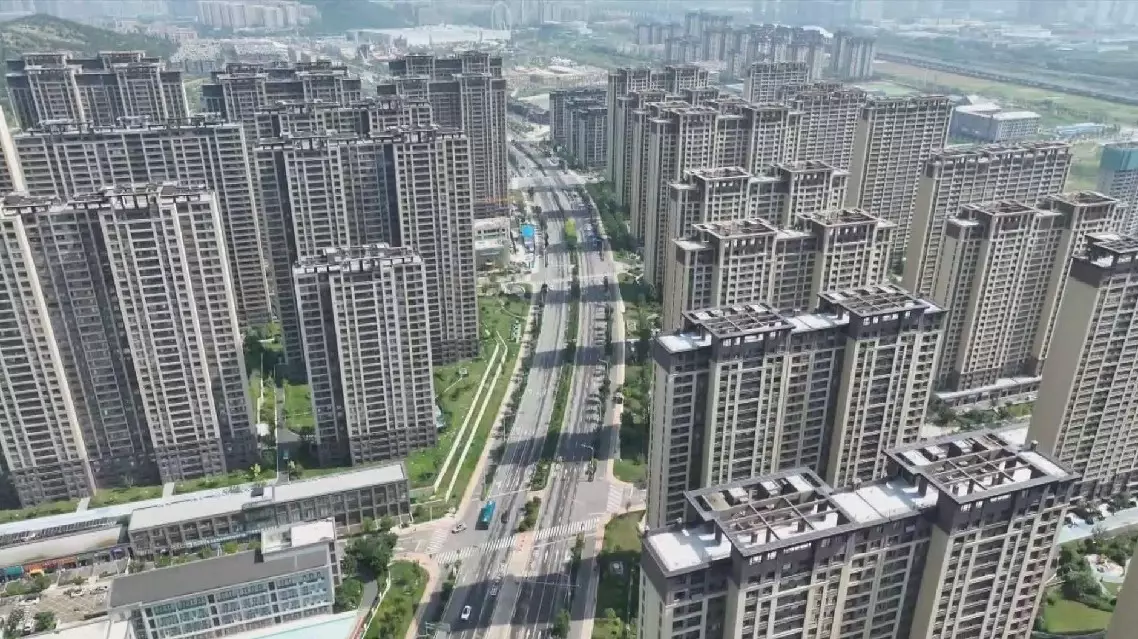
China on Wednesday rolled out tax policies to support the steady and healthy development of the real estate market.
Individuals either purchasing first residence or second home, as long as the property size does not exceed 140 square meters, will now pay a uniform 1 percent deed tax, according to a joint statement issued by the Ministry of Finance, State Taxation Administration and the Ministry of Housing and Urban-Rural Development.
The expansion of the eligibility for the lower tax rate to include apartments up to 140 square meters is expected to better support people's basic housing needs and their wishes to improve living conditions, according to the statement.
Meanwhile, in regions where the distinction between ordinary and non-ordinary housing has been abolished, individuals who have owned a property for two years or more will be exempt from paying value-added tax when selling their homes regardless of their property types.
Houses over 144 square meters are usually classified as non-ordinary housing and face higher transaction tax rates.
The new policy will also uniformly lower the minimum prepayment rate for land appreciation tax by 0.5 percentage points across all regions, so as to alleviate financial difficulties of real estate companies.
The State Taxation Administration previously outlined a tiered system for prepayment rate for land appreciation tax, setting the minimum rate at 2 percent for eastern regions, 1.5 percent for central and northeastern regions, and 1 percent for western regions.
China launches tax policies to support property market
China is willing to continue working with Russia within the framework of the United Nations (UN) Security Council, maintain timely communication on major issues, and make joint efforts to help de-escalate the situation in the Middle East, safeguard regional peace and stability, and uphold common security for the world, Chinese Foreign Minister Wang Yi said on Sunday.
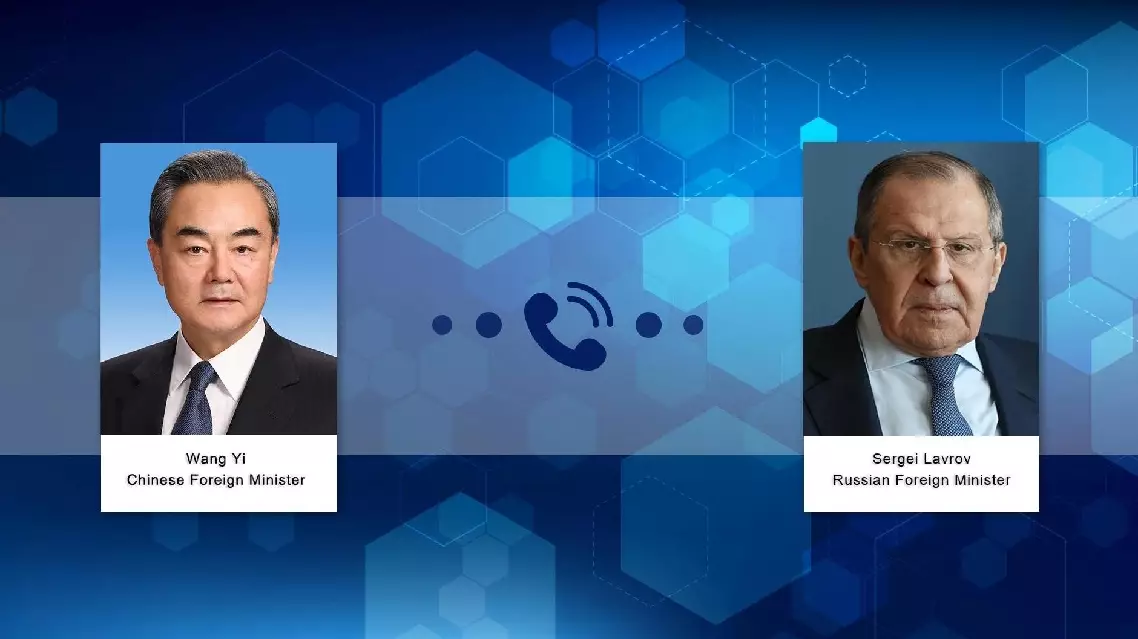
Wang, also a member of the Political Bureau of the Communist Party of China Central Committee, made the remarks in a phone conversation with Russian Foreign Minister Sergei Lavrov.
China and Russia, as permanent members of the UN Security Council, should uphold fairness and justice on matters of principle, adopt an objective and balanced approach, and seek greater understanding and support from the international community, Wang said.
Noting that China has consistently advocated the resolution of international and regional hotspot issues through dialogue and negotiation, Wang said that the situation in the Middle East continues to deteriorate, hostilities are still escalating, and the fundamental solution to ensuring navigation through the Strait of Hormuz lies in achieving an early ceasefire and bringing the war to an end.
For his part, Lavrov said Russia is highly concerned about the continued escalation of tensions in the Middle East.
Regarding the ongoing conflict and the issue of the Strait of Hormuz, Lavrov said Russia maintains that military operations must be stopped immediately and efforts should return to the track of political and diplomatic settlement to address the root causes of the conflict, and the UN Security Council should play a constructive role in this regard.
Russia stands ready to maintain close communication and coordination with China and continue to make efforts and speak out in support of a ceasefire and the end of the war, he said.
China willing to cooperate with Russia to de-escalate Mideast situation: FM