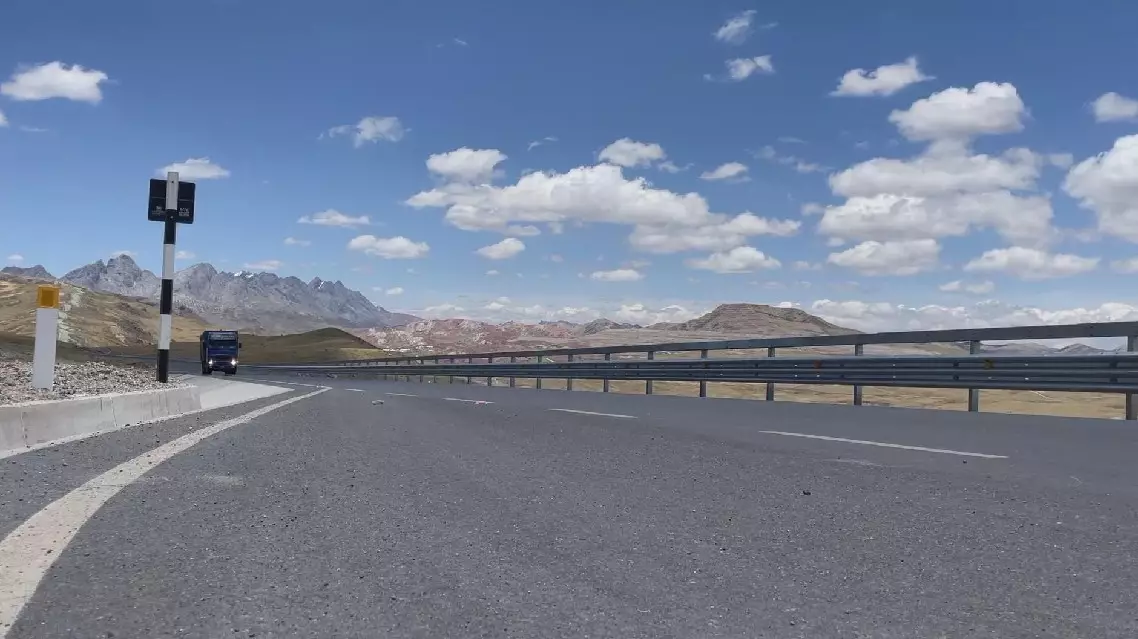
A road which is being constructed by a Chinese contractor in the mountains of Peru is expected to promote economic development in Huanuco province, which is located about 350 kilometers away from the Peruvian capital Lima.
Huanuco is surrounded by the towering Andes mountain range, with altitudes averaging over 4,000 meters, and its poor road infrastructure has posed significant challenges to travelers and to farmers when they want to ship their potatoes, corn and other produce to customers in other locations.
To mitigate these challenges, construction work began in 2019 on the Andes National Road project, also known as the Carretera Huanuco-La Union-Huallanca road project.
Located in the central and western regions of Peru, the 236.63-kilometer road is the country's largest infrastructure project under construction, and is expected to take 11-12 years to complete.
It is estimated to halve travel time for about 270,000 people in 243 towns along the road.
"I am a farmer. I have grown potatoes all my life. We tried to sell Huanuco products to Lima. Because there were only paths, it was difficult to get there. People had to travel for hours. But now, it has shortened the time," said Adalberto Vela, a potato farmer in Huanuco.
"In fact, it will lower the cost of products and it will be easier to transport the products to the capital," said Gonzalo Prado, a truck driver.
"From the point of view of transport in Peru, it was necessary, because it is part of the national highway system. This makes it easier and better for producers in the mountainous areas to profit more from their products," said Luis Cordoba, the director of the engineering department at the national highways bureau under the Ministry of Transport and Communications.
While trying to maximize the economic advantages of the new road, China Railway 20th Bureau Group Corporation Limited (CR20G), which is responsible for building the Andes National Road project, also works hard to protect the local environment.
This part of the Andes features a complex and diverse climate and a fragile ecological environment characterized by native forests along the route of the road.
To balance the requirements of heavy infrastructure work and a delicate environment, CR20G workers plant trees while building the road. The work team also includes experts specializing in environment, forest, safety, and community development. Nurseries have been established at different altitudes for different plants, and specialists teach forest protection knowledge to tens of thousands of residents along the road, and train forestry technicians.
"We are about to plant 40,000 trees. They are purely native species," said Luis Avila, a forest engineer.
"I look forward to the completion of the Andes national highway. Our construction team will deliver to the Peruvian people not only a high-quality expressway, but also a road surrounded by lush landscape, which is the best proof of Chinese companies' practice of biodiversity conservation. In my opinion, this road will be a road to poverty alleviation, a road that combines development and ecology, and a road of friendship between China and Peru," said Chen Jingfang, the executive manager of CR20G's Peru Branch.
Chinese-built road to promote economic, environmental development in Peru
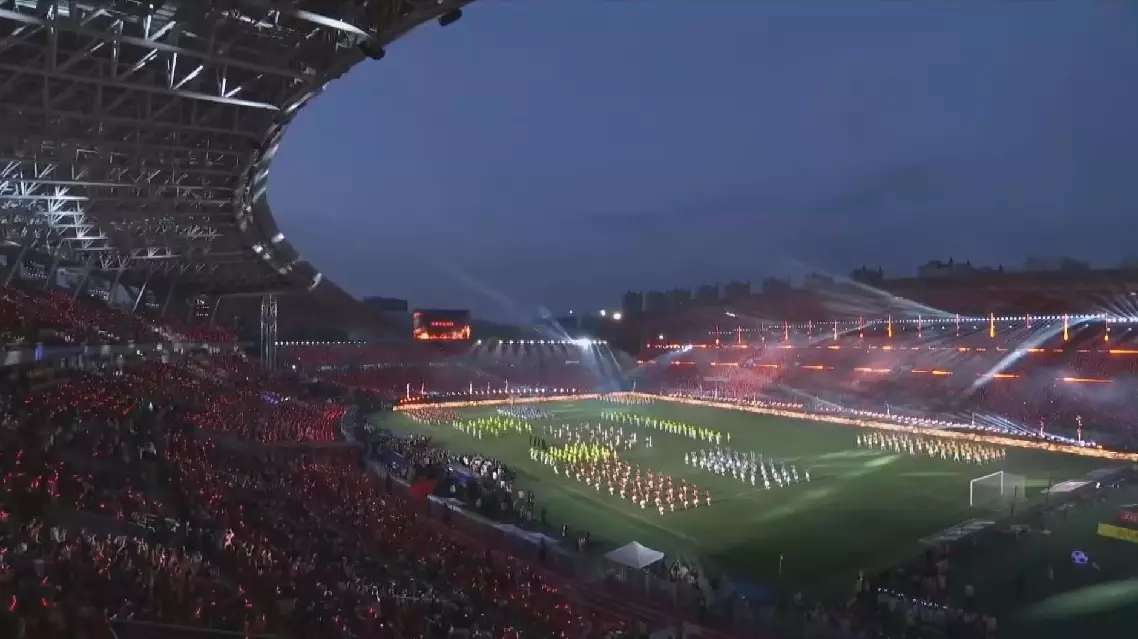
The Northeast China Football League, China's first cross-provincial city-based football tournament, is in full swing across northeast China, transforming a low-cost ticket into a golden key that unlocks regional tourism and fuels a surge in consumer spending this summer.
Fresh off the conclusion of the 2026 FIFA World Cup in North America, football fever is just heating up in China's northeastern region.
Officially called "The 2026 Northeast China City Football League," an eight-team amateur competition spanning the three northeastern provinces of Liaoning, Jilin and Heilongjiang, plus the Inner Mongolia Autonomous Region, opened simultaneously in Shenyang, Changchun, Harbin and Hohhot, the four capitals of the provinces and the region, on May 23.
While match tickets cost less than three U.S. dollars, their value extends far beyond the pitch. Ticket holders enjoy free entry to landmarks like the Shenyang Imperial Palace, as well as discounts at partner hotels, restaurants and local businesses, with a single match ticket unlocking a host of city-wide benefits.
"The ticket allows us to visit attractions such as the Shenyang Imperial Palace and Marshal Zhang’s Mansion, all of which have discounts. This is something we particularly like. So, taking advantage of the weekend, we should have a good time in the area," said a fan from Heilongjiang.
The bundled benefits have significantly lowered travel costs for fans, turning weekend trips into economical getaways.
"We can enjoy discounts on food, drink and entertainment with our ticket. Roughly calculated, it feels like this trip will save four to five hundred yuan for me," said another fan from Heilongjiang.
This tournament model, which is organized and promoted by local governments, features wide community participation and deep integration with culture, tourism and commercial sectors, and has been widely recognized as a proven success.
Since the launch of the Jiangsu Football City League in 2025, the format has been adopted by regions across China as a way to drive consumption, boost local economies and enrich public life, while also strengthening cultural exchanges between cities.
"We have nearly 20 people here. We hope to use regional football leagues to improve the exchanges between cities and deepen the bond between people. These competitions are just as popular as the World Cup among local fans. We can enjoy intense and exciting matches and their atmosphere right at our doorsteps. This is one of our original goals for football," said Hao Junjie, secretary general of the Jiangsu Zhenjiang Fan Association.
For many visiting supporters, the trip is as much about immersing themselves in local culture as it is about watching football.
"We have experienced Northeast China-style bathhouses and night market barbecue. The football culture and heritage in Shenyang are very good, and this time we are here specifically to watch the Northeast China Football League match. The overall travel cost is approximately 3,500 yuan," said a fan from Jiangsu.
Outside the stadium, thousands of "second viewing venues" have emerged across host cities' core business districts, paired with supporting services including specialty catering, cultural exhibitions and dedicated outdoor match screenings. Every weekend, host cities buzz with vibrant energy, with street stalls bustling with crowds and local businesses thriving.
Local merchants have reported a noticeable surge in activity as the league turns cities into vibrant weekend destinations.
"Business has been very good recently. Since the start of the Northeast China Football League, the customer flow in our entire neighborhood has increased significantly. For our store, the revenue has increased by 10 percent," a local coffee merchant said.
The league's vibrant atmosphere and rich local offerings have even attracted international visitors seeking an authentic cultural experience.
"I'm a Korean who came specifically from Nanjing to watch the match of the Northeast China Football League. I really like it here. It's very lively and fun. I like to eat Northeastern style pork belly and iron pot stew, which are particularly delicious," said a South Korean football fan.
The league is now serving as a powerful catalyst for renewed vitality, proving that the passion for the beautiful game can drive tangible economic and social benefits. The World Cup may be over, but in this corner of China, the season is just beginning.
Grassroots sporting events fuel regional tourism, consumption