Ten Colombian trainees on Tuesday graduated from the "Operation and Maintenance Plan" training program for the Bogota Metro Project in Xi'an, capital of northwest China's Shaanxi Province, the first batch of new recruits completed training in China for the Chinese-contracted metro project.
They will return to Bogota, the capital of Colombia, to participate in the operation and management work of the city's first metro line, which will begin service in 2028.
The subway line is being built by a consortium of Chinese companies, namely China Harbor Engineering Company Limited and Xi'an Metro Company Limited.
The Bogota Metro Project has made steady progress in infrastructure construction, personnel education and training, thanks to the support of governments, relevant enterprises, and education institutions from both sides.
The graduates have mastered the knowledge and operational methods of urban rail transit systems after a year of study.
"I learned a lot in China, and I need to bring that knowledge back to my country. I have a very important responsibility to build my country's subway, to build the Bogota Metro Line 1, so I studied very hard every day. I think it would be wonderful to come back to Xi'an sometime," said David Wan, a Colombian student.
Colombian Ambassador to China Sergio Cabrera lauded the training program as contributing to enhancing friendship between Colombia and China.
"I also went to Xi'an when the students first came to China a year ago. At that time, they had just arrived and did not know anything. A year later, I saw that they spoke Chinese very well, and that they had learned a lot and studied very hard. I watched their study videos, and I was proud of their achievements. It shows the abilities of these young Colombians, who have adapted to their new work and life very well. They have established a long and solid friendship between Colombia and China," he said.
Meanwhile, the second batch of 40 trainees set to begin their sessions in China. Selected from over 2,000 applicants, they have signed contracts to become employees of the Bogota Metro Project.
Building on the experience gained from training the first batch, this program has established a specialized training team to help trainees thoroughly understand and master the knowledge and operational methods of urban rail transit. The training will also equip them with initial management experience and enhance their skills in repair and maintenance.
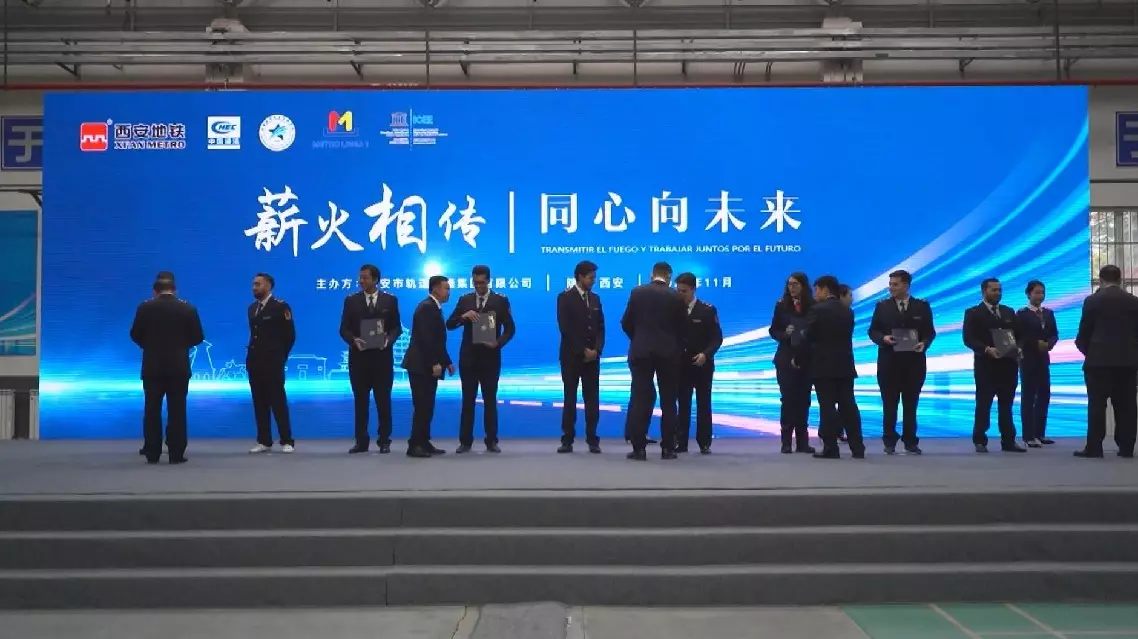
Colombian trainees complete training in China for Pogota Metro project