Skip to Content Facebook Feature Image

EU tariffs on Chinese EVs harm export-dependent economies: business chamber leader

China

China

China

EU tariffs on Chinese EVs harm export-dependent economies: business chamber leader

2024-11-14 16:14 Last Updated At:11-15 00:47

The additional tariffs the European Union imposed on the electric vehicles (EVs) imported from China are harmful to export-dependent economies like China and Germany which need free markets, said a German business chamber leader.

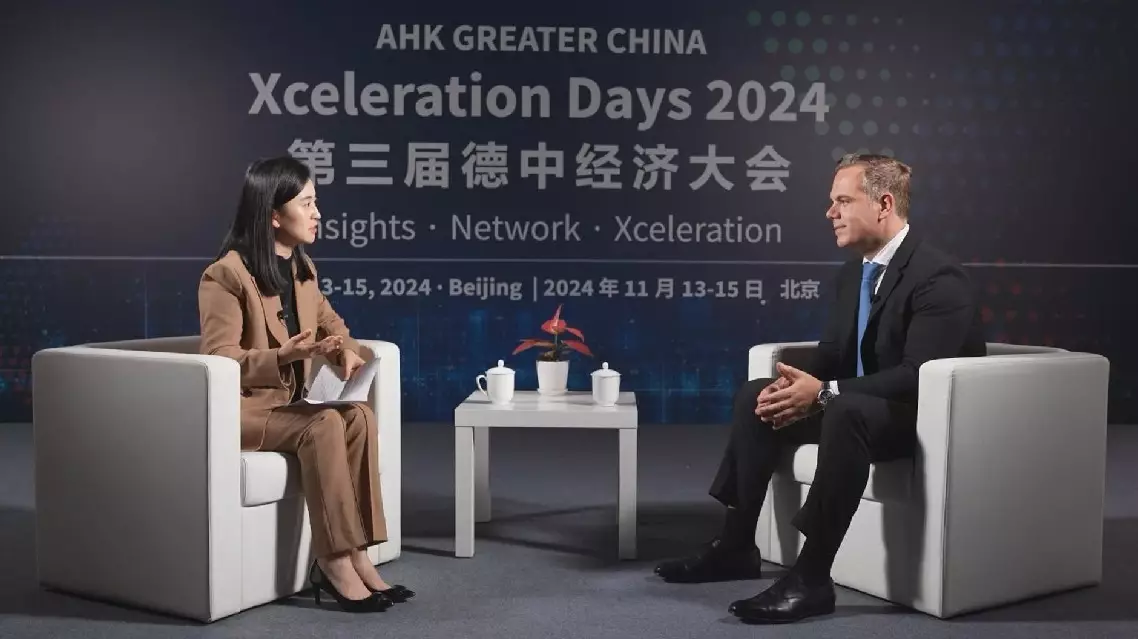
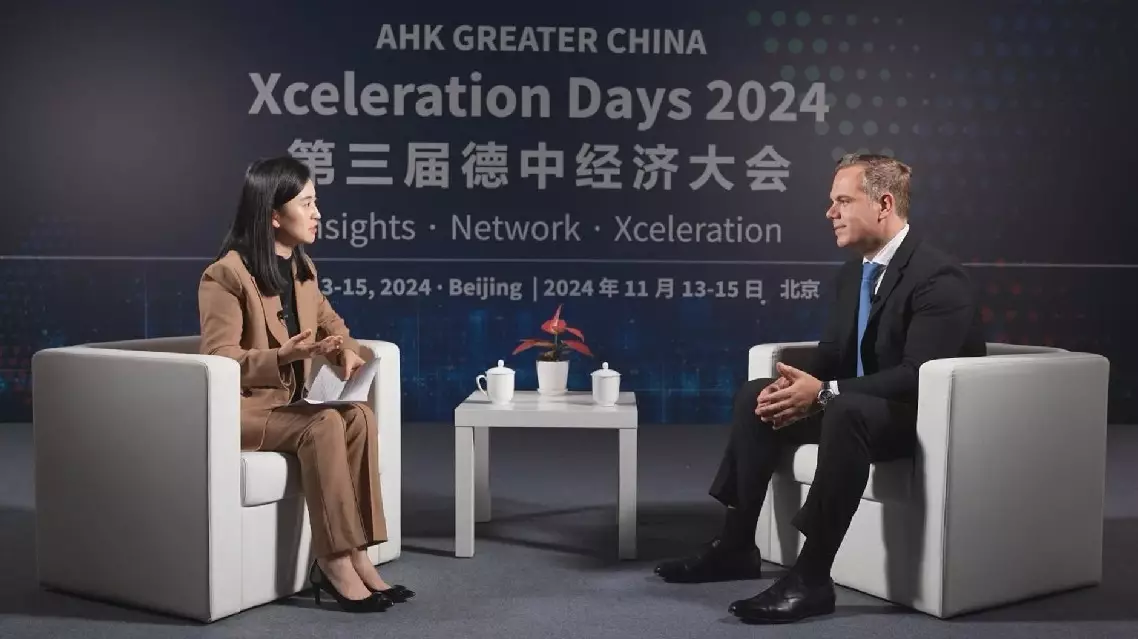
Maximilian Butek, executive director of the German Chamber of Commerce in China - East China, made the statement in an interview with China Global Television Network (CGTN) on the sidelines of the AHK Greater China Xceleration Days 2024, which is taking place in Beijing from Nov 13 to 15.

"The tariffs are against carmakers who produce in China and deliver to Germany. And this also hits companies like Tesla or BMW. So, we positioned ourselves on behalf of our companies against tariffs because our economy is quite similar to the Chinese economy. We are highly export-dependent. So, we need free markets, and having implemented tariffs will not promote the idea of free markets. We need an open discussion because if the economy is continuing to slow down, we will not have a good winner out of that," he said.

Last month the European Commission announced the imposition of anti-subsidy tariffs on Chinese EVs. Starting Oct. 31, these tariffs will remain in place for five years with varying rates: 17 percent for BYD, 18.8 percent for Geely, and 35.3 percent for SAIC, among China's leading automakers. Additional firms that cooperated in the investigation will be subject to a 20.7-percent duty, while non-cooperative companies will incur the maximum 35.3-percent rate.

Butek also noted that German companies are committed to exploring the overseas market like China and the United States by creating jobs, bringing technologies and boosting innovation, thus urging the two economies not to decouple in case of taking a toll on consumers of both sides.

"Chinese companies have future advantages. German companies have future advantages. We German companies, we really love to be in China, to be very committed to our employees here. And we have more than one million employees in China to continue bringing technology, knowledge, innovation into China. And we also like to do that in the States. So, I believe that the tensions between U.S. and China, those two powers have to resolve that. And we, in the ideal world, try to work in both systems. And we just can urge both sides: don't decouple, because if you decouple, it's the consumers in China and in the U.S. will pay for it," he said.

As the flagship business event organized by AHK Greater China, the AHK Xceleration Days attract thousands of business leaders, executives, and representatives of international organizations, aiming to promote bilateral economic and trade exchanges and cooperation between China and Germany and to accelerate their business development in China.
EU tariffs on Chinese EVs harm export-dependent economies: business chamber leader
EU tariffs on Chinese EVs harm export-dependent economies: business chamber leader
EU tariffs on Chinese EVs harm export-dependent economies: business chamber leader
EU tariffs on Chinese EVs harm export-dependent economies: business chamber leader
Geoeconomic confrontation is the leading short-term global threat in 2026, the World Economic Forum (WEF) warned in its Global Risks Report 2026 released on Wednesday ahead of its annual meeting in Davos, Switzerland.

The report ranks geoeconomic confrontation as the top risk for 2026, followed by interstate conflict, extreme weather, societal polarization, and misinformation and disinformation. It also identifies geoeconomic confrontation as the most severe risk over the next two years.

"I think if there is to be one key takeaway from the report, it's that we are entering an age of competition and this new competitive order is then shaping current global risks, but it is also shaping and to some extent hindering our ability to actually cope with them. That's really the key takeaway. If we take a look at, the number one risk both for 2026 and two years out, it's dual economic confrontation. But then if we look at the risks 10 years out. It's really the climate and environment related risks. All of these things require global cooperation and that's where we're seeing a big backsliding in this new age of competition," said Saadia Zahidi, managing director of the WEF.

Economic risks showed the largest increase in the two-year outlook, with concerns over economic downturns, inflation, rising debt and potential asset bubbles intensifying amid geoeconomic tensions, the report said.

Environmental risks remain the most severe overall, led by extreme weather, biodiversity loss and critical changes to Earth systems. The report noted that three-quarters of respondents expect a turbulent environmental outlook.

Risks related to adverse outcomes of artificial intelligence rose sharply, climbing from 30th in the two-year horizon to fifth in the 10-year outlook, reflecting concerns over impacts on labor markets, society and security.

The 21st edition of the report draws on views from more than 1,300 experts, policymakers and industry leaders.

The WEF's annual meeting will be held in Davos from Jan 19 to 23 and draw nearly 3,000 guests from more than 130 countries and regions to participate.

"So overall, we are starting to see this shift away from what have traditionally been the ways in which people have been able to cooperate. Now, that is not to say that any of this is a foregone conclusion. And I think that's a really important message around the risks report. None of this is set in stone. All of this is in the hands of leaders. Whether they choose to cooperate and invest in resilience or whether they do not. So that's really what we'll be focused on next week in Davos bringing leaders together under this overall theme of 'a spirit of dialogue' and trying to reestablish relationships, cooperation and trust. That's the fundamental," said Zahidi.

WEF warns of rising geoeconomic risks in 2026

WEF warns of rising geoeconomic risks in 2026

Recommended Articles