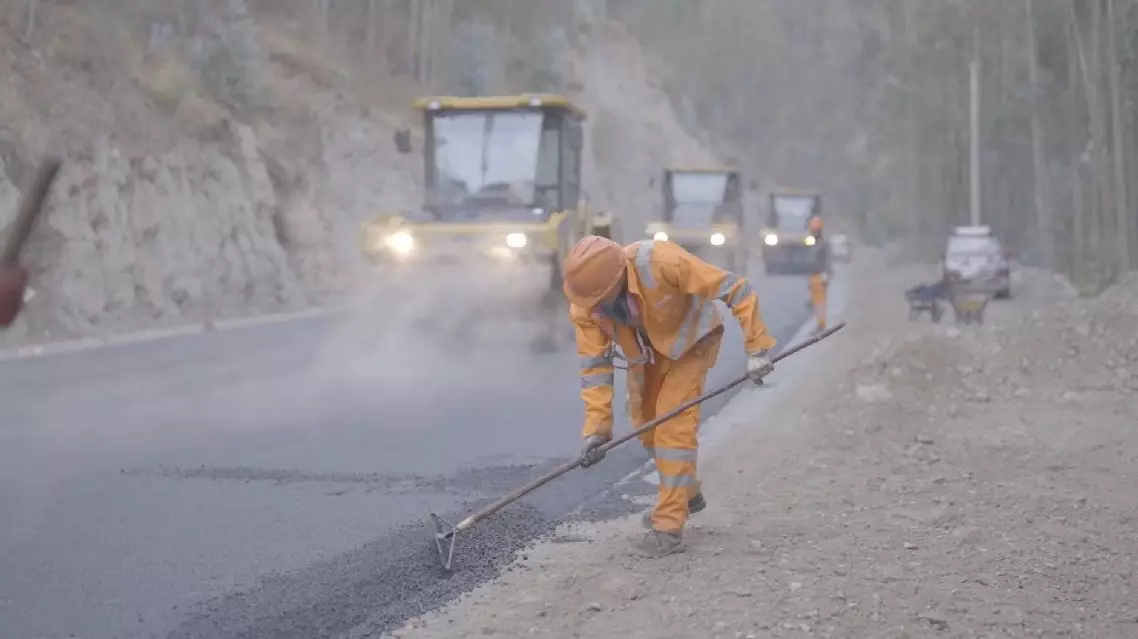
Construction of Peru's Andes National Highway, undertaken by a Chinese firm, has surpassed the 100-kilometer mark of asphalt paving, halfway through the country's largest mountainous infrastructure project, which is set to open next year.
Stretching 236.6 kilometers, the highway traverses the high-altitude Andes Mountains, with 90 percent of its route being at least 3,000 meters above the sea level, posing significant safety challenges due to steep cliffs.
"The construction team has extensively utilized China's most advanced concrete mixing equipment and automated asphalt production machines, ensuring both the progress and quality of the project," said Zhang Baolin, project manager with China Railway 20th Bureau.
The highway runs through Huánuco province, where the local economy relies heavily on agriculture. The new highway is expected to significantly improve transportation for local products like potatoes and corn. Before the vision becomes a reality, the construction of the project has already created over 2,000 jobs for families along the route.
"The Andes Mountains are one of the most biodiverse regions in the world. During our three years of construction, we have cultivated and planted over 40,000 saplings and restored 18 hectares of vegetation, integrating our green construction philosophy into the project," said Dai Ruibin, engineering director of the project.
Upon completion, the Andes National Highway will connect the mountainous regions to the Pan-American Highway, reducing travel time between Huánuco and Yarowilca from over 10 hours to under three hours, benefiting roughly 270,000 residents in over 240 towns along the route.
Construction advances on Peru's Andes highway
Rawalpindi, the garrison city neighboring Pakistan's capital Islamabad, is on high security alert ahead of the expected second round of U.S.-Iran talks.
Rawalpindi is not only an important transport hub for Pakistan's capital, Islamabad, but is also home to Nur Khan Air Base, where the U.S. delegation landed during the first round of U.S.-Iran talks.
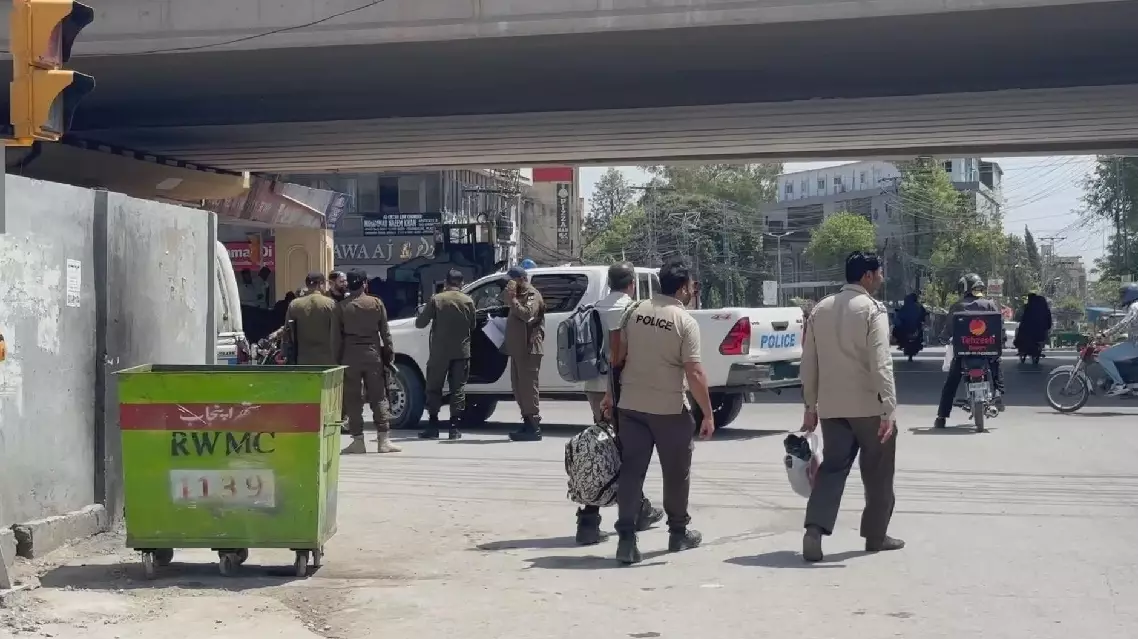
More than 600 checkpoints were set up in the city, and local business activities were also reduced, local media reported.
Footage from a China Media Group (CMG) reporter showed that many shops in major commercial districts in downtown Rawalpindi were closed, and more police were visible on the streets.
U.S. President Donald Trump said in a Truth Social post on Sunday that U.S. representatives were going to Islamabad for negotiations. Sources say advance teams from the U.S., including security personnel, have arrived in Islamabad to coordinate arrangements for the expected talks.
Meanwhile, Iran's official news agency IRNA said on the same day that the country had rejected taking part in the second round of talks.
On Feb. 28, Israel and the United States launched joint attacks on Tehran and several other Iranian cities, killing Iran's then Supreme Leader Ali Khamenei, along with senior military commanders and civilians. Iran responded by launching waves of missile and drone strikes targeting Israel and U.S. bases and assets in the Middle East, and exercising tight control over the Strait of Hormuz.
A ceasefire was achieved between the warring parties on April 8, which was followed by lengthy talks between the Iranian and U.S. delegations in Pakistan's capital Islamabad on April 11 and 12.
Security strengthened in key city near Pakistan's capital ahead of expected U.S.-Iran talks