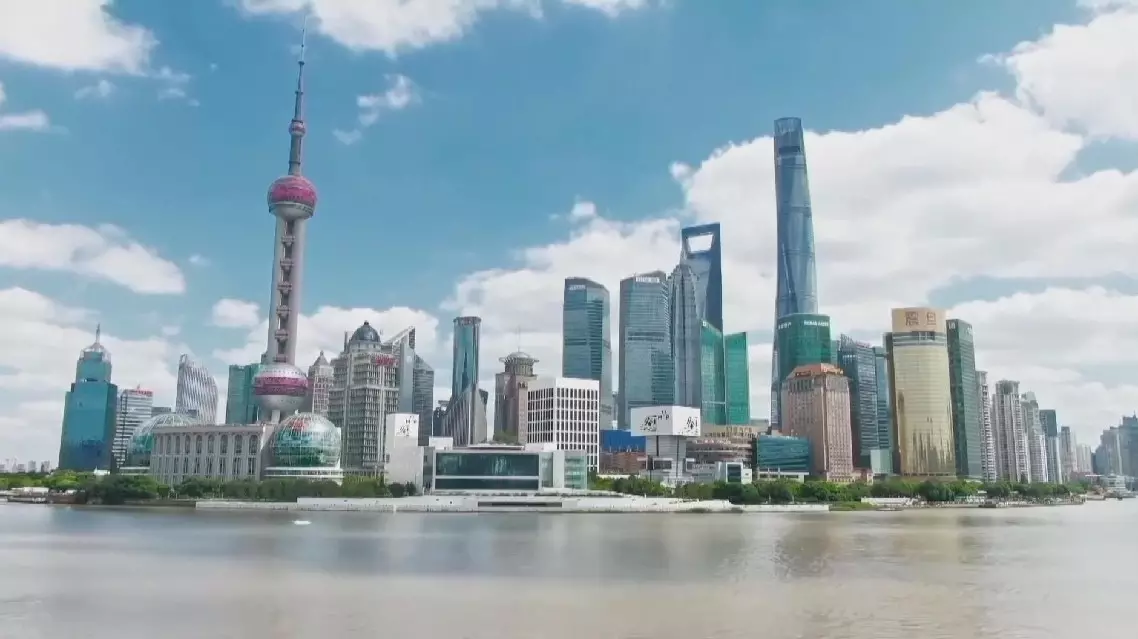
Regional cooperation and global economic integration have taken the center stage of the 29th Asian EXIM Banks Forum Annual Meeting which runs from Tuesday to Thursday in Shanghai.
Forum members have gathered to explore ways to strengthen the regional economy by promoting low-carbon development and tapping into the digital economy's potential.
Featuring over a dozen export credit agencies from across the world and three multilateral financial institutions, this year's Asian EXIM Banks Forum Annual Meeting aims to build a consensus while exploring new opportunities for collaboration.
As China's official export credit agency, the Export-Import Bank of China (China EximBank) hosts the annual meeting in Shanghai.
" Today's Asia has become the world's most influential dynamic region, accounting for nearly half of the global economy and contributing more than 70 percent to global economic growth. It is a crucial engine for global growth, an anchor for peace and stability, and a new frontier for cooperation. Asian countries need to strengthen solidarity and collaboration more closely to share opportunities and achieve win-win solutions in the face of challenges," said Wu Fulin, chairman of the Export-Import Bank of China (China EximBank).
This year's meeting focuses on four main areas, spanning regional cooperation on the economy and trade, finance, as well as the industrial chain.
" We hope that the members of this forum will use the annual meeting as an opportunity to engage in closer solidarity and cooperation in areas such as infrastructure, green trade, the digital transformation, and public welfare. By sharing opportunities and facing challenges together, we aim to contribute new momentum to regional cooperation and economic growth, and inject new vitality into the integration of the global economy," said Yang Dongning, vice president of the bank.
For international participants, finding more room for cooperation remains a top priority.
" This is indeed a very important occasion for Exim banks around the Asia Pacific region to come together, to discuss matters of mutual interest, to identify some of the key challenges and opportunities to trade, and to find solutions to further expand trade in the region. For ADB, we are a regional development bank, so regional cooperation is in our DNA, so to speak. We have been working together with the Chinese authorities, with other banks around the world on promoting regional economic cooperation," said Safdar Parvez, country director for China Resident Mission of the Asian Development Bank (ADB).
" Very good discussions between all the Asian banks, and I think we are getting to get a good understanding of what requires to be done. Because as the theme of the conference goes, it's all about cooperation, and I think we see a lot of that going on here today. The common theme at the moment, things like digital and renewable energy, the whole energy transition program is something of interest to everyone. I think I can see a lot of cooperation there," said Dato' Charon Wardini Mokhzani, independent non-executive director of the EXIM Bank of Malaysia.
Inaugurated in 1996, the Asian EXIM Bank Forum includes official export credit agencies from more than ten countries, such as China, India and Indonesia, with the Asian Development Bank as a permanent observer. The forum serves as an essential platform for members to deepen understanding, share best practices, and promote mutual development.
Asian EXIM Banks Forum focuses on regional cooperation, global economic integration