Inbound tourism have boomed after China extended its visa-free policy to nine more countries, including Norway, Finland, Denmark, and South Korea.
The pilot visa-free policy, effective from Nov 8 to December 31 next year, marks the fifth round of visa-free policy expansion.
On November 8, the first group of tourists under the new policy arrived at the airport in Wuhan City of central China's Hubei Province. Within around two minutes, all 184 visitors from South Korea had cleared customs.
"With the visa-free policy in place, I can bring my parents and my wife here together, which is convenient," said Lee Sang-Su from South Korea.
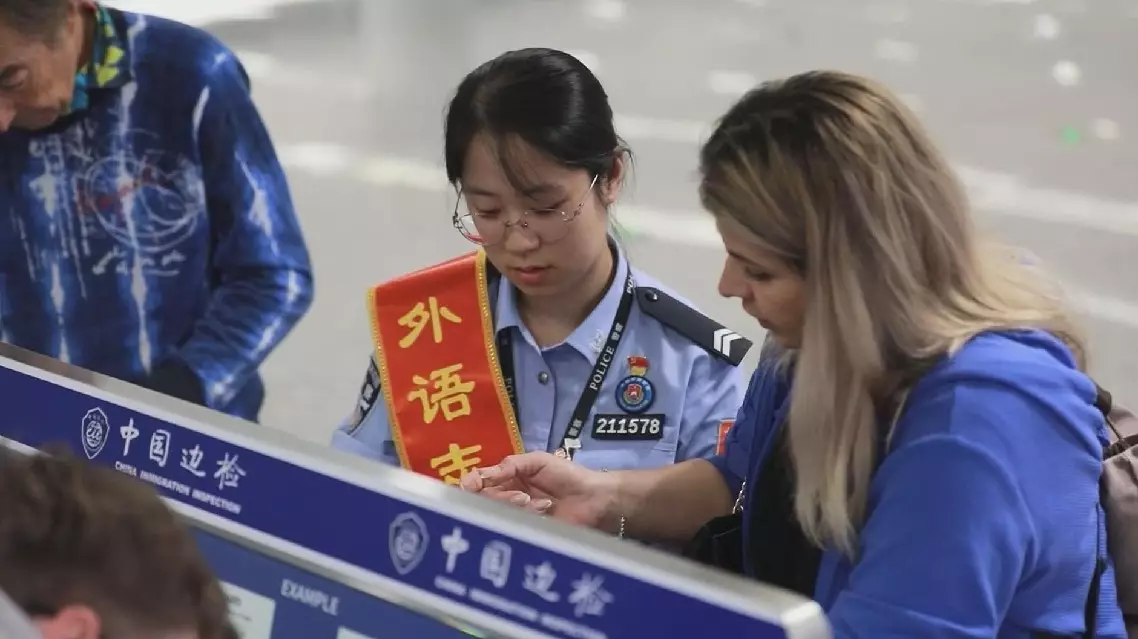
To better serve the influx, Wuhan customs has added more language service volunteers and streamlined the border inspection.
"Wuhan Immigration Inspection Station assigned police forces who are fluent in Korean to guide visitors in the entry card filling area, and also perfected the visa-free entry inspection process. We are now able to carry out inspections as soon as visitors arrive to enable faster entry," said Yan Wei, a staff of the Wuhan Immigration Inspection Station.
Apart from visa-free policy expansion, China has also rolled out a series of policies to facilitate foreign tourists including better payment methods, diverse tourism products and so on.
In Zhangjiajie City of central China's Hunan Province, foreign tourists can now buy tickets directly with their passports to explore the scenery of Zhangjiajie Grand Canyon and its breathtaking 300-meter-high glass bridge.
"I always love China, and the culture, and the language, and always want to be here, but it's so far away. So we finally got here, the scenery, so stunning. It's just so amazing. It's such a big and open country. I'm just amazed by everything here," said Dariana, a German tourist. Hangzhou City of east China's Zhejiang Province and Shenzhen City of south China's Guangdong Province are also seeing a growing number of foreign visitors coming in for business, sightseeing or family reunion. According to statistics, Hangzhou customs has welcomed over 110,000 inbound arrivals visa-free so far this year, up 3 times year on year. And for Shenzhen, the number has exceeded 600,000, a seven-time increase year on year.
"Shenzhen Immigration Inspection General Station has inspected a total of 4.55 million inbound and outbound foreigners this year, rising by 98 percent year on year. The visa-free travel constituted 28 percent of the total, compared to 7 percent last year. The visa-free policy is making immediate effects," said Du Hai, a staff of the Shenzhen Immigration Inspection General Station.
Cities in China see more global tourists as visa-free policy expands