China's State Administration of Foreign Exchange has been placing emphasis on coordination with cross-border Renminbi (RMB) policies in efforts to promote the high-standard and institutional opening-up of China's financial market, said an official in a recent interview with China Central Television (CCTV).
The Chinese bond market, the world's second largest, has provided diversified investment and financing channels for global capital.
"RMB assets have independent performance in terms of yield globally, which can help global investors achieve risk diversification in asset allocation. At the same time, RMB has gradually enhanced international influence with its proportion in global cross-border transactions steadily increasing, thus becoming an important choice for global investors to diversify their asset allocations," said Wang Lei, deputy head of the Capital Account Management Department under the State Administration of Foreign Exchange.
By the end of September, 1,152 overseas institutions held 4.39 trillion yuan (about 607 billion U.S. dollars) of bonds in China's interbank market.
Seven overseas institutions entered China's interbank bond market in September.
"We place emphasis on coordination with cross-border RMB policies. So the QFII (Qualified Foreign Institutional Investors scheme), RQFII (Renminbi Qualified Foreign Institutional Investors scheme), CIBM (China Interbank Bond Market) and panda bonds all follow the principle of policy integration on domestic and foreign currencies. We have been promoting the application of uniform rules for same-type transactions on different markets. For example, we use the same foreign exchange management rules to regulate panda bond issuances both on the interbank market and the exchange-traded bond market. And these measures are conducive to gradually establishing a unified and efficient system for financial market opening-up, and promoting the high-standard and institutional opening-up of China's financial market," said Wang.
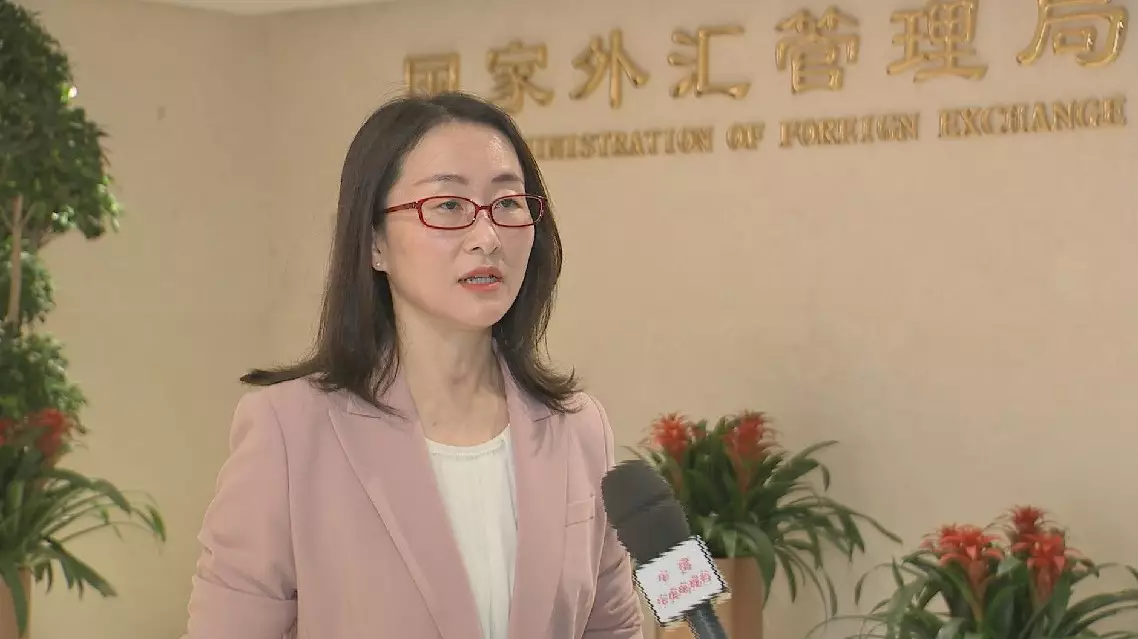
China's foreign exchange regulator helps promote financial market opening-up: official
Commemorations honoring Chinese People's Volunteers (CPV) martyrs were held on the banks of the Yalu River in Dandong, Liaoning Province on Tuesday as part of ongoing tributes to those who fought in the War to Resist U.S. Aggression and Aid Korea (1950-1953).
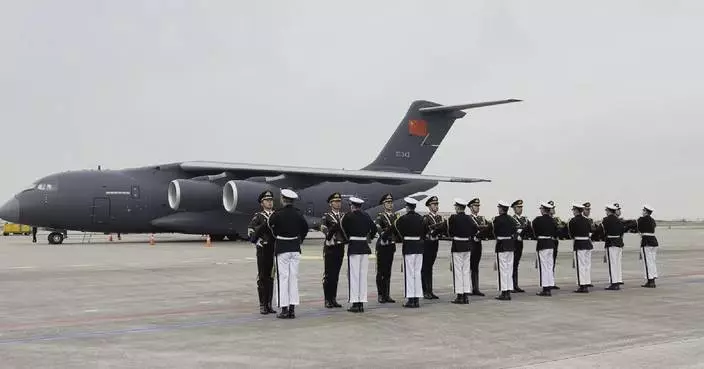
The event was held to mark the return of the remains of 12 CPV martyrs, who were killed in the war, from the Republic of Korea (ROK) on Wednesday.
This will be the 13th such repatriation of CPV remains following the handover agreement between the two countries. Since 2014, the remains of 1,011 soldiers have been returned to China from the ROK, according to China's Ministry of Veterans Affairs.
More than 170 representatives, including veteran CPV soldiers, relatives of the martyrs, active-duty personnel, students, and other from various sectors of society, attended the event.
People boarded a ferry which slowly sailed down the Yalu River. Inside the cabin, all present stood in solemn silence as the national anthem of the People's Republic of China was played, and observed a moment of silence in honor of the CPV martyrs.
Then, they walked to the ship's railings one by one and scattered flower petals into the river to pay tribute to the martyrs.
"We, the CPV, went abroad to fight to defend our motherland, the people, and our good life and to resist U.S. imperialist aggression against the Democratic People's Republic of Korea (DPRK). I hope that our young comrades and students today will study hard and make contributions to our motherland," said Hu Changzhe, a CPV veteran.
"I feel deeply moved as these veteran soldiers are heroes who once fought for our country. Now, standing by the Yalu River, looking back on their past and remembering their comrades, they must be deeply touched," said Hong Jialu, a student at a branch of Liaoning Province Shiyan High School.
At the event, 10 student representatives from primary and middle schools read aloud a letter to express their reverence and remembrance for the heroic martyrs through their sincere words and heartfelt recitation.
The Korean War broke out in June 1950, eight months after the People's Republic of China was founded. At the request of the Democratic People's Republic of Korea (DPRK), China sent 2.9 million CPV soldiers to assist the DPRK during the war, of whom more than 360,000 were killed or injured.
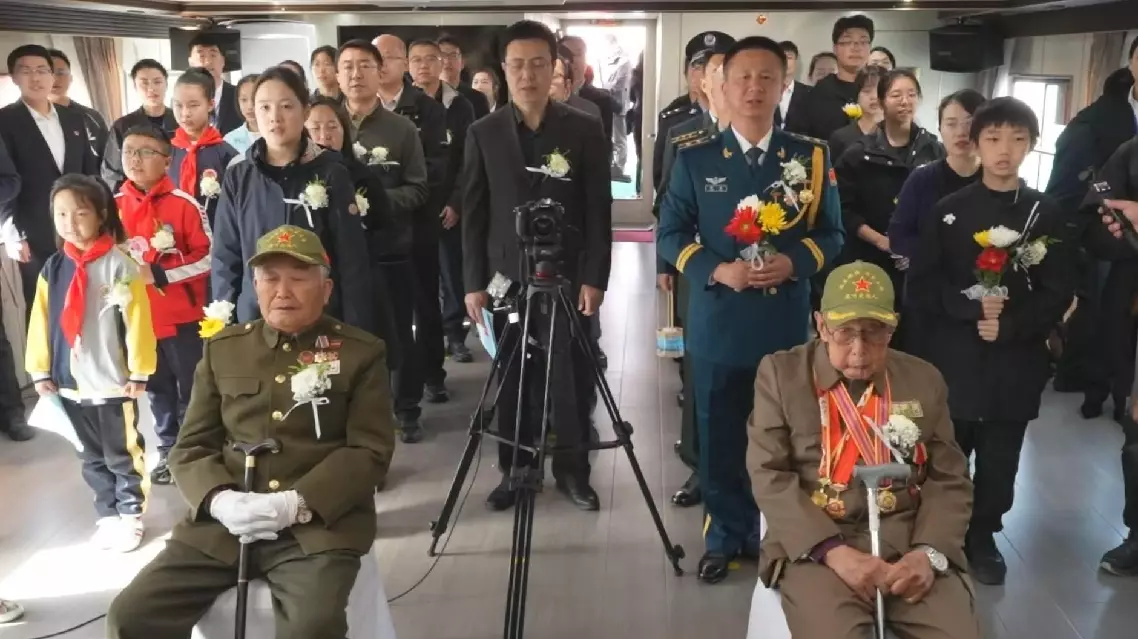
Commemorations held to pay tribute to CPV heroes in northeast China