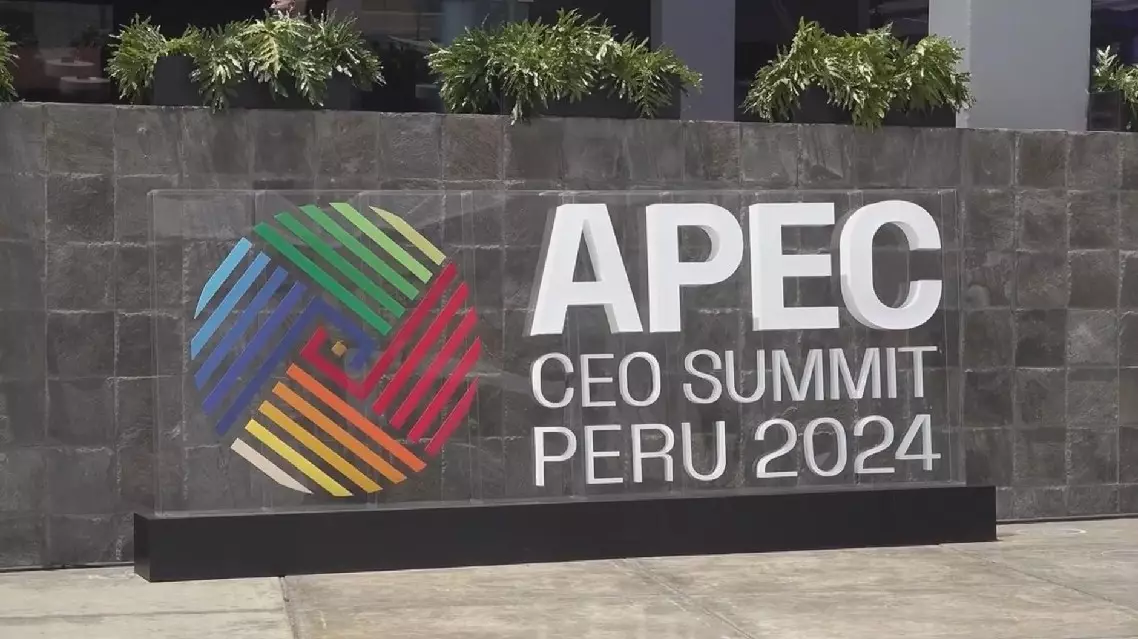
Peru's business community and government say they are eagerly anticipating new cooperation opportunities with China in technology and sustainable development brought by the 31st APEC Economic Leaders' Meeting in the Peruvian capital Lima.
Scheduled for Friday and Saturday in Lima under the theme "Empower, Include, Grow," the APEC Economic Leaders' Meeting will gather leaders from 21 member economies across the Asia-Pacific, including the United States and China, the two largest economies in the world, as well as other major economies in Southeast Asia.
"Members of the Peruvian business community are looking to display their demands and supplies. The focus will be on investment in areas like technology and manufacturing, and there is an expectation on what achievements the APEC will provide. It is obvious China is the factory of the world. With the Chancay Port and other special economic zones opening, Peru is looking forward to seeing Chinese factories setting up in Peru," said Julio Perez, president of the Peruvian Exporters Association, in an interview with China Global Television Network (CGTN).
In addition to technological advancements, the Peruvian government is also actively focusing on green development and transitioning towards sustainable practices. Emphasizing eco-friendly solutions, renewable energy sources and environmentally conscious strategies, businesses are aligning their objectives with global sustainability goals.
"With the arrival of President Xi Jinping, we hope to expand free trade agreements with China. The environmental issue is always transversal to all projects. So we do hope to strengthen our relations in the conservation of the environment, in environmental quality, biodiversity conservation, and projects of sustainable development," Juan Carlos Castro, Peruvian Minister of Environment, told the CGTN.
Peruvian business community, government anticipate greater tech, environment cooperation with China
Iran poignantly marked the Persian Gulf National Day on Thursday with a series of commemorative events as Iranian officials stressed the country firmly opposes any actions that threaten the security of the region.
The Persian Gulf National Day is observed on the 10th day of Ordibehesht, the second month in the Iranian calendar, which this year landed on April 30.
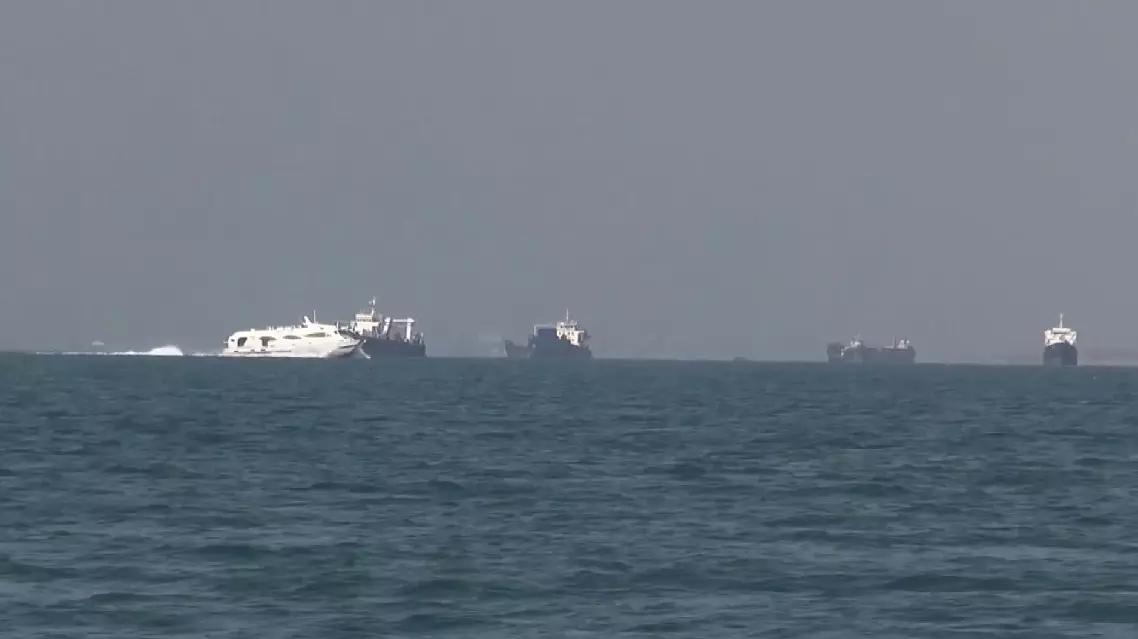
The occasion celebrates the anniversary of Iran's 17th century reclamation of the Strait of Hormuz -- a key waterway for global trade which has become a focal point in recent weeks amid the U.S.-Israeli war on Iran -- with the event marking the end of Portugal's 115-year occupation of the Persian Gulf in 1622.
Among the many events was a concert entitled "That Persian Blue," delivered by the National Music Orchestra in Tehran, a pointed performance which underscored Iran's tradition of safeguarding the strategic Strait of Hormuz waterway and resisting foreign intervention.
Officials attending the concert said the Persian Gulf is a vital corridor of Iranian civilization and a crucial avenue for trade and security. They condemned the military interventions by external forces which have caused chaos and instability in the region and stressed Iran's resolve to oppose any attempts to undermine its national security and that of the wider Gulf region.
"If there is any enlightenment that all the recent events have brought to this region, it is that countries in this region have the ability to maintain the security of the Persian Gulf, and only the people in the region have the right to maintain regional security -- no one else can do it," said Mohsen Haji-Mirzaei, the chief of staff for Iranian President Masoud Pezeshkian.
"The Iranian people have always been ready to resist invaders and any external invading forces. They trample on humanity, attack Iran, and undermine peace and friendship. The Iranian people will confront these forces with authority and unity," said the Deputy Minister of Culture for Media Affairs Mohammadreza Norouzpour.
President Pezeshkian also issued a defiant message on the same day, saying that the presence and interference of foreign forces in the region has only served to worsen tensions and undermine lasting peace, rather than improving security in the Persian Gulf.
He said that Iran, as a guardian of the Strait of Hormuz, will continue to uphold the principles of the freedom of navigation and maritime safety, except for hostile states.
Pezeshkian also stressed these principles must be based on respecting Iran's national sovereignty, adding that any insecurity in the waters should be blamed on the United States and Israel.
Iran poignantly marks Persian Gulf National Day with defiant call to resist foreign interference