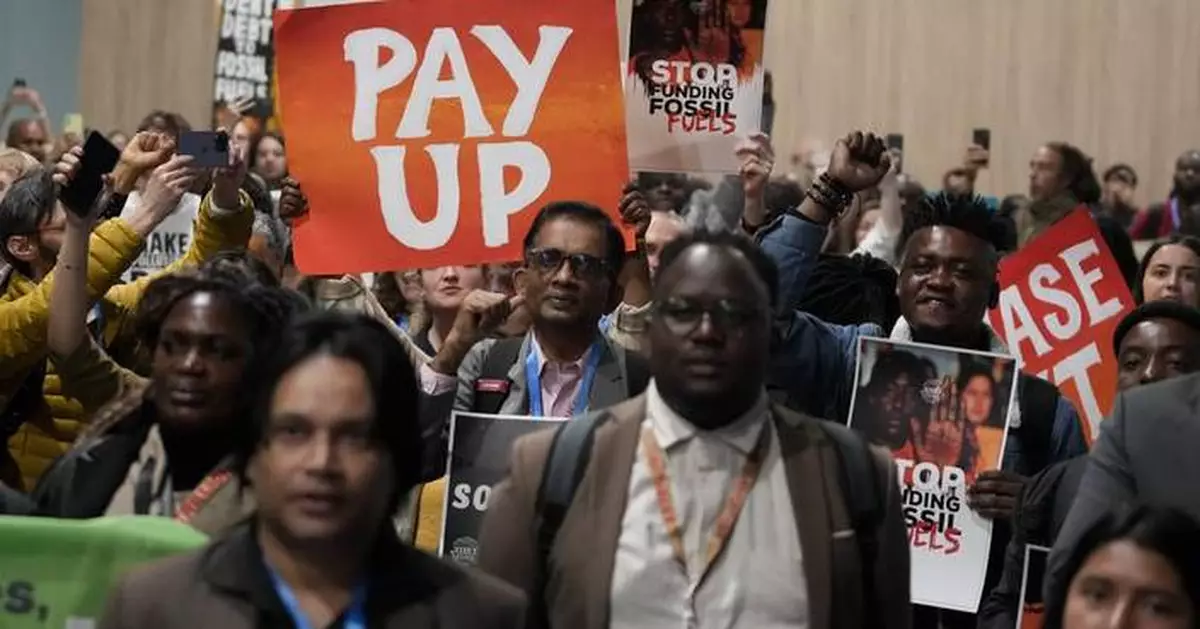
BAKU, Azerbaijan (AP) — Distractions were bigger than deals in the first week of United Nations climate talks, leaving a lot to be done, especially on the main issue of money.
In week one, not a lot of progress was made on the issue of how much money rich countries should pay to developed ones to move away from dirty fuels and how to cope with rising seas and temperatures and pay for damage already caused by climate-driven extreme weather. But more is expected when government ministers fly in for week two to handle the hard political deal-making at the negotiations — known as COP29 — in Baku, Azerbaijan.
Click to Gallery
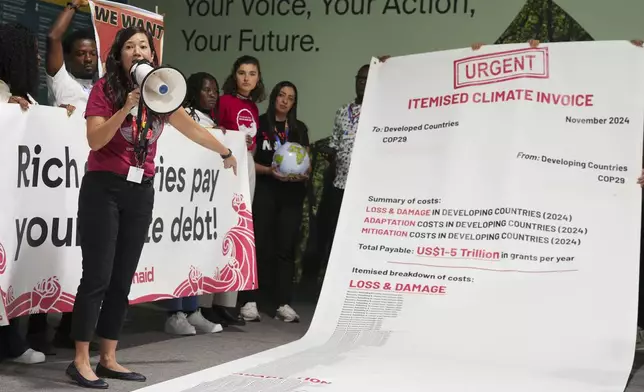
Activist Teresa Anderson leads a demonstration calling for climate finance during the COP29 U.N. Climate Summit, Thursday, Nov. 14, 2024, in Baku, Azerbaijan. (AP Photo/Peter Dejong)
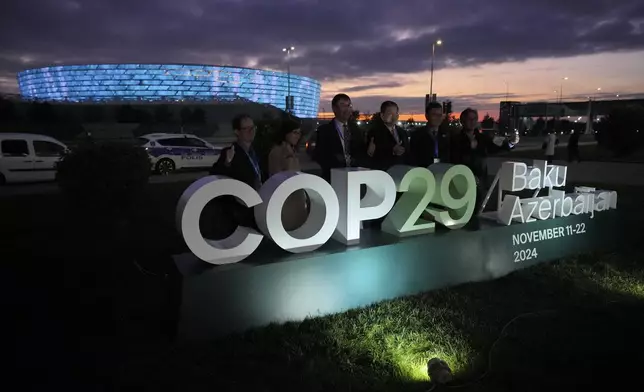
People pose for a photo with the Baku Olympic Stadium in the background at the COP29 U.N. Climate Summit, Thursday, Nov. 14, 2024, in Baku, Azerbaijan. (AP Photo/Peter Dejong)
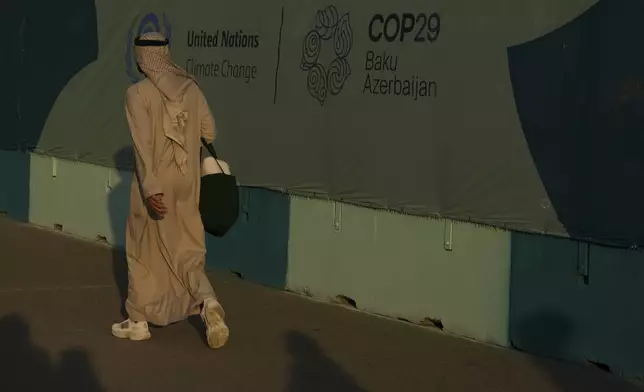
A person walks past a sign for the COP29 U.N. Climate Summit, Friday, Nov. 15, 2024, in Baku, Azerbaijan. (AP Photo/Peter Dejong)
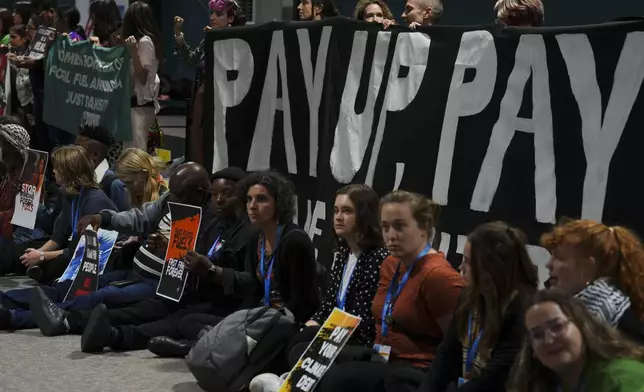
Activists participate in a demonstration for climate finance at the COP29 U.N. Climate Summit, Saturday, Nov. 16, 2024, in Baku, Azerbaijan. (AP Photo/Peter Dejong)
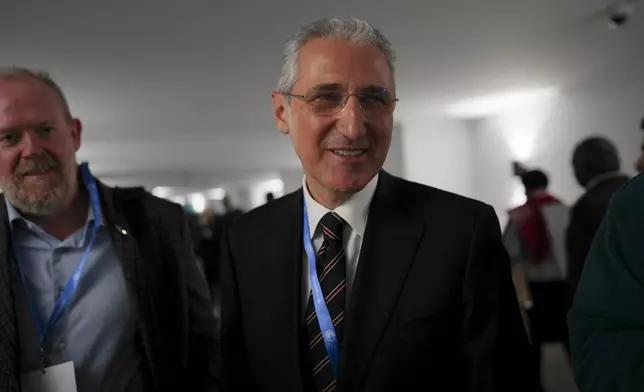
Mukhtar Babayev, COP29 President, walks through the COP29 U.N. Climate Summit, Thursday, Nov. 14, 2024, in Baku, Azerbaijan. (AP Photo/Peter Dejong)
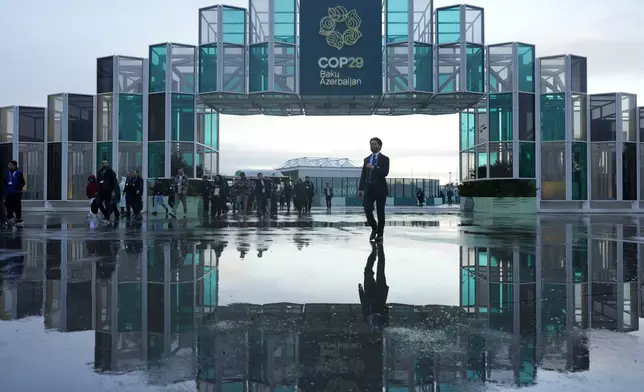
Attendees arrive for the day at the COP29 U.N. Climate Summit, Thursday, Nov. 14, 2024, in Baku, Azerbaijan. (AP Photo/Rafiq Maqbool)
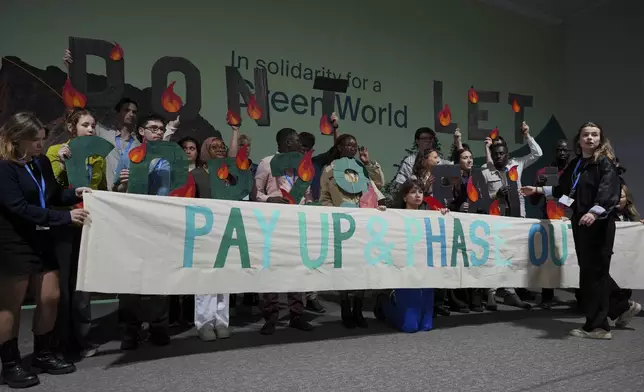
Activist Luisa Neubauer, of Germany, right, leads a demonstration against fossil fuels at the COP29 U.N. Climate Summit, Friday, Nov. 15, 2024, in Baku, Azerbaijan. (AP Photo/Peter Dejong)
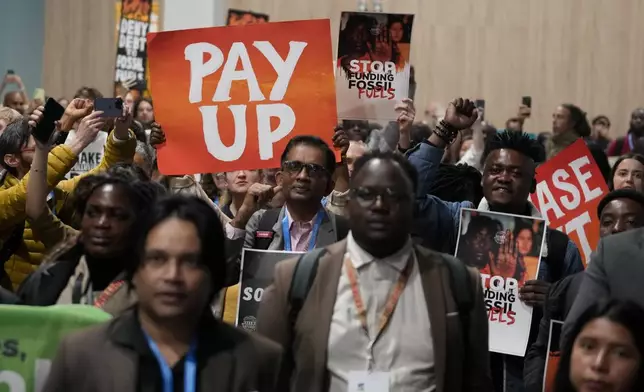
Activists participate in a demonstration for climate finance during the COP29 U.N. Climate Summit, Saturday, Nov. 16, 2024, in Baku, Azerbaijan. (AP Photo/Rafiq Maqbool)
Countries remain about a trillion dollars a year apart in the big number to be settled.
“All the developing countries look very united behind $1.3 trillion. That’s not a ceiling. That’s what they want. That’s what they think they need,” said Debbie Hillier, policy lead at Mercy Corps. “The U.S. and Canada are constantly talking about a floor of $100 billion.... So you've got $100 billion at one end and $1.3 trillion" on the other end.
While poor countries have come up with a number for the total final package, the rich donor nations have assiduously avoided giving a total, choosing to pick a figure late in the bargaining game, Hillier said.
“The intention of developed countries to really come clean and show commitment is missing,” said Harjeet Singh, global engagement director for the Fossil Fuel Non-Proliferation Treaty Initiative. "They have not uttered a single word on what the (final total) is going to be which is very disturbing.”
Especially when it comes to this total, United Nations Climate Secretary Simon Stiell said, “negotiations on key issues need to be moving much faster."
“What’s at stake here in Baku,” Stiell said, is "nothing less than the capacity to halve emissions this decade and protect lives and livelihoods from spiraling climate impacts.”
At the moment, the sides are far away, which is sort of normal for this stage. The technical details that are worked out by negotiators now have to give way to the bigger, harder number decisions made by climate and finance ministers to make more political decisions, said Ani Dasgupta, president of World Resources Institute.
“Member states have not moved and parties have not moved as expeditiously as they need to do,” said United Nations Environment Programme Executive Director Inger Andersen. “This is causing frustration. I understand that. So the answer is to push and push more and ensure that we land where we need to land.”
Andersen said it’s not smart to judge where countries will end up after just one week. Things change. It’s the nature of how negotiations are designed, experts said.
That’s how it usually goes.
“COP works on brinkmanship,” said Avinash Persaud, a special climate adviser at the Inter-American Development Bank. “COP works on the fear of us not reaching agreement in the end, which makes the process appear chaotic from the outside.”
Ministers will also be consulting with their bosses half a world away and seven hours behind at the Group of 20 countries — the G20 — in Brazil from Monday. The G20 is comprised of the world’s richest nations, who are also responsible for 77% of planet-heating gases being spewed.
Usually, the second week is when the COP president takes over and pushes sides together for a deal. Different negotiations' presidents have different styles. Last year's president used sharp elbows to get things done, upsetting some people.
That's not the style of this year's COP29 President Mukhtar Babayev.
“What I see with Mukhtar is that he uses a gentle presence, a degree of humility in his very presence,” Andersen said.
But Mohamed Adow, of the think tank Power Shift Africa said “the presidency is not giving any hope for how he will help the world strike the right compromises."
Babayev struck an optimistic tone in a statement to The Associated Press on how things are looking at the halfway point.
“We have made good progress in the first week. We’re feeling positive but there is still much work to do,” Babayev said. "Success does not depend on one country or party alone – it requires all of us.”
Much of the news from the talks' first weeks came from outside the negotiation rooms.
Host country president Ilham Aliyev triggered a few distractions himself. His combative welcome speech not only blasted neighbor Armenia and western mainstream media, but he called oil and gas — chief causes of climate change a “gift from the Gods.”
And then he got into a verbal spat with France, prompting the environment minister to pull out from the talks.
Argentina called its delegation home in what may be a preview for the right-wing ruled country pulling out of the Paris climate agreement.
At the same time, a letter signed by a former United Nations secretary-general and ex-top climate negotiators called for dramatic reform of the talks. But several authors said the letter was being misinterpreted.
Activists blasted the talks as being too wedded to fossil fuels, citing Aliyev's comments, the fact that Azerbaijan is a big oil producer and that more than 1,700 people connected to the fossil fuel industry were part of the negotiations.
Some top leaders already at the climate talks expressed “cautious optimism” but added that the larger goal of climate talks should be front and center next week.
"We need to keep 1.5 alive,” said Alliance of Small Island States Chair Cedric Schuster referring to the climate goal set nine years ago at the Paris climate talks to keep global heating to less than 1.5 degrees Celsius (2.7 degrees Fahrenheit) above pre-industrial times.
Schuster, who is also the environment minister of Samoa, a Pacific island impacted by rising seas, added that “discussions are progressing, and we hope to get there.”
Sehr Raheja from New Delhi-based Centre for Science and Environment said countries have gone for the “lowest hanging fruit so far" and said developed nations “will have to engage in good faith on the issues of total money needed” if there's a chance of getting a strong outcome.
Climate Analytics CEO Bill Hare called for more urgency from the talks.
“Despite the recent devastation the world has experienced and the soaring rise in temperatures, the urgency really hasn’t yet been felt here in Baku,” he said.
The Associated Press’ climate and environmental coverage receives financial support from multiple private foundations. AP is solely responsible for all content. Find AP’s standards for working with philanthropies, a list of supporters and funded coverage areas at AP.org.
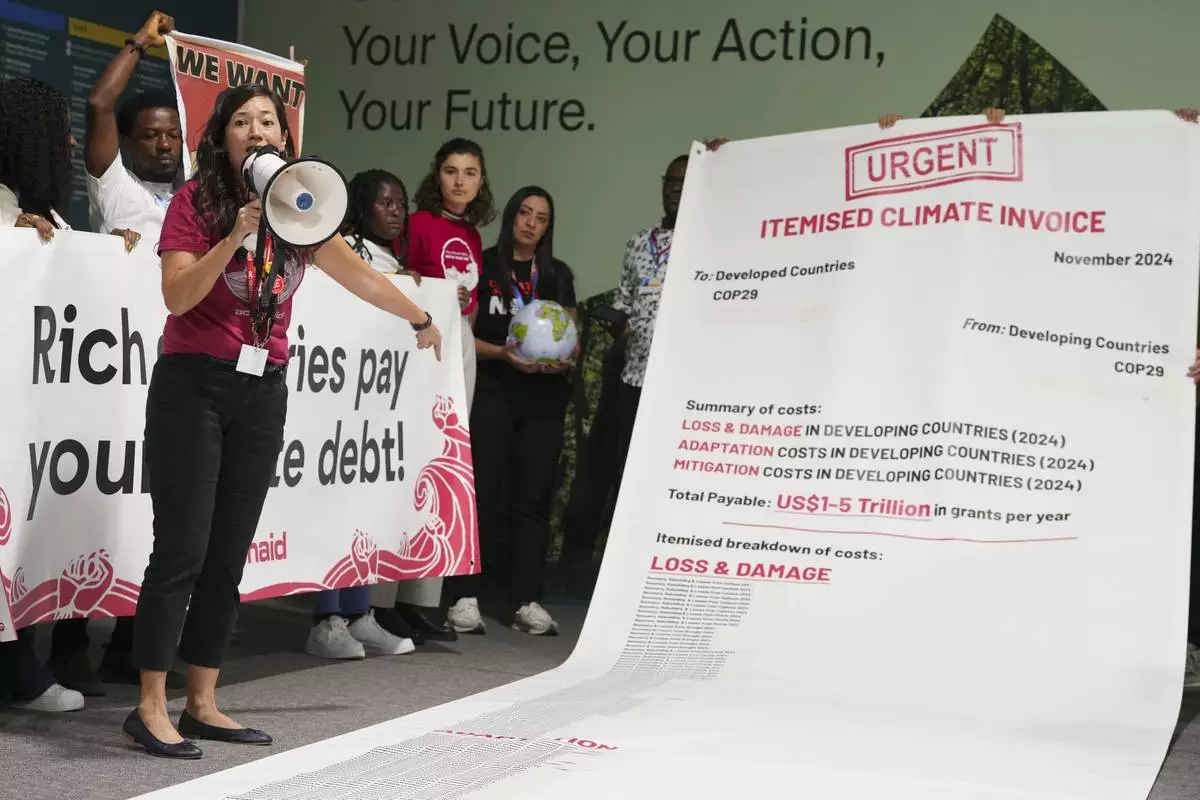
Activist Teresa Anderson leads a demonstration calling for climate finance during the COP29 U.N. Climate Summit, Thursday, Nov. 14, 2024, in Baku, Azerbaijan. (AP Photo/Peter Dejong)
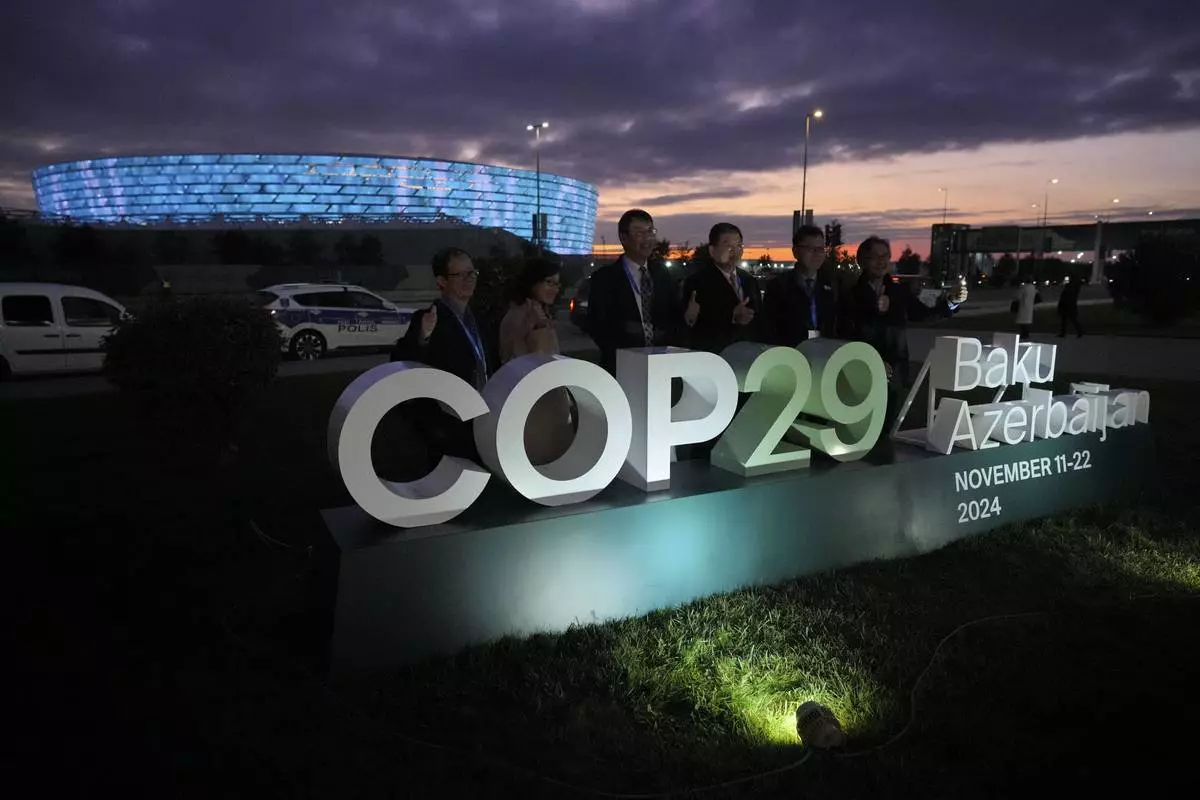
People pose for a photo with the Baku Olympic Stadium in the background at the COP29 U.N. Climate Summit, Thursday, Nov. 14, 2024, in Baku, Azerbaijan. (AP Photo/Peter Dejong)
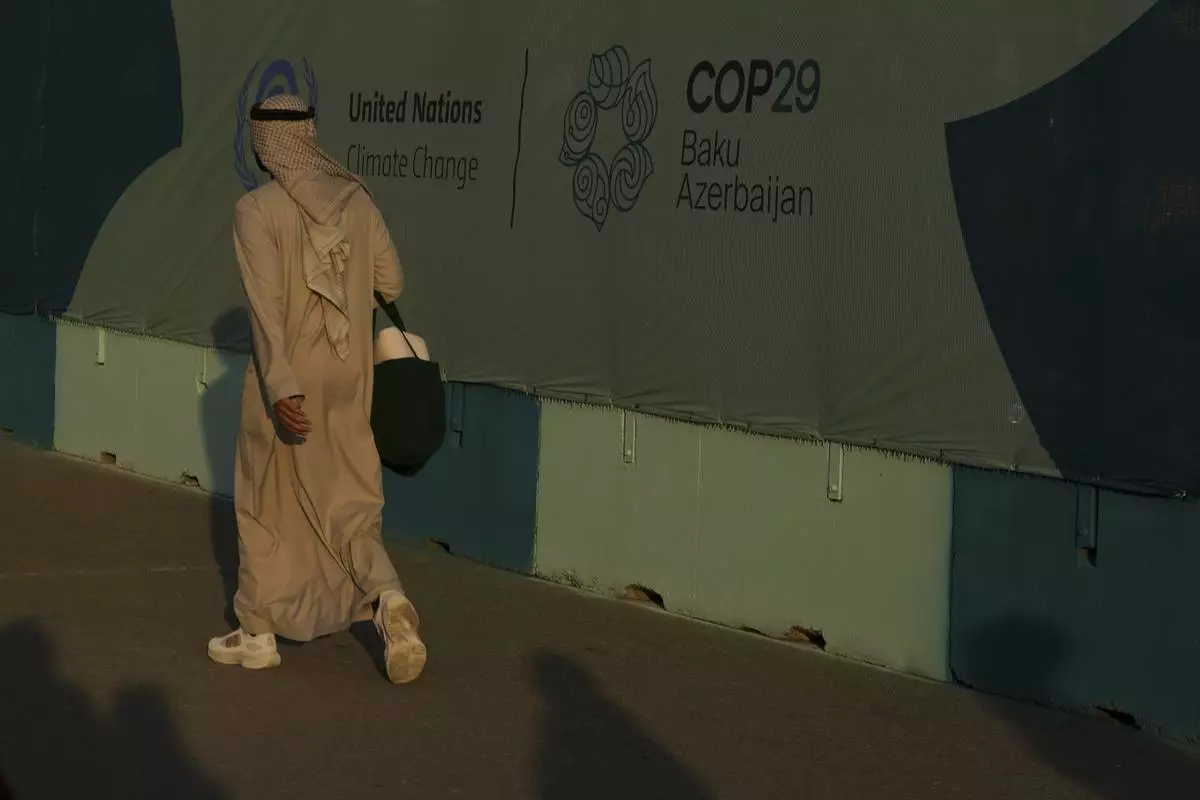
A person walks past a sign for the COP29 U.N. Climate Summit, Friday, Nov. 15, 2024, in Baku, Azerbaijan. (AP Photo/Peter Dejong)
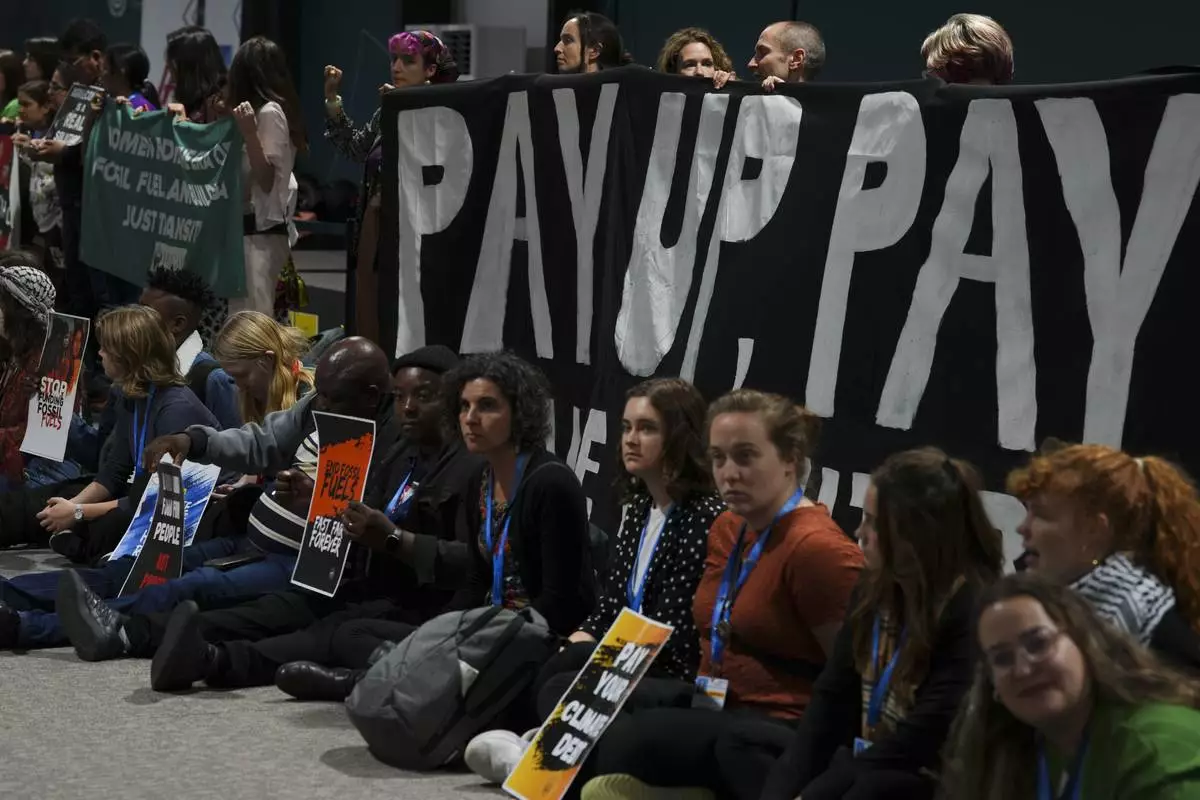
Activists participate in a demonstration for climate finance at the COP29 U.N. Climate Summit, Saturday, Nov. 16, 2024, in Baku, Azerbaijan. (AP Photo/Peter Dejong)
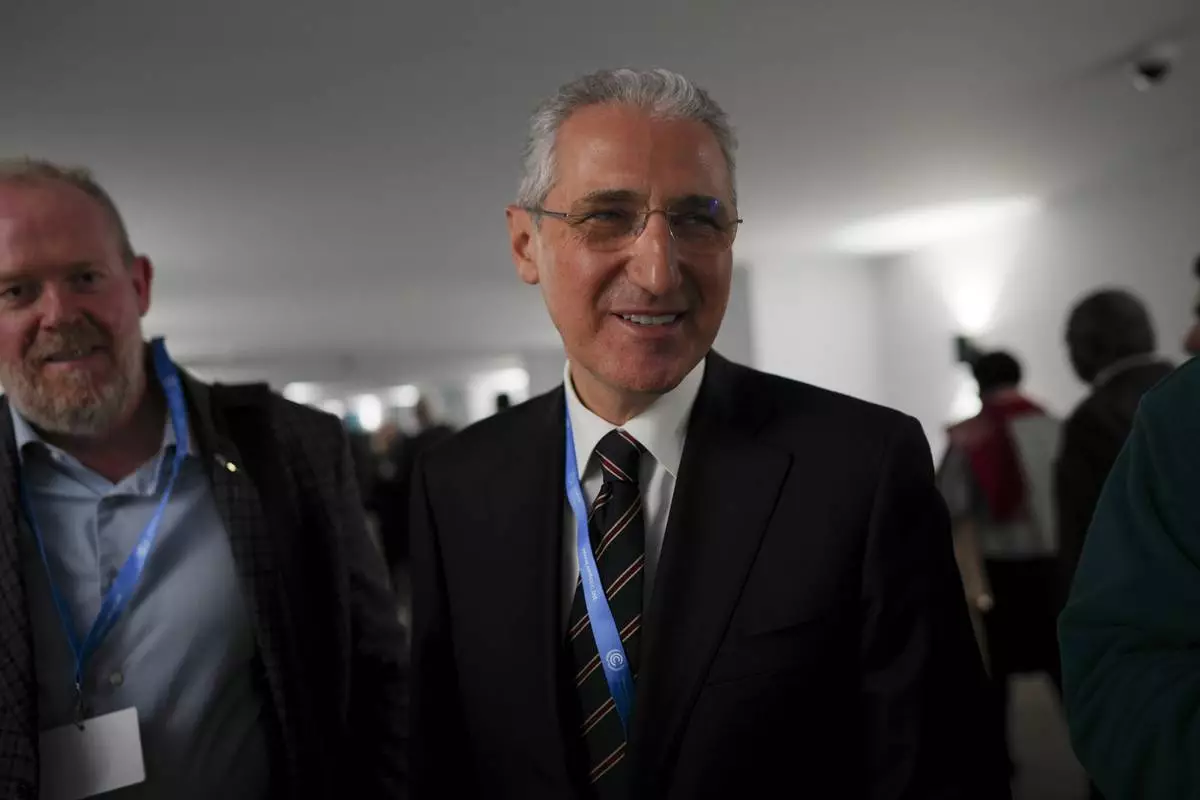
Mukhtar Babayev, COP29 President, walks through the COP29 U.N. Climate Summit, Thursday, Nov. 14, 2024, in Baku, Azerbaijan. (AP Photo/Peter Dejong)
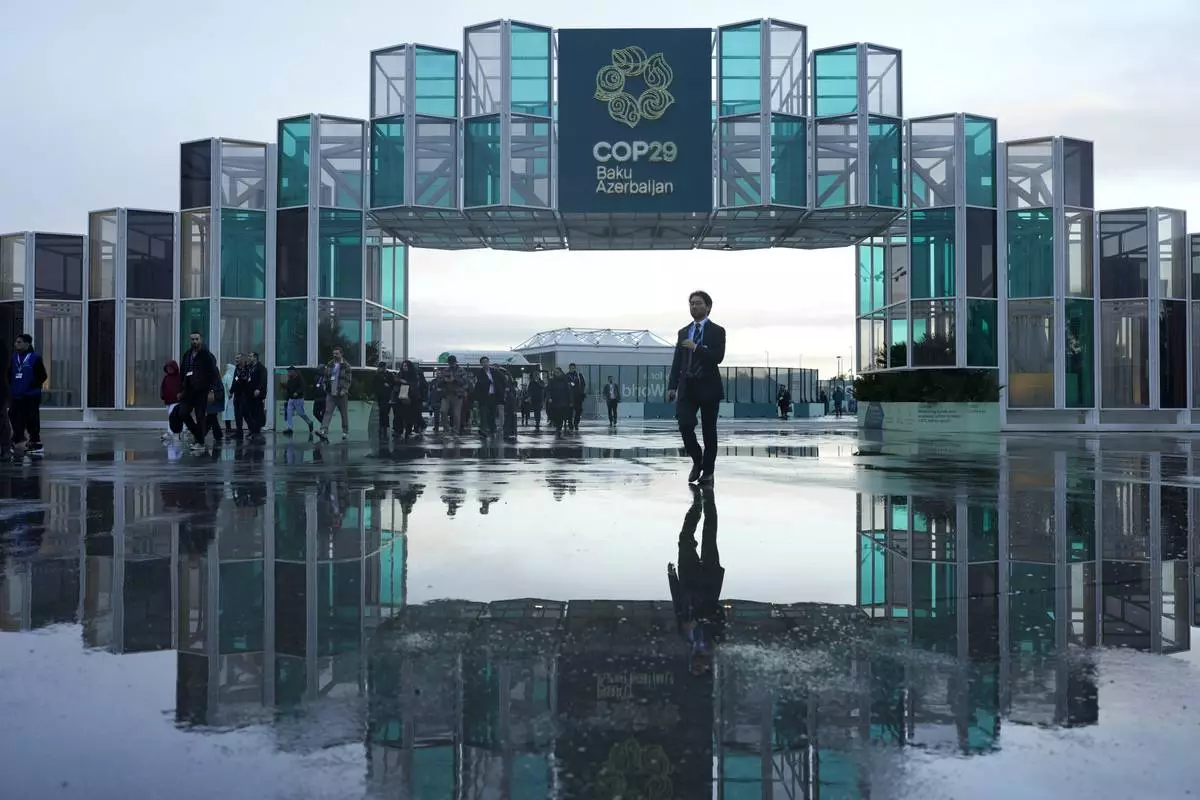
Attendees arrive for the day at the COP29 U.N. Climate Summit, Thursday, Nov. 14, 2024, in Baku, Azerbaijan. (AP Photo/Rafiq Maqbool)
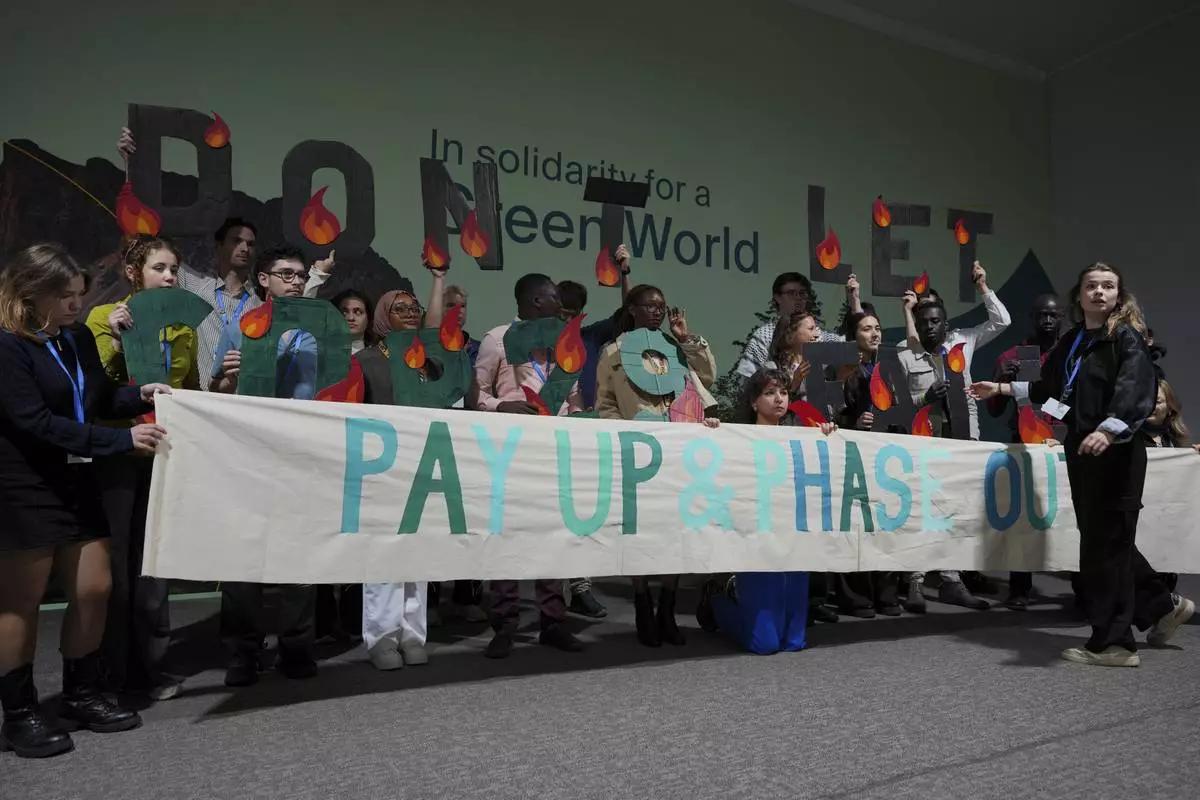
Activist Luisa Neubauer, of Germany, right, leads a demonstration against fossil fuels at the COP29 U.N. Climate Summit, Friday, Nov. 15, 2024, in Baku, Azerbaijan. (AP Photo/Peter Dejong)
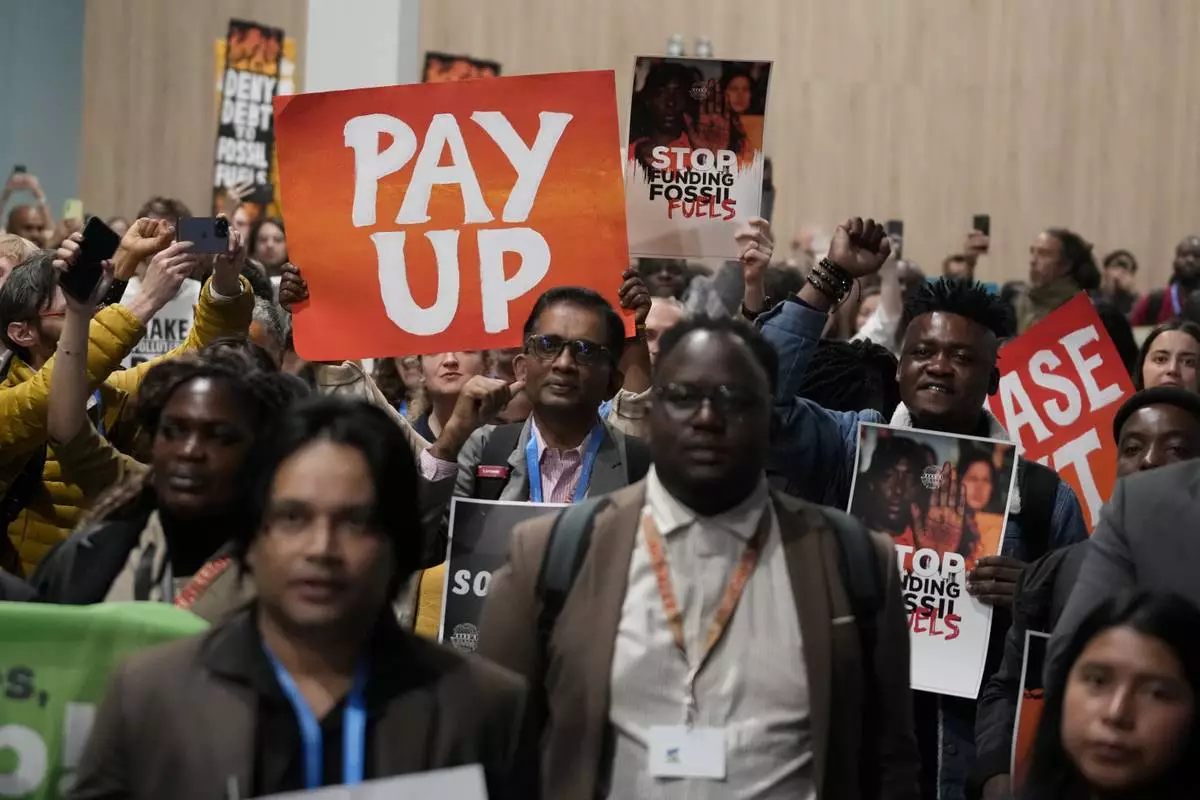
Activists participate in a demonstration for climate finance during the COP29 U.N. Climate Summit, Saturday, Nov. 16, 2024, in Baku, Azerbaijan. (AP Photo/Rafiq Maqbool)