China and Brazil are cooperating more closely than ever on green energy projects, with some Chinese companies using their technical and management know-how to partner with Brazilian stakeholders to unleash the potential of the South American country's renewable energy sources.
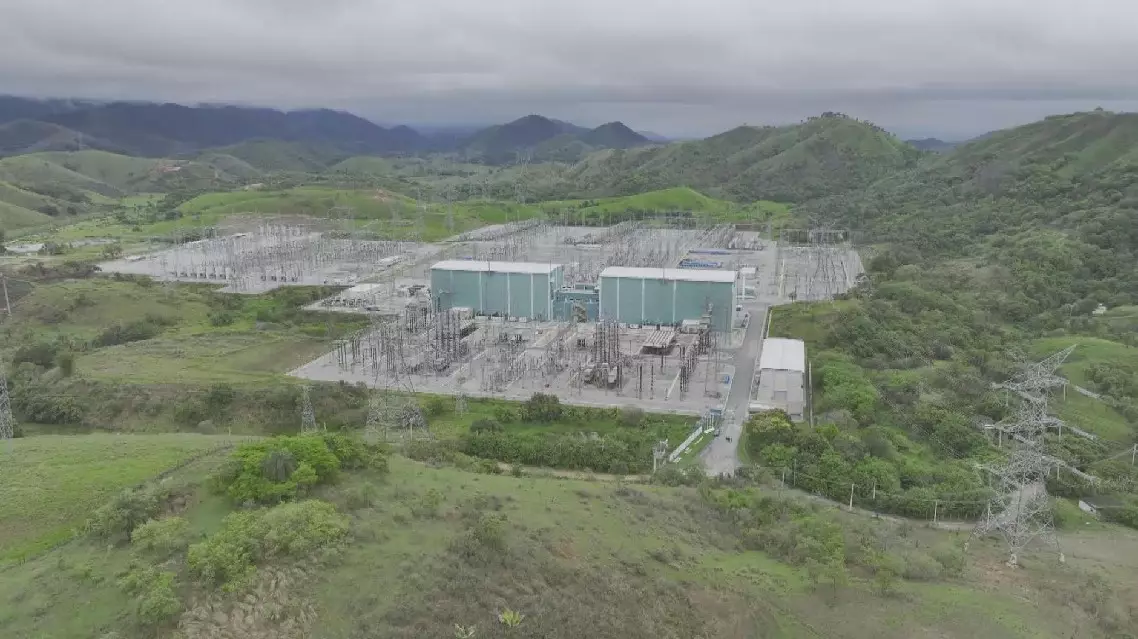
The Xingu Rio±800kV Ultra-High Voltage Direct Current (UATCC) Belo Monte Power Transmission Project is one such project which uses the abundant hydropower resources of the Amazon Basin in northern Brazil to satisfy the huge energy needs of densely-populated southeastern Brazil.
Since being put into operation in 2017 and 2019, the Phase I and Phase II projects have boosted local economic and social development and the low-carbon energy transformation, and provided a "Chinese solution" for the security, stability and efficiency of Brazil's energy supply. It is one of the landmark projects where China and Brazil are working together to promote high-quality development.
Osvalter Paro, operation manager at the Rio de Janeiro substation that is part of the second phase of the project, said the technologies being used transmit power more efficiently with less power loss.
"So it's really, really good to get the opportunity to work with this kind of technology during these years. So it's more reliable. So it's really good. We have a new philosophy, new technology, best equipment, a sharing of knowledge among the Brazilian companies, Chinese companies. So it was a great moment and very useful, not only to me, but also for all the Brazilian citizens and the Brazilian market," he said.
Thirty-year-old Cayo Santos studied electrical engineering in China for two years and became an operating engineer at the substation in 2019. He said that Chinese technologies have offered energy security for developed areas in southeastern Brazil and improved local economic and social development.
"It is an honor to work on the Xingu Rio±800kV UATCC Project. It plays a great role in stabilizing Brazil's energy supply and promoting national development. Cooperation between Brazil and China is very important. China is developing very fast and has many advanced technologies," said Caio Santos.
"Near the starting point of the project, there is a village called Altamira. The project created a large number of local job opportunities. The project now has a substation in Rio. It also created a lot of job opportunities for Rio," said Flavio Teixeira, an employee at the substation.
Due to the economic, social and environmental benefits it has brought, the Phase II project has won a best practice award for social and environment management in Brazil and is also Brazil's first large-scale infrastructure project that has incurred no environmental penalties.
Chinese companies are also participating in more projects to develop the use of solar and wind energy resources in Brazil.
"The partnership between Brazil and China is important for proximity. Both countries can lead the energy transition process together to help other developing countries realize the potential of the energy transition. At the same time, the cooperation between China and Brazil is also a huge opportunity to promote the economic and social development of both countries," said Elbia Gannoum, president of the Brazilian Wind Energy Association.
China, Brazil see closer cooperation in green development