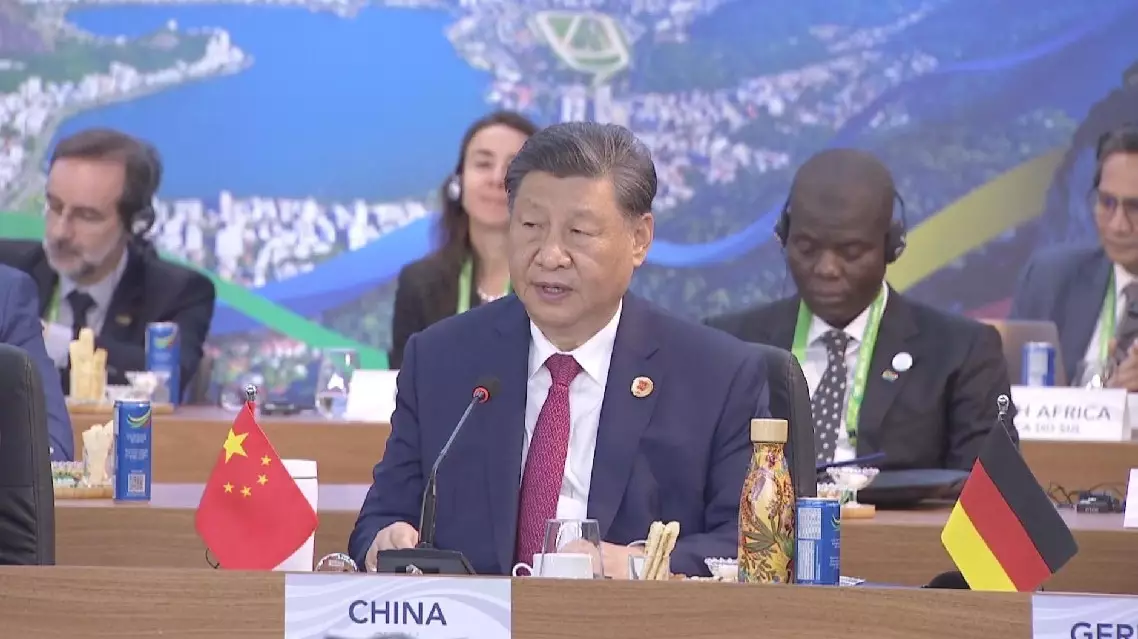
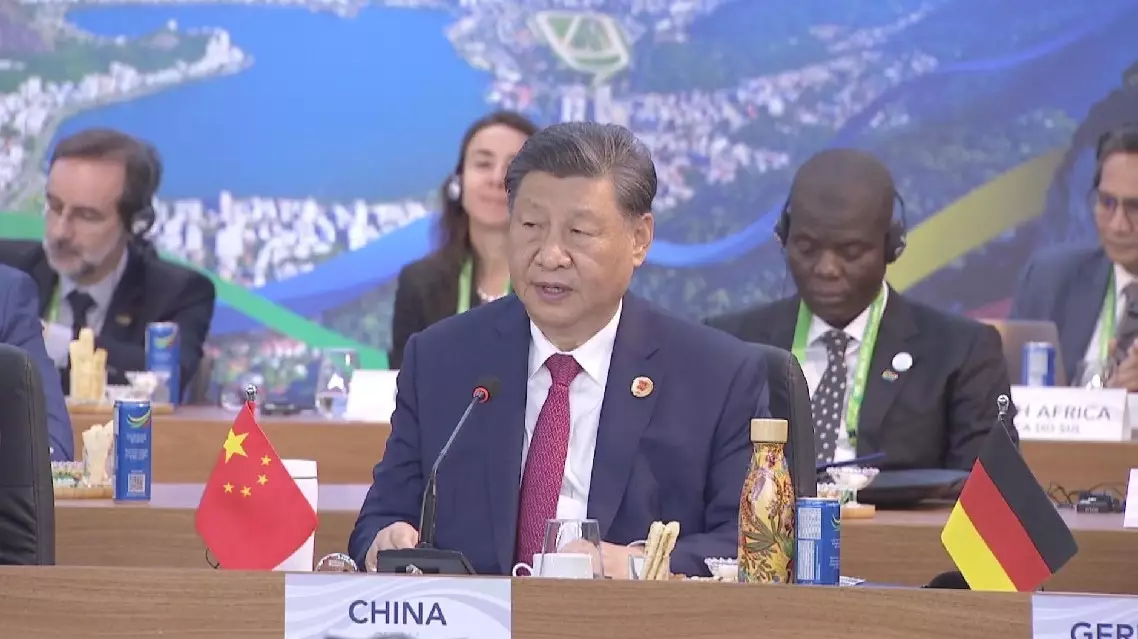
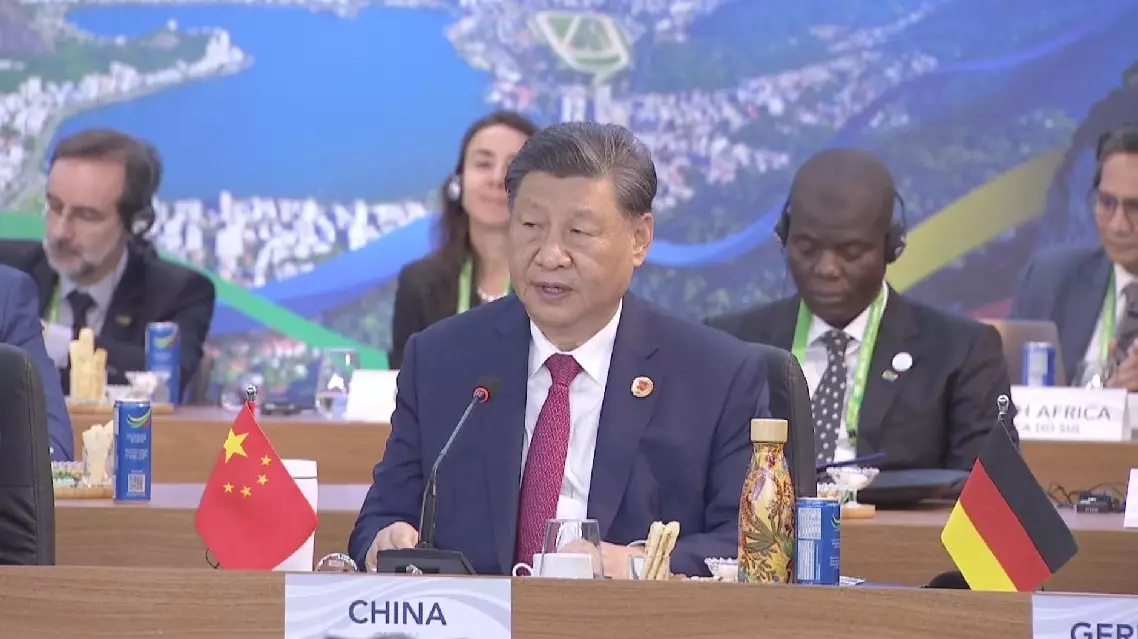
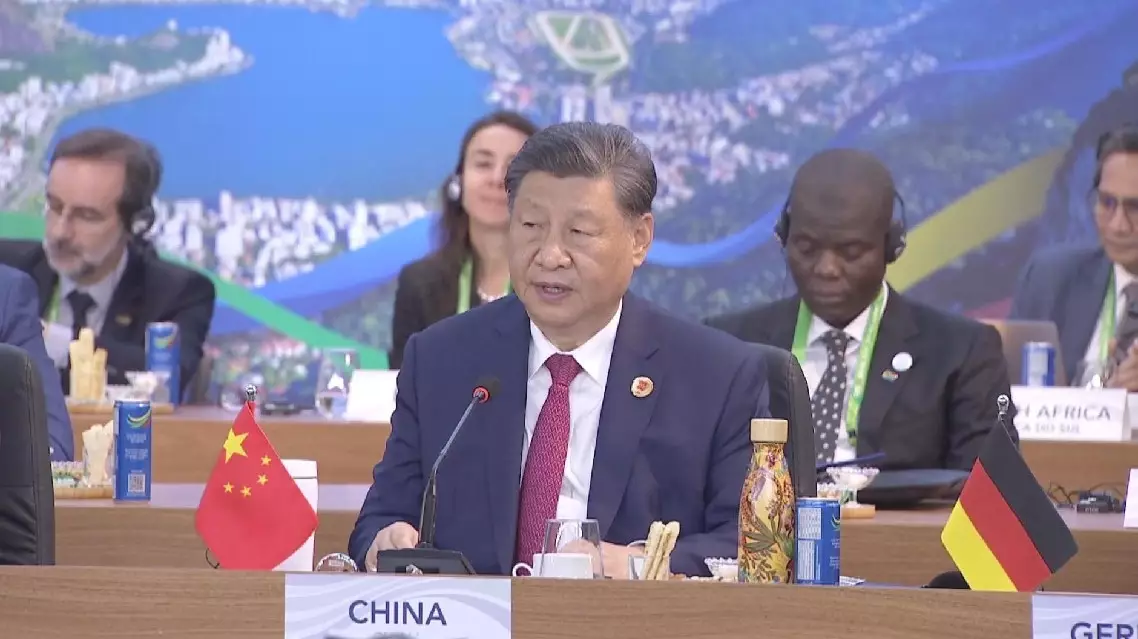
China's story is proof that developing countries can eliminate poverty, Chinese President Xi Jinping said while addressing the Session I of the 19th G20 Summit in Rio de Janeiro on Monday.
Xi delivered an important speech at the first session of the summit, which saw the launch of the Global Alliance Against Hunger and Poverty.
Click to Gallery
China's story proves developing countries can eliminate poverty: Xi
China's story proves developing countries can eliminate poverty: Xi
China's story proves developing countries can eliminate poverty: Xi
China's story proves developing countries can eliminate poverty: Xi
"I have worked from village to county, city, provincial and central levels. Poverty alleviation has always been a priority and a major task I am determined to deliver. China's story is proof that developing countries can eliminate poverty, and that a weaker bird can start early and fly high, when there is the endurance, perseverance, and striving spirit that enables water drops to penetrate rocks over time and turns blueprints into reality. If China can make it, other developing countries can make it too. This is what China's battle against poverty says to the world," Xi said in his speech.
Xi arrived in Brazil on Sunday to attend the G20 summit scheduled for Monday and Tuesday and to pay a state visit at the invitation of Brazilian President Luiz Inacio Lula da Silva.
Created in 1999, the G20 is a main forum for international cooperation on financial and economic issues and comprises 19 countries plus the European Union (EU) and the African Union (AU).
China's story proves developing countries can eliminate poverty: Xi
China's story proves developing countries can eliminate poverty: Xi
China's story proves developing countries can eliminate poverty: Xi
China's story proves developing countries can eliminate poverty: Xi
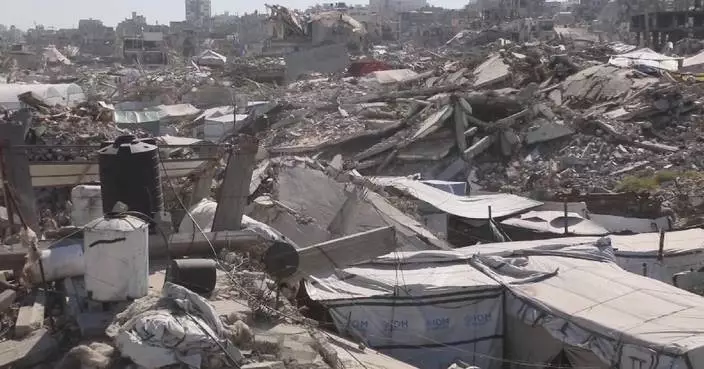
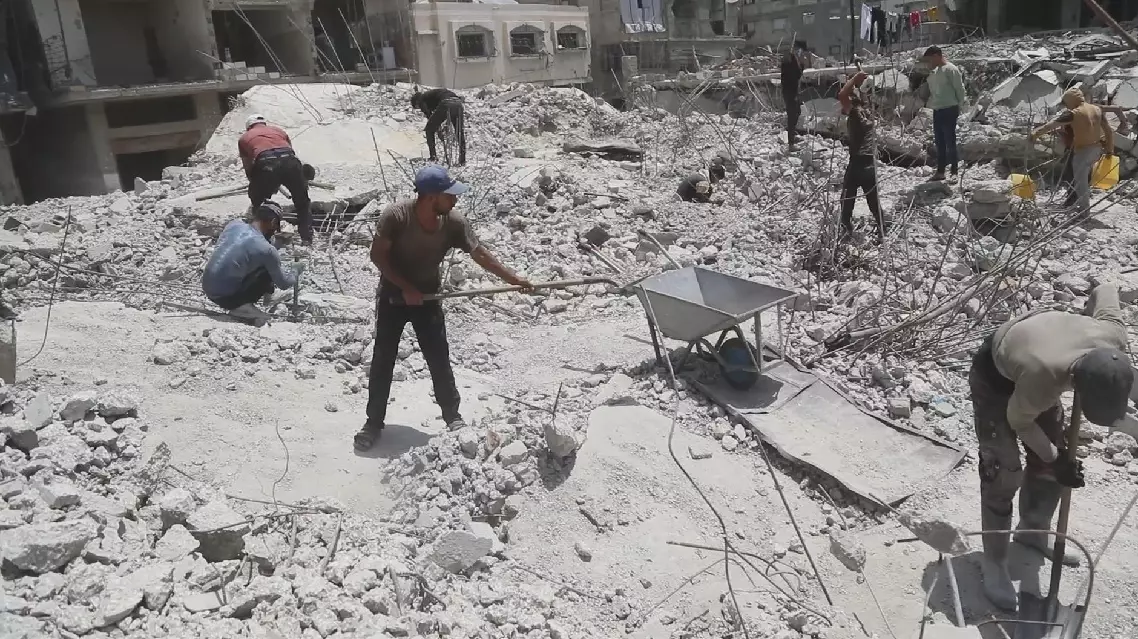
Displaced Palestinians in the Gaza Strip are manually removing rubble using basic tools, in the absence of heavy machinery and international reconstruction assistance.
Seven months into a fragile ceasefire, large-scale reconstruction remains largely stalled in Gaza, with Israeli restrictions on construction materials and unresolved political disputes deemed as key obstacles.
Many families in the enclave say they can no longer wait for rebuilding plans to begin.
Mohammad Adel, who lost his seven-story home in Khan Younis during the war, has been living with his family under difficult displacement conditions in the crowded tents of Al Mawasi for more than two years.
Unable to wait any longer, Adel decided to begin clearing the rubble of his home by hand.
"We see that there will be no reconstruction for Gaza and the closure is very strict on us. Waiting for reconstruction will take a very long time, so we started working and removing the rubble with our own hands. As you can see, this will cost us money, but we are trying to prepare the place so we can live in it," he said.
For some unemployed workers, clearing debris has become a temporary source of income amid the economic collapse caused by the war.
"Today, financial means have become nonexistent. Before the war, I had a chicken farm, but my work stopped because of the war. So I searched for another job that could provide me with an income, and I have no choice except this extremely exhausting work," said Abdullah Al Bayouk, a worker.
Palestinian officials warn that the continued delay in reconstruction is forcing thousands of displaced families to remain inside tents or unsafe damaged buildings, under worsening humanitarian conditions.
"Over 400,000 residential buildings have been either totally destroyed or rendered uninhabitable, along with more than 60 million tons of rubble. And 3,000 more housing units are at risk of collapse, yet people are still living inside them," said Mohannad Abboud, director of reconstruction of the Palestinian Ministry of Public Works.
A recent UN report showed that rebuilding Gaza and clearing the debris will require more than 71 billion U.S. dollars over the next decade. The rubble is estimated to cover around 78 percent of buildings across the strip.
Gaza residents clear rubble by hand as large-scale reconstruction stalls
Gaza residents clear rubble by hand as large-scale reconstruction stalls