Iran remains open to serious negotiations but has no trust in the United States, which is the main obstacle in the way of any diplomatic effort, Iranian Foreign Minister Seyed Abbas Araghchi said on Friday.
Tensions in the Middle East have escalated since the United States and Israel launched joint military strikes against Iran on Feb 28, triggering retaliation from Tehran against Israel as well as U.S. bases and assets in the Middle East, along with the closure of the Strait of Hormuz.
A ceasefire took effect on April 8 after 40 days of fighting through Pakistani mediation, but talks in Islamabad failed to produce a lasting agreement. The truce was later extended by U.S. President Donald Trump without a set deadline.
The mediation process by Pakistan has not failed but is in "difficulty," Araghchi said at a press conference on the conclusion of the BRICS Foreign Ministers Meeting in the Indian capital New Delhi.
Tehran is trying to keep the current fragile ceasefire to give diplomacy a chance, he added.
He stressed that there is no military solution to issues involving Iran, and that Tehran will never surrender to pressure or threats.
Noting the lack of trust is impeding negotiations, Araqchi said that "contradictory messages" from the U.S. side have made Tehran reluctant about the real intention of the Americans on negotiations.
Araqchi said Iran appreciates the efforts of any country that have the ability to help, particularly China, which brokered an agreement to restore diplomatic relations between Iran and Saudi Arabia in 2023.
Iran has very good relations with China, the two countries are strategic partners, and Tehran knows that the Chinese have good intentions, so anything they can do to help diplomacy would be welcomed, Araqchi said.
On the nuclear issue, Araqchi reiterated that Iran has never sought to develop nuclear weapons, and its nuclear program is peaceful.
As for the Strait of Hormuz, Araghchi said the strait is open and all vessels can pass except the vessels of those countries that are at war with Iran, if they coordinate with the Iranian Navy.
Araghchi blamed the U.S. for an "illegal blockade" and for its aggression that has created insecurity in the region, pledging efforts to ensure that there will be a good administration in the Strait of Hormuz after the war ends, which guarantees the safe passage of all vessels.
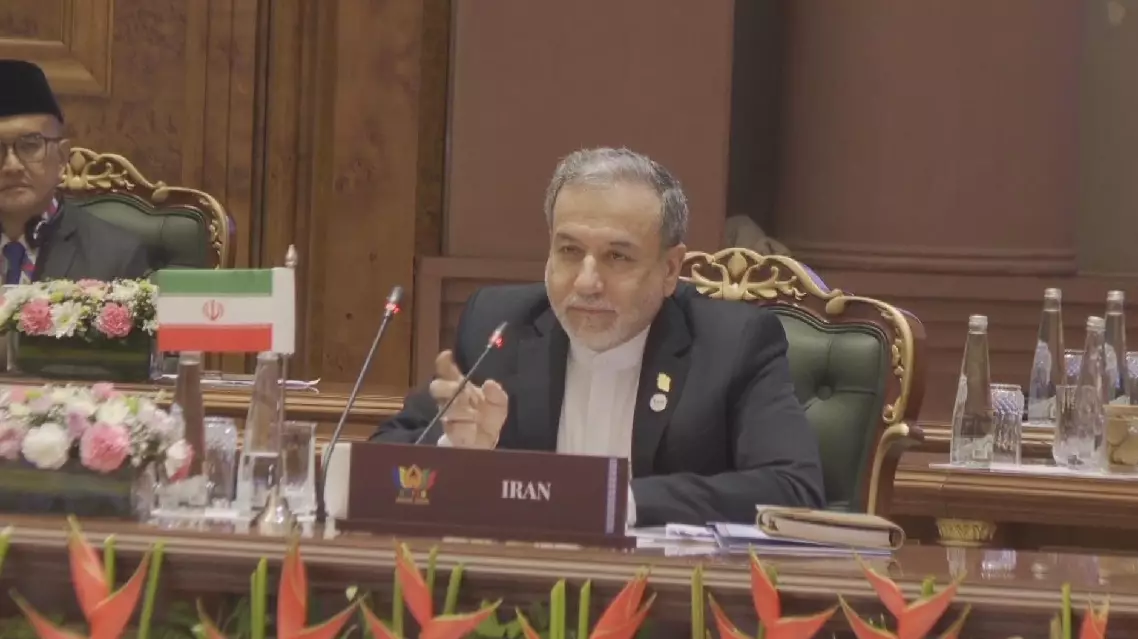
Iran has interest in negotiations but no trust in US: Araghchi