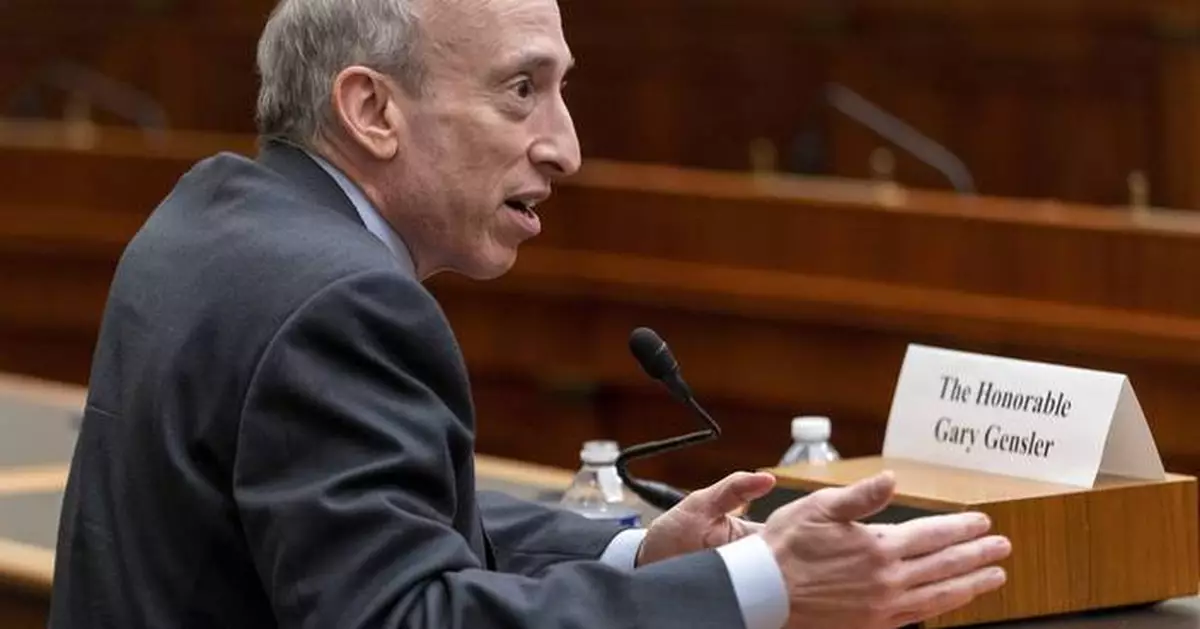
Securities and Exchange Commission Chair Gary Gensler, who was aggressive in his oversight of cryptocurrencies and other financial markets, will step down from his post on Jan. 20.
Gensler pushed changes that he said protected investors, but the industry and many Republicans bristled at what they saw as overreach.
President-elect Donald Trump had promised during his campaign that he would remove Gensler. But Gensler on Thursday announced that he would be stepping down from his post on the day that Trump is inaugurated.
Bitcoin has jumped 40% since Trump’s victory. It hit new highs Thursday and was nearing $100,000. Bitcoin moved notably higher still after Gensler's resignation was announced.
Gensler's stance on the rise of cryptocurrencies was captured during a speech he gave during the first year of his chairmanship in 2021 where he described the market as “the Wild West.”
“This asset class is rife with fraud, scams, and abuse in certain applications,” he said in a speech at the Aspen Security Forum. “There’s a great deal of hype and spin about how crypto assets work. In many cases, investors aren’t able to get rigorous, balanced, and complete information.”
Under Gensler, the SEC brought actions against players in the crypto industry for fraud, wash trading and other violations, including as recently as last month when the commission brought fraud charges against three companies purporting to be market makers, along with nine individuals for trying to manipulate various crypto markets.
Yet access to cryptocurrencies became more widespread under Gensler. In January, the SEC approved exchange-traded funds that track the spot price of bitcoin. With such ETFs, investors could get easier access to bitcoin without the huge overlays required to buy it directly.
Gensler, however, acknowledged the SEC had denied earlier, similar applications for such ETFs, including Grayscale Bitcoin Trust, among the first to eventually be approved by the SEC.
“Circumstances, however, have changed,” Gensler said, pointing to a ruling by the U.S. Court of Appeals for the District of Columbia that said the SEC failed to adequately explain its reasoning in rejecting Grayscale’s proposal.
Even there, Gensler made sure not to endorse the merits of bitcoin. He pointed to how ETFs that hold precious metals are tracking prices of things that have “consumer and industrial users, while in contrast bitcoin is primarily a speculative, volatile asset that’s also used for illicit activity including ransomware, money laundering, sanction evasion, and terrorist financing.”
Gensler was tested early in his tenure with the rise of the meme stock phenomenon that shocked the financial system in early 2021. Earlier this year, the SEC under Gensler pushed Wall Street to speed up how long it takes for trades of stocks to settle, one of the areas where the commission’s staff recommended changes following the reckoning created by GameStop, one of the first meme stocks.
In the depths of the COVID-19 pandemic, hordes of smaller-pocketed and novice investors suddenly piled into the stock of the struggling video-game retailer. During the height of the frenzy, several brokerages barred customers from buying GameStop after the clearinghouse that settles their trades demanded more cash to cover the increased risk created by its highly volatile price.
In May 2024, new rules meant broker-dealers have to fully settle their trades within one business day of the trade date, down from the previous two.
Critics of the SEC under Gensler have called many of the agency's proposals overly burdensome.
The investment industry, for example, is pushing against a proposal to force some advisers and companies disclose more about their environmental, social and governance practices, otherwise known as ESG. Critics say the proposal is overly complex and increases the risk of investor confusion, while imposing unnecessary burdens and costs on funds.
On Thursday, Gensler stood by the SEC's track record under his direction.
“The staff and the Commission are deeply mission-driven, focused on protecting investors, facilitating capital formation, and ensuring that the markets work for investors and issuers alike," Gensler said in prepared remarks. “The staff comprises true public servants."
Gensler previously served as Chair of the U.S. Commodity Futures Trading Commission, leading the Obama Administration’s reform of the $400 trillion swaps market. He also was senior advisor to U.S. Senator Paul Sarbanes in writing the Sarbanes-Oxley Act (2002) and was undersecretary of the Treasury for Domestic Finance and assistant secretary of the Treasury from 1997-2001.
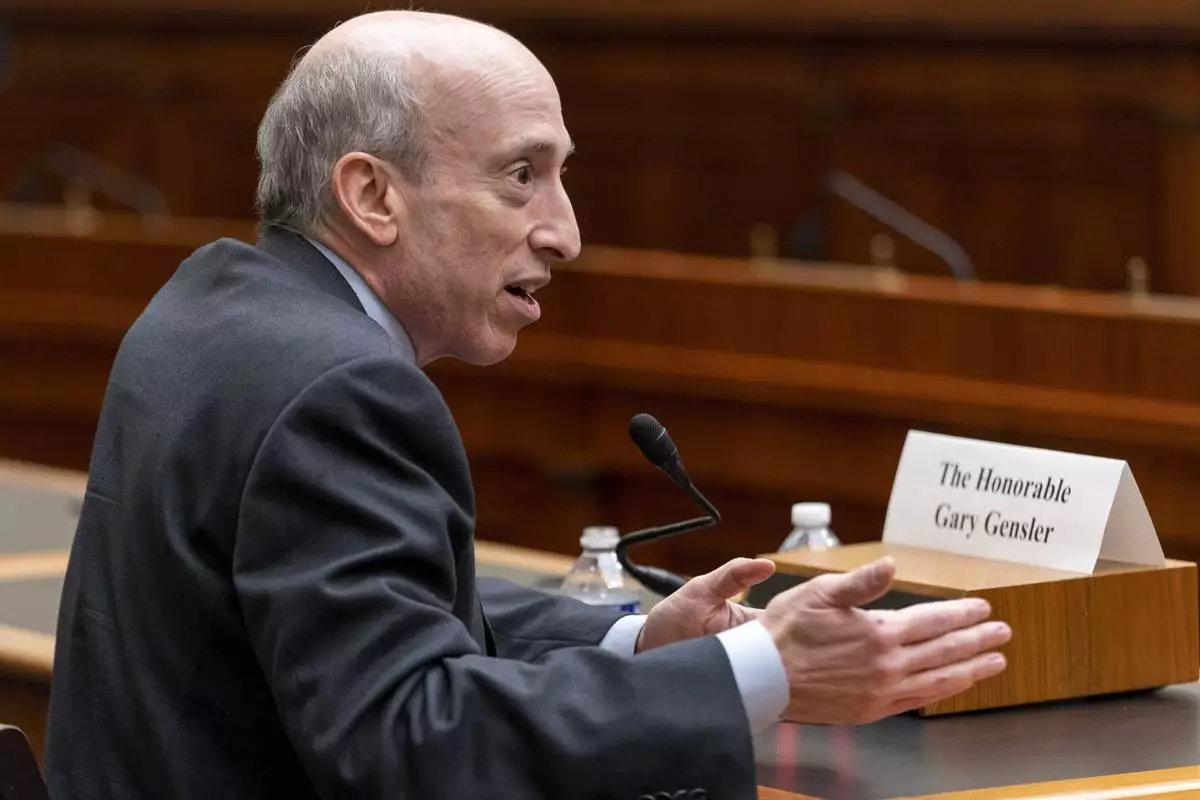
FILE - Securities and Exchange Commission (SEC) Chair Gary Gensler testifies during a House Financial Services Committee hearing on oversight of the SEC, April 18, 2023, on Capitol Hill in Washington. (AP Photo/Jacquelyn Martin, File)
WASHINGTON (AP) — The Food and Drug Administration commissioner's effort to drastically shorten the review of drugs favored by President Donald Trump's administration is causing alarm across the agency, stoking worries that the plan may run afoul of legal, ethical and scientific standards long used to vet the safety and effectiveness of new medicines.
Marty Makary's program is causing new anxiety and confusion among staff already rocked by layoffs, buyouts and leadership upheavals, according to seven current or recently departed staffers. The people spoke to The Associated Press on the condition of anonymity because they were not authorized to discuss confidential agency matters.
At the highest levels of the FDA, questions remain about which officials have the legal authority to sign off on drugs cleared under the Commissioner’s National Priority Voucher program, which promises approval in as little as one month for medicines that support “U.S. national interests.”
Traditionally, approval decisions have nearly always been handled by FDA review scientists and their immediate supervisors, not the agency’s political appointees and senior leaders.
But drug reviewers say they've received little information about the new program's workings. And some staffers working on a highly anticipated anti-obesity pill were recently told they can skip certain regulatory steps to meet top officials' aggressive deadlines.
Outside experts point out that FDA drug reviews — which range from six to 10 months — are already the fastest in the world.
“The concept of doing a review in one to two months just does not have scientific precedent,” said Dr. Aaron Kesselheim, a professor at Harvard Medical School. “FDA cannot do the same detailed review that it does of a regular application in one to two months, and it doesn’t have the resources to do it.”
On Thursday Reuters reported that FDA officials have delayed the review of two drugs in the program, in part due to safety concerns, including the death of a patient taking one of the medications.
Health and Human Services spokesman Andrew Nixon said the voucher program prioritizes “gold standard scientific review” and aims to deliver “meaningful and effective treatments and cures."
The program remains popular at the White House, where pricing concessions announced by the Republican president have repeatedly been accompanied by FDA vouchers for drugmakers that agree to cut their prices.
For instance, when the White House announced that Eli Lilly and Novo Nordisk would reduce prices on their popular obesity drugs, FDA staffers had to scramble to vet new vouchers for both companies in time for Trump's news conference, according to multiple people involved in the process.
That’s sparked widespread concern that FDA drug reviews — long pegged to objective standards and procedures — have become open to political interference.
“It’s extraordinary to have such an opaque application process, one that is obviously susceptible to politicization,” said Paul Kim, a former FDA attorney who now works with pharmaceutical clients.
Many of the concerns around the program stem from the fact that it hasn't been laid out in federal rules and regulations.
The FDA already has more than a half-dozen programs intended to speed up or streamline reviews for promising drugs — all approved by Congress, with regulations written by agency staff.
In contrast, information about the voucher program is mostly confined to an agency website. Drugmakers can apply by submitting a 350-word “statement of interest.”
Increasingly, agency leaders such as Dr. Vinay Prasad, the FDA’s top medical officer and vaccine center director, have been contacting drugmakers directly about awarding vouchers. That’s created quandaries for FDA staffers on even basic questions, such as how to formally award a voucher to a company that didn’t request one.
Nixon, the HHS spokesman, said that voucher submissions are evaluated by “a senior, multidisciplinary review committee,” led by Prasad.
Questions about the legality of the program led the FDA’s then-drug director, Dr. George Tidmarsh, to decline to sign off on approvals under the pathway, according to several people with direct knowledge of the matter. Tidmarsh resigned from the agency in November after a lawsuit challenging his conduct on issues unrelated to the voucher program.
After his departure, Sara Brenner, the FDA’s principal deputy commissioner, was set to have the power to decide, but she also declined the role after looking further into the legal implications, according to the people. Currently the agency’s deputy chief medical officer, Dr. Mallika Mundkur, who works under Prasad, is taking on the responsibility.
Giving final approval to a drug carries significant legal risks, essentially certifying that the medicine meets FDA standards for safety and effectiveness. If unexpected safety problems later emerge, both the agency and individual staffers could be pulled into investigations or lawsuits.
Traditionally, approval comes from FDA drug office directors, made in consultation with a team of reviewers. Under the voucher program, approval comes through a committee vote by senior agency leaders led by Prasad, according to multiple people familiar with the process. Staff reviewers don't get a vote.
“It is a complete reversal from the normal review process, which is traditionally led by the scientists who are the ones immersed in the data,” said Kesselheim, who is a lawyer and a medical researcher.
Not everyone sees problems with the program. Dan Troy, the FDA’s top lawyer under President George W. Bush, a Republican, says federal law gives the commissioner broad discretion to reorganize the handling of drug reviews.
Still, he says, the voucher program, like many of Makary’s initiatives, may be short-lived because it isn't codified.
“If you live by the press release then you die by the press release,” Troy said. “Anything that they’re doing now could be wiped out in a moment by the next administration.”
Initially framed as a pilot program of no more than five drugs, it has expanded to 18 vouchers awarded, with more under consideration. That puts extra pressure on the agency’s drug center, where 20% of the staff has left through retirements, buyouts or resignations over the past year.
When Makary unveiled the program in October there were immediate concerns about the unprecedented power he would have in deciding which companies benefit.
Makary then said that nominations for drugs would come from career staffers. Indeed, some of the early drugs were recommended by FDA reviewers, according to two people familiar with the process. They said FDA staffers deliberately selected drugs that could be vetted quickly.
But, increasingly, selection decisions are led by Prasad or other senior officials, sometimes unbeknownst to FDA staff, according to three people. In one case, FDA reviewers learned from GlaxoSmithKline representatives that Prasad had contacted the company about a voucher.
Access to Makary is limited because he does not use a government email account to do business, according to people familiar with the matter, breaking with longstanding precedent.
Once a voucher is awarded, some drugmakers have their own interpretation of the review timeline — creating further confusion and anxiety among staff.
Two people involved in the ongoing review of Eli Lilly's anti-obesity pill said company executives initially told the FDA they expected the drug approved within two months.
The timeline alarmed FDA reviewers because it did not include the agency's standard 60-day prefiling period, when staffers check the application to ensure it isn’t missing essential information. That 60-day window has been in place for more than 30 years.
Lilly pushed for a quicker filing turnaround, demanding one week. Eventually the agency and the company agreed to a two-week period.
Nixon declined to comment on the specifics of Lilly's review but said FDA reviewers can “adjust timelines as needed.”
Staffers were pushed to keep the application moving forward, even though key pieces of data about the drug's chemistry appeared to be missing, according to one person involved in the process. When reviewers raised concerns about some of the gaps during an internal meeting, the person said, they were told by a senior official: “If the science is sound then you can overlook the regulations.”
Former reviewers and outside experts say that approach is the opposite of how FDA reviews should work: By following the regulations, staffers scientifically confirm the safety and effectiveness of drugs.
Skipping review steps could also carry risks for drugmakers if future FDA leaders decide a drug wasn’t properly vetted. Like other experts, Kesselheim says the program may not last beyond the current administration.
“They are fundamentally changing the application of the standards, but the underlying law remains what it is,” he said. “The hope is that one day we will return to these scientifically sound, legally sound principles.”
The Associated Press Health and Science Department receives support from the Howard Hughes Medical Institute’s Department of Science Education and the Robert Wood Johnson Foundation. The AP is solely responsible for all content.
FILE - The Food and Drug Administration seal is seen at the Hubert Humphrey Building Auditorium in Washington, April 22, 2025. (AP Photo/Jose Luis Magana, File)
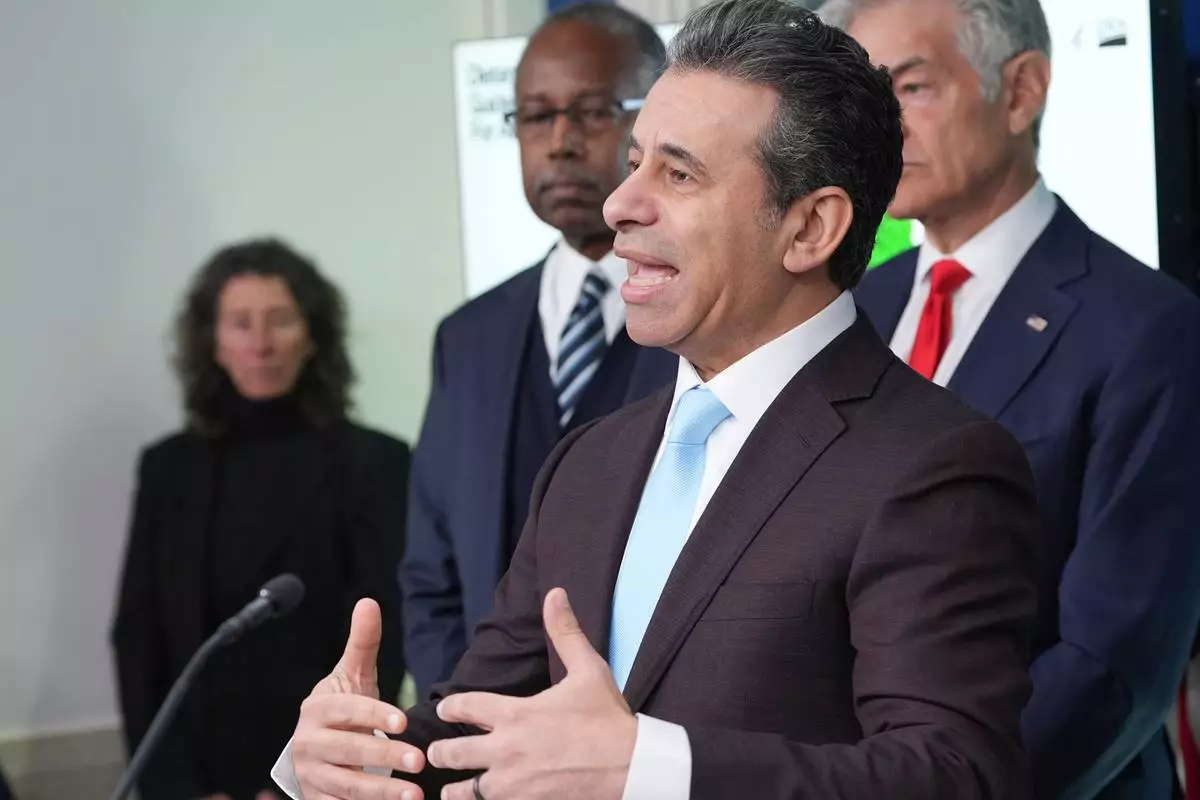
Dr. Marty Makary, commissioner of the Food and Drug Administration, speaks during a press briefing at the White House, Wednesday, Jan. 7, 2026, in Washington. (AP Photo/Jacquelyn Martin)