Angola's new capital airport, Dr. Antonio Agostinho Neto International Airport (AIAAN), has opened for passenger flights and is capable of accommodating 15 million passengers annually.
According to the Angolan Ministry of Transport's flight schedules, the new airport, located 40 km southeast of downtown Luanda, the capital of Angola, and built by a Chinese company, saw eight round-trip flights between Luanda and Cabinda, operated by Angola Airlines (TAAG), on its first day of passenger services last Sunday.
After 20 years of planning and construction, Luanda has inaugurated its new international airport. Built with Chinese expertise and financing, this ultra-modern facility is set to reshape Angola's aviation landscape and its economic future. The national carrier, TAAG, is betting on the success of this project to expand its flight network and increase global connectivity through the new hub.
"It will have a great impact on Angola's position as a global hub, not only as a regional, but a global hub going through the African continent. We're talking about an airport with the capability to process 15 million passengers annually -- 10 million internationally and five million domestic -- plus 130,000 tons of cargo," said Miguel Carneiro, Chief Commercial Officer of the TAAG.
The airport will be key to attracting more business and tourism, with plans to expand flight routes, including direct links with China to drive trade and economic growth.
"The airline's strategic plan is currently designed in a view to expand with two regional routes and one intercontinental route. Definitely, we are putting together the business case for China, specifically for Guangzhou," Carneiro said.
Financed by China CITIC Bank, one of China's joint-stock commercial banks, and insured by the China Export and Credit Insurance Corporation, the construction of the airport is a step forward for Angola's infrastructure and broader development strategy.
"In 2023, November 10, the airport had started for cargo flight. And this year, November 10, we started for passenger flight," said Liu Hongguang, general manager of the AVIC International Engineering Company.
The new airport significantly elevates Angola's status within the region positioning the country as a key player in global aviation.
"The construction of this airport will provide a significant boost to our country in terms of economic growth. Our geographical position is one of the key factors to transforming this new airport into a hub because we are located in southern Africa, in a more advantageous position compared to our main competitor, South Africa. We have the infrastructure to receive aircraft from all over the world. With modern technology, such as an LS system for air navigation, we believe this will revolutionize our country's air travel history," said Engracia Paredes, an architect of the airport.
The newly inaugurated airport is set to become southwestern Africa's largest aviation hub. Currently serving regional flights to Cabinda, it will begin international routes next year.
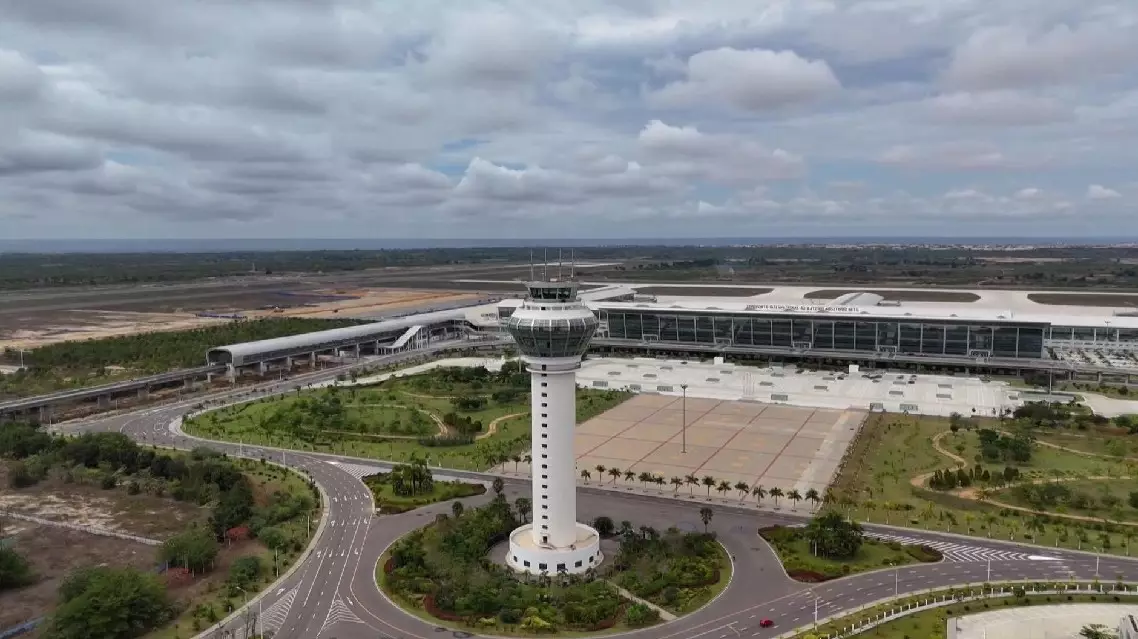
Chinese-built new airport in Angolan capital to accommodate 15 million passengers annually
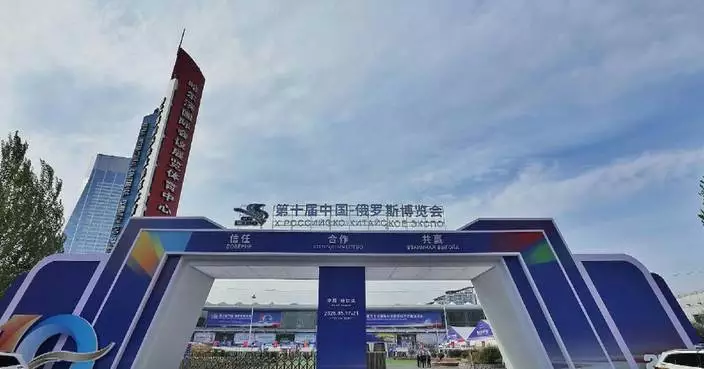
The 10th China-Russia Expo opened on Sunday in Harbin, the provincial capital of Heilongjiang in northeast China, highlighting the resilience, vitality and mutual benefits of China-Russia economic ties.
Held from May 17 to 21, this year's expo covers a floor space of 55,000 square meters, with more than 1,500 companies from 46 countries and regions taking part. Nearly 300 Russian companies are attending, while over 5,000 buyers are expected.
Since 2014, the event has attracted more than 7,200 Chinese and Russian companies and over a million visitors.
The China-Russia Expo is the largest comprehensive exhibition platform between the two countries.
President Xi Jinping and Russian President Vladimir Putin each sent congratulatory letters to the event, encouraging all sectors from both countries to seize the opportunity, make full use of their geographical proximity and economic complementarity, and further expand all-round practical cooperation.
"Leaders of the two countries have signed agreements to deepen practical cooperation, which we fully support. Russia and China stand side by side for common development, benefiting young people and all people. Such cooperation is timely and far-reaching. We are here in Harbin for the China-Russia Expo, coming from Russia's Sakha Republic. Our region is dominated by agriculture. We are seeking advanced farming technologies including irrigation equipment and harvesters. We hope to reach deals in the coming days to boost local development," said Vasiliy Petrovich Alexeev, head of Ust-Aidan Region of the Russian Federation.
"We are greatly inspired by the congratulatory letters from the heads of state of China and Russia. We will keep building targeted and efficient cooperation platforms, and smooth channels for sub-national exchanges between China and Russia," said Chen Shijun, president of Heilongjiang Council for the Promotion of International Trade.
China-Russia trade volume has surpassed 200 billion U.S. dollars for three consecutive years. China has been Russia's largest trading partner for 16 years running.
In the first quarter of this year, bilateral trade volume hit 60 billion U.S. dollars, a year-on-year increase of more than 14 percent.
This year's Expo features eight major exhibition zones. Beyond the exhibition halls, Russian delegations have also conducted field visits to Chinese companies. A delegation from the Republic of Buryatia visited one of northeast China's largest building materials distribution centers to explore potential areas of cooperation.
"Regular China-Russia economic and trade events continuously bring fresh cooperation opportunities for both sides. This field trip to Xilong Building Materials Market has helped us explore more practical directions and modes for bilateral cooperation," said Alexei Tsydenov, head of the Republic of Buryatia of the Russian Federation.
"Relying on Buryatia's abundant mineral resources and sound logistics conditions, we plan to build industrial parks focusing on home building materials, mineral resources and energy sectors in Russia. We will introduce advanced Chinese technologies and management models to drive coordinated industrial upgrading between the two countries," said Wu Jinrong, vice president of Harbin Xilong International Trade and Logistics Park.
From everyday consumer goods to advanced helicopters, and from mineral resources to intelligent robotics, China-Russia cooperation now spans a wide range of sectors. Economic ties and people-to-people exchanges between the two countries continue to advance toward higher-quality development and broader prospects.
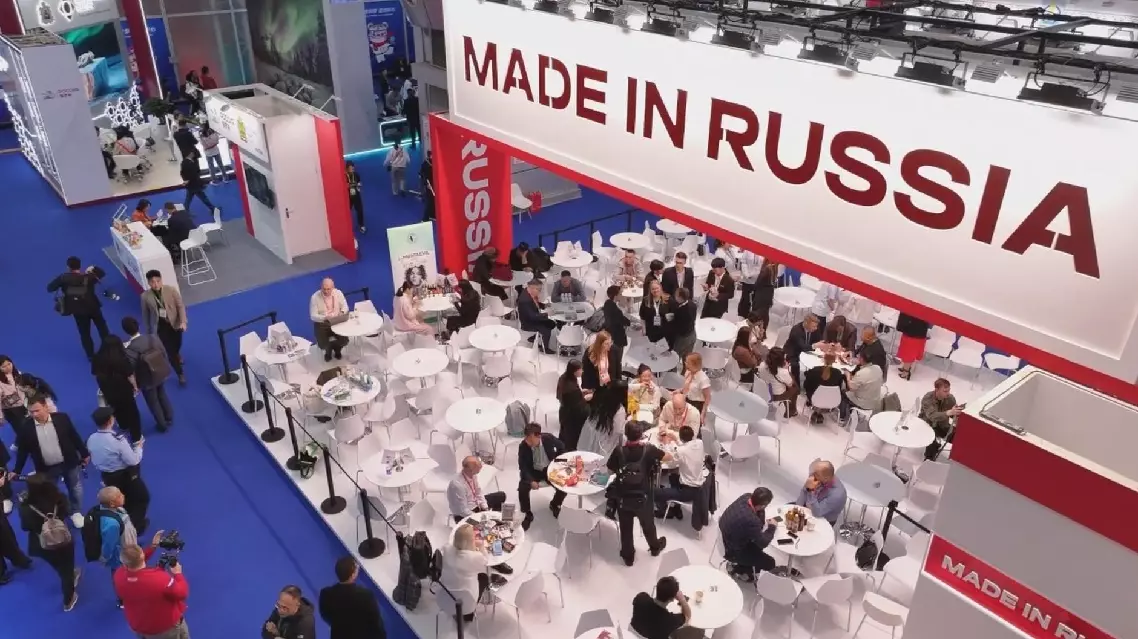
China-Russia Expo promotes trust, cooperation, mutual benefit
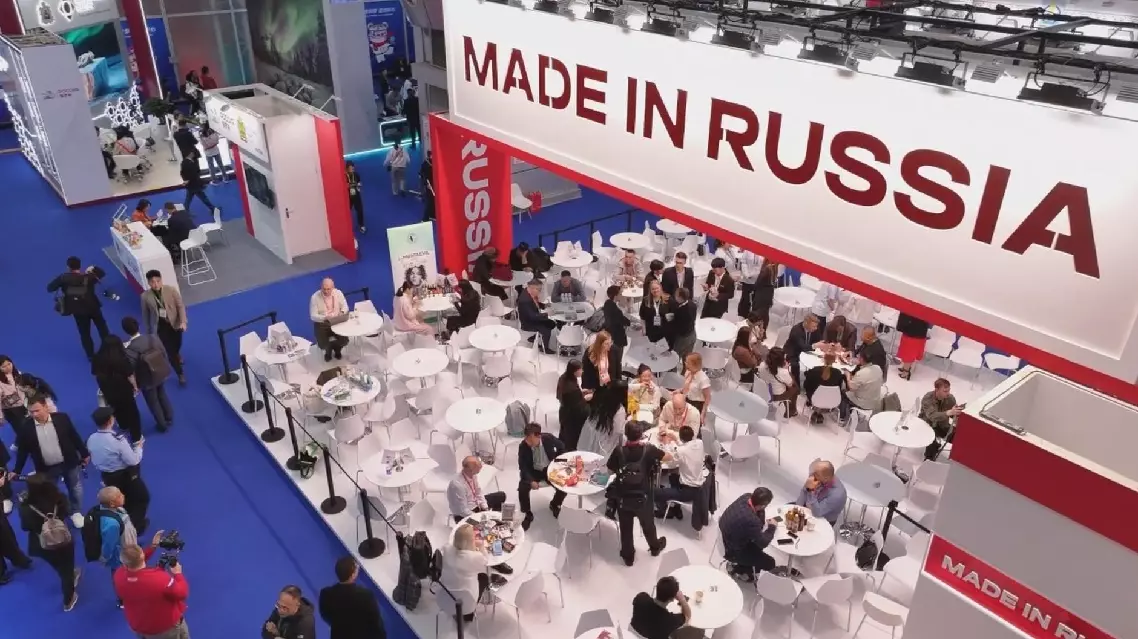
China-Russia Expo promotes trust, cooperation, mutual benefit