China has emerged as the first country worldwide to achieve zero growth in land degradation and has become the largest contributor to global afforestation, with a net reduction of 65 million mu (about 4.33 million hectare) of desertified land in the past four decades, said the National Forestry and Grassland Administration (NFGA) on Monday.
Speaking at a press conference in Beijing, senior officials with the NFGA highlighted China's progress in combating desertification and the Three-North Shelterbelt Forest Program (TSFP), a large-scale afforestation project aiming to create a protective green barrier in northern China.
Since June 2023, the NFGA has dedicated significant resources to the Three-North project, with a total of 32 billion yuan (about 4.4 billion U.S. dollars) allocated as central government investment in 2024. So far this year, the administration has overseen the execution of 287 priority projects of afforestation on 57 million mu (about 3.8 million hectares) of desertified land.
These efforts have meant a good start of the campaign to fight desertification, leading to continuous improvements in ecological conditions in arid regions, according to the officials.
China, one of the countries most affected by desertification, has made significant strides over the past 40 years, particularly since the 18th National Congress of the Communist Party of China (CPC) in 2012.
Currently, 53 percent of the treatable desertified areas in China are under effective control, resulting in a net reduction of 65 million mu (about 4.33 million hectare) of desertified land. This progress reflects a positive trend of overall improvement and accelerated recovery, making China the global pioneer in achieving zero growth in land degradation, as well as simultaneous reduction in desertification and sandy land, said the officials.
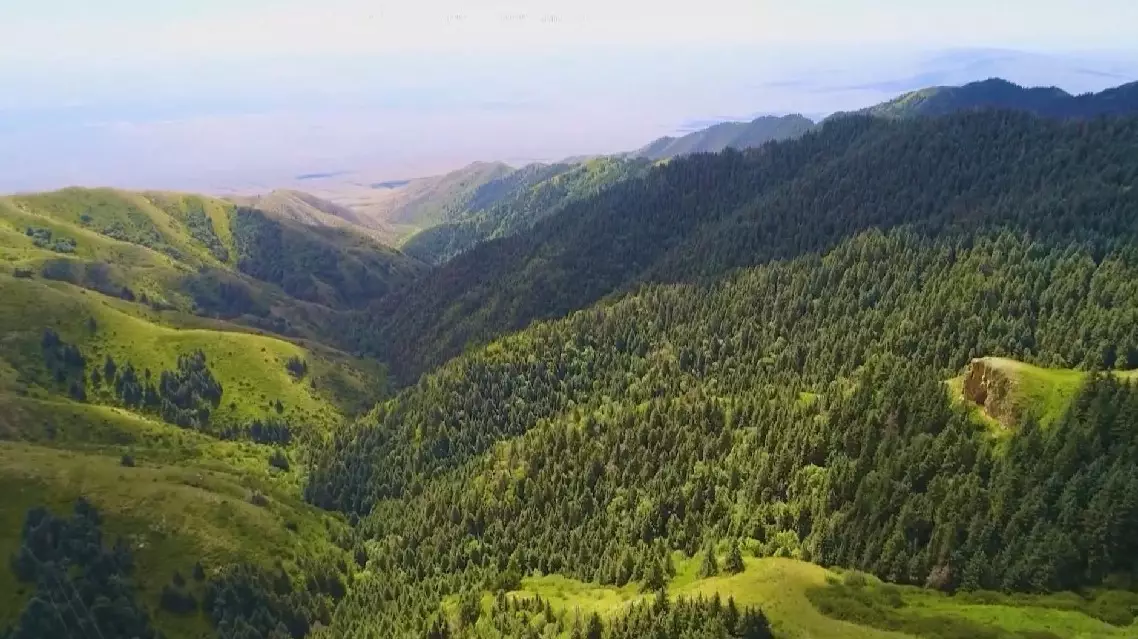
China leads global fight against desertification, land degradation