The conflict between Russia and Ukraine escalated over the weekend as Ukrainian forces launched a military strike in Russia's Kursk region, targeting multiple military sites.
On Sunday, Ukraine announced that it had successfully struck several Russian positions, including the Kursk region. Russian media confirmed the assault in Kursk, citing sources that indicated foreign-made missiles were used in the operation.
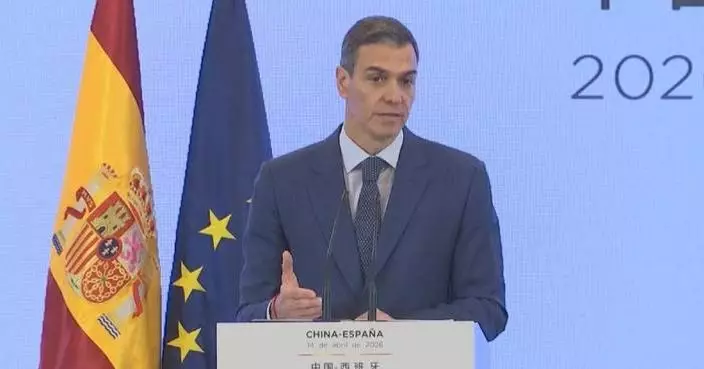
Ukrainian President Volodymyr Zelensky said on Sunday that he believes Russia has set a timeline to push Ukrainian troops out of the Kursk region by Jan 20, 2025, aligning with Donald Trump' inauguration as the U.S. president.
Recent statements from Ukrainian officials indicate that Russian forces have ramped up their counteroffensive efforts in Kursk. Ukrainian control in the area has reportedly decreased by around 40 percent. At its height, Ukraine managed to hold 1,376 square kilometers of territory, but that figure has now dropped to approximately 800 square kilometers. Ukrainian officials insist they will defend their remaining territories for as long as necessary.
Zelensky expressed cautious optimism about the possibility of ending the conflict by 2025. He emphasized the need to engage with the incoming Trump administration regarding potential peace proposals, which he expects to be presented in January. The Ukrainian government is closely monitoring the new administration's decisions.
In anticipation of this political shift in the U.S., Ukrainian media report that Ukraine is crafting a strategic plan to ensure ongoing American support, aiming to strengthen cooperation and prevent any critical cuts to military aid.

Fighting intensifies in Kursk, Russia
A one-legged oriental white stork has managed to find its footing again after a custom-built prosthetic was fitted at a wildlife rescue center in north China. Staff there are now assessing whether this unique bionic bird is ready to be released back into the wild.
The stork was brought to the Sunshine Wildlife Rescue and Shelter Center in Tianjin Municipality back in 2024 with a severe injury after its left leg became entangled in netting. A resulting infection was so serious that amputation was required.
While staff at the center slowly nursed the bird back to health, it was initially determined that it would be unable to survive in the wild on a single leg. To change its future, the team searched for a solution that would eventually allow it to return to nature.
Last year, staff began experimenting with prosthetic designs, testing a range of materials including carbon fiber, plastic, and rubber. Each attempt improved the outcome, but the key challenge was developing a suitable “shock absorber” to make the prosthesis feel more natural to the stork and help it fully restore its movement.
Oriental white storks typically land and step with the front of the foot first, and walking naturally requires a strong upward rebound. To deal with this, the latest prosthetic developed by the teams incorporated a mechanical component to allow for finer adjustments while providing cushioning to support the bird as it walks.
"The internal compression rod and clasp system enables [the stork to have] micro-adjustments so that the stork is able to better get used to [walking with the prosthesis]. And the [prosthesis] can match the height of the stork's remaining leg while offering both walking support and shock absorption," said Li Zheng, a staff member at the Tianjin Wildlife Rescue and Domestication Breeding Center, as he showed off the final design.
The 17-centimeter-tall prosthesis is made from resin and silicone, and it is designed to weigh roughly the same as a normal bird leg. Its orange color was also chosen to help it blend in with its peers.
The breakthrough came on the morning of Wednesday, when staff carefully carried out the fitting. After nearly an hour-long, non-invasive procedure, the prosthesis was successfully installed.
Returning to its outdoor enclosure, the stork took some time to adjust and adapt to the new feeling. But, before long, it was soon seen attempting to step up onto a rocky formation with its new leg leading the way, and after a couple of shaky moments it appeared able to keep its balance.
Next, staff say they will monitor and assess how well the stork is acclimatizing to the brand new prosthetic. If they deem it can live and move normally, the bird will be released back into the wild at an appropriate time.
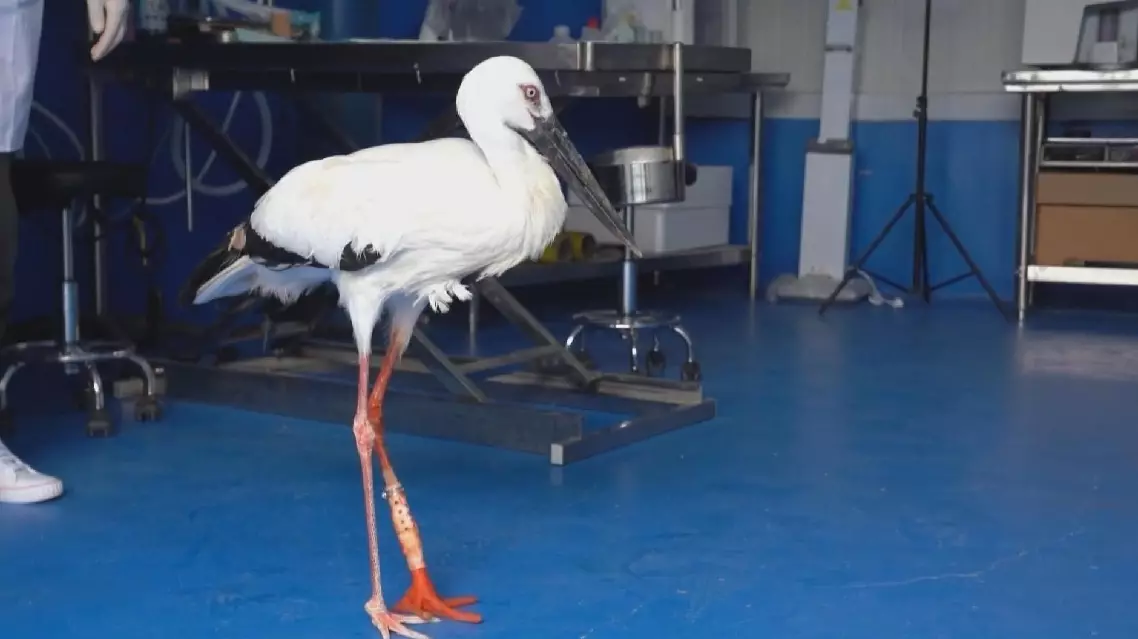
One-legged stork finds feet again after being fitted with custom prosthetic leg