Skip to Content Facebook Feature Image

U.S. FDA Approves AOP Health’s RapiblykTM (landiolol) for Atrial Fibrillation and Atrial Flutter in the Critical Care Setting

News

U.S. FDA Approves AOP Health’s RapiblykTM (landiolol) for Atrial Fibrillation and Atrial Flutter in the Critical Care Setting
News

News

U.S. FDA Approves AOP Health’s RapiblykTM (landiolol) for Atrial Fibrillation and Atrial Flutter in the Critical Care Setting

2024-11-27 20:02 Last Updated At:20:10

VIENNA--(BUSINESS WIRE)--Nov 27, 2024--

AOP Orphan Pharmaceuticals GmbH (AOP Health), based in Vienna, Austria, announced that the U.S. Food and Drug Administration (FDA) has granted regulatory approval for Rapiblyk TM (landiolol) in the hospital critical care setting for the treatment of the severe heart condition supraventricular tachycardia (atrial fibrillation and atrial flutter). The approval is based on clinical studies which demonstrated that Rapiblyk TM (landiolol) enables rapid management of the heart rate with minimal reduction of blood pressure. The approval will provide patients in the U.S. with a new treatment option and is an important step for AOP Health in bringing its mission to help patients and make an impact on rare diseases and critical care to the United States for the first time.

This press release features multimedia. View the full release here: https://www.businesswire.com/news/home/20241127506170/en/

The approval was based on data of 5 randomized, double-blind, placebo-controlled studies. A total of 317 adults with supraventricular tachycardia were treated with landiolol: The heart rate decreased in 40-90% of treated patients within about 10 minutes, compared to 0-11% of patients who received placebo; heart rate decrease was defined as a >20% decrease in heart rate or a heart rate <100 bpm or at least intermittent cessation of the arrhythmia. In placebo-controlled clinical trials, adverse events were observed in 9,9% of landiolol treated patients vs. 1 % in patients treated with placebo.”

New Therapeutic option for rapid and “short-term” treatment of supraventricular tachycardia

AOP Health strives to offer solutions for patients with rare diseases or in critical care. Therefore, this approval marks an important moment for patients suffering from atrial fibrillation and atrial flutter in intensive care settings. “Rapiblyk TM approval in the US represents an important milestone for patients experiencing supraventricular tachycardia, including atrial fibrillation and atrial flutter, who need rapid and short-term heart rate reduction. After being available in Europe, we are delighted that this therapeutic option can be now available also for US patients” says Dr. Martin Steinhart, CEO of AOP Health.

Study Design

Five randomized, double-blind, placebo-controlled studies were conducted to test landiolol efficacy and safety in patients with supraventricular tachycardia (including atrial fibrillation and atrial flutter). A total of 317 adults were treated with landiolol: heart rate in patients treated with landiolol decreased of 40-90% vs 0-11% of patients who received placebo. Heart rate decrease was defined as a >20% decrease in heart rate or a heart rate <100 bpm or at least intermittent cessation of the arrhythmia. The infused dose of landiolol in these studies ranged from 9.3 to 74.6 mcg/kg/min. Adverse events were observed in 9,9% of landiolol treated patients (main adverse event was hypotension) vs. 1 % in patients treated with placebo.”

About supraventricular tachycardias

Supraventricular tachycardias (including atrial fibrillation and atrial flutter) can occur both in patients with and without heart disease. Because they can impair cardiac function, leading to acute cardiovascular problems, they require immediate medical attention.

About Rapiblyck TM (landiolol) intravenous [280 mg of landiolol (equivalent to 300 mg of landiolol HCl) in a single-dose vial]

Landiolol is an ultra-short-acting adrenergic receptor antagonist, with beta 1/beta 2 selectivity ratio of 255. Landiolol is characterized by a fast onset of action and rapid reduction in heart rate without significantly lowering blood pressure. It is designed for use in emergency, cardiac critical care unit, operating room, and intensive care settings. It is used in emergency conditions and for short term treatments in critical care. It is therefore not intended for the treatment of chronic cardiac arrhythmias. It is registered in Europe for the treatment of supraventricular tachycardia, including atrial fibrillation or atrial flutter and for the management of non-compensatory sinus tachycardia.

INDICATION

RAPIBLYK TM is indicated for the short-term reduction of ventricular rate in adults with supraventricular tachycardia including atrial fibrillation and atrial flutter.

IMPORTANT SAFETY INFORMATION

CONTRAINDICATIONS

RAPIBLYK TM is contraindicated in patients with:

· Severe sinus bradycardia, sick sinus syndrome, heart block greater than first degree

· Decompensated heart failure

· Cardiogenic shock: May precipitate further cardiovascular collapse and cause cardiac arrest.

· Pulmonary hypertension: May precipitate cardiorespiratory decompensation.

· Hypersensitivity reactions, including anaphylaxis, to landiolol or any of the inactive ingredients

WARNINGS AND PRECAUTIONS

· Hypotension. Patients with hemodynamic compromise, hypovolemia, or on interacting medications are at increased risk of hypotension.

· Bradycardia. Patients with first-degree atrioventricular block, sinus node dysfunction, or conduction disorders are at increased risk of bradycardia, including sinus pause, heart block, severe bradycardia, and cardiac arrest.

· Cardiac Failure. Beta-blockers, like RAPIBLYK TM, can cause depression of myocardial contractility and may precipitate heart failure and cardiogenic shock.

· Reactive Airways Disease. Patients with reactive airways disease should, in general, not receive beta-blockers. Because of its relative beta-1 selectivity and titratability, RAPIBLYK TM injection may be titrated to the lowest possible effective dose. In the event of bronchospasm, stop the infusion immediately; a beta-2 stimulating agent may be administered with appropriate monitoring of ventricular rates.

· Use in Patients with Diabetes Mellitus and Hypoglycemia. Beta-blockers may prevent early warning signs of hypoglycemia, such as tachycardia, and increase the risk for severe or prolonged hypoglycemia at any time during treatment, especially in patients with diabetes mellitus, patients who are fasting (i.e., surgery, not eating regularly, or are vomiting), or children.

· Infusion Site Reactions. Infusion site reactions such as pain, swelling and erythema have occurred with the use of RAPIBLYK TM injection. Avoid infusions into small veins or through a butterfly catheter.

· Use in Patients with Prinzmetal’s Angina. Beta-blockers may exacerbate anginal attacks in patients with Prinzmetal’s angina because of unopposed alpha receptor–mediated coronary artery vasoconstriction.

· Use in Patients with Pheochromocytoma. If RAPIBLYK TM injection is used in the setting of pheochromocytoma, administer RAPIBLYK in combination with an alpha-blocker, and only after the alpha-blocker has been initiated. Administration of beta-blockers without opposing alpha blockade in the setting of pheochromocytoma has been associated with a paradoxical increase in blood pressure from the attenuation of beta receptor-mediated vasodilation in skeletal muscle.

· Use in Patients with Peripheral Circulatory Disorders. RAPIBLYK TM injection may exacerbate peripheral circulatory disorders, such as Raynaud’s disease or syndrome, and peripheral occlusive vascular disease.

· Abrupt Discontinuation of RAPIBLYK TM Injection. Severe exacerbations of angina, myocardial infarction, and ventricular arrhythmias have been reported in patients with coronary artery disease upon abrupt discontinuation of beta-blocker therapy.

· Hyperkalemia. Beta-blockers, including RAPIBLYK TM injection, can cause increases in serum potassium and hyperkalemia. The risk is increased in patients with risk factors such as renal impairment. Intravenous administration of betablockers has been reported to cause potentially life-threatening hyperkalemia in hemodialysis patients. Monitor serum electrolytes during therapy with RAPIBLYK TM injection.

· Use in Patients with Metabolic Acidosis. Beta-blockers have been reported to cause hyperkalemic renal tubular acidosis. Acidosis in general may be associated with reduced cardiac contractility.

· Use in Patients with Hyperthyroidism. Beta-adrenergic blockade may mask certain clinical signs (e.g., tachycardia) of hyperthyroidism. Abrupt withdrawal of beta blockade might precipitate thyroid storm; therefore, monitor patients for signs of thyrotoxicosis when withdrawing beta blocking therapy.

- Use in Patients at Risk of Severe Acute Hypersensitivity Reactions. When using beta-blockers, patients at risk of anaphylactic reactions may be more reactive to allergen exposure (accidental, diagnostic, or therapeutic). Patients using beta-blockers may be unresponsive to the usual doses of epinephrine used to treat anaphylactic or anaphylactoid reactions.

ADVERSE REACTIONS

The most important and common adverse reaction is hypotension, which in clinical trials occurred in 9.9% of patients receiving RAPIBLYK TM vs. 1% in those receiving placebo.

Please see the full Prescribing Information for Rapiblyk TM (landiolol), athttps://www.accessdata.fda.gov/drugsatfda_docs/label/2024/217202s000lbl.pdf

About AOP Health

The AOP Health Group incorporates several companies including AOP Orphan Pharmaceuticals GmbH with its seat in Vienna, Austria (“AOP Health”). The AOP Health Group is the European pioneer for integrated therapies for rare diseases and in critical care. Over the past 25 years, the Group has become an established provider of integrated therapy solutions operating from its headquarters in Vienna, its subsidiaries and representative offices throughout Europe and the Middle East, as well as through partners worldwide. The claim “Needs. Science. Trust.” sums up the foundation of the Group’s success: establishing trust through a continually high level of investment in research and development and a highly consistent and pragmatic orientation towards the needs of all stakeholders – especially the patients and their families as well as the healthcare professionals treating them.

Portrait of Dr. Martin Steinhart, CEO AOP Health (Photo: AOP Health/Studio Koekart)


Portrait of Dr. Martin Steinhart, CEO AOP Health (Photo: AOP Health/Studio Koekart)
WASHINGTON (AP) — Secretary of State Marco Rubio suggested Sunday that the United States would not govern Venezuela day-to-day other than enforcing an existing “oil quarantine” on the country, a turnaround after President Donald Trump has insisted that the U.S. would be running Venezuela following its ouster of leader Nicolás Maduro.

Rubio's statements seemed designed to temper concerns that the assertive action to achieve regime change in Venezuela might lead the U.S. into another prolonged foreign intervention or failed attempt at nation-building.

They stood in contrast to Trump’s broad but vague claims that the U.S. would at least temporarily “run” the oil-rich nation, comments that suggested some sort of governing structure under which Caracas would be controlled by Washington.

Rubio offered a more nuanced take, saying the U.S. would continue to enforce an oil quarantine that was already in place on sanctioned tankers before Maduro was removed from power early Saturday and use that leverage as a means to press policy changes in Venezuela.

“And so that’s the sort of control the president is pointing to when he says that," Rubio said on CBS’ “Face the Nation.” "We continue with that quarantine, and we expect to see that there will be changes, not just in the way the oil industry is run for the benefit of the people, but also so that they stop the drug trafficking.”

The blockade on sanctioned oil tankers — some of which have been seized by the U.S. — “remains in place, and that’s a tremendous amount of leverage that will continue to be in place until we see changes that not just further the national interest of the United States, which is number one, but also that lead to a better future for the people of Venezuela,” he added.

Leaders in Venezuela have so far pushed back, calling on the Trump administration to release Maduro.

Even before the operation that nabbed Maduro, experts questioned the legality of aspects of the Trump administration’s pressure campaign on Maduro, including the deadly bombing of boats accused of trafficking drugs that some scholars said stretched the boundaries of international law.

Cuba on Sunday night announced that 32 Cuban security officers were killed in the U.S. operation in Venezuela, which Trump acknowledged: “You know, a lot of Cubans were killed yesterday.”

“There was a lot of death on the other side," Trump said aboard Air Force One as he flew back to Washington from his Mar-a-Lago estate in Florida. "No death on our side.”

The president's vow, repeated more than half a dozen times at a Florida news conference on Saturday, sparked concerns among some Democrats. It also drew unease from parts of his own Republican coalition, including an “America First” base that is opposed to foreign interventions, and from observers who recalled past nation-building efforts in Iraq and Afghanistan.

Rubio dismissed such criticism, saying Trump’s intent had been misunderstood.

“The whole foreign policy apparatus thinks everything is Libya, everything is Iraq, everything is Afghanistan,” Rubio said. "This is not the Middle East. And our mission here is very different. This is the Western Hemisphere.”

He also suggested the U.S. would give Maduro’s subordinates now in charge time to govern, saying, “We’re going to judge everything by what they do.” Though he did not rule out boots on the ground in Venezuela, Rubio said the U.S., which has built up its presence in the region, was already capable of stopping alleged drug boats and sanctioned tankers.

A day earlier, Trump had told reporters, “We’re going to run the country until such time as we can do a safe, proper and judicious transition.” He later pointed to his national security team with him, including Rubio and Defense Secretary Pete Hegseth, and said it would be done for a period of time by “the people that are standing right behind me. We’re gonna be running it, we’re gonna be bringing it back."

Despite Rubio's seeking to tamp down that notion, Trump reiterated Sunday that the U.S. would control Venezuela, saying, “We’re going to run everything."

“We’re going to run it, fix it,” he said Sunday. He added, "We’ll have elections at the right time” but didn't say when that might be.

A middle-of-the-night operation extracted Maduro and his wife, Cilia Flores, from their home in a military base in the capital city of Caracas — an act Maduro’s government called “imperialist.” The couple faces U.S. charges of participating in a narco-terrorism conspiracy.

The dramatic seizure capped an intensive Trump administration pressure campaign on Venezuela’s autocratic leader and months of secret planning, resulting in the most assertive American action to achieve regime change since the 2003 invasion of Iraq. Legal experts raised questions about the lawfulness of the operation, which was done without congressional approval.

Venezuela’s vice president, Delcy Rodríguez, has called Maduro the country’s rightful leader, even as her nation’s high court named her interim president. So did Defense Minister Vladimir Padrino López, who sai the country's armed forces “categorically reject the cowardly kidnapping" and will “maintain internal order and peace.”

Asked about Rodríguez comments in which she stands by Maduro, Trump said, “I don’t think it’s pushback" and suggested her calling what occurred a kidnapping of Maduro wasn't "a bad term.”

Maduro is due to make his first appearance Monday in Manhattan's federal court.

He and other Venezuelan officials were indicted in 2020 on narco-terrorism conspiracy charges, and the Justice Department released a new indictment Saturday of Maduro and his wife that painted his administration as a “corrupt, illegitimate government” fueled by a drug-trafficking operation that flooded the U.S with cocaine. The U.S. government does not recognize Maduro as the country’s leader.

Venezuela’s government kept operating as usual over the weekend as ministers remained in their posts.

The capital was unusually quiet Sunday with few vehicles moving around and convenience stores, gas stations and other businesses closed.

Maduro’s son, lawmaker Nicolás Ernesto Guerra, has not appeared in public since the attack. On Saturday, he posted on Instagram a government statement repudiating the capture of his father and stepmother.

The country’s incoming National Assembly is set to be sworn in at the legislative palace in Caracas. The unicameral assembly will remain under control of the ruling party.

Under Venezuelan law, Rodríguez would take over from Maduro. Rodriguez stressed during a Saturday appearance on state television that she did not plan to assume power, before Venezuela’s high court ordered that she assume the interim role.

Trump told The Atlantic in an interview Sunday that Rodríguez could “pay a very big price” if she doesn’t do what he thinks is right for Venezuela. Speaking to reporters later, Trump said Rodríguez is “cooperating” but reiterated the threat. He said he wanted her to provide “total access,” from major oil operations to basic infrastructure like roads, so all can be rebuilt.

His warning contrasted with his comments about Rodríguez on Saturday when he said Rubio had spoken with her and she was willing to do what the U.S. thinks is needed to improve the standard of living in Venezuela.

Garcia Cano reported from Caracas, Venezuela. Associated Press writers Darlene Superville aboard Air Force One and Jorge Rueda in Caracas, Venezuela, contributed to this report.

Protestors hold a banner stating "Trump Must Go Now" as they gather outside the UN Plaza during a demonstration against the U.S. bombing of Venezuela and seizure of Venezuelan President Nicolás Maduro, in San Francisco on Saturday, Jan. 3, 2026. (Yalonda M. James/San Francisco Chronicle via AP)

Protestors hold a banner stating "Trump Must Go Now" as they gather outside the UN Plaza during a demonstration against the U.S. bombing of Venezuela and seizure of Venezuelan President Nicolás Maduro, in San Francisco on Saturday, Jan. 3, 2026. (Yalonda M. James/San Francisco Chronicle via AP)

Government supporters burn a U.S. flag in Caracas, Venezuela, Saturday, Jan. 3, 2026, after U.S. President Donald Trump announced that U.S. forces had captured Venezuelan President Nicolás Maduro and his wife. (AP Photo/Ariana Cubillos)

Government supporters burn a U.S. flag in Caracas, Venezuela, Saturday, Jan. 3, 2026, after U.S. President Donald Trump announced that U.S. forces had captured Venezuelan President Nicolás Maduro and his wife. (AP Photo/Ariana Cubillos)

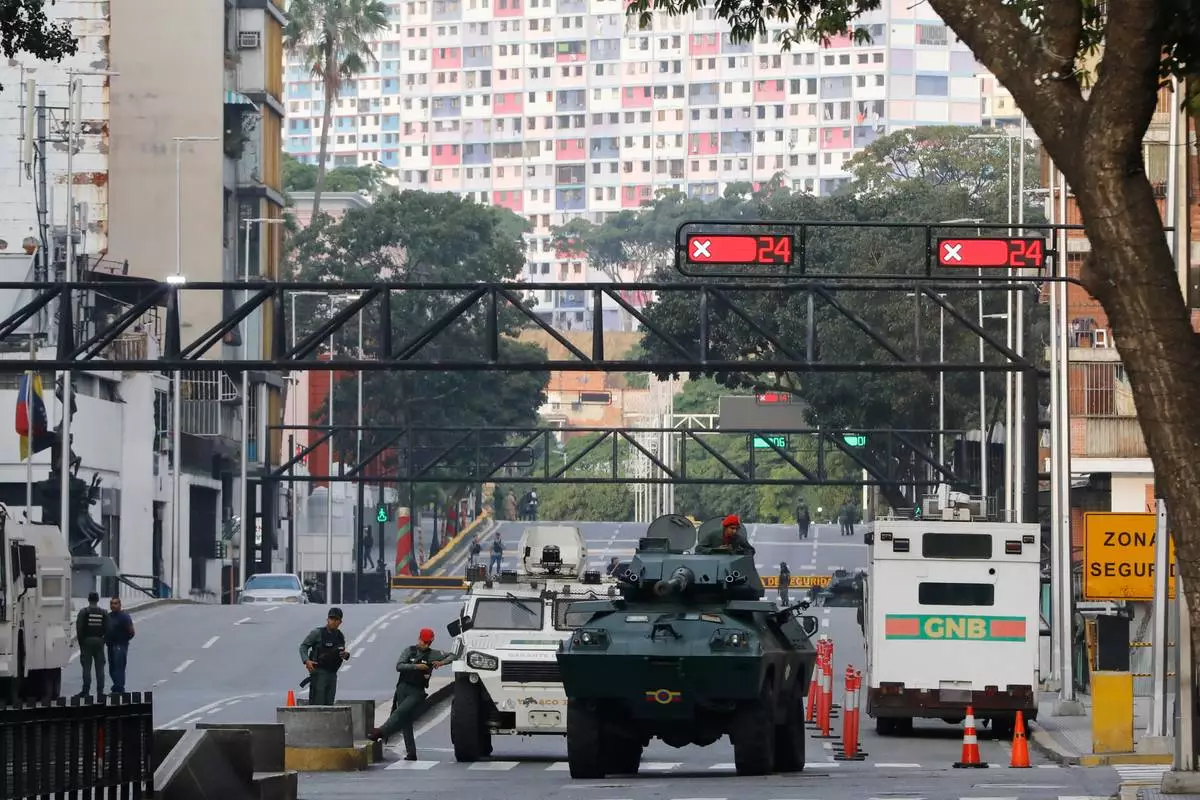
National Guard armored vehicles block an avenue leading to Miraflores presidential palace in Caracas, Venezuela, Saturday, Jan. 3, 2026. (AP Photo/Cristian Hernandez)

National Guard armored vehicles block an avenue leading to Miraflores presidential palace in Caracas, Venezuela, Saturday, Jan. 3, 2026. (AP Photo/Cristian Hernandez)

Destroyed containers lay at La Guaira port after explosions were heard in Venezuela, Saturday, Jan. 3, 2026. (AP Photo/Matias Delacroix)

Destroyed containers lay at La Guaira port after explosions were heard in Venezuela, Saturday, Jan. 3, 2026. (AP Photo/Matias Delacroix)

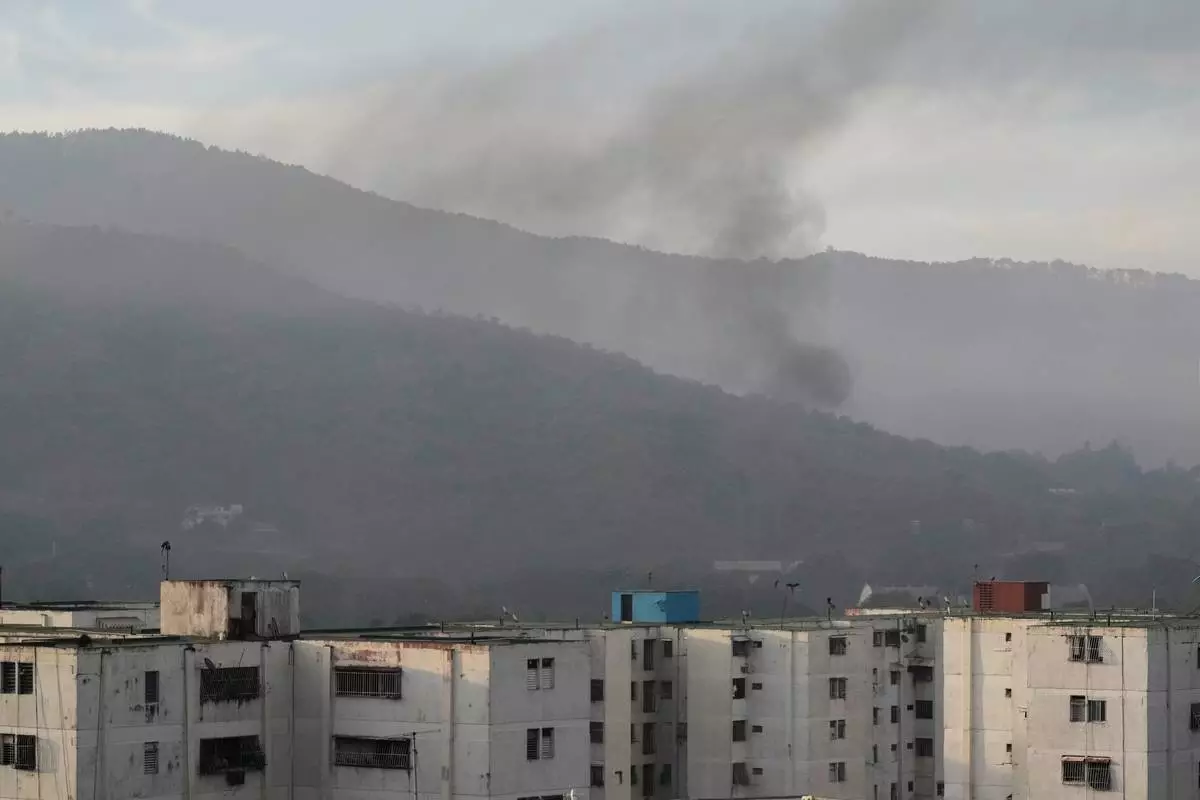
Smoke rises from Fort Tiuna, the main military garrison in Caracas, Venezuela, after multiple explosions were heard and aircraft swept through the area, Saturday, Jan. 3, 2026. (AP Photo/Matias Delacroix)

Smoke rises from Fort Tiuna, the main military garrison in Caracas, Venezuela, after multiple explosions were heard and aircraft swept through the area, Saturday, Jan. 3, 2026. (AP Photo/Matias Delacroix)

Men watch smoke rising from a dock after explosions were heard at La Guaira port, Venezuela, Saturday, Jan. 3, 2026. (AP Photo/Matias Delacroix)

Men watch smoke rising from a dock after explosions were heard at La Guaira port, Venezuela, Saturday, Jan. 3, 2026. (AP Photo/Matias Delacroix)

Supporters of Venezuelan President Nicolás Maduro embrace in downtown Caracas, Venezuela, Saturday, Jan. 3, 2026, after U.S. President Donald Trump announced that Maduro had been captured and flown out of the country. (AP Photo/Cristian Hernandez)

Supporters of Venezuelan President Nicolás Maduro embrace in downtown Caracas, Venezuela, Saturday, Jan. 3, 2026, after U.S. President Donald Trump announced that Maduro had been captured and flown out of the country. (AP Photo/Cristian Hernandez)

Recommended Articles