The purchasing managers' index (PMI) for China's non-manufacturing sector came in at 50 in November, down from 50.2 in October, data from the National Bureau of Statistics (NBS) showed Saturday.
A reading above 50 indicates expansion, while a reading below 50 reflects contraction.
Experts attributed this slowdown to decreased consumption demand in the recreation sectors, including accommodation and catering, following the festival period.
Despite this, the service sector PMI remained in expansion, with financial services and capital markets service seeing a slight increase, surpassing 60 percent.
"The expansion of the financial service sector has actively contributed to the further recovery and improvement of the entire real economy," said Cai Jin, vice president of the China Federation of Logistics and Purchasing.
Additionally, new energy-related sectors performed well, further driving the transformation of the economy. In November, the PMI for telecommunications, internet, and software services exceeded 55 percent.
While the construction sector experienced a slight decline due to the off-season, the PMI for the civil engineering construction sector remained above 52 percent, reflecting a relatively high level and demonstrating the continued expansion of infrastructure investment activities.
"From the perspective of market expectations, the expected index of business activities in the construction industry has picked up slightly in the expansion area, which also indicates that most construction enterprises' expectations for future market development are still relatively stable," said Huo Lihui, head of the business climate survey division at the Service Survey Center, National Bureau of Statistics.
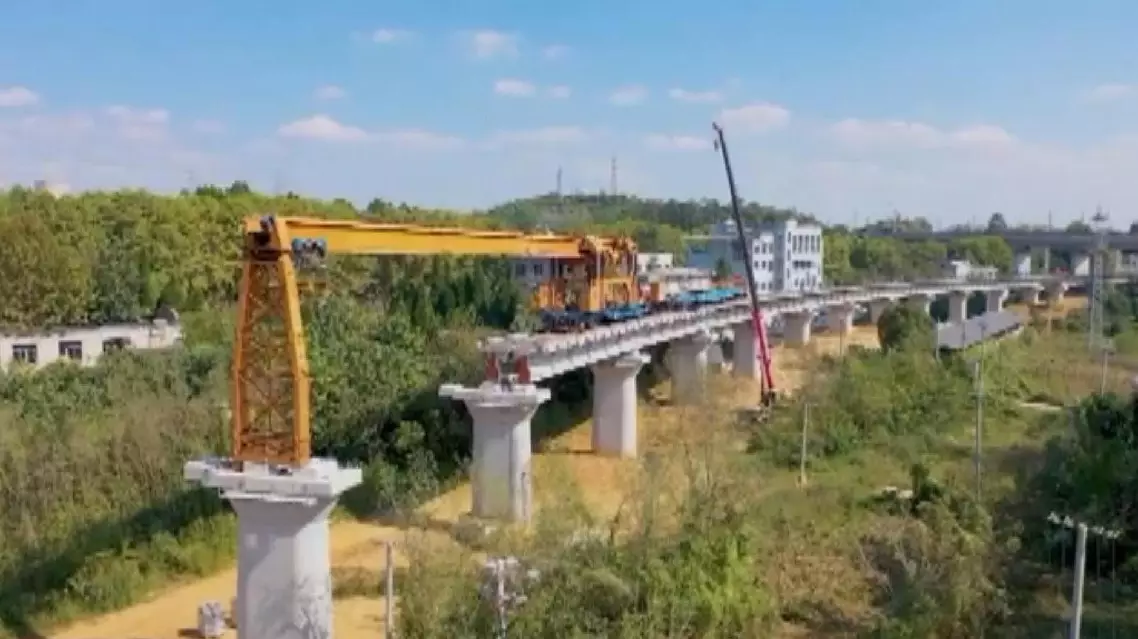
China's non-manufacturing PMI at 50 in November