Skip to Content Facebook Feature Image

Kenya's Port of Mombasa boosts global supply chain development

China

China

China

Kenya's Port of Mombasa boosts global supply chain development

2024-12-01 03:05 Last Updated At:07:27

The Port of Mombasa, Kenya's main seaport, is expected to boost economic growth in the region and enhance the global supply chain, according to industry sources.

Located on Kenya's eastern coast, it is one of Africa's busiest and most important ports, serving not only as Kenya's economic artery but also as a critical logistics hub for the region.

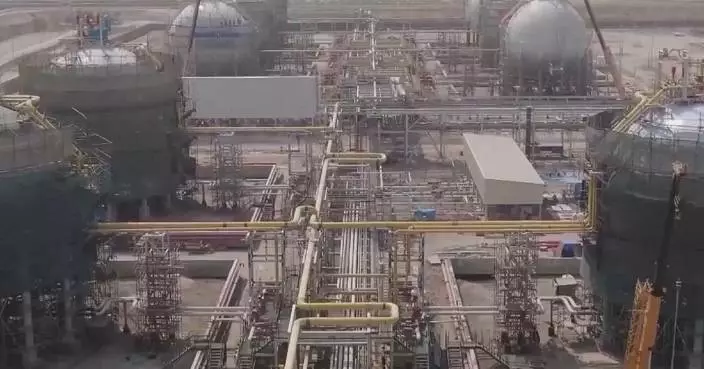
The Kipevu Oil Terminal (KOT) is a key component of Mombasa Port's transformation under China-Kenya cooperation. It is capable of processing crude oil, heavy fuel oil, gasoline, diesel, aviation kerosene, and liquefied petroleum gas, ensuring the efficient operation of Mombasa Port's oil and gas supply chain. Additionally, it contributes to Kenya's economic development and strengthens trade and logistics across East Africa.

"We introduced several innovations in the construction of the KOT (Kipevu Oil Terminal). Firstly, a groundbreaking technique involving onshore prefabrication and single-tow installation was applied for laying seabed pipelines -- a first-time application not only in East Africa but also globally. Secondly, the project adopted high-precision ultrasonic flow meters with large flow capacities to enhance measurement accuracy. Lastly, a PLC automated monitoring system was implemented to improve automation and precision," Said Mao Honghui, the Chinese project leader for the Kipevu Oil Terminal (KOT).

The Port of Mombasa also fosters regional integration. By linking the Mombasa-Nairobi Railway with the Nairobi-Malaba Railway, the port bridges the gap between maritime and inland transportation, strengthening Kenya's economic ties with neighboring landlocked countries such as Uganda, Rwanda, Burundi and South Sudan.

Chinese developers have also helped establish a commuter railway linking the Mombasa station of the Mombasa-Nairobi Railway to Mombasa's urban and suburban areas, facilitating the transportation of people and goods and promoting inclusive growth in the region.

"We get so many benefits that we can't even talk more about it. So talk of business, talk of saving time, talk of saving money, energy, all these things that the community of Miritini will benefit out of this commuter train around here," said Ramadan Fokwe, the head of Miritini Village in Mombasa.

The upgrading of Mombasa Port highlights the importance of multilateral cooperation in driving economic growth and improving people's well-being.

"There is no country that works alone; it has also to work with other countries, also to foster trade. And also, the economy is also what China is doing, also in terms of supporting and zero-rating some of the taxes to give more markets to the African countries," said William Kipkemboi Ruto, managing director of the Kenya Ports Authority.

Kenya's Port of Mombasa boosts global supply chain development
Kenya's Port of Mombasa boosts global supply chain development

A Chinese envoy on Monday urged Japan to face up to its history and correct its mistakes to earn the trust of China and the international community, during an open debate of the United Nations Security Council.

At the debate on "Reaffirming international rule of law: Pathways to reinvigorating peace, justice, and multilateralism," China's Deputy Permanent Representative to the UN Sun Lei strongly refuted the statements by the Japanese side, accusing the Japanese representative of "distorting facts and misleading the public."

Sun stressed that China firmly opposed and rejected such statements and was compelled to respond unequivocally.

Sun pointed out that Japan's statements violated its obligations as a defeated country, as stipulated in the Cairo Declaration, the Potsdam Proclamation, and the Japanese Instrument of Surrender, while going against the UN Charter's fundamental principles of respect for sovereignty and non-interference in other countries' internal affairs. In essence, he said, they seek to negate the outcomes of World War II (WWII) and subvert the post-war international order. The Chinese side emphasized that Japan's aggression during WWII inflicted immense suffering on the people of Asia. The International Military Tribunal for the Far East thoroughly tried and exposed the crimes of Japanese militarism, yet some Japanese politicians and factions continue to deny these crimes and distort historical facts.

Citing Japan's recent actions, Sun said from threatening to use force against China and publicly advocating for nuclear armament, to advancing revisions of the three documents on security and defense and seeking to alter the three non-nuclear principles, Japan's right-wing forces are revealing their attempt to push for re-militarization and a return to military expansion, posing a new threat to regional and global peace, said the Chinese envoy.

"In doing so, Japan is truly stirring up tensions. China will join all peace-loving countries in seeing through Japan's intentions and in jointly defending international rule of law and the hard-won outcomes of World War II. We strongly urge Japan to deeply reflect, sincerely admit and correct its mistakes, and stop crossing the line with provocative actions. Only through concrete actions can Japan earn the trust of China and the international community, " Sun told the Security Council debate.

"China's demands on Japan have always been clear and unequivocal: Face up to its history, reflect and correct is past wrongdoings, retract its erroneous statements, and cease all moves toward neo-militarism. We hope Japan will take real actions, give a responsible account to the Chinese people, and reassure the world," said the envoy.

China rebukes Japan's UN remarks, urges concrete actions to correct its wrongdoings

China rebukes Japan's UN remarks, urges concrete actions to correct its wrongdoings

Recommended Articles