As the war in Gaza rages on, a group of Israeli youths are refusing to enlist, citing their political beliefs.
These conscientious objectors face the harsh reality of jail time for their defiance.
At a military recruitment center near Tel Aviv on Wednesday, Soul Behar Tsalik and Ido Elam, two young men who have chosen to resist the draft, spoke out in defense of their decision in separate interviews with China Global Television Network (CGTN).
"The Israeli military right now is acting in a way that only propels violence and brings us further away from safety for us as Israelis, hostages, soldiers and Palestinian," said Tsalik. "I think a big part of it is the militarism in our society. Since Day 1, they basically teach you about how you are supposed to go to the army and how you're supposed to sacrifice your life for this country. We want to break that, we want to break the status quo," Elam explained. In Israel, serving in the military is a central part of life, and those who refuse are often ostracized and even labeled as traitors. Sofia Orr, who refused to serve in February this year and spent 85 days in jail for her beliefs, knows the cost of standing by one's convictions.
"The experience is obviously not nice. It's much better than the way Palestinians get treated in prison, but it's still not nice. And I got yelled at and threatened for punishment if I kept talking about politics," Orr recalled.
"I get called a traitor, a self-hating Jew, getting told that they want to kill me or rape me," she added. Despite the backlash, the refusers say they are not entirely alone. Tsalik's father, Erez, said he's proud that his son is willing to be jailed for his convictions, rather than finding an easier way of avoiding military service.
"I spent most of my service in the Lebanon war. A couple of years later, I experienced the first uprising, the intifada, and then the second one. So, three wars in a lifetime is more than enough. I got injured. My father was injured when he was in the war in 1967 and 1973. So we had enough of wars," said Erez.
As the time for their arrests draws nearer, the young men wrestle with the gravity of the situation.
"Right now, I'm really nervous. It's starting to hit me," Elam admitted.
Amid final hugs and words of support from their friends and family, the young men collected their belongings. It's unclear how long they will be away, as many conscientious objectors end up serving multiple terms behind bars.
But for Tsalik, Elam, and others like them, the personal cost is outweighed by their commitment to their principles.
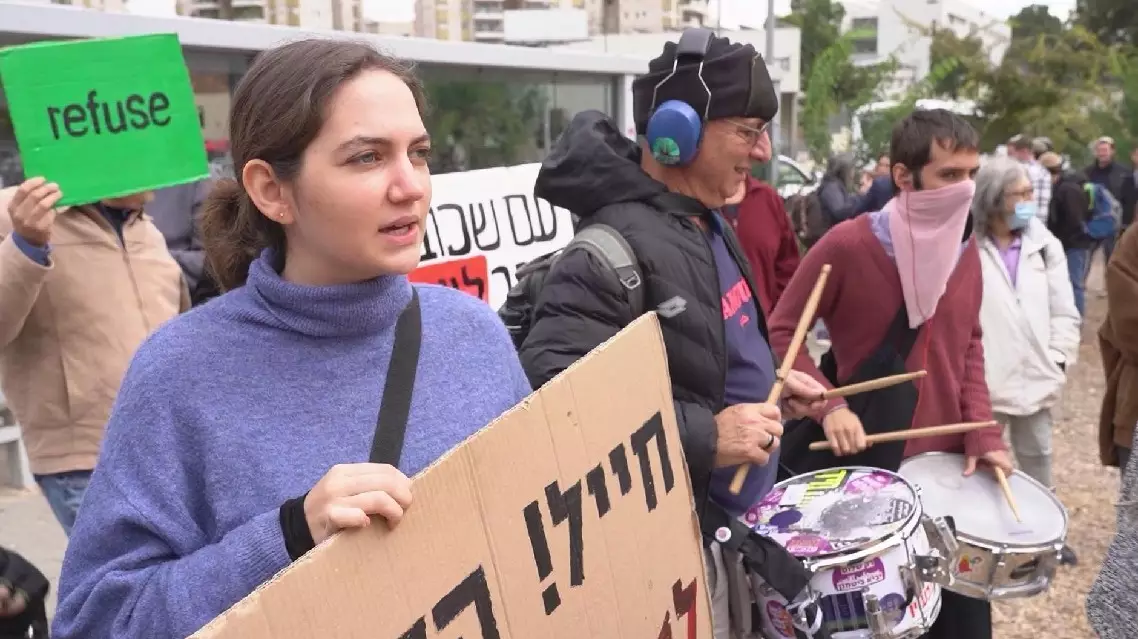
Group of Israeli youths refuse military service amid Gaza conflict