BUCHAREST, Romania (AP) — Pro-Western parties won the most votes in Romania’s parliamentary election, data on Monday shows, and will look to form a coalition government as the European Union country sees a surge of support for far-right nationalists who made huge gains in the country’s legislature.
The leftist Social Democratic Party topped the polls in Sunday’s vote and the far-right nationalist Alliance for the Unity of Romanians (AUR) came in second, ahead of the National Liberal Party. The reformist Save Romania Union party (USR) was fourth. Two smaller far-right nationalist parties also got enough votes to enter parliament.
Click to Gallery

A woman holding a ballot exits a voting booth during the country's parliamentary elections, in Bucharest, Romania, Sunday, Dec. 1, 2024. (AP Photo/Andreea Alexandru)
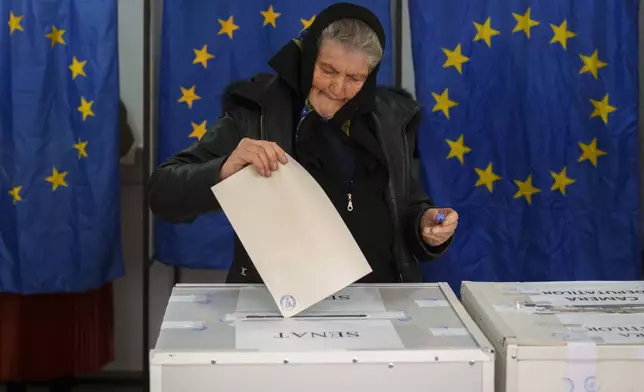
A woman casts her vote in a station with European Union flags as curtains for the cabins, in the country's parliamentary elections, in Baleni, Romania, Sunday, Dec. 1, 2024. (AP Photo/Vadim Ghirda)
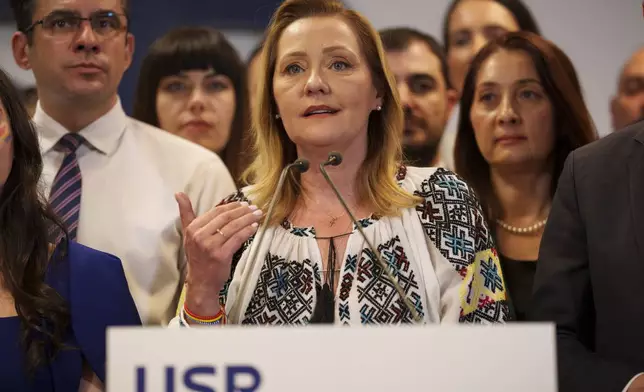
Elena Lasconi, runner up in the presidential runoff, representing the Save Romania Union, or USR, speaks after exit polls were published in the country's parliamentary elections, in Bucharest, Romania, Sunday, Dec. 1, 2024. (AP Photo/Vadim Ghirda)

A child sits between Romanian flags before a speach by George Simion, leader of the Alliance for the Unity of Romanians (AUR) after polls closed during the country's parliamentary elections, in Bucharest, Romania, Sunday, Dec. 1, 2024. (AP Photo/Andreea Alexandru)
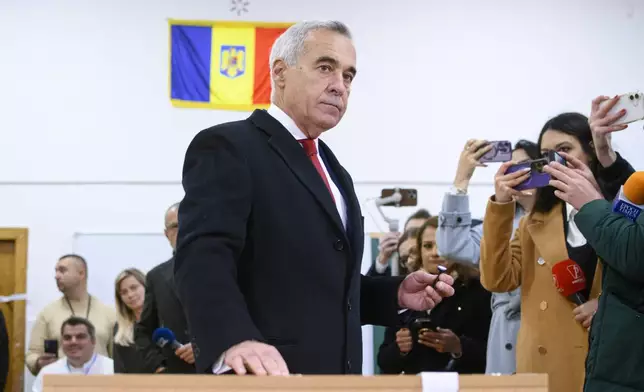
Calin Georgescu, an independent candidate for president who came first after the first round of presidential elections, casts his vote in the country's parliamentary elections, in Mogosoaia, Romania, Sunday, Dec. 1, 2024. (AP Photo/Alexandru Dobre)
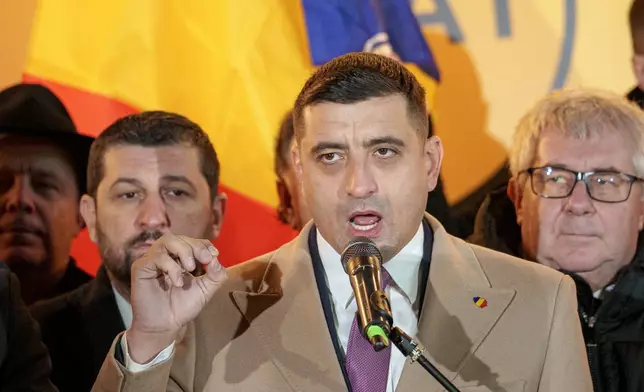
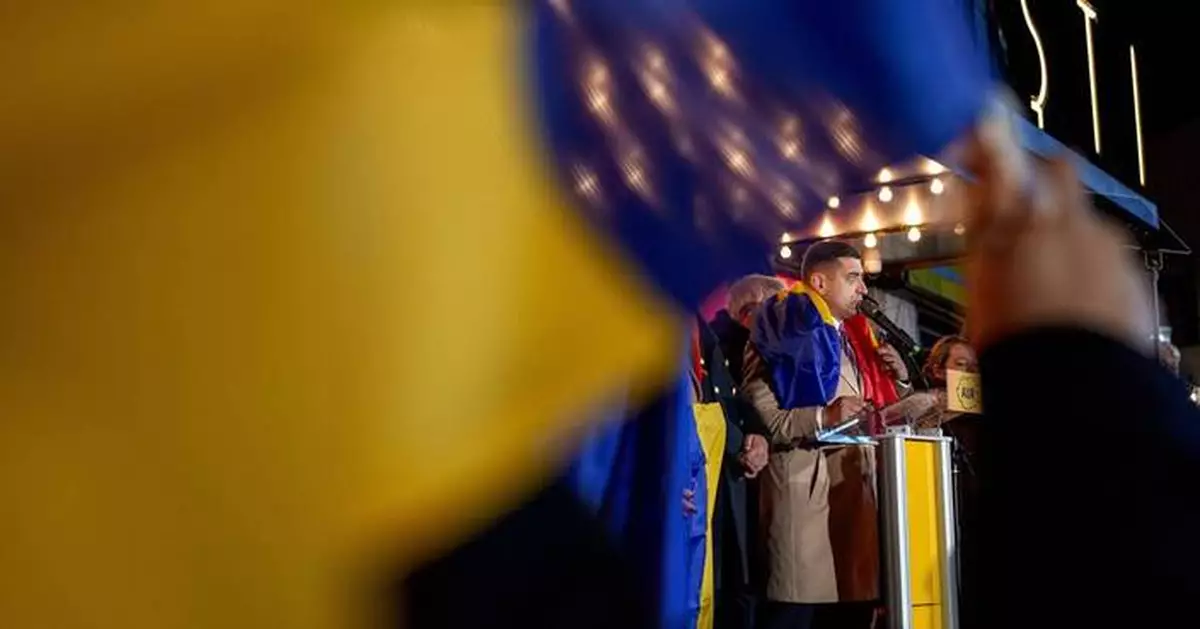
George Simion, leader of the Alliance for the Unity of Romanians (AUR) speaks to media after polls closed during the country's parliamentary elections, in Bucharest, Romania, Sunday, Dec. 1, 2024. (AP Photo/Andreea Alexandru)
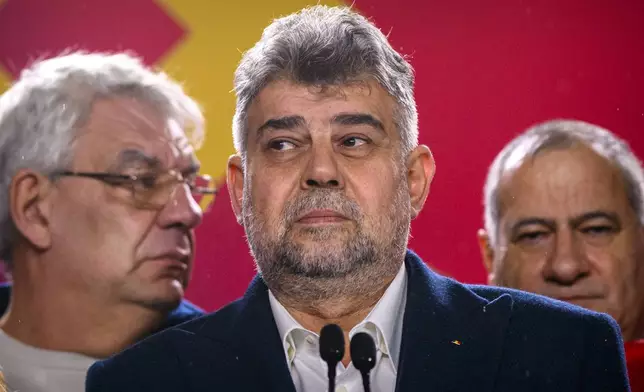
Romanian Prime Minister Marcel Ciolacu, of the Social Democratic Party or PSD, speaks after exit polls in the country's parliamentary elections, in Bucharest, Romania, Sunday, Dec. 1, 2024. (AP Photo/Alexandru Dobre)
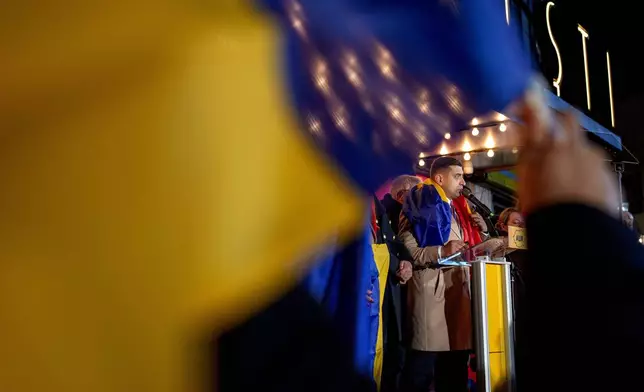
George Simion, leader of the Alliance for the Unity of Romanians (AUR) speaks to media after polls closed during the country's parliamentary elections, in Bucharest, Romania, Sunday, Dec. 1, 2024. (AP Photo/Andreea Alexandru)
The election revealed widespread anti-establishment sentiment in the EU and NATO member country, which is due to hold a presidential runoff on Dec. 8 between far-right populist Calin Georgescu and the USR's Elena Lasconi. The first round plunged Romania into political turmoil and led to allegations of electoral violations and Russian interference.
George Simion, the controversial 38-year-old leader of the AUR and a vocal supporter of U.S. President-elect Donald Trump, said the anti-establishment gains on Sunday amounted to a “watershed moment” for Romania.
“It is a moment when, through our common will, Romania is reborn,” he said. “We are here … generation after generation, proving that nothing can defeat a united nation.”
In 2020, the AUR went from relative obscurity to gaining 9% in a parliamentary vote, allowing it to enter parliament. The party — which proclaims to stand for “family, nation, faith, and freedom” and won the largest share of the vote among Romanians living abroad — doubled its support in Sunday’s vote to 18.2%.
Cristian Andrei, a political consultant based in Bucharest, says the increased parliamentary seats for the far-right will make forming a majority government difficult for the pro-Western parties because they are historically opposition parties and could struggle to reach agreements.
“It’s not a unified majority, it’s a very fragmented one and full of hatred among the parties,” he said. “The European side won a majority ... but a majority is very difficult to build, because all those pro-European parties are not enemies, but they fought a lot in the past."
In 2021, despite historically being Romania’s two main opposition parties that have dominated post-communist politics, the Social Democratic Party and the National Liberal Party formed an unlikely but increasingly strained coalition together with a small ethnic Hungarian party, which exited the Cabinet last year after a power-sharing dispute.
“The real kingmaker will be the next president, that person ... will have a very strong position in negotiating the coalition," Andrei said.
The presidential role in Romania has significant decision-making powers in areas such as national security and foreign policy. They also nominate prime ministerial appointments and can dissolve parliament if it is twice rejected. However, the prime minister is the head of the nation’s government.
Observers say that Georgescu's surprise win in the first round of Romania's presidential election indicates a sharp shift from Romania’s mainstream parties to more populist anti-establishment parties, whose voices have found fertile ground amid high inflation, high cost of living and a sluggish economy. He polled at less than 10% before the race.
The next government will have to make “unpopular decisions about taxes and budget cuts and stuff like that,” which could further bolster the far-right over the next four years, Andrei said.
The success of Georgescu — who has praised Romanian fascist leaders and Russian President Vladimir Putin — has triggered nightly protests throughout Romania by those who oppose his past remarks and view him as a threat to democracy.
Many have attributed to his rapid rise in popularity on the social media platform TikTok. According to a report by Expert Forum, a Bucharest-based think tank, the recent popularity of Georgescu’s account “appears sudden and artificial, similar to his polling results.”
Without naming Georgescu, who declared zero campaign spending, Romania’s top defense body said last week that “a presidential candidate benefited from massive exposure due to preferential treatment” granted by TikTok. Romania has become a “priority target for hostile actions” by Russia, it added. The Kremlin has denied meddling in the election.
The Constitutional Court on Nov. 28 requested a recount of all 9.4 million votes after a former presidential candidate who obtained 1%, lodged a complaint alleging the reformist USR had violated electoral laws against campaign activities on polling day.
The court also postponed on Nov. 29 a decision until Monday on whether to annul the vote.
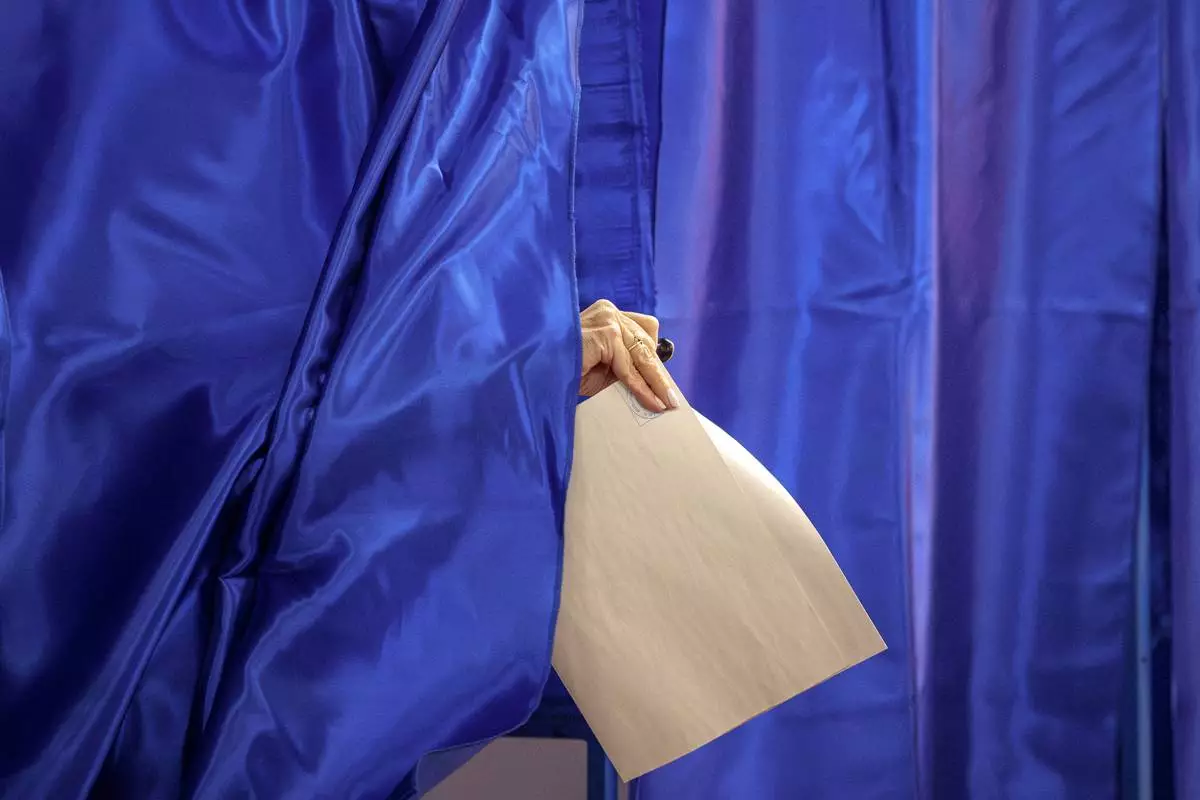
A woman holding a ballot exits a voting booth during the country's parliamentary elections, in Bucharest, Romania, Sunday, Dec. 1, 2024. (AP Photo/Andreea Alexandru)
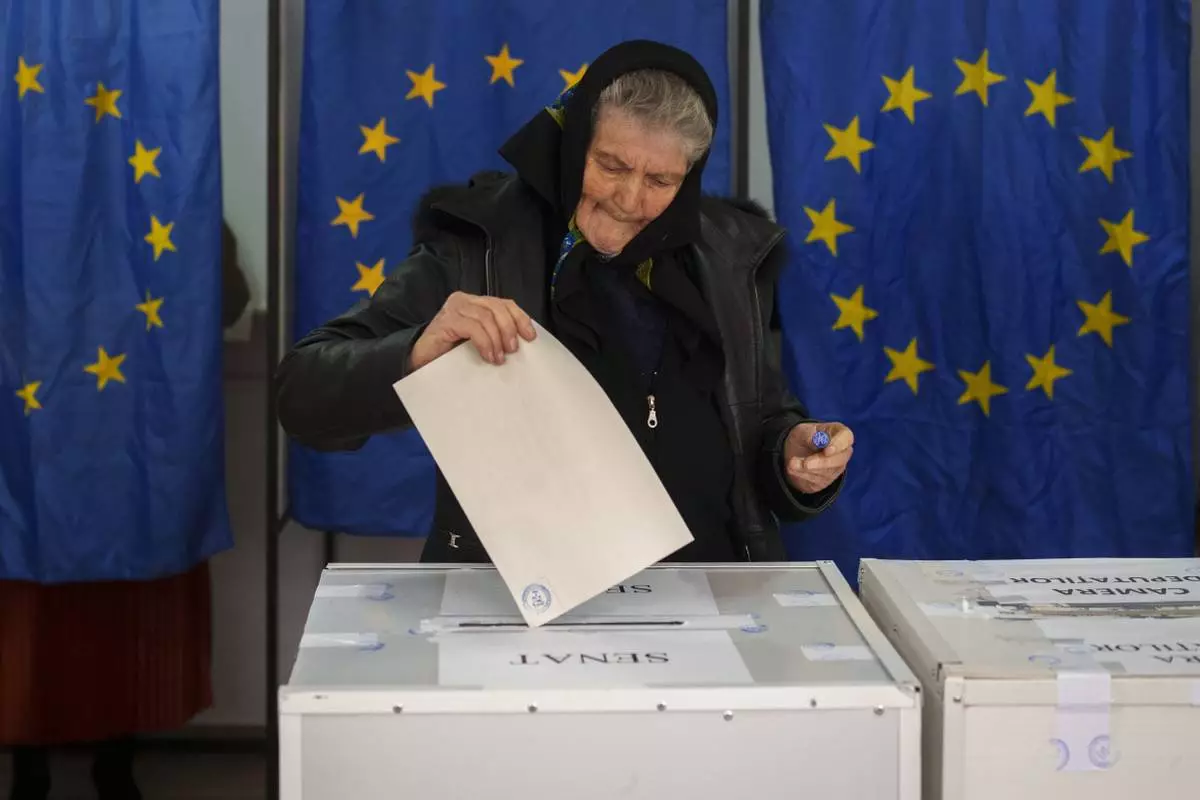
A woman casts her vote in a station with European Union flags as curtains for the cabins, in the country's parliamentary elections, in Baleni, Romania, Sunday, Dec. 1, 2024. (AP Photo/Vadim Ghirda)
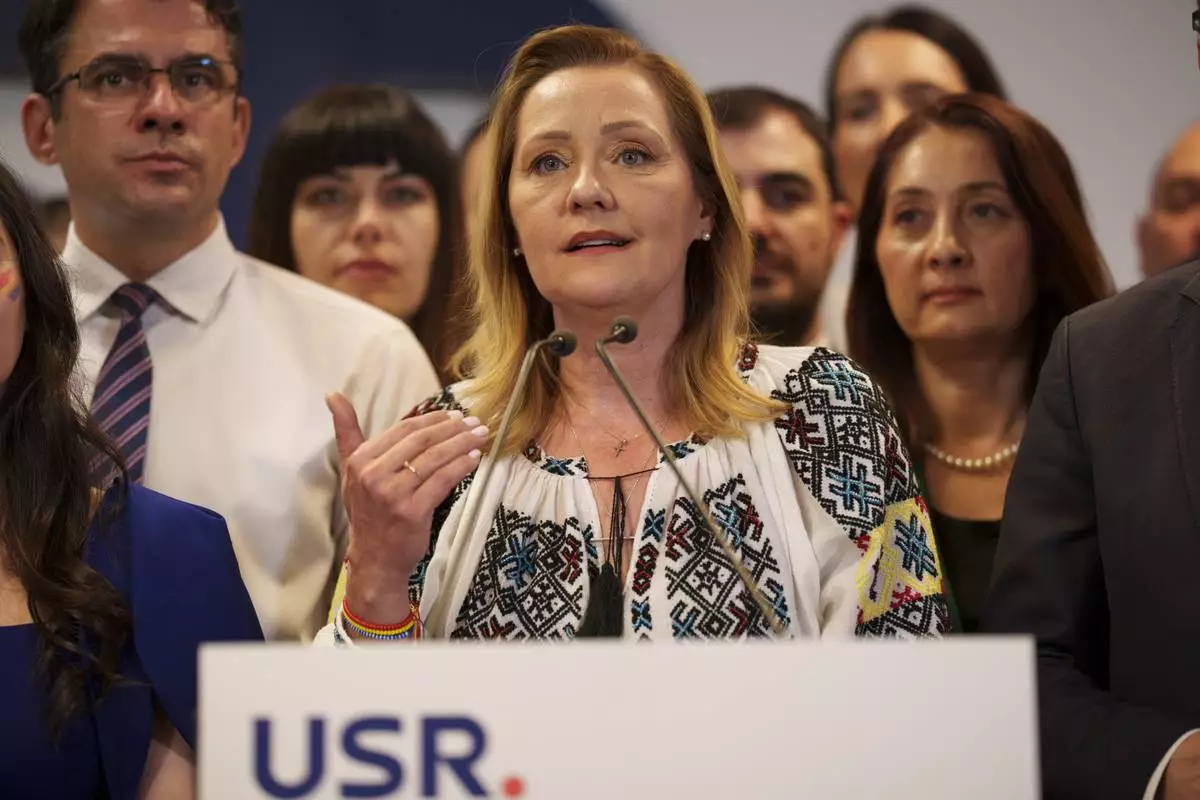
Elena Lasconi, runner up in the presidential runoff, representing the Save Romania Union, or USR, speaks after exit polls were published in the country's parliamentary elections, in Bucharest, Romania, Sunday, Dec. 1, 2024. (AP Photo/Vadim Ghirda)
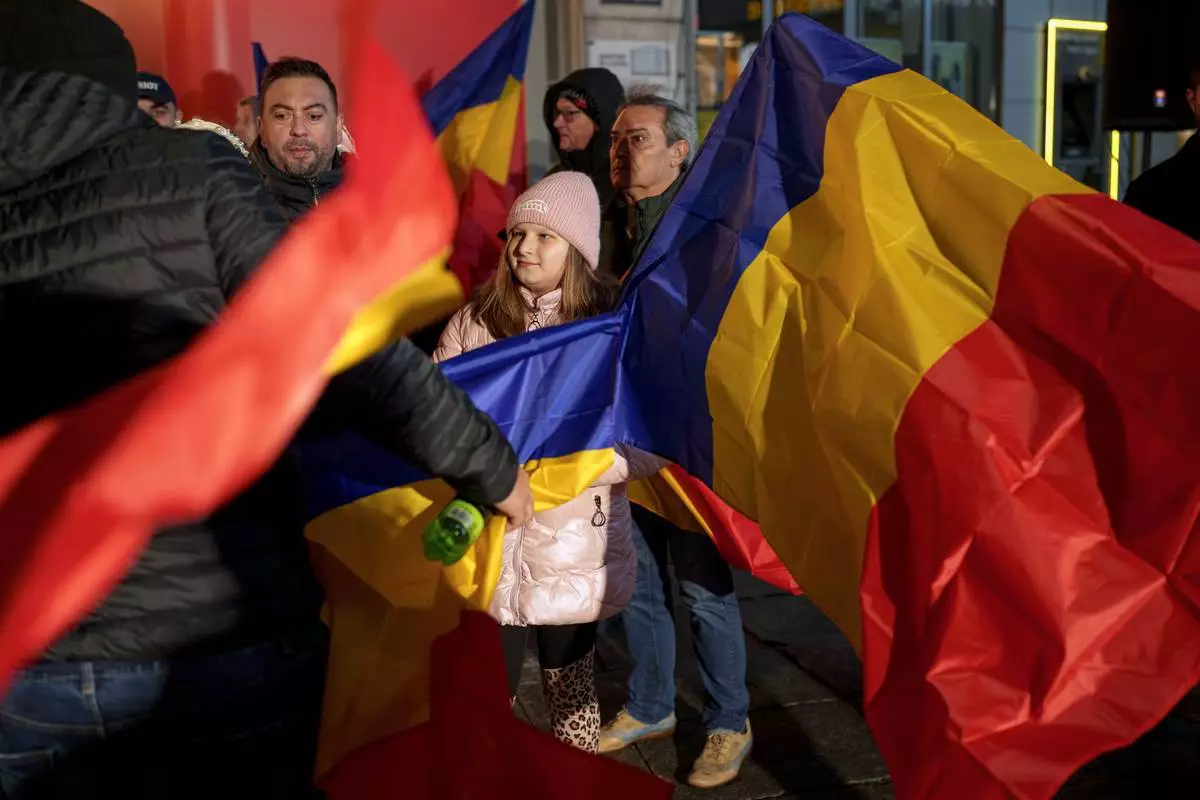
A child sits between Romanian flags before a speach by George Simion, leader of the Alliance for the Unity of Romanians (AUR) after polls closed during the country's parliamentary elections, in Bucharest, Romania, Sunday, Dec. 1, 2024. (AP Photo/Andreea Alexandru)
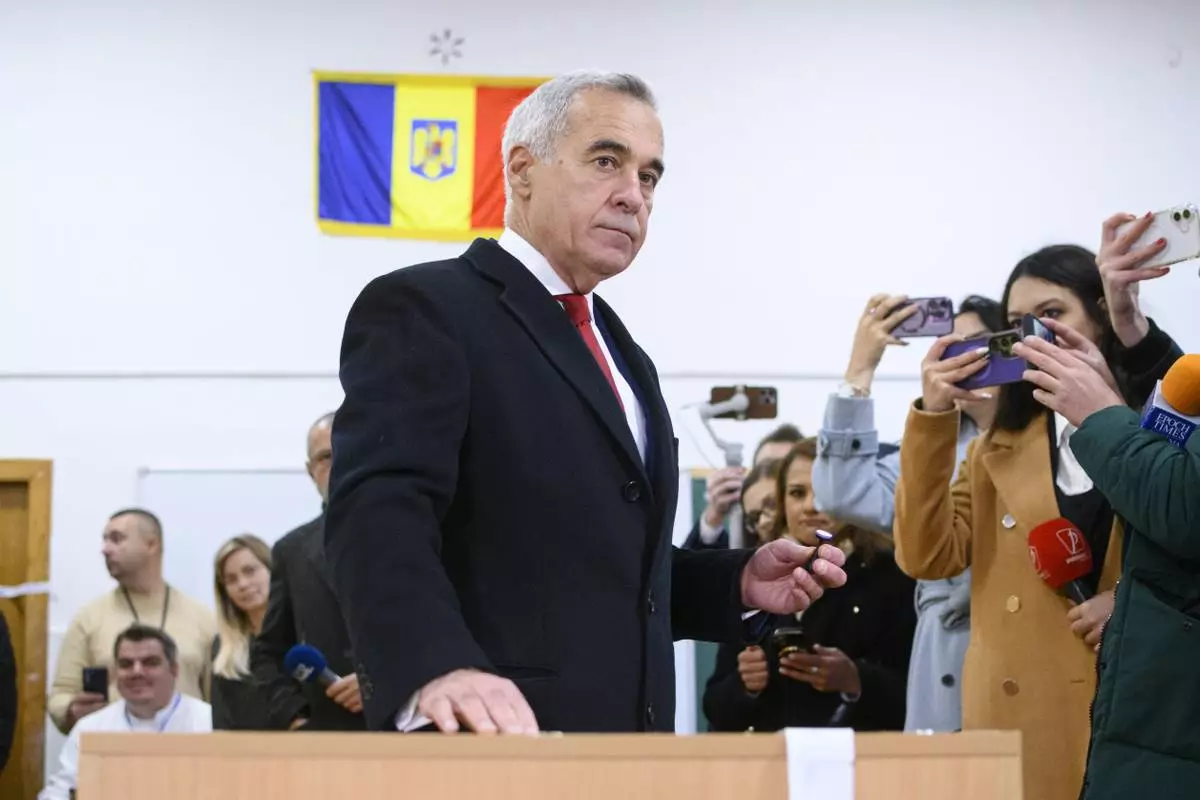
Calin Georgescu, an independent candidate for president who came first after the first round of presidential elections, casts his vote in the country's parliamentary elections, in Mogosoaia, Romania, Sunday, Dec. 1, 2024. (AP Photo/Alexandru Dobre)
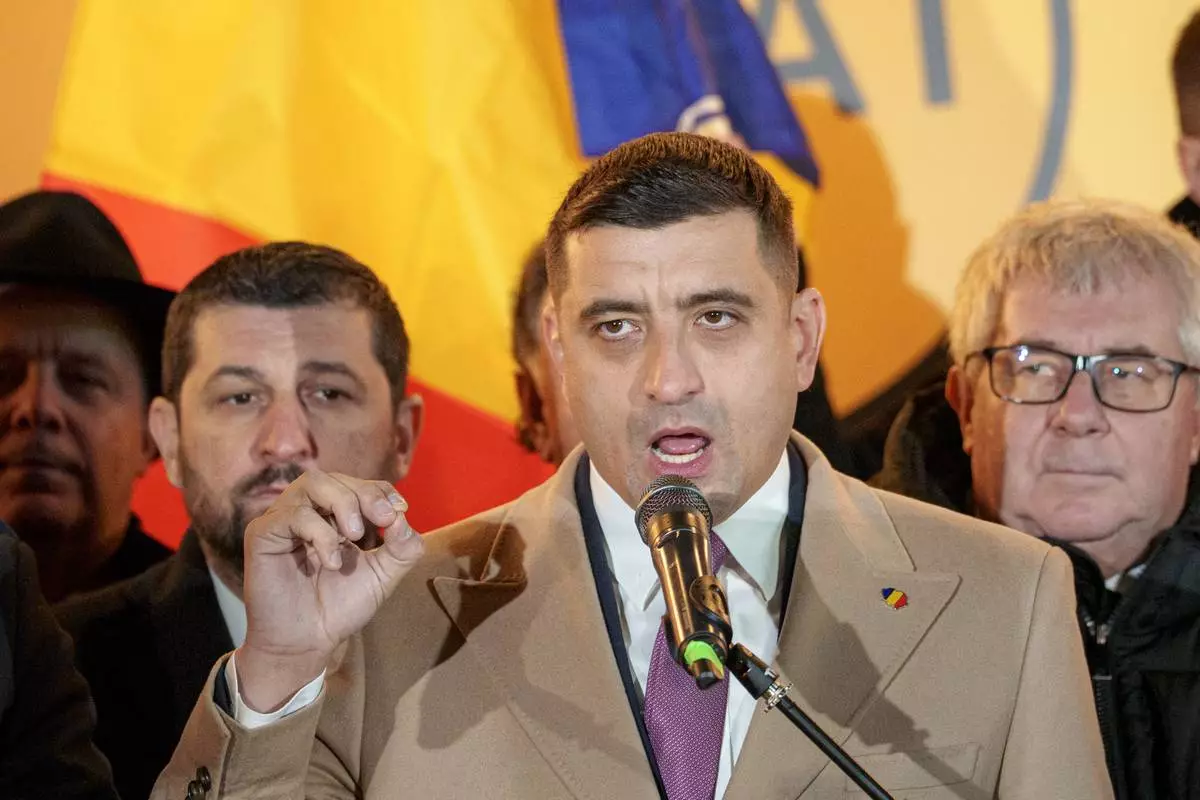
George Simion, leader of the Alliance for the Unity of Romanians (AUR) speaks to media after polls closed during the country's parliamentary elections, in Bucharest, Romania, Sunday, Dec. 1, 2024. (AP Photo/Andreea Alexandru)
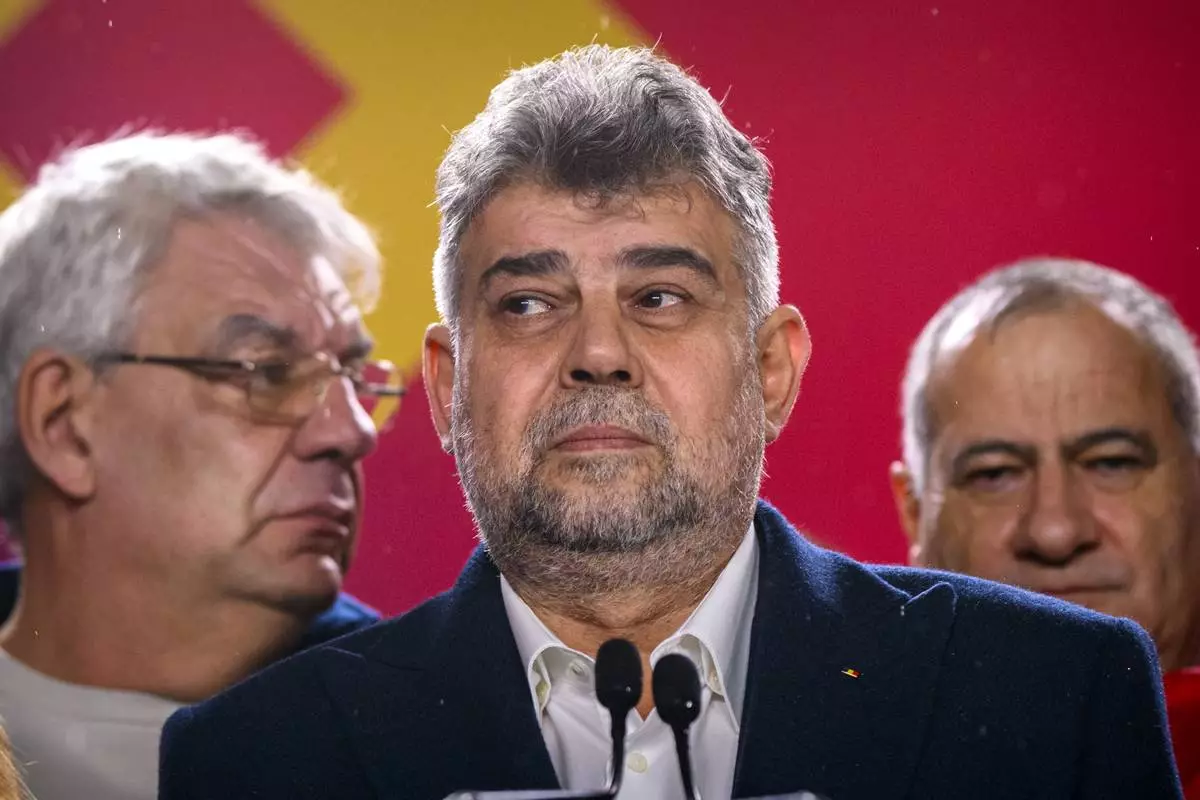
Romanian Prime Minister Marcel Ciolacu, of the Social Democratic Party or PSD, speaks after exit polls in the country's parliamentary elections, in Bucharest, Romania, Sunday, Dec. 1, 2024. (AP Photo/Alexandru Dobre)
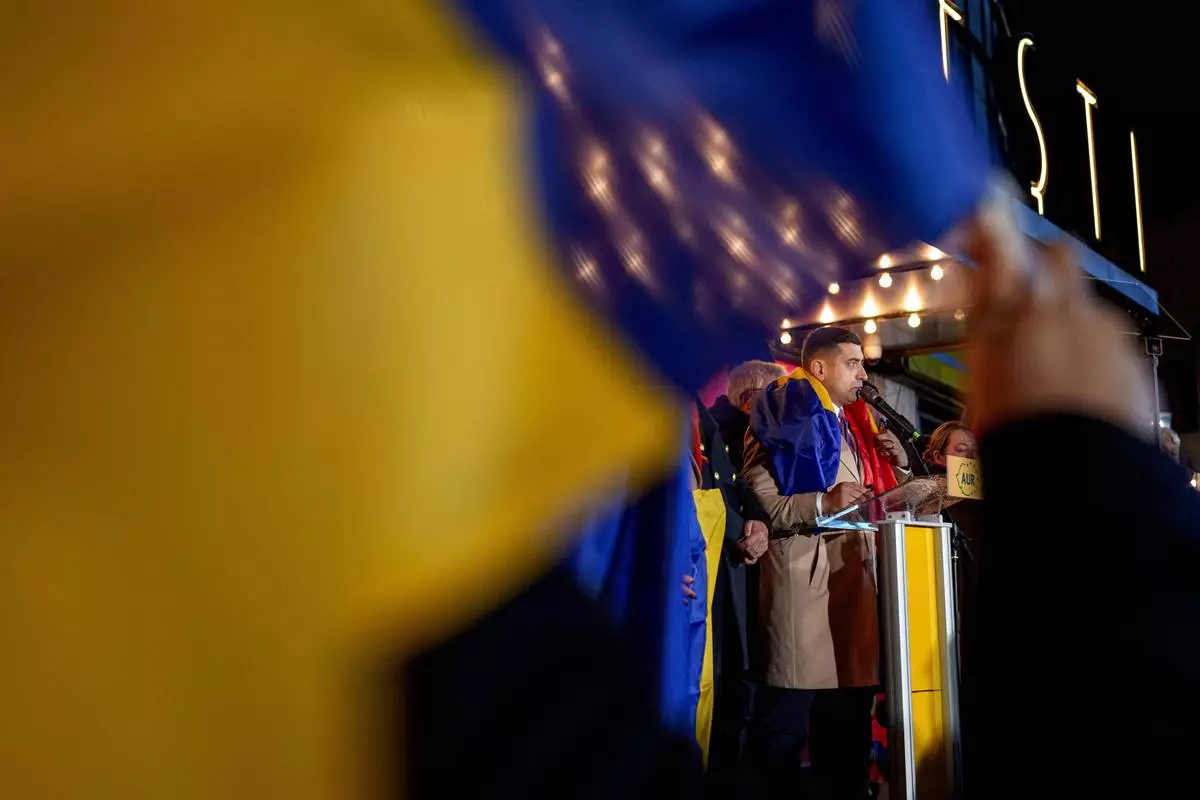
George Simion, leader of the Alliance for the Unity of Romanians (AUR) speaks to media after polls closed during the country's parliamentary elections, in Bucharest, Romania, Sunday, Dec. 1, 2024. (AP Photo/Andreea Alexandru)