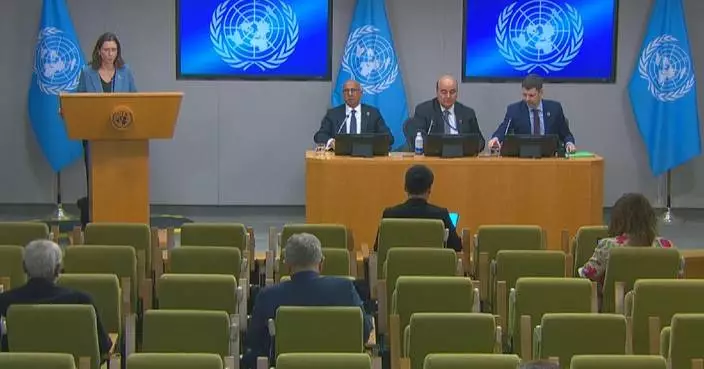
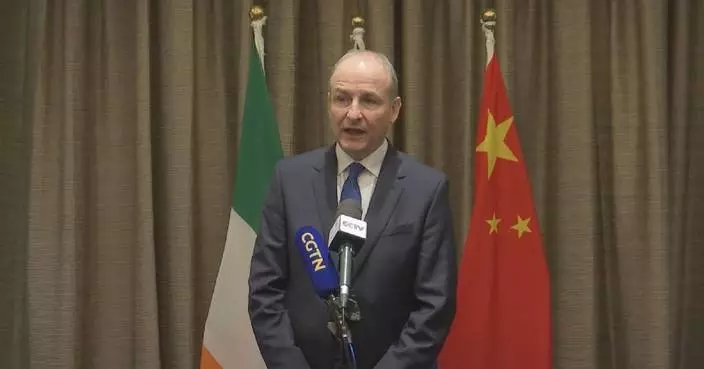
The United States has been trying to prolong the war between Russia and Ukraine because its hegemonic dominance in the world depends on perpetuating conflicts, a Norwegian scholar commented on Thursday.
In November, the U.S. authorized Ukraine to use powerful long-range American weapons inside Russia, which has led to the launch of a new medium-range ballistic missile by Russia on Ukraine and further escalated tensions.
Glenn Diesen, a professor at the University of South-Eastern Norway, said the U.S. move was to keep the war going as bad news from the Ukrainian frontlines mounts.
Furthermore, the move, which came soon after the Democratic Party lost the election, also aimed to sabotage President-elect Donald Trump's ambition to negotiate with Russians, he added.
The U.S. missiles sent to Ukraine would be operated by the Americans, and Ukrainians have very little if anything to do with the launching, so it's like an American attack on Russia, Diesen said, adding that this is why Russians had to do something to retaliate.
"NATO doesn't really have a way to respond to the Oreshnik missile except for introducing nuclear weapons, and nobody wants to do this. So, it looks like the checkmate to the Americans for now at least," he said.
The U.S. has continued to fan the flames because it wants a world order where it remains the sole hegemonic power, which doesn't allow the rise of other countries and relies highly on continuous conflicts to weaken its adversaries, Diesen said.
"When the Cold War came to an end, we had a question of what kind of international system we should build. And the Americans were quite clear. They wanted a system based on hegemony, that is one central power. The idea was if there's only one central power in the world, there will be no competition between great powers, because there will only be one. So this has been the source behind America. If you want to have a system based on hegemonic dominance, you need alliance systems, and alliance systems depend on perpetuating conflicts," he said.
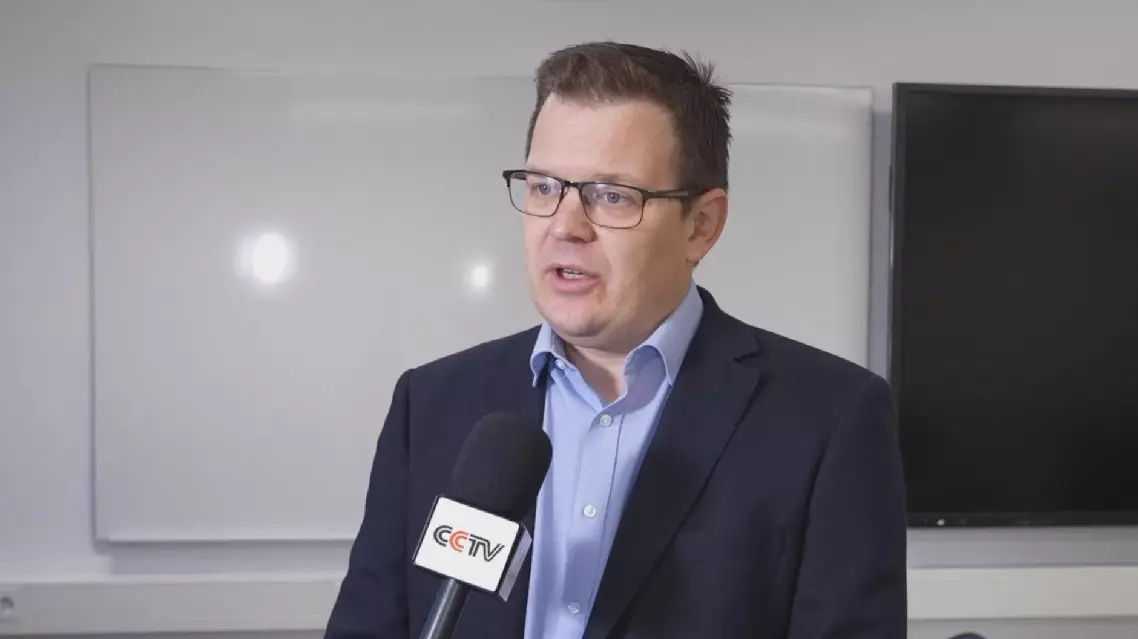
US tries to prolong Ukraine Crisis to maintain hegemonic dominance: Norwegian scholar
US tries to prolong Ukraine Crisis to maintain hegemonic dominance: Norwegian scholar
Yemen's temporary capital Aden is showing resilience and stability in economy, with market operations and public services running smoothly despite a recent escalation in the region's volatile military and political situation.
Currently, various essential supplies, including grain, oil, food and everyday items, are consistently available on the markets.
Public services such as water, electricity and communications are also functioning normally, and shops in multiple commercial districts remain open.
"We went out to buy household items today. The prices were the same. There was no rise in prices," said Mohamed Naguib, a resident.
The current market stability is attributed to the efficient functioning of the transportation and logistics systems, as well as the government's ongoing efforts to enhance market oversight and regulate prices, which have helped reduce market volatility, according to analysts.
"Although there are some rumors about rising tensions, the overall situation in Aden remains stable. The industry and commerce department has continued to monitor the market and rigorously control prices to prevent increases in commodity and food costs," said Amjad Al-Husseini, director of the Aden Governor's Office.
The city's monetary circulation system has also largely maintained balance, with the exchange rate of the local currency against major foreign currencies remaining relatively stable.
Aden has long been a flashpoint in the country's civil war, which erupted in 2014 when Houthi forces seized much of the north, prompting a Saudi-led military intervention in the following year. Tensions in the south have persisted despite repeated power-sharing deals.
The tensions further escalated last month after the United Arab Emirates-backed Southern Transitional Council (STC) seized large swathes of Yemen's oil-rich Hadramout province and the eastern province of Al-Mahrah. Riyadh considers these areas as a "red line" due to their proximity to the Saudi border and their concentration of Yemen's remaining energy reserves.
Last week, airstrikes and ground operations by the Saudi-led coalition forced the STC forces to withdraw from the two provinces.
Formed in 2017, the STC seeks autonomy and eventual independence for southern Yemen. Although it joined the Saudi-led coalition and became part of the Yemen's Presidential Leadership Council in 2022, the group's push for southern self-rule has continued to fuel disputes over power-sharing and control of territory and resources.

Economy, market remain stable in Yemen's Aden despite escalating violence