JOHANNESBURG (AP) — At the Westonaria agricultural park near Bekkersdal, east of Johannesburg, farm workers are busy tilling the soil and planting tomatoes and lettuce. Despite the hive of activity, there is silence around the park.
Most people here are deaf and communicate using sign language.
Click to Gallery

People do farming works at the Westonaria agricultural park near Bekkersdal, east of Johannesburg, South Africa, Friday, Oct. 11, 2024. (AP Photo/Themba Hadebe)

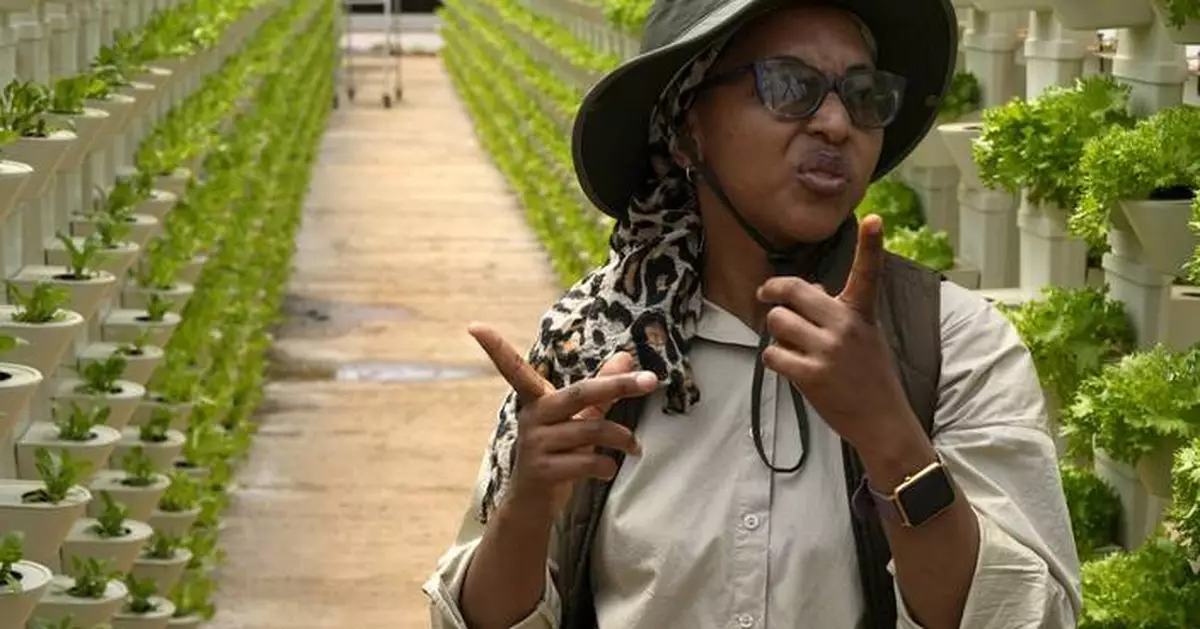
Matebogo Victoria shows lettuce grown from hydroponic farming at the Westonaria agricultural park near Bekkersdal, east of Johannesburg, South Africa, Friday, Oct. 11, 2024. (AP Photo/Themba Hadebe)
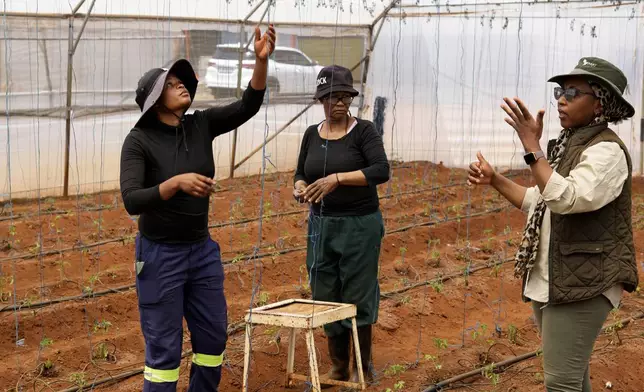
Entrepreneur Matebogo Victoria, right, communicate using a sign language with co-workers as they line up strings for tomatoes at the Westonaria agricultural park near Bekkersdal, east of Johannesburg, South Africa, Friday, Oct. 11, 2024. (AP Photo/Themba Hadebe)
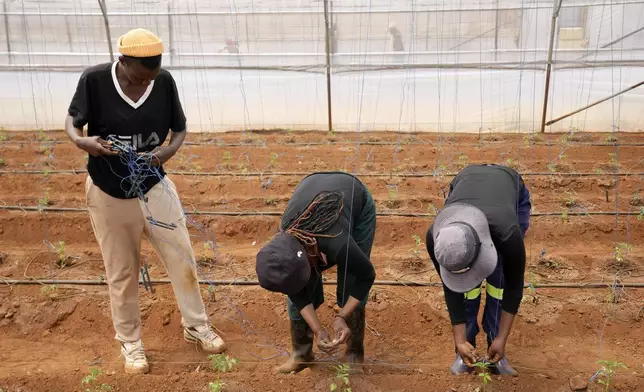
Workers stringing tomatoes at the Westonaria agricultural park near Bekkersdal, east of Johannesburg, South Africa, Friday, Oct. 11, 2024. (AP Photo/Themba Hadebe)

Entrepreneur Matebogo Victoria communicate using a sign language with co-workers at the Westonaria agricultural park near Bekkersdal, east of Johannesburg, South Africa, Friday, Oct. 11, 2024. (AP Photo/Themba Hadebe)

Workers communicate using a sign language whilst tilling the soil at the Westonaria agricultural park near Bekkersdal, east of Johannesburg, South Africa, Friday, Oct. 11, 2024. (AP Photo/Themba Hadebe)
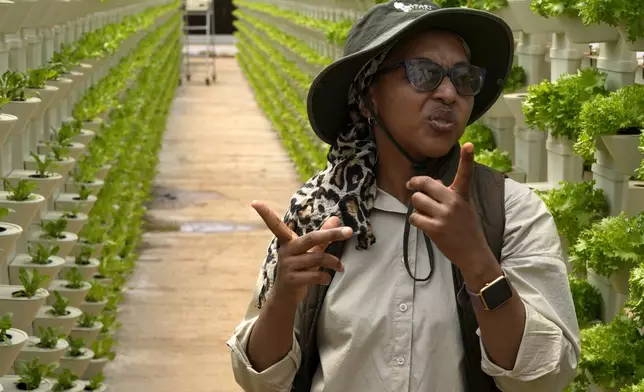
Entrepreneur Matebogo Victoria communicates using a sign language during an interview with The Associated Press at the Westonaria agricultural park near Bekkersdal, east of Johannesburg, South Africa, Friday, Oct. 11, 2024. (AP Photo/Themba Hadebe)
They are members of the Voiceout Deaf farming collective, started by entrepreneur Matebogo Victoria, to create a platform where deaf people can develop their skills in agriculture and find sustainable work.
Victoria, who has a hearing disability herself, understood perfectly the challenges faced by deaf people when competing for opportunities with their counterparts who do not face the same challenge.
While studying at the Tshwane University of Technology in the country's capital, Pretoria, Victoria had to attend classes with a hearing partner, as the university could not make the lectures accessible for her.
It is an all-too-common challenge for deaf people, according to Victoria.
“The government does not have facilities for communication (for deaf people). A lot of deaf people did not finish school. They cannot afford to travel far to reach schools, so normally they decide to leave school early,” said Victoria.
Across South Africa, there are 44 schools for the deaf, offering sign language as a subject and using it as a medium of instruction.
Most are based far from where the students live, which sometimes leads to them dropping out of school as families struggle to afford the transportation costs.
Victoria, who used to work for Standard Bank, decided to leave her corporate job and start Voiceout as a way of allowing deaf people to gain agricultural skills.
“I make things simple for them, it is like a family when they are here. They become very much happy when they are here but when they go outside of this space, it becomes difficult for them,” she said.
For Sibongile Maake, the opportunity to learn agriculture in a space where co-workers can easily communicate with her in sign language was transformational.
It has also afforded her an opportunity to earn a living and rely less on the welfare disability grants that are paid out by the government.
“I’m happy working here, it’s (a) pleasure working here in the farm. I’m working slowly but surely and I am learning while also getting a salary. I can do things for myself, I can afford myself,” said Maake.
Another worker, who said in sign language his name was John, said the challenges of communication reduced his chances of getting a job but the Voiceout Deaf project became a lifeline for him.
“Communication is always a barrier, so coming here at the farm is very much better because they are able to communicate in my own language so it makes life much easier for me,” said John.
He and other workers are responsible for various activities at the farm including cleaning, ploughing, planting and harvesting the produce. The demand for their vegetables was so great that Voiceout Deaf has taken on two other farms, where John and his colleagues also work.
The project is breaking even: the farms currently supply some of the local supermarkets and chain stores with fresh produce.
In other South African provinces like Limpopo and North West, provincial governments are looking at farming as a source of training and employment for disabled people.
The farming sector is emerging as a solace for those with disabilities who also face the dire levels of unemployment in Africa’s most developed economy.
As she goes around giving instructions monitoring activities on the farm, which consists of 10 greenhouses, Victoria laments how difficult it often is for people using sign language to understand the jargon of developed industries.
The Pan South African Language Board is responsible for setting the country's standards for sign language. A constitutionally mandated body responsible for promoting the development and use of South African languages, it recently scored a victory by having Parliament approve sign language as South Africa’s 12th official language.
However, the board sometimes struggles to keep up with fast-evolving business language, Victoria says.
“The difficulty is that sign language has not developed to an extent that it covers technical jargon used in various sectors. It is the same in agriculture. There are certain technical words used that are there in spoken language but not in sign language," she explains.
But beyond changing official attitudes, Victoria wants to inspire change in the farmers themselves.
“We need them (the deaf farmers) to think out of the box about agriculture. They need to be empowered to understand that agriculture is involved in the production of other products like toothpastes, perfumes, medicines. This is where we have to improvise and find ways to communicate with them in the simplest way possible,” said Victoria.
For more news on Africa: https://apnews.com/hub/africa-pulse
The Associated Press receives financial support for global health and development coverage in Africa from the Gates Foundation. The AP is solely responsible for all content. Find AP’s standards for working with philanthropies, a list of supporters and funded coverage areas at AP.org.
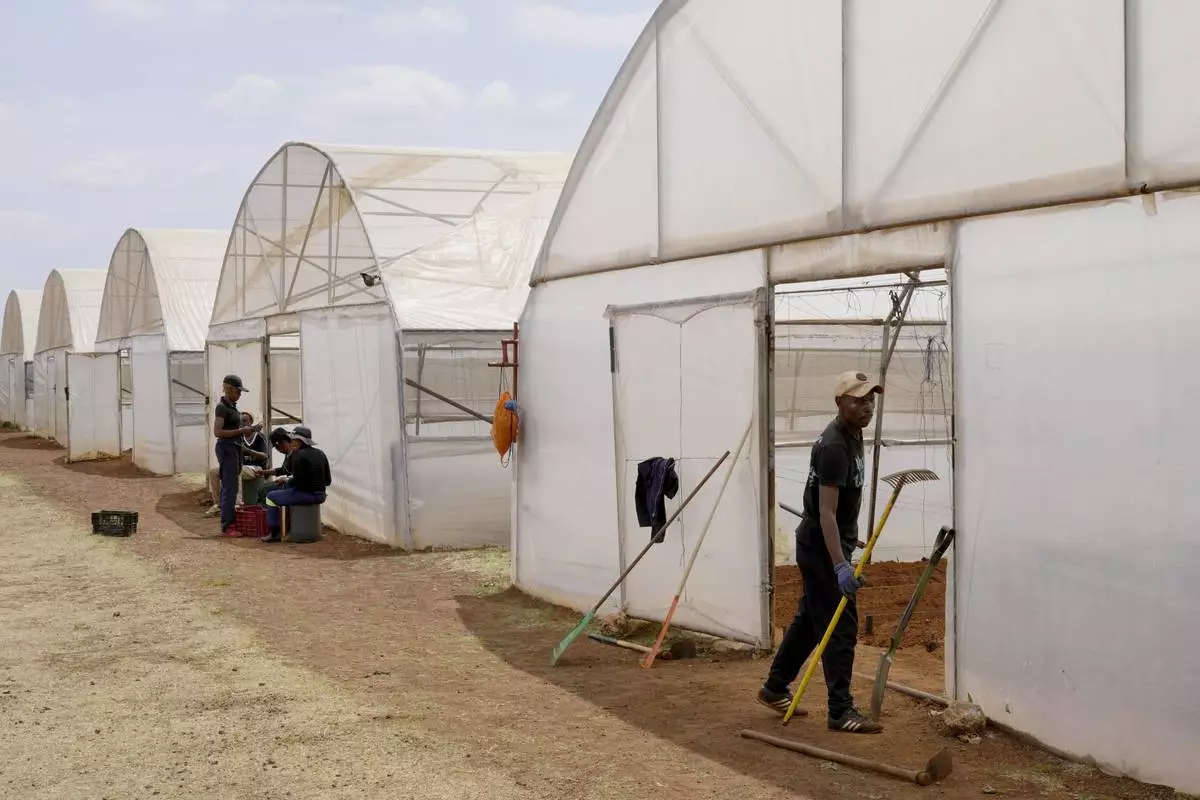
People do farming works at the Westonaria agricultural park near Bekkersdal, east of Johannesburg, South Africa, Friday, Oct. 11, 2024. (AP Photo/Themba Hadebe)
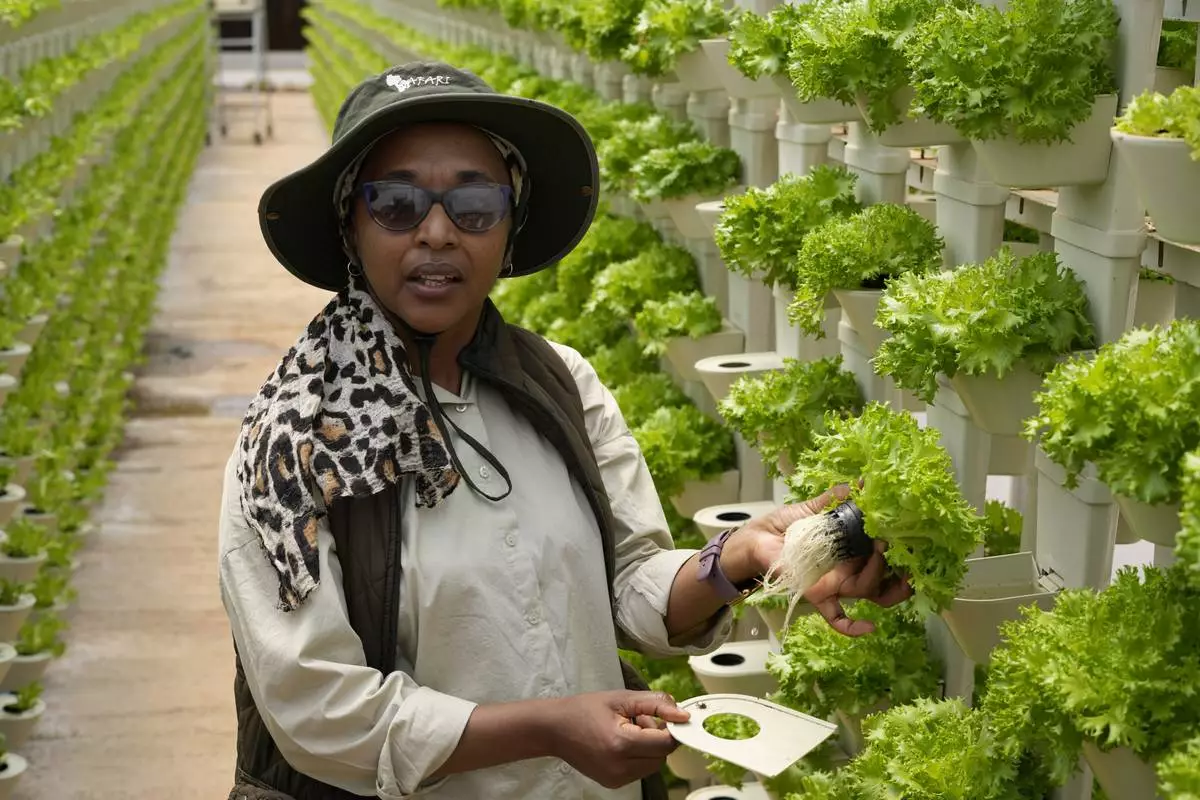
Matebogo Victoria shows lettuce grown from hydroponic farming at the Westonaria agricultural park near Bekkersdal, east of Johannesburg, South Africa, Friday, Oct. 11, 2024. (AP Photo/Themba Hadebe)
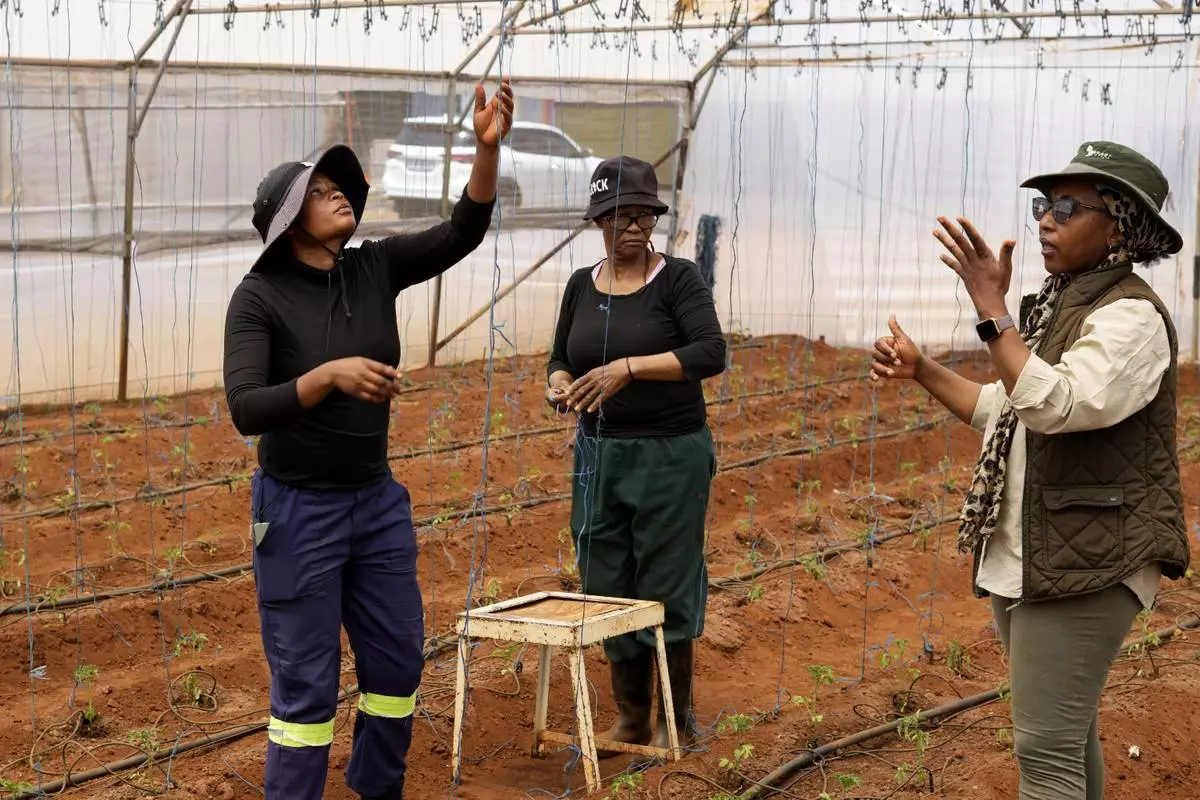
Entrepreneur Matebogo Victoria, right, communicate using a sign language with co-workers as they line up strings for tomatoes at the Westonaria agricultural park near Bekkersdal, east of Johannesburg, South Africa, Friday, Oct. 11, 2024. (AP Photo/Themba Hadebe)
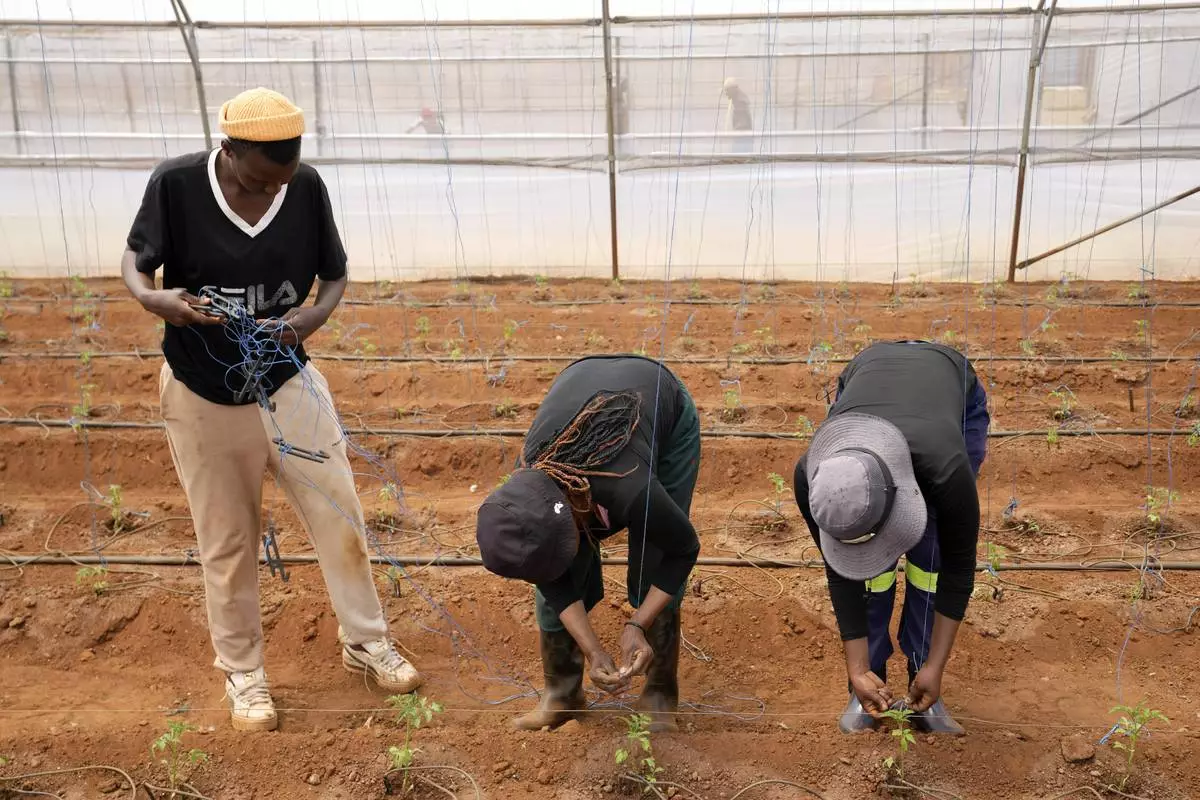
Workers stringing tomatoes at the Westonaria agricultural park near Bekkersdal, east of Johannesburg, South Africa, Friday, Oct. 11, 2024. (AP Photo/Themba Hadebe)
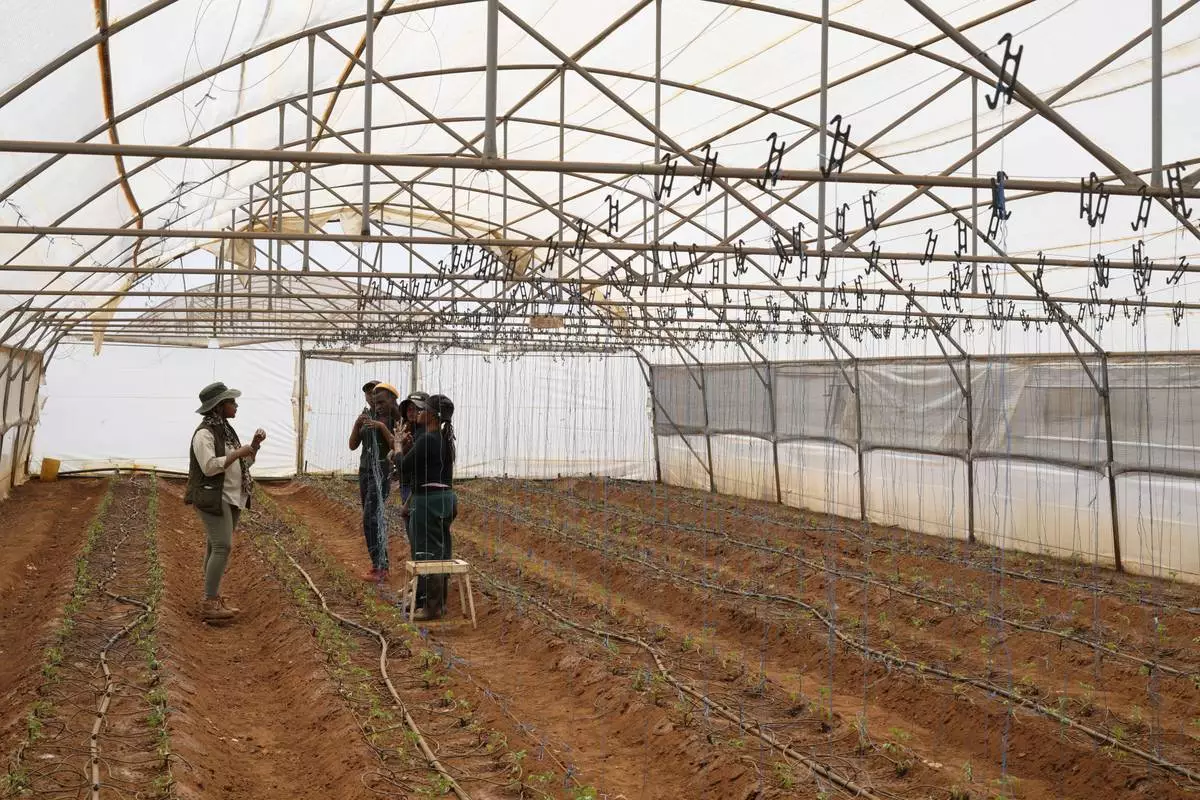
Entrepreneur Matebogo Victoria communicate using a sign language with co-workers at the Westonaria agricultural park near Bekkersdal, east of Johannesburg, South Africa, Friday, Oct. 11, 2024. (AP Photo/Themba Hadebe)
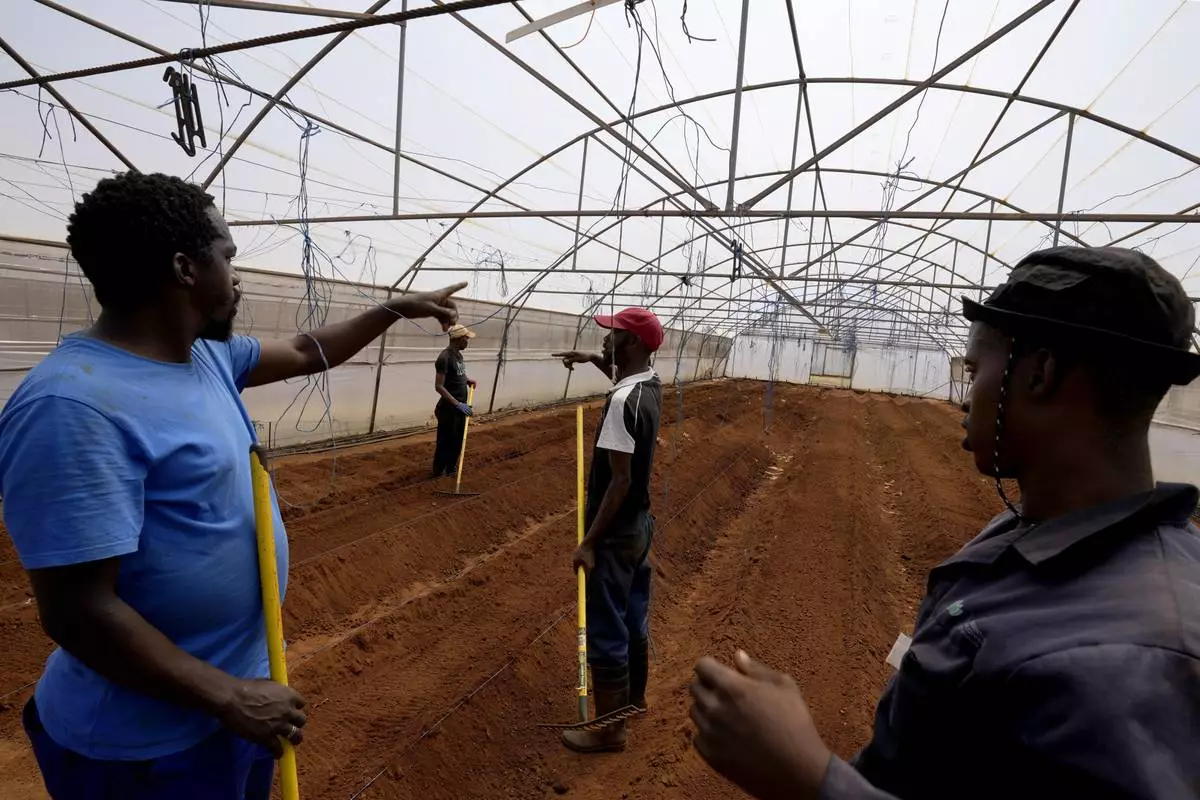
Workers communicate using a sign language whilst tilling the soil at the Westonaria agricultural park near Bekkersdal, east of Johannesburg, South Africa, Friday, Oct. 11, 2024. (AP Photo/Themba Hadebe)
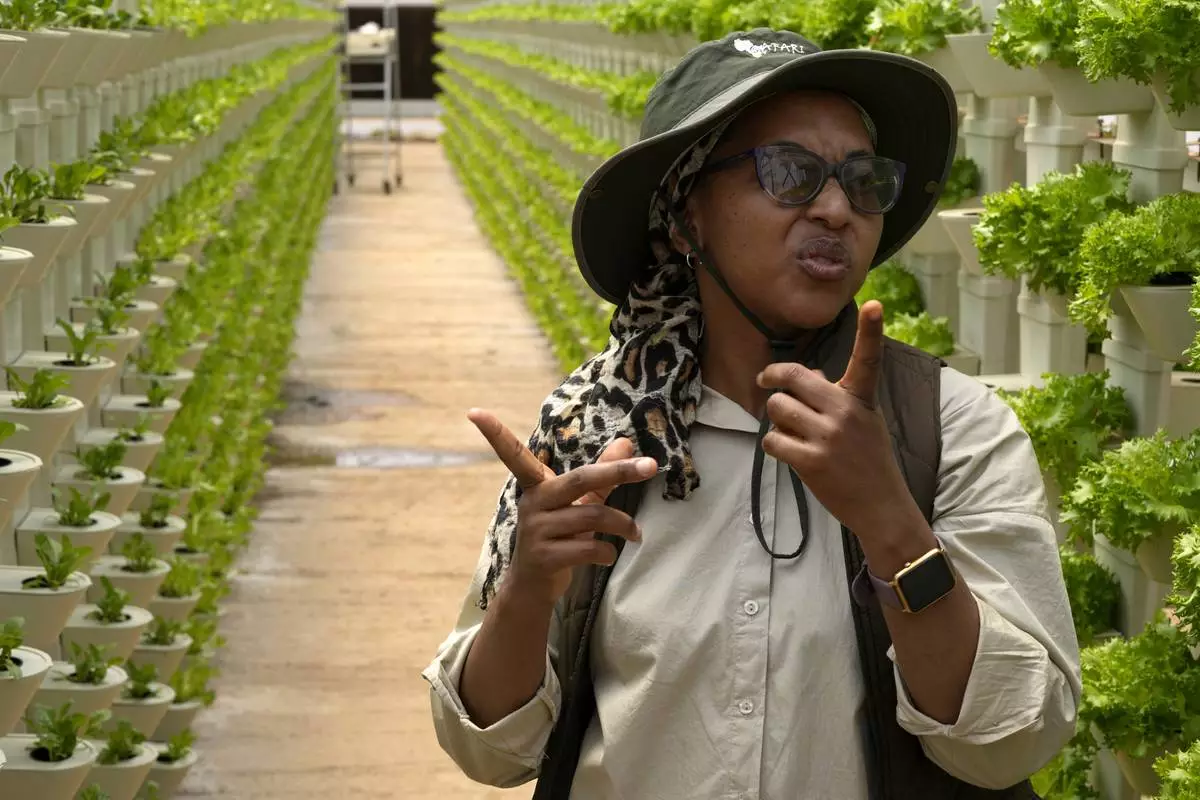
Entrepreneur Matebogo Victoria communicates using a sign language during an interview with The Associated Press at the Westonaria agricultural park near Bekkersdal, east of Johannesburg, South Africa, Friday, Oct. 11, 2024. (AP Photo/Themba Hadebe)