AMSTELVEEN, Netherlands--(BUSINESS WIRE)--Jan 8, 2026--
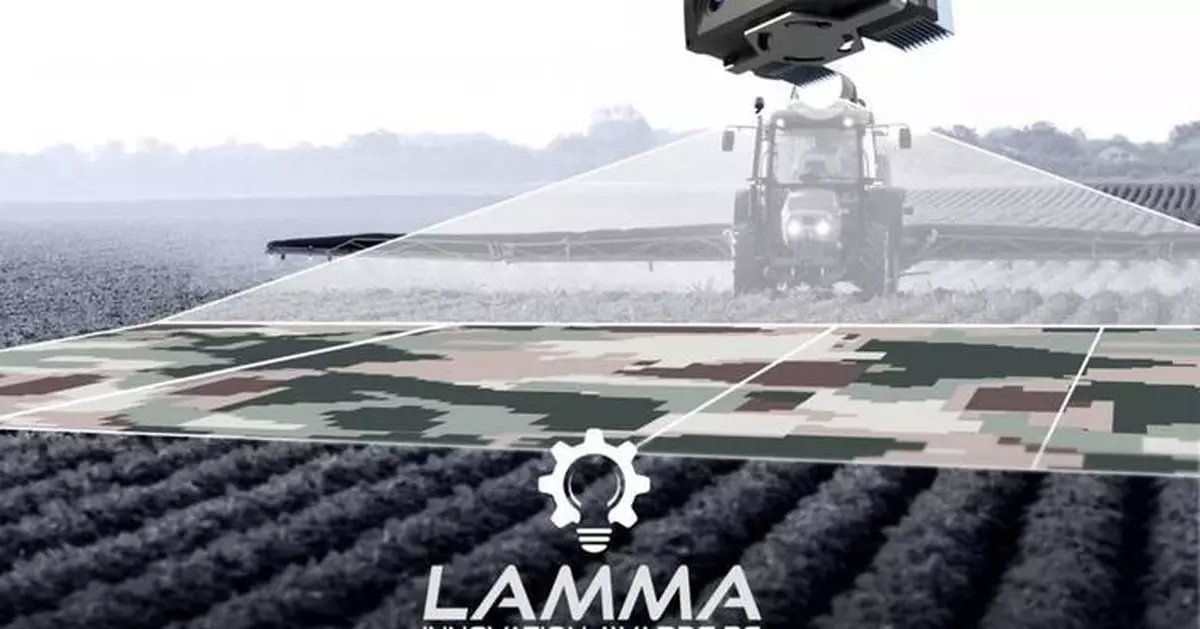
FieldBee, the European leader in high-quality, easy-to-use and affordable precision agriculture technologies, proudly announces that FieldBee Vision has earned global recognition, becoming the Gold Winner in the Digital TechnologyInnovation of the Year category at the LAMMA Innovation Awards 2026. Lamma Show is the UK’s premier agricultural machinery, technology and equipment innovation.
This press release features multimedia. View the full release here: https://www.businesswire.com/news/home/20260107606411/en/
FieldBee Vision is part of the newly launched myFieldBee ecosystem, built to unify FieldBee’s precision farming tools and designed to connect navigation, autosteering, ISOBUS into one unified platform that supports planning, execution, monitoring and reporting.
FieldBee Vision, the first modular retrofit agricultural vision system, is based upon a next-generation camera and AI-powered architecture. It provides scalable and integrated next-gen autonomous steering and real-time variable rate application, through:
By combining RTK, camera vision and AI into one integrated solution, FieldBee Vision supports farmers, OEM manufacturers and robotics companies with the most reliable and intelligent tools to fulfill critical farming operations.
“Precision alone is no longer enough — modern farming demands intelligent autonomy, FieldBee Vision goes beyond accuracy. It unifies sensing, decision-making, field planning, and AI-driven support into one ecosystem. Farmers reduce inputs, improve sustainability, and boost productivity in all conditions, even when working in irregular vineyard rows,” said a Fieldbee spokesperson.
FieldBee Vision combines RGB and NIR cameras with GNSS support to enable precise, stable autosteering in conditions where GPS alone is insufficient, such as changing canopy density, uneven tramlines and narrow or irregular vineyard layouts.
Benefits of FieldBee Vision
FieldBee Vision will be showcased at LAMMA 2026 in Hall 19, Booth 19.644 and will be available for preorder. Official launch is in Q3 2026.
About FieldBee
FieldBee is a European company developing CE- and GTU/TÜV-certified precision farming technologies that make advanced agricultural tools accessible to every farmer. FieldBee’s PowerSteer autosteering systems are known for their easy installation, reliability and precision. The company also offers PowerSteer Ready and ISOBUS-compatible systems designed for a wide range of tractors and implements.
With a focus on usability, strong customer support and an extensive partner network — as well as direct sales to farmers — FieldBee is shaping the future of modern precision agriculture.

FieldBee wins the LAMMA Innovation Award 2026 for Digital Technology Innovation of the Year for the FieldBee Vision (VisionSteer & VisionPro) system
WASHINGTON (AP) — President Donald Trump on Friday called on oil executives to rush back into Venezuela as the White House looks to quickly secure $100 billion in investments to revive the country's ability to fully tap into its expansive reserves of petroleum.
Since the U.S. military raid to capture former Venezuelan leader Nicolás Maduro on Saturday, Trump has quickly pivoted to portraying the move as a newfound economic opportunity for the U.S., seizing tankers carrying Venezuelan oil, and saying the U.S. is taking over the sales of 30 million to 50 million barrels of previously sanctioned Venezuelan oil and will be controlling sales worldwide indefinitely.
Trump used the meeting with oil industry executives to publicly assure them that they need not be skeptical of quickly investing in and, in some cases, returning to the South American country with a history of state asset seizures as well as ongoing U.S. sanctions and decades of political uncertainty.
“You have total safety,” Trump told the executives. “You’re dealing with us directly and not dealing with Venezuela at all. We don’t want you to deal with Venezuela.”
Trump added: “Our giant oil companies will be spending at least $100 billion of their money, not the government’s money. They don’t need government money. But they need government protection."
The president said the security guarantee would come from working with Venezuelan leaders and their people, instead of deploying U.S. forces. He also said the companies would “bring over some security.”
Trump played up the potential for major oil companies to strike big, while acknowledging that the oil executives were sharp people who were in the business of taking risk, a quiet nod to the reality that he's asking for big investment in Venezuela at a moment when the country is teetering and economic collapse is not out of the question.
Trump welcomed the oil executives to the White House after U.S. forces earlier Friday seized their fifth tanker over the past month that has been linked to Venezuelan oil. The action reflected the determination of the U.S. to fully control the exporting, refining and production of Venezuelan petroleum.
It's all part of a broader push by Trump to keep gasoline prices low. At a time when many Americans are concerned about affordability, the incursion in Venezuela melds Trump’s assertive use of presidential powers with an optical spectacle meant to convince Americans that he can bring down energy prices.
The White House said it invited oil executives from 17 companies, including Chevron, which still operates in Venezuela, as well as ExxonMobil and ConocoPhillips, which both had oil projects in the country that were lost as part of a 2007 nationalization of private businesses under Maduro’s predecessor, Hugo Chávez.
While some wildcatters and other companies expressed enthusiasm for going into Venezuela, others spoke with a degree of carefulness about the legal and political barriers that still exist.
“If we look at the commercial constructs and frameworks in place today in Venezuela, today it's un-investable,” said Darren Woods, the ExxonMobil CEO. “And so significant changes have to be made to those commercial frameworks, the legal system, there has to be durable investment protections and there has to be change to the hydrocarbon laws in the country.”
Other companies invited included Halliburton, Valero, Marathon, Shell, Singapore-based Trafigura, Italy-based Eni and Spain-based Repsol as well as a vast swath of domestic and international companies with interests ranging from construction to the commodity markets.
Large U.S. oil companies have so far largely refrained from affirming investments in Venezuela as contracts and guarantees need to be in place. Trump has suggested that the U.S. would help to backstop any investments.
Venezuela’s oil production has slumped below one million barrels a day. At the heart of Trump's challenge to turning that around is convincing oil companies that his administration has a stable relationship with Venezuela’s interim President Delcy Rodríguez, and can provide protections for companies entering the market.
Trump, however, is confident that Big Oil is ready to take the plunge, but allowed that it's not without risk.
“You know, these are not babies,” Trump said of the oil industry executives. “These are people that drill oil in some pretty rough places. I can say a couple of those places make Venezuela look like a picnic.”
The president also offered a new rationale for ousting Maduro and demanding the U.S. maintain oversight of its Venezuelan oil industry, saying, “One thing I think everyone has to know is that if we didn’t do this, China or Russia would have done it."
While Rodriguez has publicly denounced Trump and the ouster of Maduro, the U.S. president has said that to date Venezuela's interim leader has been cooperating behind the scenes with his administration.
Tyson Slocum, director of the consumer advocacy group Public Citizen’s energy program, criticized the gathering and called the U.S. military’s removal of Maduro “violent imperialism." Slocum added that Trump’s goal appears to be to “hand billionaires control over Venezuela’s oil.”
Meanwhile, the United States and Venezuelan governments said Friday they were exploring the possibility of restoring diplomatic relations between the two countries, and a delegation from the Trump administration arrived in the South American nation Friday.
The small team of U.S. diplomats and diplomatic security officials traveled to Venezuela to make a preliminary assessment about the potential reopening of the U.S. Embassy in Caracas, the State Department said in a statement.
Trump also announced Friday he’d meet next week, either Tuesday or Wednesday, with Maria Corina Machado, the leader of Venezuela’s opposition party, as well as with Colombian President Gustavo Petro in early February.
Trump has declined to back Machado, even as the U.S. and most observers determined her opposition movement defeated Maduro in Venezuela's last election. Trump said following Maduro's ouster that Machado “doesn’t have the support within, or the respect within, the country” to lead.
Trump called on the Colombian leader to make quick progress on stemming flow of cocaine into the U.S.
Trump, following the ouster of Maduro, had made vague threats to take similar action against Petro, describing the Colombia leader as a “sick man who likes making cocaine and selling it to the United States”
Trump abruptly changed his tone Wednesday about his Colombian counterpart after a friendly phone call in which he invited Petro to visit the White House.
The seeming détente between Petro, a leftist, and Trump, a conservative, appears to reflect that their shared interests override their deep differences.
For Colombia, the U.S. remains key to the military’s fight against leftist guerrillas and drug traffickers. Washington has provided Bogotá with roughly $14 billion in the last two decades.
For the U.S., Colombia, the world's biggest cocaine producer, remains the cornerstone of its counternarcotics strategy abroad, providing crucial intelligence used to interdict drugs in the Caribbean. —
Associated Press writers Matthew Daly and Seung Min Kim contributed to this report.
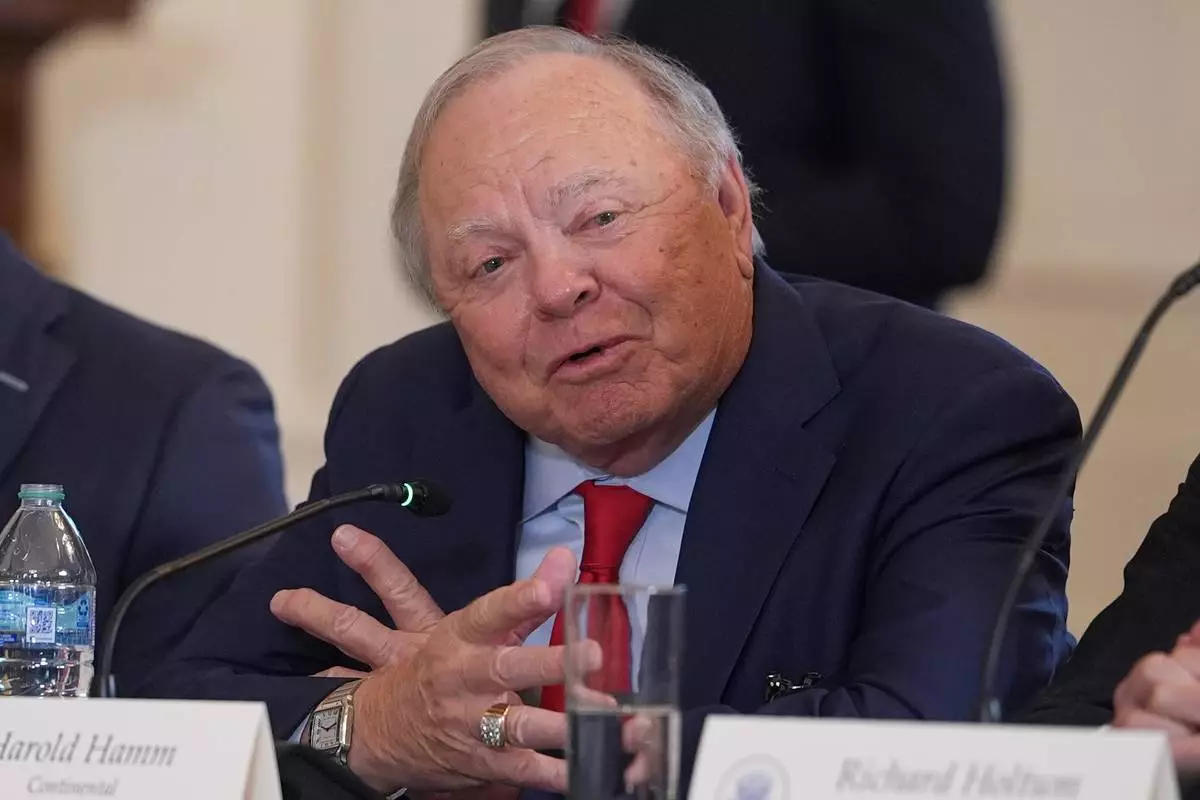
Harold Hamm, founder and chairman of Continental Resources, speaks during a meeting with President Donald Trump and oil executives in the East Room of the White House, Friday, Jan. 9, 2026, in Washington. (AP Photo/Evan Vucci)
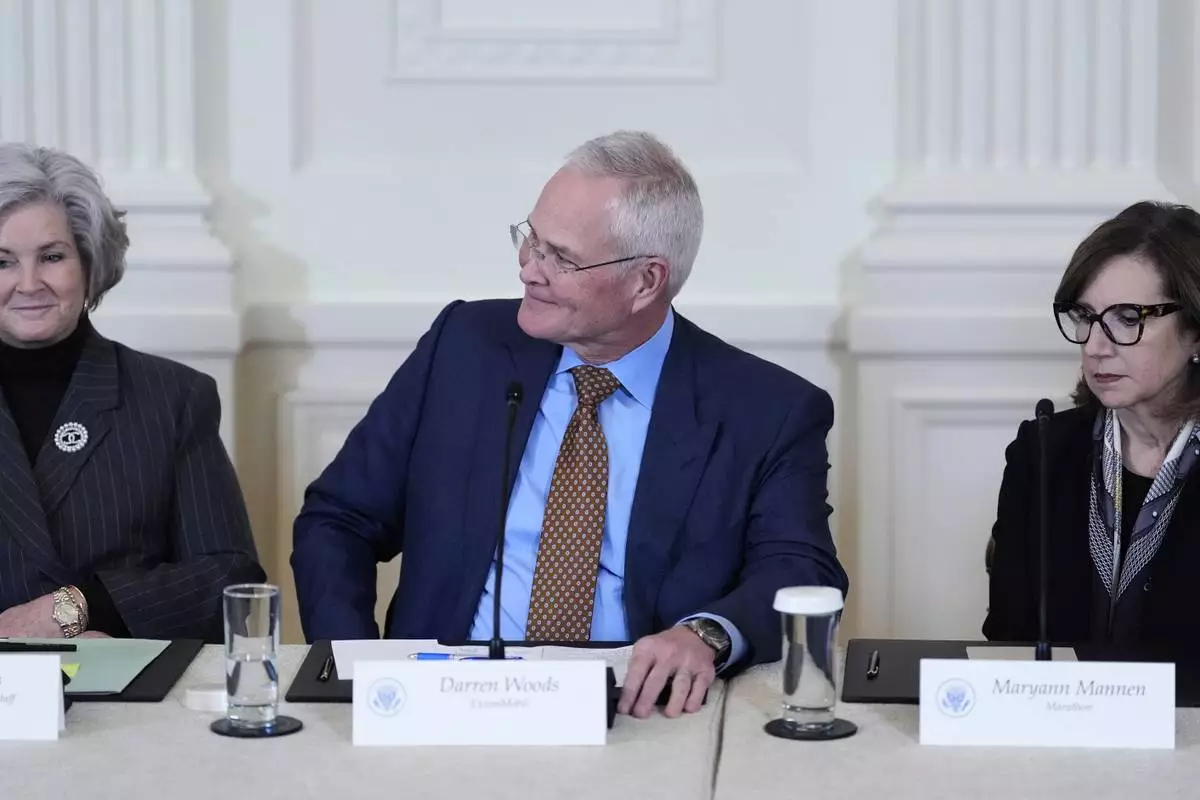
Chief Executive Officer and Chairman of ExxonMobil Darren Woods greets President Donald Trump, not pictured, with White House Chief of Staff Susie Wiles, seated left, and Chairman, President and Chief Executive Officer of Marathon Petroleum Maryann Mannen, seated right, during a meeting in the East Room of the White House, Friday, Jan. 9, 2026, in Washington. (AP Photo/Alex Brandon)
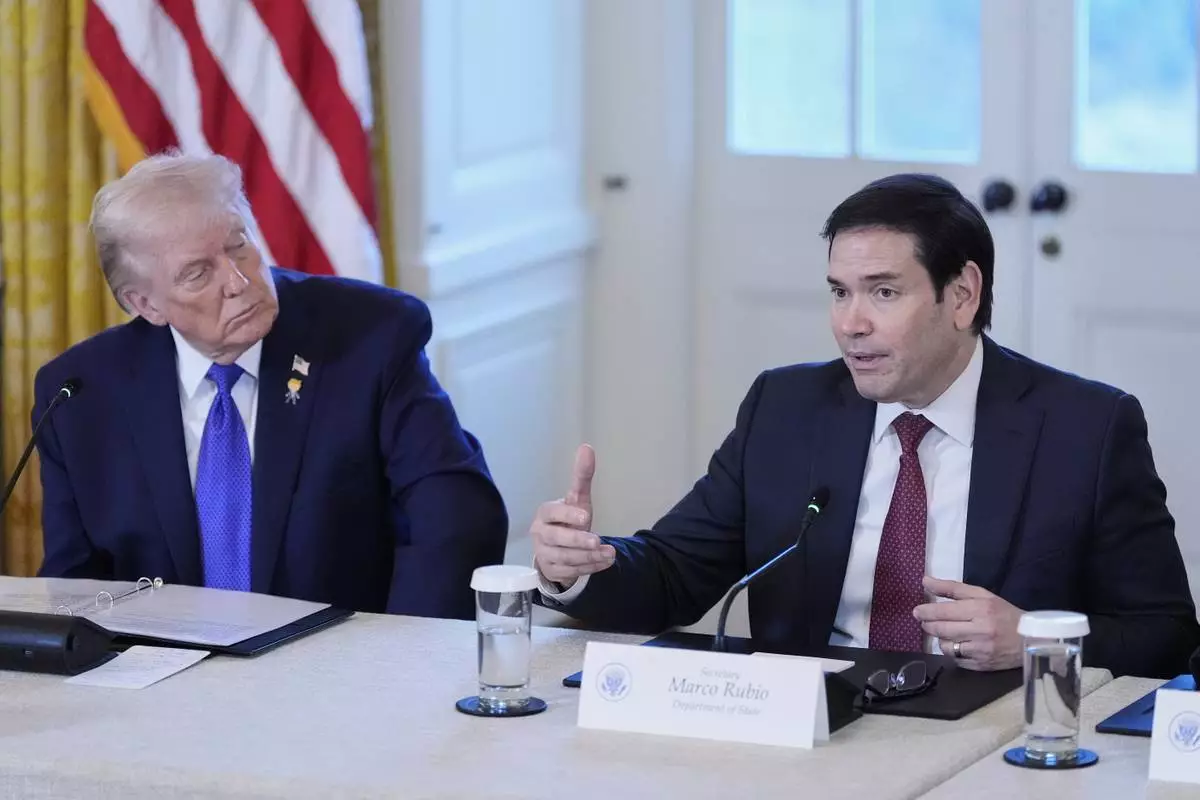
President Donald Trump listens to Sec. of State Marco Rubio speak during a meeting with oil executives in the East Room of the White House, Friday, Jan. 9, 2026, in Washington. (AP Photo/Alex Brandon)
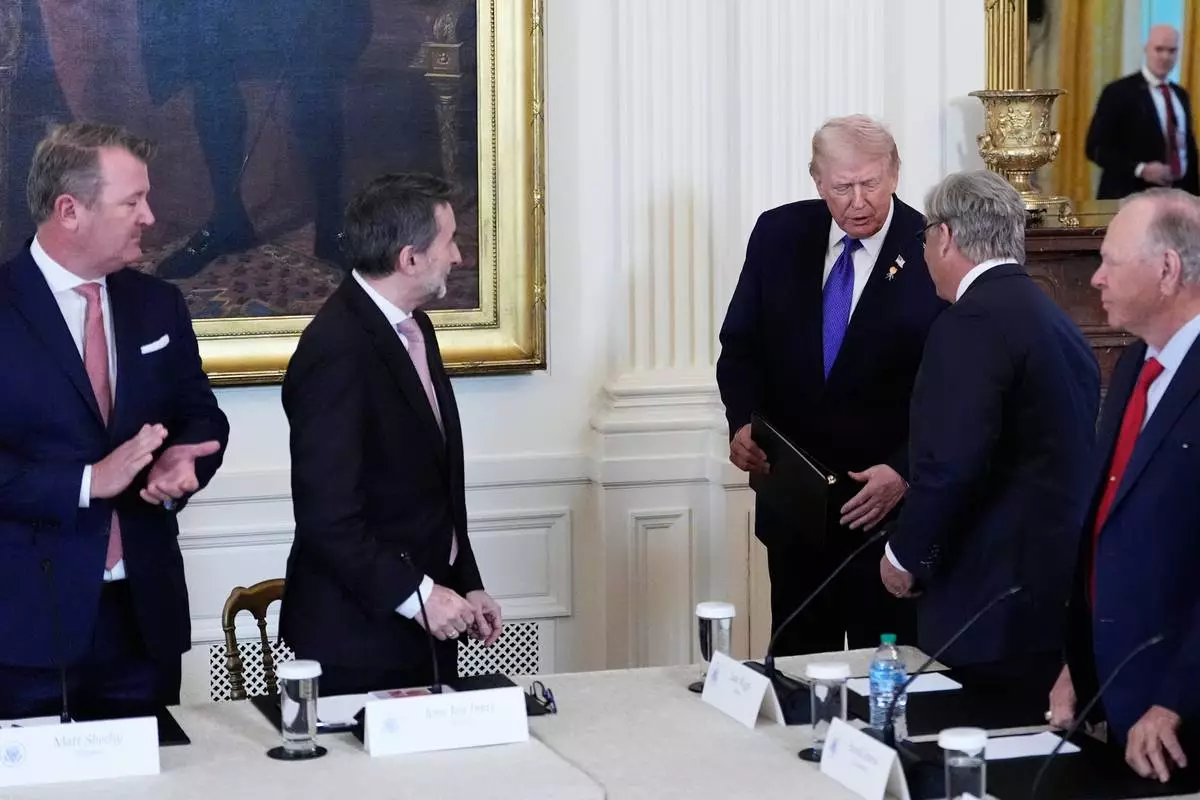
President Donald Trump talks with Valero Chief Executive Officer and President Lane Riggs, second from right, while Tallgrass Energy President and Chief Executive Officer Matt Sheehy, far left, Repsol Chief Executive Officer Josu Jon Imaz, second from left, and Chairman and Chief Executive Officer of Continental Resources Harold Hamm, far right, look on during a meeting in the East Room of the White House, Friday, Jan. 9, 2026, in Washington. (AP Photo/Alex Brandon)
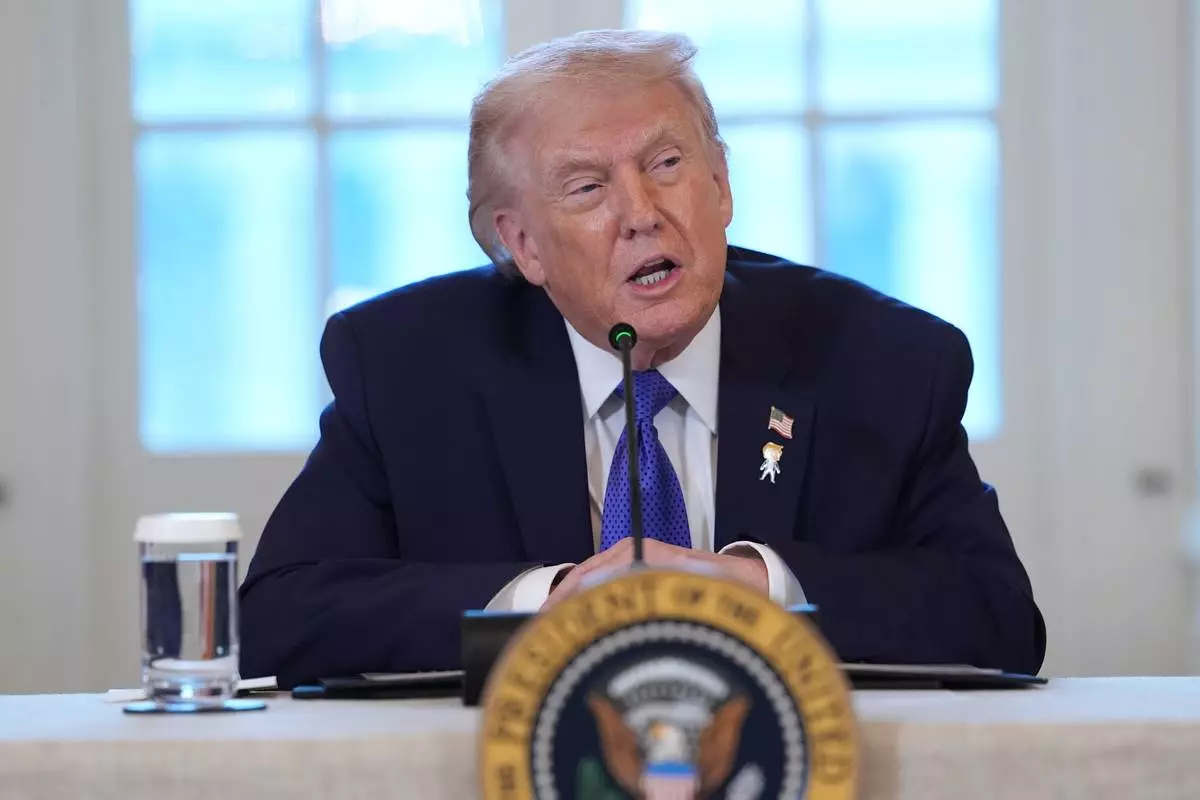
President Donald Trump speaks during a meeting with oil executives in the East Room of the White House, Friday, Jan. 9, 2026, in Washington. (AP Photo/Evan Vucci)
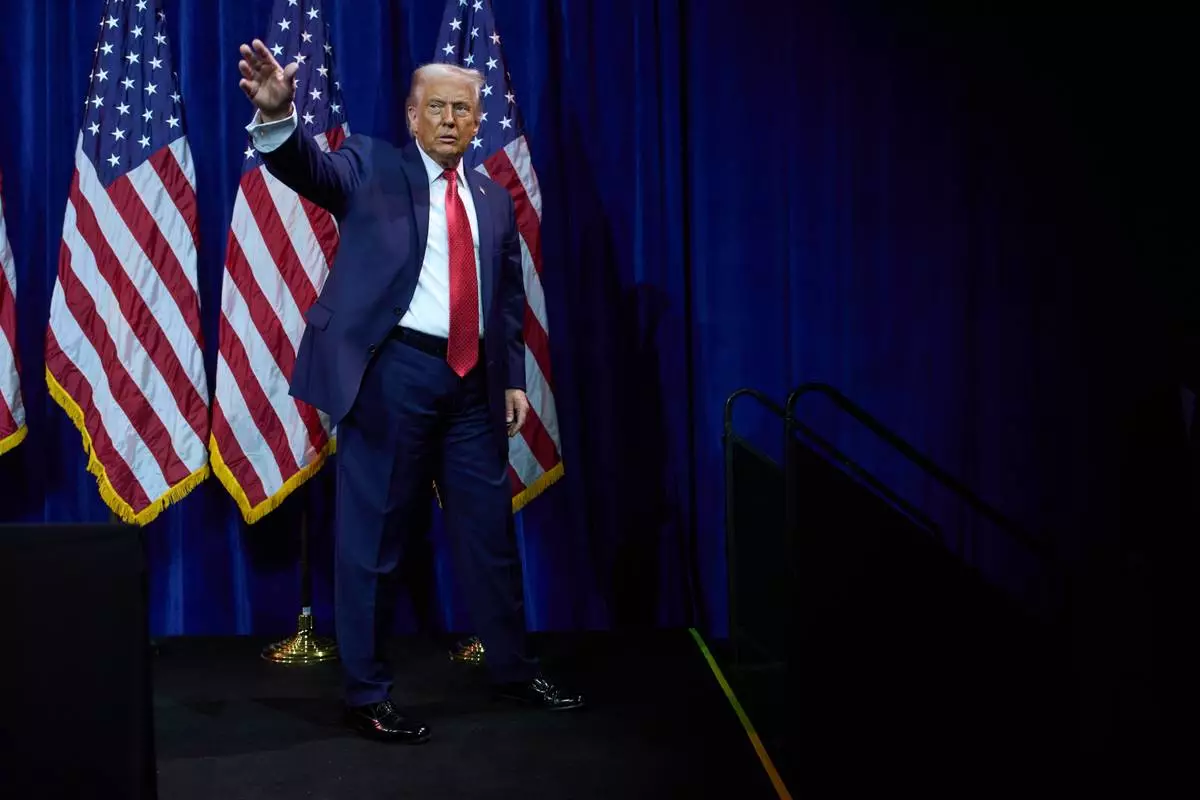
President Donald Trump waves as he walks off stage after speaking to House Republican lawmakers during their annual policy retreat, Tuesday, Jan. 6, 2026, in Washington. (AP Photo/Evan Vucci)